Introduction
Artificial Intelligence (AI), automation and digital technologies are ushering in one of the biggest shifts in the world of work in modern history. Since the Industrial Revolution, when some jobs were replaced by machines, to the Digital Revolution and computerization in the workplace, technology has always been a part of work life, helping people to complete their tasks. Today, AI is ushering in a new era of transformation by empowering machines to learn, analyze information, make decisions and execute tasks that were once the domain of human intelligence. AI tools are being leveraged by businesses across sectors to boost efficiency, cut expenses, and generate novel possibilities. But this shift has raised concerns about safety, adjustment and the new skills required for success in the future. These shifts are fundamental to understand and affect both students and employees, as AI is not going to eliminate jobs, but rather transform the nature of the work, skills needed, and the relationship between humans and machines.
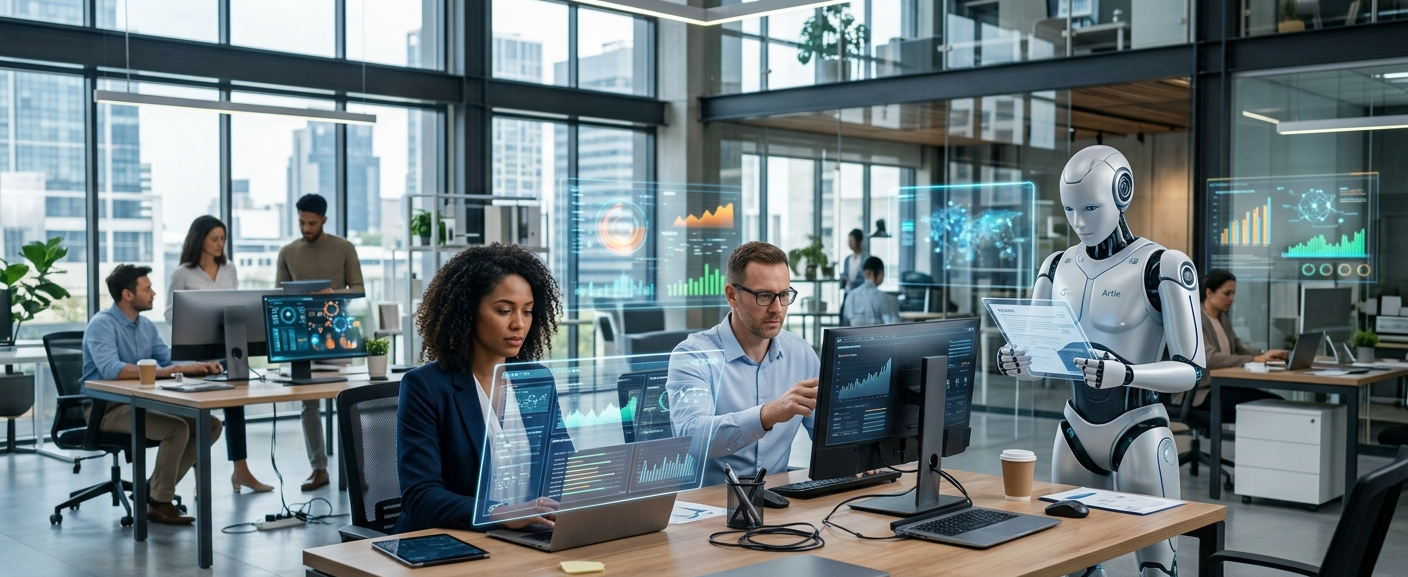
AI is reshaping careers by automating repetitive tasks, aiding in decision-making, and generating new ones. Intelligent systems are already making an impact in many sectors, such as healthcare, finance, education, agriculture, manufacturing, and entertainment. The conversation regarding the impact of how automation and artificial intelligence are reshaping careers includes the ways in which technology is changing the nature of jobs and creating new opportunities for innovation and productivity. It is crucial to understand that AI is not meant to replace human workers, but is intended to augment human capabilities. The future workplace will likely be a combination of humans and intelligent machines, with people providing the creativity, emotional intelligence, and critical thinking skills, and machines processing complex data and executing repetitive tasks.
In the era of Artificial Intelligence and Automation, what are the future prospects for employees?So, what is the future of employees in the Artificial Intelligence and Automation era?
In simple terms, AI is the scientific study and application of systems that are designed to think, learn, reason, recognize patterns, understand language and solve problems in a manner that mimics human intelligence. Automation, however, is the use of technology to automate processes with little or no human interaction. Automation has been around for many years with the help of machines and computer controlled systems, but with the advent of modern AI, automation has become much more sophisticated and can adapt and improve over time. The impact of this development is that businesses can now leverage AI-powered tools to analyse vast quantities of information, forecast trends, interact with customers and optimise every day. Alongside automated customer service assistants, AI is also playing a significant role in many industries, such as intelligent manufacturing robots.
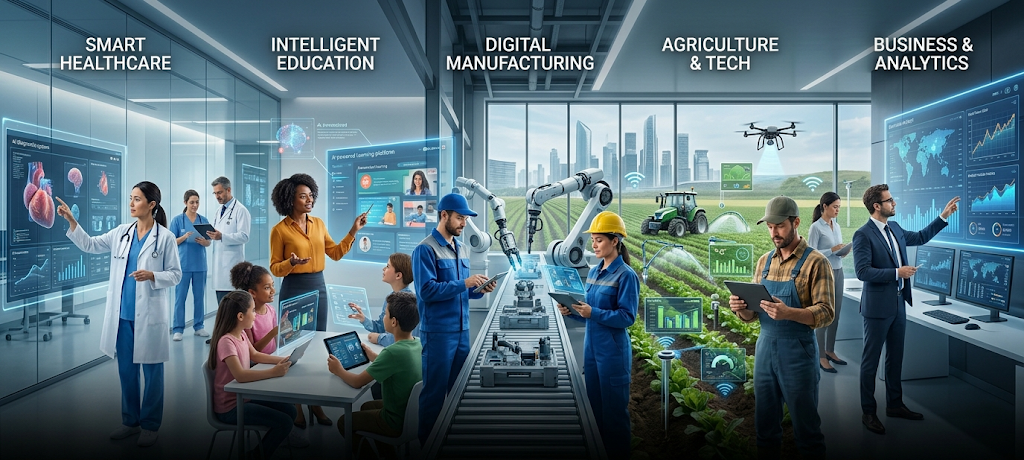
AI adoption is rising due to businesses that are always looking for ways to get more productive and remain competitive. In manufacturing, robots and intelligent machines can do repetitive work quickly and accurately, freeing up time for human employees to supervise, maintain, and solve problems creatively. AI systems can also help doctors in healthcare by analyzing medical images, identifying potential health risks, and aiding in research. AI learning platforms can offer tailored learning experiences in educational settings, addressing the specific needs of each student. As these examples illustrate, AI is by no means a technology for a single sector; it is a general-purpose technology that is impacting nearly every facet of society. The workplace is going to have to adapt as AI continues to mature, and integrate technological innovation with human expertise.
The influence of AI on careers and employment prospects.
Jobs which are changing because of automation.
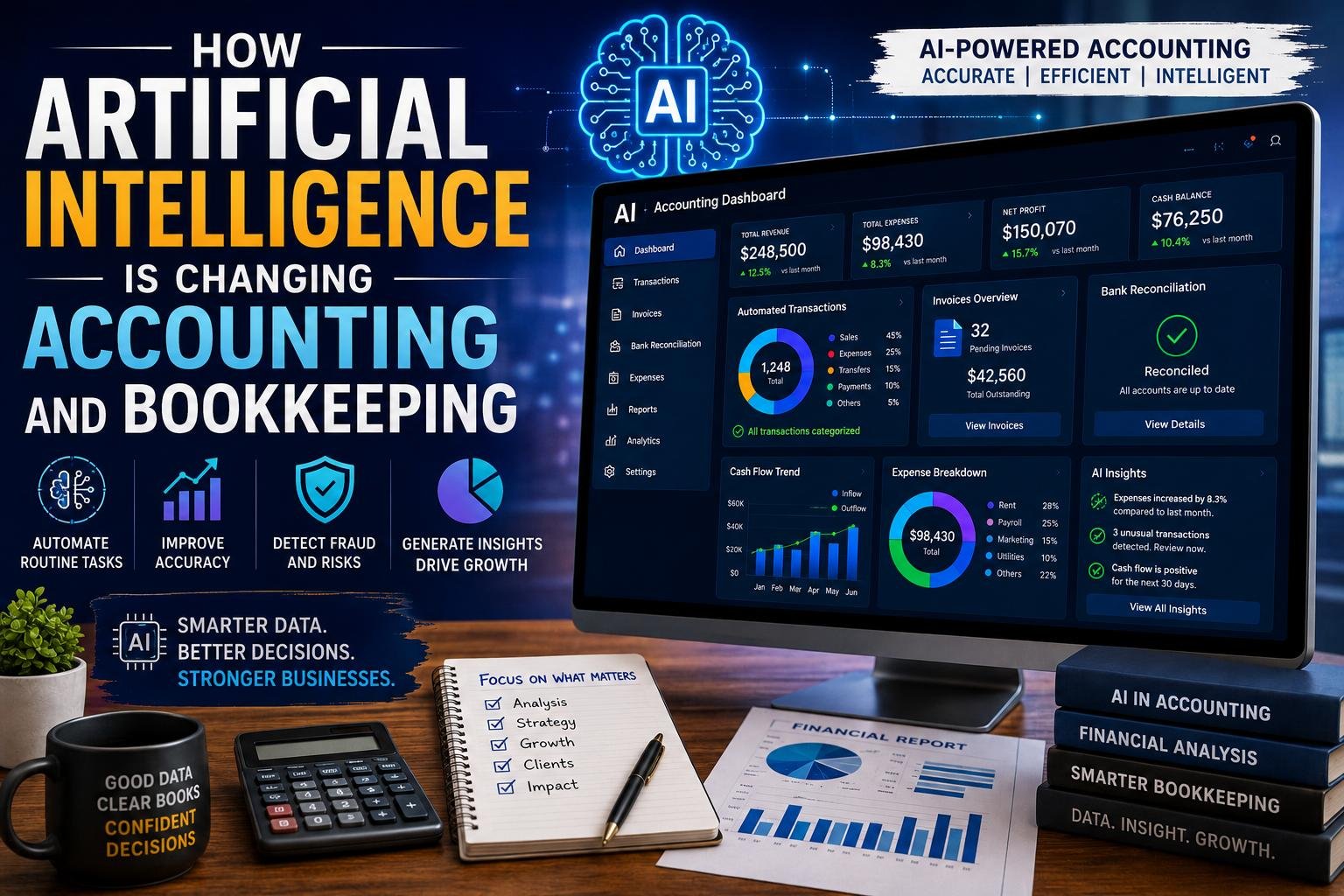
The impact of AI on jobs is profound because of the reshaping of jobs. Many jobs that involve repetitive or predictable tasks or data entry are being automated. Administrative staff, for instance, can leverage AI software to manage documents, schedule appointments, and analyze data more effectively. Customer service representatives could also be used in tandem with AI chatbots to deal with simpler inquiries, while humans take on more complex ones that demand empathy and understanding. Likewise, the marketing, accounting, and analytical fields are relying on AI to process information more quickly and make more informed decisions. Instead of taking over these roles, AI is altering the nature of the work, demanding new skills from professionals.
But, as AI systems grow more capable, some jobs can be profoundly impacted. Employees who do routine work may end up needing to switch to a more technically, creatively or interpersonally demanding job. But it does not imply that humans will be redundant in the workplace. Rather, it emphasizes the need for ongoing learning and change. Over time, the emergence and development of technology have led to the disappearance of some jobs and the birth of new ones. AI is no exception to the rule. The main difference is that the rate of change could force individuals and organisations to take more proactive steps in preparing for workplace change.
AI is creating new jobs and careers.
AI isn’t replacing certain jobs but is also creating new ones that were previously unheard of. As AI continues to evolve, the need for AI-related professions like machine learning engineers, data scientists, AI researchers, cyber security experts, and automation experts is rising. These jobs require computer science, math, data analysis and tech management skills. AI is also bringing opportunities to the table beyond technical fields. Experts in sectors like healthcare, education, business, agriculture, and creative industries will be in high demand for their expertise in leveraging AI tools.
There are also new roles cropping up that are concerned with human-AI interactions. For instance, AI tools need to be used in a responsible, ethical, and effective way, and organizations must have experts who can help ensure this. AI trainers, technology experts, and digital transformation professionals assist companies in adopting AI. AI is also being explored for writing, designing, producing music, and creating media, with creative professionals finding innovative applications for it. As these advancements show, the future of work will not just be of the people who create AI systems, it will also be of people who know how to employ AI to create innovation.
Essential Skills for the Future Workplace
Critical Thinking and Problem-Solving Skills
While AI systems are getting smarter and smarter, there are still tasks that demand creative thinking, judgment, and complex reasoning where human skills are crucial. Critical thinking will be one of the most valuable skills in the future workplace as individuals will be required to assess information, recognise problems and make decisions based on the information. While AI can suggest and identify patterns, it is still the human user that needs to decide if the results are accurate, ethical, and appropriate for the context. People with the ability to solve problems in a logical way and think for themselves will be valuable, as these problems may not be easily solved by automating them.
Problem solving skills will also be increasingly significant with the increasing technologization of workplaces. Staff will need to get the most out of the use of AI tools and recognise opportunities for improvement. This suggests that employees must become proficient in integrating their expertise with the AI capabilities and skills that technology offers. For instance, a teacher can design more engaging learning experiences using AI, and a farmer can use AI technology to enhance crop management and productivity. Being able to use technology creatively is a key asset to have in the future economy.
Creativity and Innovation
Another human skill that will always be useful even after the introduction of artificial intelligence is creativity. AI can be used to brainstorm ideas, create designs, and generate content, but human creativity is needed for imagination, cultural awareness, emotional connection, and original thinking. Companies require people who can think out of the box and create new products, resolve unique problems and provide meaningful experiences to customers. With the rise of AI, there might be more space for people to engage in innovation and exploration.
People will have to try new approaches to working with AI, too. For the future, students will be required to pose questions about how technology can enhance the services, how businesses can responsibly utilize data, and how AI can address social issues. Individuals will have to change their environment and take advantage of opportunities that have been created by technological advances, and creative thinking will be a key to helping them do this. Human devices that can think about possibilities and develop fresh solutions will be among the most precious assets of man in a world that can rapidly process information provided by machines.
Good Communication and Emotional Intelligence
Emotional intelligence will remain an essential attribute as people still need to interact with one another and this will never be fully replaced by machines. AI understands language and can answer questions, but it lacks real human feelings, experiences, or understanding. Empathy and communication skills are essential in careers that are leadership, teamwork, counseling, healthcare, education, and customer relations. Individuals who can understand others, control emotions and develop working relationships will continue to be a necessity in many professions.
Employees need to possess strong communication skills as well to work well with humans and AI systems. Employees will be required to communicate clearly with others and explain ideas to AI and communicate decisions within teams. In a digitised work environment, communicating with others will be even more significant. Whilst the world of work may be changing because of technology, the influence of cooperation, trust and people will remain the same as it relates to professional success.
The Future of Work: Human-AI Collaboration.
The workplace of the future is probably going to be a collaborative environment between humans and artificial intelligence, rather than a competitive one. AI systems can handle vast amounts of data, detect patterns, and perform repetitive tasks efficiently. Humans, on the other hand, add creativity, ethics, emotional understanding and strategic thinking. These strengths can be used in combination to produce results that are more effective for the organization than those that could be produced by humans or machines operating alone. This partnership is referred to as human-AI collaboration and it’s a new way of working productively.
A doctor using an AI system, for instance, can process medical information more efficiently without sacrificing judgement and compassion in their treatment of patients. AI tools can be used by a designer to spark ideas, but with creativity and knowledge of human preference also playing a role. AI-generated data insights can be used by a business leader to complement their own experience and ethical judgment in decision-making. The examples demonstrate that AI needs to always be seen as a tool to augment human capabilities, not a tool to supplant human contributions.
Educating for the Future of Work
Due to technology changing with the times, lifelong learning will be required for career success. As the world of work and technology evolves, the skills acquired in the early years of someone’s career may not continue to be adequate for their lifelong experience. Education, training, online courses and experience will be required for workers to keep up to date. Pupils in the lead up to working in the future should not be just taught knowledge and skills but also be taught skills they can transfer to new technologies.
In addition, organizations play a crucial part in equipping employees to thrive in AI-driven environments. Companies should offer learning opportunities to enable the effective use of new technology by employees. Governments and educational institutions can help this shift by enhancing digital education and developing programs to equip people for the future industry. Learning how to work successfully in a changing environment is preparation for learning about AI.
Summary and discussion: Building a future in which humans and AI coexist.
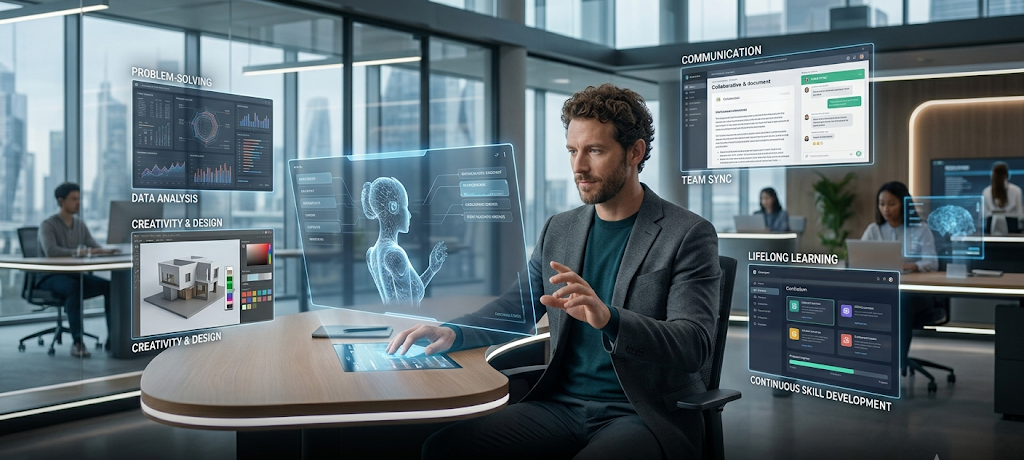
AI and automation are reshaping the world of work by revolutionizing career pathways, generating new job opportunities, and impacting daily tasks. Though certain occupations might be impacted by automation, AI also offers prospects for innovation, productivity, and economic development. The workplace of tomorrow will demand new and very human skills that go beyond technology—creativity, critical thinking, emotional intelligence, and communication.
People and organizations should not be afraid of AI, but they should get ready to work with intelligent technologies. The future’s most effective employees will be the ones who learn to harness the power of AI and still master their human abilities. Technology will keep evolving, but creative, curious and adaptable human beings will continue to be an integral part of it. In embracing the philosophy of lifelong learning and responsible innovation, society can shape a future in which AI will contribute to and facilitate human flourishing and ensure increased opportunities for individuals in their work and daily lives.