
Introduction
It’s not enough to sell a good product or service to make a good business. Having the right expertise, innovation and determination is important, but if these are in place, meaningful relationships are what can create opportunities faster and for the business to increase its growth. When it comes to finding new clients, trusted partners, valuable mentoring and connections, entrepreneurs who invest in building true professional relationships often find they locate these they would not have if they didn’t invest in the relationship. Networking is more than exchanging business cards and friending others via social media. It’s a matter of developing robust, trust-based, ongoing relationships that are based on value.
Networking can make a huge difference in the course of your business life whether you’re establishing a new business or a small business or a freelancer. Good relationships can also be helpful to you when you face challenges, are looking for information on market changes, get advice from industry, and investigate new industries and areas. Networking today is not just about meeting people face-to-face, you can connect with people from all walks of life and all over the world via online and email!
This article delves into the importance of professional networking, the opportunities it provides entrepreneurs for business expansion, where the best networking opportunities lie and how entrepreneurs can foster their networks over time. You’ll discover the most effective follow up techniques that will turn first encounters into long-term business connections.
Understanding Professional Networking
Professional networking is building and maintaining relationships with some other people who can help and support one another, share information, provide opportunities and work together through a career/business life. These connections can be with fellow entrepreneurs, customers, suppliers, investors, consultants, industry experts, mentors, employees, and community leaders. Good business owners do not network for a quick gain; they network to add value to all the parties involved and in the long-term. There are several ways of professional networking related to career guidance that can be used in conjunction with the methods outlined in this article; if you are interested in learning more about career-related professional networking you can read more about it in career guidance professional networking advice. It will take time to establish genuine relationships, but the payoff can be more solid business opportunities, credibility and a consistent support network that aid in sustaining growth in a business.
Networking is an Essential part of a Business that is essential to its success.
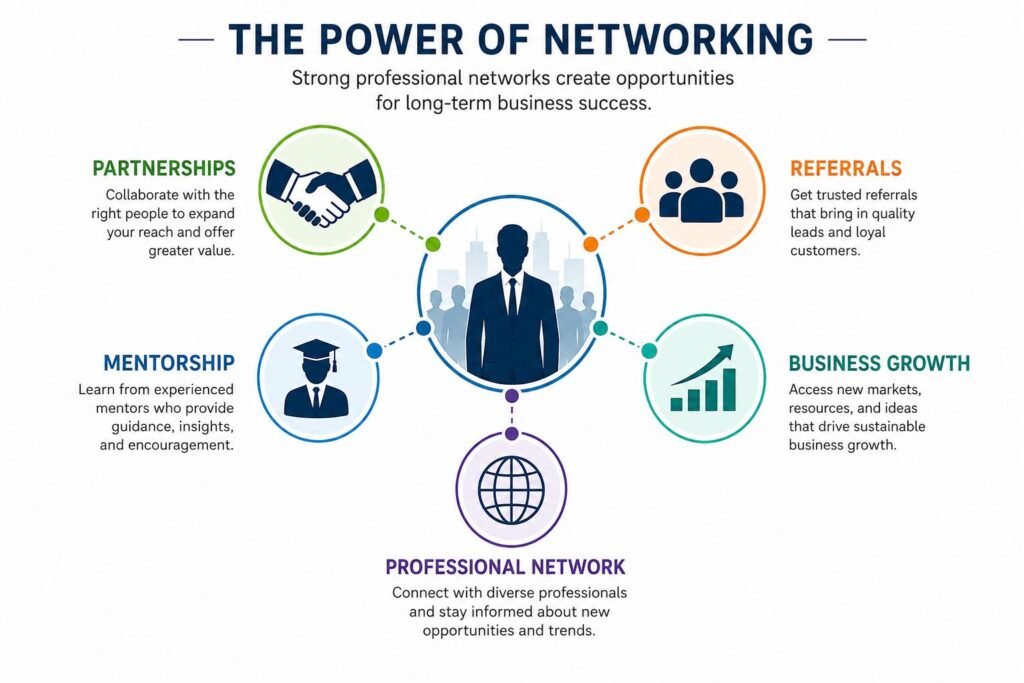
As businesses are increasingly about connections, networking is a huge part of being effective in business because business opportunities can often arise out of a relationship with a trusted individual, rather than solely advertising. A referral from a trusted person who is familiar and appreciative of your work can be the starting point for relationships, investments, talks and customer referrals. Repetition and relationship are worth the business assets and are of great value to people who prefer to do business with people they feel they can recommend. They build solid relationships and get greater exposure in their area of expertise, increasing the chances of being noticed to pursue joint projects and strategic partnerships and leadership opportunities. Over time, a solid network becomes a part of the business, and can also provide access to resources, expertise and opportunities that are not available through traditional marketing.
Networking to create Partnership Opportunities
Teaming up for strategic growth can help businesses grow quicker than they would on their own by combining complementary strength, skills and customer base. By networking, you’re able to connect with business owners who have products or services that are complementary to your own. There are many other ways to collaborate rather than compete, such as offered bundled services, co-hosting an event, combined marketing initiatives or developing a new product idea together. This can result in reduced costs, increased customer base, and improved user satisfaction, due to the sharing of different skills and expertise. Networking will enable business people to have access to reliable partners who have respect for them and their vision. These connections are developed over time, with effective communication and shared experiences, fostering trust and confidence that will help to create more successful and mutually beneficial collaborations in the future.
Referrals are predominantly the Result of Networking.
Customer referrals are still one of the best methods of business expansion as people believe more in a referral from a friend than in a typical advertisement. Networking enables professionals to make connections with individuals who recognize the work that they do and who are confident that they can endorse it to others. Entrepreneurs can build referral networks, with their business contacts, to bring in quality customers, rather than making constant individual efforts to find new business. This has a positive impact on the customer acquisition cost, but also on conversion rates as the referred customers are likely to have some level of trust. This ongoing communication, combined with great service and thanking contacts for referrals reinforce these relationships and will keep contacts coming back to recommend your business when appropriate.
The Value of Mentorship in Business Growth
One of the greatest advantages of networking is gaining access to experienced mentors who have successfully overcome many of the challenges new entrepreneurs face. Mentors provide guidance, constructive feedback, industry insights, and encouragement that can help business owners avoid costly mistakes and make more informed decisions. Unlike formal education, mentorship offers personalized advice based on real-world experience and practical knowledge. Networking events, industry associations, and professional communities frequently introduce entrepreneurs to individuals willing to share their expertise with emerging business leaders. Developing a respectful mentor relationship requires patience, genuine curiosity, and appreciation for the mentor’s time. Over time, these relationships become invaluable sources of wisdom that contribute to both personal development and long-term business success.
Creating a successful business connection is central to growing your business.
Growth in information, resources and relationships outside a business’s own market can be crucial to business expansion. Entrepreneurs are introduced to potential distributors, investors, suppliers, consultants, and customers from other industries and areas through networking. These links can offer valuable insights into market trends, customer preferences, and emerging opportunities that can aid in strategic growth choices. Diverse professional networks can help the entrepreneurs to be aware of the opportunities for expansion ahead of the competitors. Also, existing contacts may be able to offer introductions to decision makers that may not be easy to get in touch with, making it easier to develop new partnerships and market entry. A robust network enables businesses to grow powerful, and thus more adaptable, to adjust to market changes effectively.
Networking Events for Business Development
1. Industry Conferences
Industry Conferences are a great place to learn, network, and keep up on new trends in your industry. Entrepreneurs can also go to keynote speeches, workshops, and networking events, allowing them to connect with professionals and build relationships with potential customers and partners. Planning and asking thoughtful questions, taking an active role in the conference, and taking action afterwards is a great way to maximize the benefit of attending the conference. Successful entrepreneurs do not build up a large number of contacts, but look to create a few more significant contacts that can be long-lasting.
2. Trade Shows & Business Expos
Trade shows and business exhibitions offer business owners a chance to promote their products, get a feel for their competitors, and meet suppliers, buyers and industry professionals one on one. Such events provide a chance to have a face-to-face conversation which can foster trust faster than online communication. Entrepreneurs that have a clear plan, promotional material and are open to learning always find a great deal of benefit at a trade show. For businesses not exhibiting, it’s a great possibility to take advantage of the event by getting involved with other exhibitors and educational sessions as well as networking throughout the entire event.
3. Local Business Associations
There are frequent opportunities to develop connections with the local business community through local chambers of commerce, entrepreneur associations and professional organizations. These groups frequently have networking breakfasts, educational seminars, community initiatives and leadership programs that foster the continued interaction of its members. To build credibility, the entrepreneur should be a consistent participant, and to show that they are committed to the local economy. As trust builds up over time, other members are more inclined to endorse services and provide opportunities to other businesses and to work with other businesses on community projects that benefit them all.
Relationship: Building Relationships Techniques Strengthen Networks.
Networking is about quality of relationship and not quantity of contacts. Successful entrepreneurs tend to be interested in people, ask questions, and listen to what they have to say, this is beneficial in developing professional relationships. When you can be of help before you ask for help, it’s an act of generosity and builds trust, making it more natural to work together in the future. Keeping in mind the important information about contacts, their successes and achievements, and regular contact helps to strengthen relationships over time. Consistency is also important since networking isn’t a single event, but a continuous process of maintaining and building relationships with peers, colleagues and others in the field, through mutual respect, honesty and mutual achievement. Such practices build a reputation for reliability, and foster the expectation of a continued relationship.
Learning how to Communicate Effectively in a Networking Session
Good communication skills make networking a big success as first impressions will make the difference whether the relationship continues to grow or not. As an entrepreneur, you need to make brief introductions that clearly explain who you are, what you do and how you value your customers, but not sound like a sales pitch. Open-ended questions promote discussion and show interest in people’s experiences. Rapport and mutual respect is built through active listening, positive body language and avoiding unnecessary interruptions. Discussions followed with thoughtful observations or relevant suggestions further enhance credibility and make it more likely that the new contacts will remember the discussion long after the networking event.
Why Follow up is Important after Meeting New Contacts
There are numerous instances in which people make a great first impression, but then lose contact with one another. Follow-up shows professionalism, appreciation and a true interest in maintaining a long-term relationship. An individualized message sent in the first few days after meeting someone will help keep the conversation going and give the opportunity to talk about common interests or brainstorm any partnerships. One other great way entrepreneurs can use social media is to share articles that are helpful to their contacts, congratulate contacts on their professional successes, or introduce them to people who could be a valuable addition to their business. Such thoughtful actions demonstrate an interest in adding value to the other person and not to oneself. After repeated interactions, this initial contact becomes a reliable business relationship that can develop into a valuable avenue for business expansion.
Entrepreneurs need to be Familiar with some of the Common Networking Pitfalls.
While many entrepreneurs try to sell their ideas more than network, they endanger their networking efforts. Merely talking about products and services may end up reducing the quality of the discussion if the information is just a sales pitch. One frequent mistake is not preparing before networking – where a lot of good discussion time is lost. Other business owners fail to follow up, and promising connections can quickly fade after their first meeting. Others don’t value the need to return their goodwill by sharing knowledge, making introductions or providing support. By steering clear of these pitfalls, entrepreneurs can foster more positive and reputable business relationships that can lead to sustainable long-term opportunities.
Creating a plan for Long-Term Networking
Networking is not a one-off event; it’s a consistent plan that has to be followed. Networking goals need to be set, the right communities need to be targeted, regular attendance at industry events needs to be planned and a weekly networking time needs to be committed. Having well-documented contacts and prior chat logs, and a follow-up plan, will make sure that essential relationships are consistently tended. Looking at network size alone is not sufficient to define the success of networking; it is important to assess the quality of the networking and the products of it, like referrals, partnerships, mentorship opportunities, collaborative projects. Once networking is seen as an ongoing process, rather than a single job, the entrepreneur establishes a viable system that is designed and planned to continually help him with his personal growth, professional development and future expansion of his business.
Conclusion
Networking continues to be one of the best methods for any entrepreneur to get a business off the ground and keep it going. Having good professional relationships helps to establish opportunities for partnerships, referrals, mentoring, collaboration, knowledge sharing and market expansion, which are hard to come by through advertising and sell alone. By attending trade shows, joining business chambers, and actively engaging in online communities, entrepreneurs can connect with peers and professionals, fostering a sense of community and support. By investing in genuine relationships, entrepreneurs can connect with peers and professionals, fostering a sense of community and support.
Great business networks are established through trust, generosity, reliability and a true desire to see others succeed. Instead of thinking of networking as a quick get-rich scheme for him to get immediate attention, he should think of it as a long-term investment in developing valuable relationships. As these relationships strengthen, they provide a source of support, opportunity and inspiration that can be relied on to not just help businesses grow, but to ensure personal and professional success for the long-term. Entrepreneurs can benefit from developing a consistent networking approach in their business plan, which can open up doors to new opportunities that will enhance their businesses and form connections that will stay productive for years.
Get more well researched information about the Importance of Networking for Business Success here.