Low-Maintenance Garden Tips are not only feasible, but also fulfilling. With the right plant selection, watering techniques, and design, homeowners can create a beautiful outdoor space that requires minimal maintenance. It is not a “no maintenance” garden, but rather a garden that is designed carefully to keep up with as little effort as possible for a beautiful and functional garden. This will enable you to enjoy your garden and not spend all your time working it.
The trick is to find a perfect combination of aesthetic appeal and functionality. Design a resource-saving, time-efficient garden with the use of drought tolerant plants, mulching, water efficient systems and a mindful design. This approach can also help to maintain its environmental friendly nature, resource saving and cost and time reduction. If you plan carefully, your garden could be a natural haven which doesn’t need too much help and support from you.
1. Choose Drought-Resistant Plants
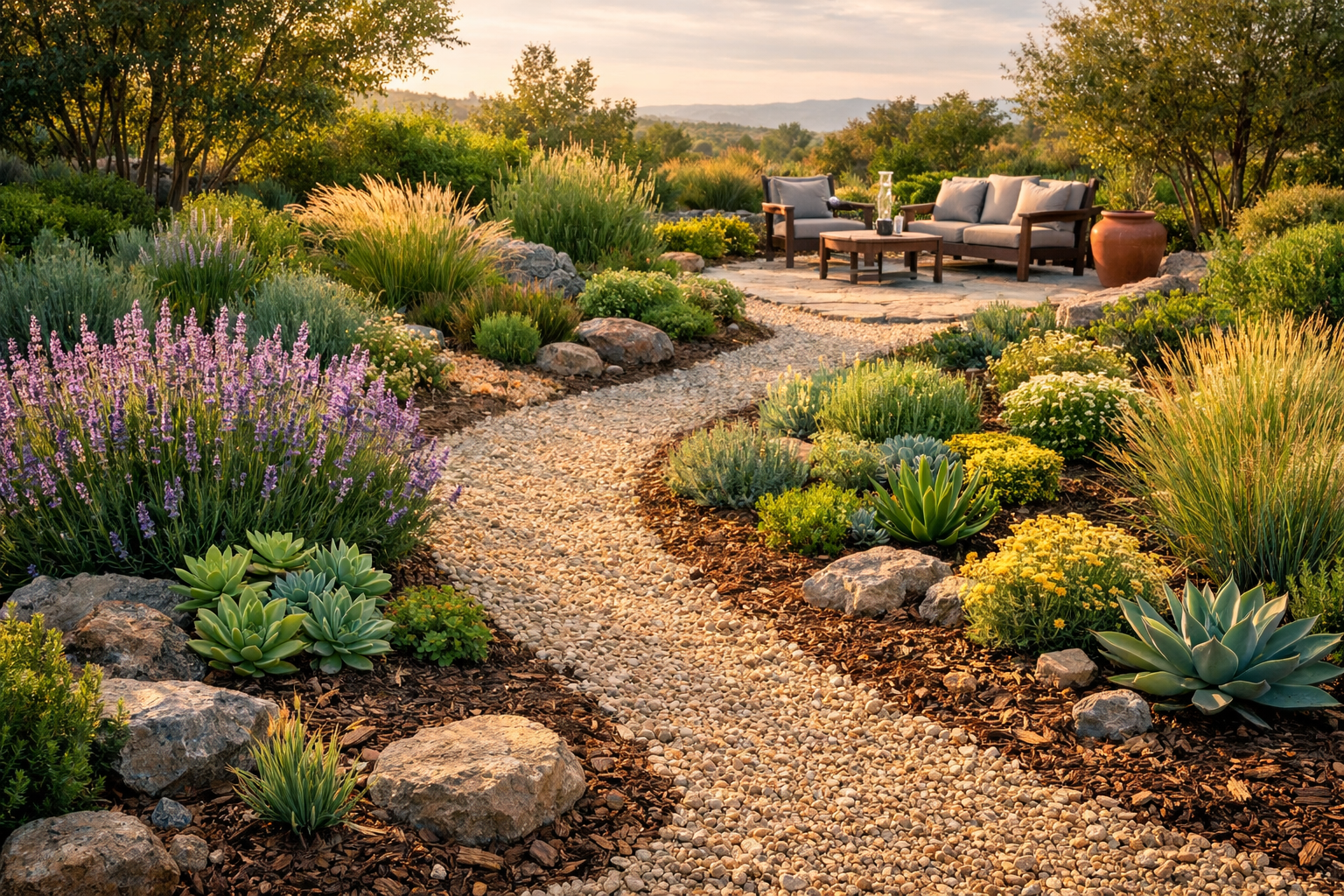
Drought resistant plants are one of the best ways to minimize garden maintenance. These species can thrive on less water and are well suited to areas subject to drought or those individuals that do not want to water every day. Lavender, ornamental grasses are good examples of succulents. They can help to prevent water loss, and they can also provide a touch of greenery and color to your garden, even when it’s dry. See more examples of drought-resistant plants.
In addition to being tolerant of drought, drought-tolerant plants may be less demanding in terms of fertilization and pest management. They are extremely hardy and will tolerate not so well-drained soil, so they do not need as much soil amendments. These plants can be implemented into your garden to create a beautiful and useful sustainable garden. This decision will save money, minimize stress and help you keep your garden looking great with little effort over time.
2. Apply Mulching Techniques
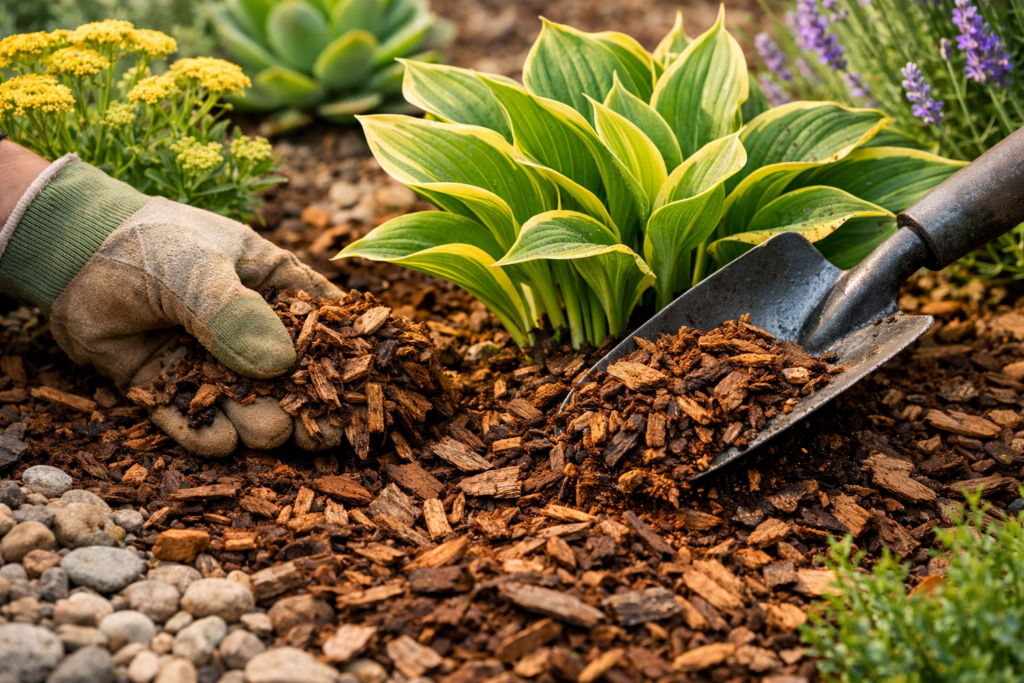
Mulching is a principle of low maintenance gardening. Wood chips, straw or compost are forms of mulch that are adequate to maintain moisture, weed-free and temperature-regulated. This will result in reduced watering and weed growth, which will save you hours of work season after season. Mulching also helps to keep the plants healthy, all year round, and prevents the roots from getting too hot or too cold.
Mulch can also help to enhance soil quality as it decomposes, and can contribute nutrients to plants. As the years go by, this natural process enhances soil structure and fertility, leading to healthier root systems. Mulching also enhances the appearance of the garden, creates neat and polished beds and prevents erosion. It’s simple but very effective and it takes your garden to a whole new level of effectiveness and sustainability.
3. Employ Efficient Irrigation Systems
The traditional watering methods result in water wastage and are costly. Efficient irrigation: Drip irrigation or soaker hoses to water in the plants root zone. This strategic planning will reduce water evaporation and runoff, which will help preserve water and optimize health of plants. This helps to prevent over watering which promotes root rot and other plant diseases.
Additional efficiencies in maintenance can be achieved with automated irrigation systems which can automatically program watering times. Smart controller will adjust watering based on weather conditions – will not water if it does rain. This conserves water and also lowers the water costs, making irrigation systems an excellent long-term investment in a garden. When you’re able to water your garden effectively, you don’t have to work so hard and keep spending time on it.
4. Plan a Landscape Informatively
Planning the landscape of your garden is important so you can have an attractive and easy to care for garden. If their watering, light and feeding needs are similar to each other, it will be easier to take care of the plants. The drought tolerant plants can be grouped together for uniformity and shade plants can be cultivated in a shaded area. This helps to prevent confusion and helps to properly care for each plant.
Important aspects of strategic planning involve designing pathways, borders and zones that help to reduce maintenance. Raised beds also improve planting and harvesting and gravel paths and stone walkways, reduce mowing and weeding. A good landscape design will look attractive, and will also not be difficult to maintain all year long. The basis of a low maintenance garden is a good garden design.
5. Limit Lawn Areas
Lawns tend to be difficult to keep, and maintenance can include regular mowing, watering and fertilizing. Allocate a section of the lawn for ground cover or native plants and rocks to minimise maintenance. Examples of this involve using creeping thyme, clover, or other ground cover to allow some green without too much stress; or gravel or stone areas to add structure and reduce water usage.
Less lawn space also means that you can focus your attention and resources on other garden space for you to enjoy, such as flower beds or a vegetable patch. With less turf comes less time and water usage while still providing a lush and inviting outdoor environment. This will not only save you money in garden maintenance but will also enhance your garden’s biodiversity.
6. Use Native Plants
Native plants are tough and low maintenance, and naturally grown to thrive in the local climate and soil. Generally will require less water, fertilizer and pest management than exotics. Incorporating native plants into your garden will benefit biodiversity and pollinators such as butterflies and bees will help to increase the environment around your house.
There are several reasons to appreciate native plants besides ecological, and plenty of native plants can be grown with minimal effort. They are also tolerant to pests and diseases prevalent locally, thus reducing the need to treat the area of land. This way they can be an environmentally friendly option and are the ideal solution to sustainable gardening. Native plants will keep your garden alive, healthy and low-maintenance.
7. Design Garden Zones for Functionality
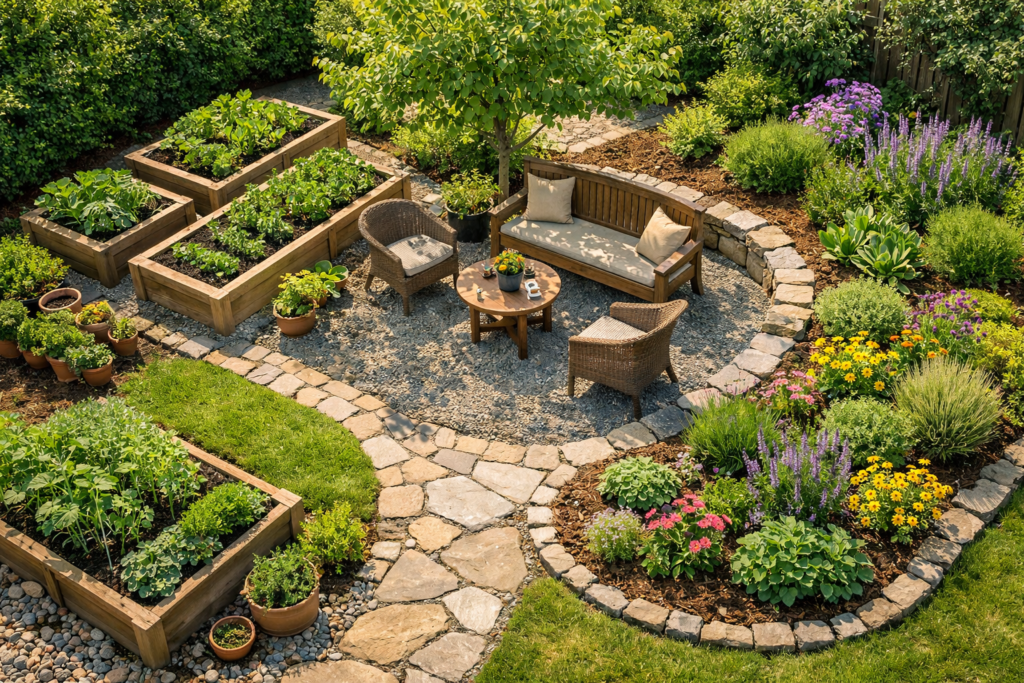
Zoning helps to make gardening easier. For instance, divide vegetable gardens, ornamental gardens and rest areas. This group will enable you to customize the care procedures for each zone, which will spare you overwork and confusion. It also makes your garden more enjoyable as it creates different areas within the garden which will be used for various purposes.
Zoning also enhances the usability of your garden. A comfortable and quiet seating area with easy care plants creates a relaxing place; a vegetable garden near the kitchen makes it easy. By careful planning, you should get the most enjoyment from your garden and less work out of it. Zones can be used to order and organize your outdoor spaces.
8. Prefer Perennials to Annuals
As an annual plant it needs to be replanted each season. Perennials, however, grow from one year to the next, and will not have to be replanted often. It’s easy to make your garden look colourful and tidy using some of the most popular, evergreen perennials like daylilies, hostas and peony.
Perennials are also better able to take root and be drought resistant and resilient. These will be expected to last a long time, giving a steady structure to the garden, and will flower in the fall and spring, adding variety to the landscape. The use of perennials rather than annuals makes sense as it saves on workload and enables plants to be bright and colourful. They are the backbone to a low maintenance garden.
9. Incorporate Hardscaping Elements
Hardscaping – adding patios, stone walls and decorative gravel, creating structure and less maintenance. They require less care than live plants, and provide helpful sun-absorber surfaces or places to have houseguests. In addition, hardscaping will decrease the area that needs watering or mowing, making your garden easier to manage.
Adding in hardscaping components adds to the garden’s beauty. A curvilinear path (of stone) through flower beds is an added attraction and a patio will serve as a focus. A balance and easy to maintain design is achieved by the use of natural and man-made components. Hardscaping allows for functionality and is also aesthetically pleasing.
10. Practice Smart Garden Maintenance
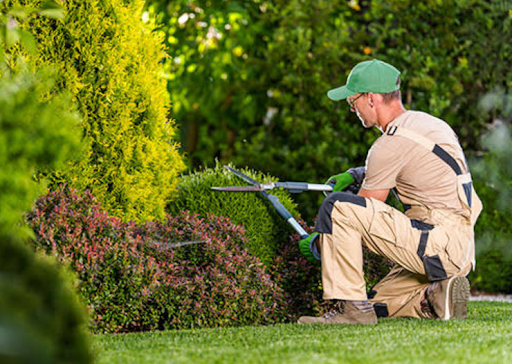
However, even in a low maintenance garden, there is a need for some maintenance. With a bit of care, avoiding some of the common pitfalls, like cutting back plants indiscriminately, fertilizing too heavily, and not paying attention to plant health, will help to ensure that the decisions you make regarding judicious maintenance are rewarded with success over time. Consider prevention rather than treatment – save time and effort. By taking preventative action you will reduce the risk of big problems, and enjoy a healthy and colourful garden with very little effort.
Pruning shrubs just once or twice a year ensures a tidy shrub without continuous trimming. Slow release fertilizers do not need to be fed frequently and regular checking will allow small problems to be addressed before they become big problems. You create a follow up plan that is simple, effective and efficient. Good care will ensure that your garden will grow continuously and your work minimal.
Conclusion
A low maintenance garden isn’t about compromising on beauty, it’s about creating a more efficient garden. If you have a little creativity, knowledge and work, you can not only have a beautiful yard, but a sustainable one too. Homeowners can have a beautiful garden and garden with little work with these 10 tips; and these two can go hand in hand.
The overall challenge is to design a garden that is in harmony with nature, not in opposition. Sustainable practices and careful design can help minimise the need for frequent maintenance, while maintaining a vibrant, welcoming space. A low maintenance garden will not only be easier to care for, but will also be more sustainable, environmentally friendly, and enjoyable for years to come.