
Introduction
Exams put out a great deal of stress for students which is in great part due to the fact that they leave preparation until the last few days. Also as a result, we see that students’ performance goes down, their grasp of concepts becomes poor, and they forget key details by the time of the exam. A much better approach is to start early, to be consistent, and to use a structured study plan which will build knowledge up little by little instead of trying to stuff it all in at once. Also this practice improves academic results and at the same time reduces anxiety and increases confidence in what they are doing. Also a resource that we find very useful which goes into this in detail is that guide to planning exam prep which weaves in tips on how to organize study time and to improve revision techniques. By using a set out plan instead of cramming in material at the last second students are able to get a deep understanding of topics, do better at retaining info and go into exams with a calm and focused mind. In this article we present a step by step guide to planning out exam prep which in turn will get students out of the last minute panic stage and see them do better in the end.

Why Early Exam Preparation Matters
Starting out on exam prep early is a key decision a student can make as it changes the entire learning game from last minute cramming to in depth study. When students get into the books weeks or even months before the exam they give their brain the time it needs to process, organize, and put info into long term memory. Also this plays a role in how easy it is to recall info during the exam with no stress or confusion. Also at the early stage of prep students have time to see which topics are tough which they may not have if they wait till the last minute which leaves no room to improve.
Also a great benefit is that students are able to better balance school work, revision and rest which in turn prevents burn out. Instead of being overwhelmed by large amounts of material they are able to break it up into more manageable parts. Over time this approach instills discipline, reduces anxiety and improves confidence. Early prep is not just about putting in more hours; it is about smart study and giving yourself the time to really get what you are learning.
Creating a Proven Revision Strategy (Step by Step).
A solid revision plan is the base of great exam prep as it gives direction and puts out confusion which materials to study each day. We first put out a list of all subjects and topics which require coverage, then we break them up by difficulty level. Hard topics get more time, easy ones are given quick reviews. The second step is to put out dedicated time slots for each subject through the week, also to see to it that no subject is left out for too long. It is important to include short breaks between study sessions for the brain to rest and stay productive. Consistency is key over long study sessions, students should aim for daily study routines instead of irregular large scale efforts. Also include in this plan time for review of past material which in turn will fortify memory. This step by step approach helps students to stay organized, track progress and also to avoid the panic which comes from unstructured study.
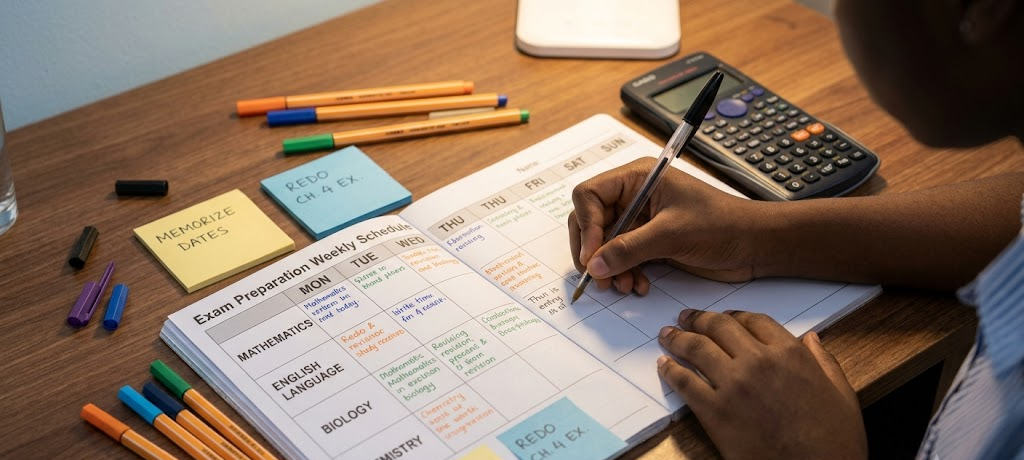
The last step in making a revision schedule is to include flexibility and evaluation. Do not make your schedule too rigid as unexpected issues and tough topics will need for you to change it. Students should report on their progress often to see if they are hitting their marks or are behind in some areas. If a topic is not a strong point, put in more time on it instead of pushing through it. Also, it is useful to mix things up to keep things fresh and avoid burnout. For example, in a week’s time you will cover Science, Math, and Humanities to keep the brain active and also to break the monotony. Also, use a weekly planner or digital calendar to make your schedule better and more visual. Also at the end of the day stick to the plan as this will help with discipline and also will keep you off the procrastination path. A good revision schedule is not just a timetable but a personal action plan which will in turn guide your study, build your confidence and see to it that all topics are covered before the exam season.
Practice Testing and Active Recall Techniques

One of the best methods of preparing for exams is practice testing and active recall which is essentially you testing yourself as you go through material rather than just re reading notes. Many of the students we see do what we call “textbook highlighting or just reading over notes’ and think that is enough but in fact what they are doing is not the same as truly learning the material, which is a brain based activity of recall. Practice testing includes things like taking old exams, using flash cards, or teaching out loud what you are studying without note reference. What this does is make the brain work that much harder to retrieve the info which in turn leads to better long term storage of that info. Also what it does is allows students to see right away what they don’t know as well so they can target their review on issues that need more work. Over time what practice testing does is build up a student’s confidence as they get familiar with the types of questions asked in the exams and also they improve their test day time management skills.
Active recall is a practice which should be integrated into the flow of your study, not just at the end of a revision session. For instance, after you go over a topic, put away your notes and see what you can recall. It is a great way to see what you have truly grasped. Also try combining active recall with spaced repetition which sees you come back to material at intervals this will reinforce what you are learning. Also get in the habit of mimicking exam conditions by timing yourself as you answer questions. This will reduce your anxiety during the actual exam and will also improve your speed and accuracy. As opposed to passive study which is more surface level, these methods engage the brain in a more in depth way which in turn makes for more effective and longer term learning. With consistent use practice testing and active recall turn revision into a dynamic process which in large part is what improves exam performance.
Choosing the Right Study Resources
Selecting the right set of study resources is key to how well a student does in exams. Not all materials are created equal and at times using too many sources may just introduce confusion. I have found it best to begin with classroom notes and books which by and large cover what the syllabus is about. They should be your base for study. After that add in extra resources such as video lectures, online tutorials, and condensed revision guides that will help in building your knowledge base. Also at this stage it is very important to pick out sources which present info clearly rather than what may appear to be in great detail but isn’t really relevant. Also a very good idea is to make use of past exam papers which also serve as a good indicator of what types of questions may come up and also what the marking criteria is.
Another key issue in the use of study resources is that of organization. Students put out too much energy into jumping between many platforms or books which in turn reduces focus and increases stress. Instead they do best to stick to a few proven materials and to really work through them. Also, creating personal notes or summaries from these resources which in turn you re-write info in your own words for better memory is very helpful. Also digital tools like study apps or flash card platforms are also very useful for quick revision. The point is not to amass as large a collection of resources as possible but to put what you have to very good use. A quality set of study materials which are well chosen makes revision go more smoothly, in a more structured and less overwhelming way which in turn allows students to put their energy into what they are studying instead of what they are looking for.
Stress Management During Exam Preparation
Managing stress is a key component of exam prep as we see even the best prepared students do poorly when very anxious. Stress results from the fear of failure, lack of prep, or poor time management which in turn we can do something about with healthy habits. Also into this is the practice of a balanced routine which includes study time, rest, sleep, and physical activity. Sleep in particular is a great asset which helps the brain to process and store info from the day’s study. Also into this mix we have regular exercise which even the simple like a walk which reduces tension and improves focus. Also it is great to take short breaks during study sessions to avoid burn out and at the same time maintain productivity.
Another key to stress management is positive thinking and self confidence. Students do well to avoid negative thoughts of which failure is a prime example and instead to focus on what they have put into their preparation. Also of great help is the use of breathing exercises and relaxation techniques which in turn will calm the mind before study sessions or exam times. Also students should talk to friends, teachers, or family members about the academic pressure they are under which in turn will provide emotional support and reduce feelings of isolation. Also it is very important that students remember exams are but a part of the learning process and not a2 be all and end all of what they are made of. When stress is managed properly concentration improves, memory performance goes up and in the end do much better during exam time.
Final Week Exam Strategy
The run up to exams do put out time for revision, review and to get prepared which is better spent on going over what has been learned which in turn reinforces it into memory and which also raises confidence. At this stage students should put most of their effort into going over summaries, key points, and problems they have seen before which they did at home. We should see to it that we have a revision plan in place which is light in comparison to what we had been doing till now to avoid burn out. Also it is very important that we practice past exam papers under timer which in turn will familiarize them with exam pressure and improve time management. Also it is useful to go over what went wrong in the past and to put in the work to fix those issues before the real exam.
In the final week what is put forth is of great importance. Students should put first focus on sleep, eating right, and steer clear of late night study which only leads to fatigue. Study in a quiet setting away from distractions which in turn improves concentration. Also of great import is emotional preparation which is as much as academic, so it is out of place to compare yourself to peers. By this stage most of the work is done and what is required is confidence which comes from that preparation. The aim is to be steady, focused and at ease so that the brain does that which is required of it during exams. What is managed in the final week may just be the thing that makes the difference in performance.
Conclusion
Preparing for exams without the last minute rush requires discipline, consistency, and a structured study approach. Instead of last minute cramming which is ineffective, students should put in early work, create organized revision schedules, use active learning techniques, and also pay attention to stress management. Each step in the prep process is key to building in depth knowledge and long term memory. By choosing the best study materials, practicing with past questions, and maintaining a balanced life, students see great improvement in performance.
Also very important is that they avoid cramming as it reduces anxiety and increases confidence which in turn has them walk into the exam hall with a clear and focused mind. What determines success in exams is not the amount of material covered at the last minute but the quality of the time spent in preparation over the long term. With the right plan each student is able to go in calm, do better, and achieve what they set out to in terms of academic goals.