
Introduction
Memory is at the core of what determines academic success which in turn is based on how well students do with information presentation, retention, and retrieval especially during exams. Many students do not do well not because of a lack of study material exposure but because they use poor study methods which only produce short term results. In fact what we see is that which information is put into long term memory and made easy to bring back to mind at exam time is what really counts. This is the reason that we see the value in students adopting structured and research based techniques which improve retention instead of last minute cram sessions. In this article we will look at what proven memory improvement methods there are such as spaced repetition, active recall, mnemonic devices and visualization. These are from the fields of cognitive psychology and education and what they do is they improve how the brain does the work of encoding and out putting info. With consistent use they also greatly improve academic performance and reduce exam stress by making the revision process more so of an asset than a liability.
Spaced Repetition: Science of Interval Based Learning
Spaced out repetition is a very effective study method because it goes with the brain’s natural tendency to forget as opposed to fighting it. Instead of mass review sessions, spaced repetition which is the practice of going over material at increasing intervals over time. What this does is it improves neural connections which in turn makes it so the brain has an easier time recalling info when you need it. For example a student may go over a topic right after they learn it, then again in 3 days, then in a week, and out. This spacing out of review sessions what it does is it takes info out of short term memory and into long term storage.

Also we have studies out of the field of cognitive science that show which students that use spaced repetition do better in terms of what they retain as compared to those that study in large blocks of time. Also it reduces stress as revision is broken up into small more manageable pieces as opposed to a large wall of info. When put into play with digital flash card machines or personal study schedules, spaced repetition is a very strong tool for the efficient mastery of large amounts of academic info.
Active Recall: Improving the Brain with Retrieval Practice
Active recall is a study approach which uses the retrieval of info from memory without the use of notes or textbooks. As opposed to passively re-reading material, students put to practice what they have learned. This technique is very effective because the act of recollecting info strengthens memory paths which in turn makes for easier and faster future retrieval. For example, instead of going over a history chapter a few times, a student may close the book and write out everything they remember or answer practice questions on their own.
Research has it that students who use active recall do better than those who depend on passive review methods because their brains are constantly at work at the task of retrieval which is in exam-like settings. Over time this improves confidence and reduces the fear of forgetting info during tests. Also active recall brings to light weak areas in what is known which in turn allows for better focused revision. When applied consistently it turns study into an active engaging process as opposed to a passive read through.
Mnemonic Devices and Memory-Enhancing Strategies
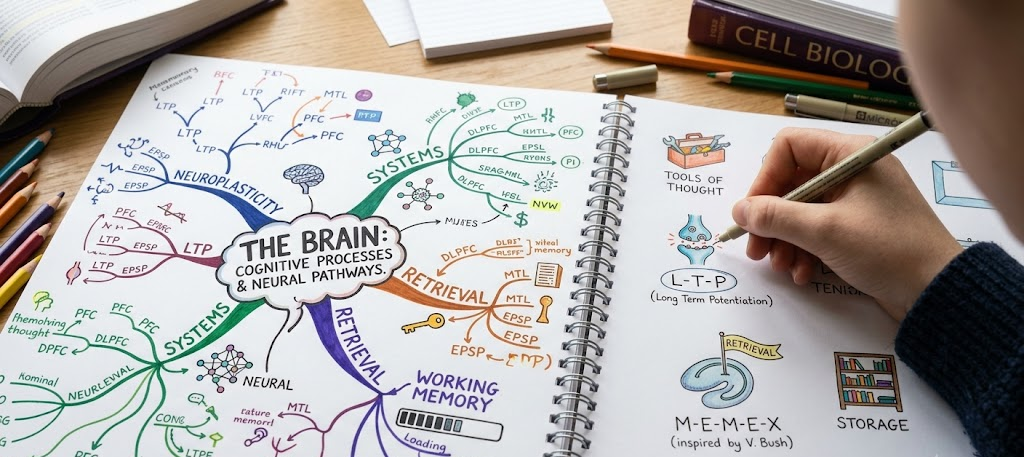
Mnemonic devices are a set of powerful tools which help students remember complex info by way of simple patterns, words, or images. We see their value in large info sets like formulas, historical dates, or scientific terms. One very used approach is acronyms which put the first letters of a set of words into a memorable word. Also we have rhymes or rhythmic patterns which make info easier to recall. Also you may create a short story or phrase which the brain will do better at storing info than just repeating it.
Also into play are proven memory improving strategies which explain how cognitive techniques like association and repetition improve retention. Mnemonics work because the brain does better with unusual or emotionally charged content than with plain facts. By turning dull info into creative mental hooks students may see great improvement in recall speed during exam time. This method is also very helpful for subjects which require memorization of lists or sequences.
Visualization Techniques: Presenting Information as Mental Images
Visualization is a memory tool which puts info into mental images. What we see the brain do is process images faster and retain them better than text which makes visualization very effective as a learning tool. As students take concepts and turn them into pictures, diagrams, or play out scenarios in their mind they are in fact creating stronger memory ties. For example instead of memorizing a definition by rote a student may put together a real life situation which personifies the concept. This technique is very useful in subjects like bio, geo, and lit which are heavy in abstract ideas that play best to visual stories.
Also visualization helps improve understanding as it gets the learner to interpret info instead of just memorizing it. The more in depth and vibrant the mental picture the stronger the memory of it will be. In the long run students that use this technique report it is easier to recall complex material during exams because they have a visual answer which they can call up in their mind instead of trying to piece together abstract terms.
Combining Techniques for Maximum Retention
Each memory technique may stand out individually yet as a whole their true power is realized. For instance a student can use spaced repetition to time their revision, active recall to check what they know, develop mnemonics to nail down the hard facts, and also do visualizations to solidify their concepts. That’s what this total approach does by hitting the brain at different angles at once we see a fuller and more lasting picture. Also this gets away from the monotony that long study sessions bring. As students switch up techniques they keep the focus and their interest alive at the same time.
Also by using many different strategies info is presented to the brain in many different ways at once. In turn this increases the brain’s chance of really holding on to it. For example a bio student may do a visual of a cell’s structure, make up a mnemonic for its parts, and quiz themselves over and over with active recall. This layering of the material into the mind also makes sure that which is learned is not just memorized but very well understood, a key element in doing well on those tough exam questions.
How These Techniques Improve Exam Performance
Memory performance strategies which in turn improve exam results by increasing the accuracy and speed of what is recalled. When students use organized systems as opposed to last minute cram sessions they tend to do better and remember info clearly under stress. Spaced practice which stretches out study over time increases what is retained which in turn reduces what is forgotten. Active recall which is practiced retrieval of info from memory2 does what is key during timed exams. Mnemonics which take complex topics and make them simple which in turn makes recall easy even in high stress situations.
Visualization which plays out concepts in the mind’s eye improves the base of info which in turn does better at application based questions. Also at play is that these techniques reduce exam stress because students go in better prepared and more confident in what they know. Instead of struggling to remember info they are able to put more effort into understanding and applying what they have learned. Over time what we see is that these strategies not only raise grades but also instill better study habits which pay off beyond the exam setting.
Common Mistakes Students Make When Studying
Many of our students report issues with memory retention which we trace back to poor study skills that may look like they are working but in fact do not lead to real understanding. A very common issue is what we term as passive reading. Students will go over their notes again and again without quizzing themselves which in turn does not form strong memories. Also very common is the practice of cramming which may get the info in for the test but does little for long term recall and just adds to the stress. Also we see that many students do not review material at all which causes them to forget key topics over time.
Also some focus too much on memorizing facts without really getting the concepts out of it which in turn does not help them use the info in exam settings. Also we note that issues like social media and phone use which break up study sessions also play a role in lowering the quality of study time. These behaviors which in the end do not properly get info into long term memory are what we are trying to get our students to recognize and change out for better study practices that support true learning, better recall and in the end better academic performance.
Conclusion
Improving memory is a matter of study smart not study hard which in turn means to use what has been proven to work with how the brain naturally functions. We see in spaced repetition, active recall, mnemonic devices, and visualization which are the structures that really put material in and improve test performance. When put together well these methods change the game for learning from a stressor into an organized and efficient system.
What we find is that students who put in this work consistently do better at recall, at sorting out complex ideas, and they go into their exams with confidence. Also beyond the classroom these skills play into better cognitive function which plays out in day to day life and future careers. The key is in the consistency and the practice, memory improvement is a process that plays out over time as opposed to overnight. By early adoption of these strategies students are in fact building a base for a lifetime of learning and academic success.