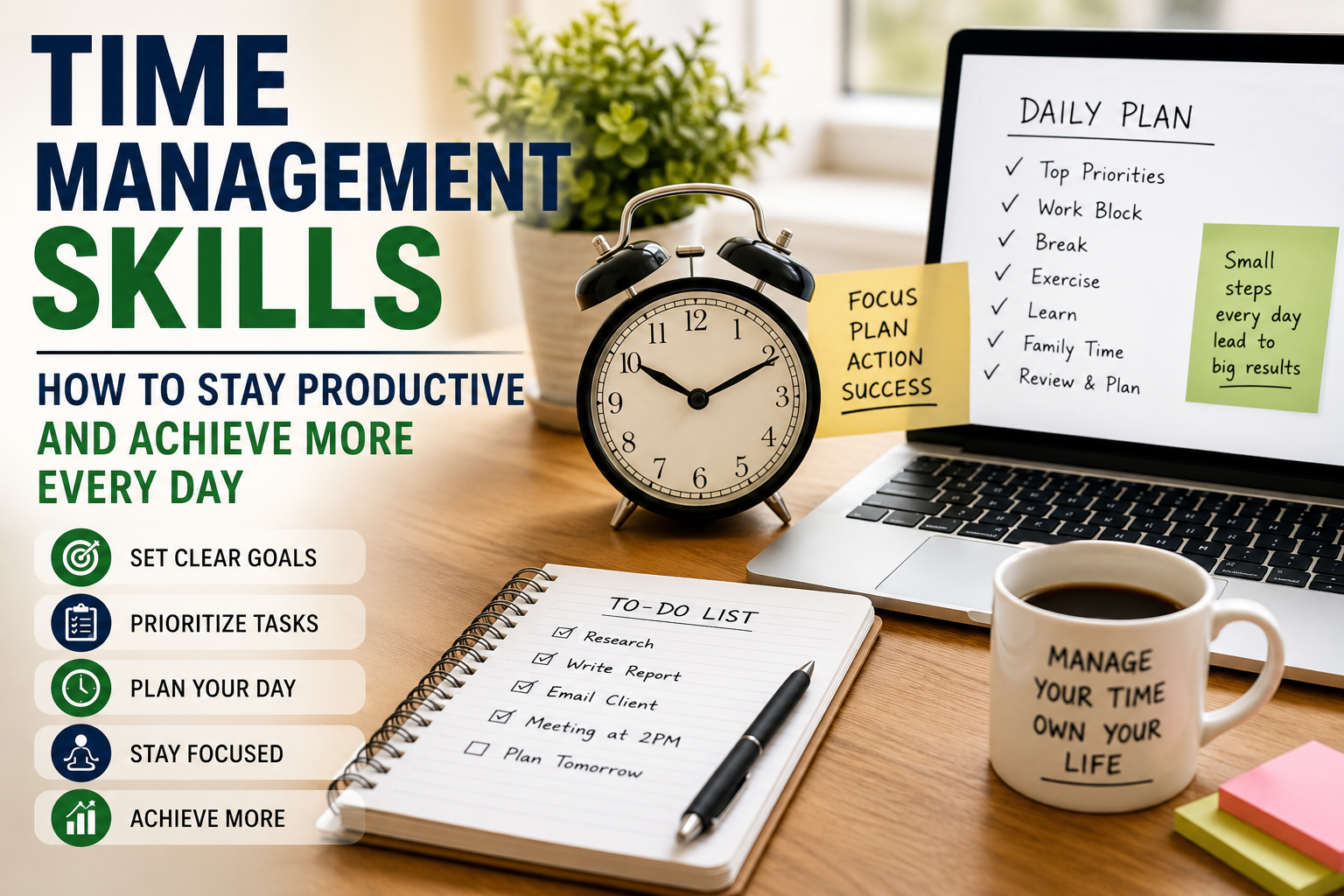
One of the few resources every person has is time, but how they use it can vary greatly. Some people always do their work on time, advance toward their targets, and have time to spend with family and friends or on leisure activities, while others are unable to keep up with the daily grind despite working long hours. The distinction can be between the time available and how it is managed. Earning effective time management skills involves more than just working all the time. Rather, it is a matter of making conscious decisions about what activities to do that will be significant in terms of priorities. Anyone who learns useful time management techniques can decrease unneeded stress, enhance productivity and have a healthier work and life balance. These time management skills can have a profound impact on your short- and long-term performance and success regardless of whether you are a student, entrepreneur, employee, or freelancer.
The Importance of Time Management
Time management has an impact on virtually everything that people do in their daily lives. It focuses on the achievement of important tasks without overwhelming the individual and offers an opportunity to individuals for personal growth, relaxation, and meaningful relationships. If not organised, the deadlines start to pile up, the stress mounts, and productivity decreases. Far more important than the hours worked in a day is how they are spent, and many people think they are more successful when they work longer hours. People who plan their lives on purpose can make better decisions, relieve needless stress, and keep steadfastly working towards their targets. Proper use of time also leads to more confidence, as important things are completed, and with this, you will be motivated to succeed in the future.
Setting Clear Goals Before Time Management
Among the top reasons why people fail in terms of productivity is that they don’t have a clear set of goals. It is impossible to manage time effectively if you don’t have any idea which task is to be given “first priority.” Having a clear agenda can guide and remove confusion throughout the day. Goals should be attainable and have a measurable target along with a larger goal.
Divide long-term goals into short-term goals, which makes them more attainable and gives you frequent chances for celebrating your progress along the way. Rather than just saying “be more productive,” it could be more feasible to say finishing a professional certification within six months, studying an hour a day for five days a week. Goals are more easily accomplished when they are explicit enough to make it easier to make decisions about how to use time effectively. Each activity can be assessed in terms of its contribution to accomplishing the goals.
Prioritization: Focusing on What Is Really Important
Enjoying a task doesn’t mean you have to do it to the same degree. Successful persons know that some things yield much more than others. Prioritization is a tool that can be used to distinguish between those things that are urgent and those that are important and allow the individual to focus on putting their effort into the things that matter most.
Often, what brings in the most trouble is responding to emails, attending unproductive meetings, and completing minor tasks throughout the day while neglecting to work on major projects. Task organization by importance is a measure to avoid this problem. Some productivity gurus say the best way to get a lot more done in the day is to list the three most crucial tasks at the top of your list and get them done first. This way, there is momentum building, and progress is made even if there are unexpected interruptions.
Creating an Effective Daily Schedule
A schedule is a way to make your good intentions work. Rather than wishing for this important work to somehow be taken care of during the day, scheduling provides certain times and blocks of time for essential work to be completed. By planning the next day at night, the subsequent day’s decision-making is avoided, and work can start on the following morning. Digital calendars, paper planners, and productivity applications are all great ways to plan responsibilities.
Time Blocking
Time blocking is especially helpful since it allows for breaks, meetings, exercise, and personal activities, as well as when you’re supposed to be focused on work. The realistic time plan should be flexible enough to allow for unexpected events or issues to not completely disrupt priorities. Having a routine with a structure every day will minimize procrastination and provide more control over how the time is used.
Removing Distractions to Stay Focused
The internet, smartphones, and other technologies have afforded us many opportunities for distraction. Reminders, social media, instant messaging, and constant email notifications break concentration during the day. Studies always indicate that it can take anywhere from a few minutes to several hours to get back on task after an interruption, and frequent distractions are very expensive. The first step to cutting down interruptions is to find out what is stealing your time. Turn off unnecessary notifications, work in a quiet room, establish limits during concentration periods, and reduce social media usage.
Reducing and silencing unnecessary distractions, paying attention to a quiet environment, setting limits during focus periods, and limiting social media can dramatically improve concentration. A few experts also employ web-blocking software or focus apps to block all the distractions on the internet during important times of the day. Reserving continuous stretches of time helps you think more deeply, do better work, and finish tasks quicker.
Solving Common Productivity Issues
Each person faces impediments that hinder productivity. Even the best plans get derailed by procrastination, perfectionism, lack of motivation, and unexpected emergencies. Recognising these issues at an early stage can enable practical solutions to be put in place before they become a major issue. If a task is daunting, it can be helpful to break it up into small steps, as the first step seems more manageable.
If perfectionism is a problem, keep in mind that not everything is a success the first time, then work on making progress in the area, not perfection, when it comes to the final execution. It is easier to stay motivated when people have a clear vision of what they want to accomplish in the long run that is directly linked to the tasks they are completing each day. Flexibility in schedules can also give people the opportunity to adjust when the unexpected occurs while keeping their plans intact.
The Importance of Breaks and Work-Life Balance
Many people think that if they work hard, they will be more productive, but continuous effort should be followed by regular recuperation. Micro breaks promote concentration, prevent mental fatigue, and help make decisions during the day. Physical activity, stretching, drinking water, and screen time breaks all rejuvenate energy. It also helps to avoid work burnout and maintain a balance between work and leisure, which can ultimately impact productivity as time goes on.
Time spent on hobbies, exercise, family, and getting a good night’s sleep is not wasted time; rather, it is an investment in long-term effectiveness. People who consistently take care of their own physical and mental health are more likely to get things done, as they are more focused and motivated.
Establishing Positive and Consistent Time Management Habits
Time management is really a set of daily habits, which is why it is a process and not a set of techniques. Consistent small improvements will yield big results in the long run. Looking back at assignments done can help you determine what is working well and what needs to be tweaked.
Weekly planning sessions help you get ready for the next responsibilities before they need to be done. It fosters time for important things by teaching you how to decline unnecessary commitments. These routines can develop into a habit in weeks and months and can alleviate stress while building confidence and productivity. People benefit most from creating routines that will work even in a hectic time, instead of trying to create the ideal schedules.
Conclusion
One of the best investments people can make in their own and their businesses’ development is to learn how to better manage their time. Establishing clear objectives, prioritizing work that has purpose, making achievable plans and schedules, avoiding distractions, and sticking to healthy habits can help people accomplish more while keeping themselves healthy.
Productivity is not about being busy, but it is about the consistent delivery of value-added goals. Effective time management brings confidence, reduces stress, and provides more opportunities for growth in every facet of life. No one has a perfect system, but with experimentation and modifications over time, each individual can develop a system to support successful results over time. With time management skills everyone can take control of their schedule, make the best use of their time, and get good results out of every day with commitment and regular practice.