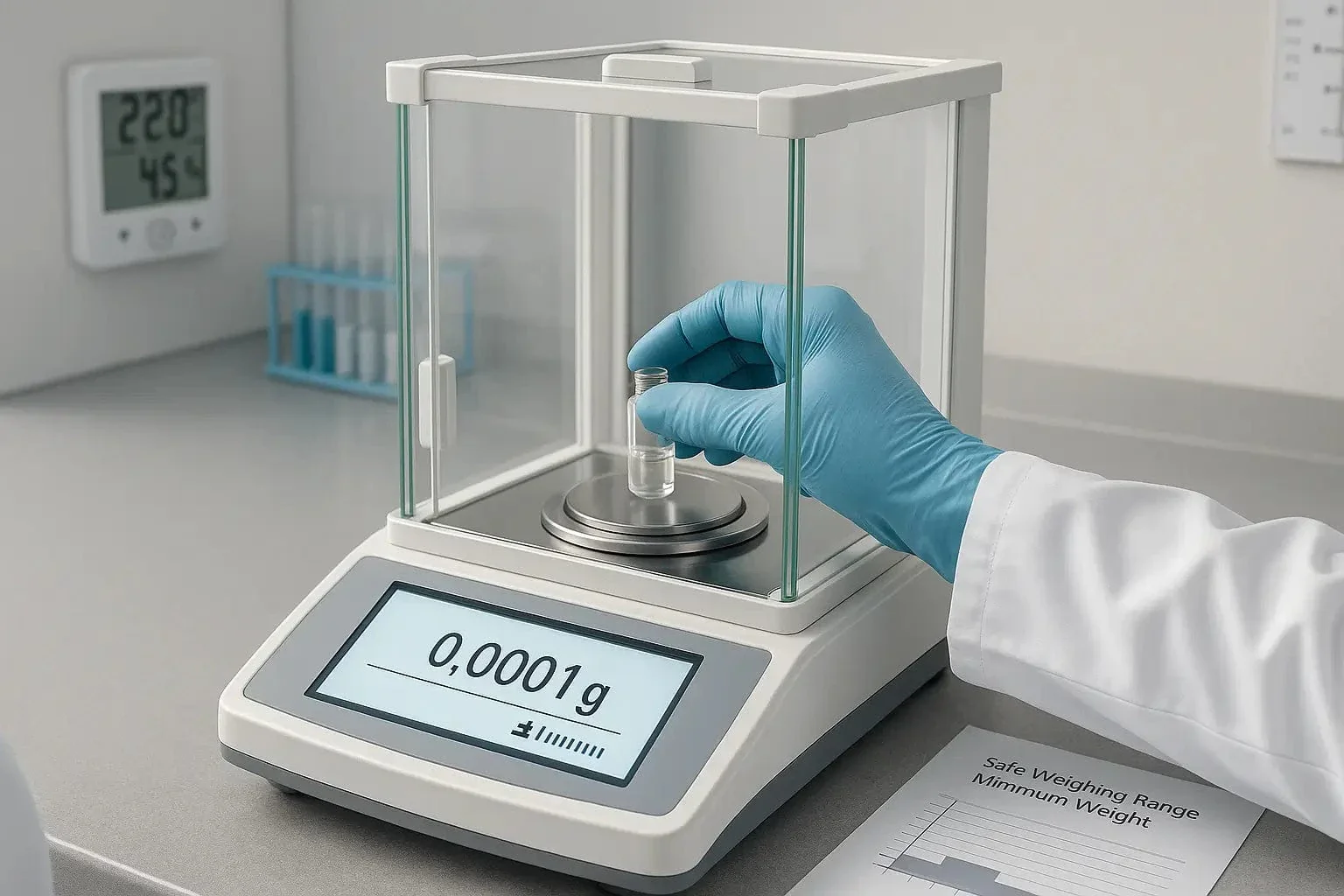
The right analytical balance manufacturer delivers a scale that holds 0.1 milligram readability under real lab conditions, not just under vibration free factory testing. Laboratories buying in 2026 for pharmaceutical, chemical, or academic use need repeatability data measured across full load capacity, along with a warranty that actually covers calibration drift.
Readability and repeatability are not the same thing, and this is where buyers most often get misled. A balance can display readings to 0.1 milligram while still drifting by 0.3 milligram between repeated weighings of the same sample. Ask the manufacturer for repeatability test data, expressed as standard deviation across at least ten repeated measurements.
Serious lab buyers compare multiple analytical balance manufacturers side by side on repeatability and environmental resistance before making a final decision, since these two factors affect day to day results far more than the marketed readability figure.
Environmental Resistance Features
Internal calibration that adjusts automatically for temperature drift is now standard on quality analytical balances in 2026. Also check for a stable, vibration dampened base and a fully enclosed draft shield with smooth sliding glass doors.
- Internal automatic calibration for temperature changes
- Draft shield with three sided sliding glass doors
- Vibration dampened weighing platform
- Repeatability under 0.1 milligram standard deviation
Software and Data Integrity
For regulated environments, confirm the balance supports GLP and GMP compliant data output, including audit trails and password protected settings. This is a requirement, not an optional extra, for most pharmaceutical and food testing labs.
Calibration and Service Contracts
Ask whether the manufacturer offers on site calibration service and how quickly a technician can respond if the balance drifts out of tolerance. Labs operating under accreditation standards should confirm the manufacturer provides traceable calibration certificates with every service visit.
Calibration Costs and Long Term Value
Annual calibration service contracts vary significantly between manufacturers, and this recurring cost can exceed the original purchase price of the balance over a five year period in a regulated lab environment. Request the full calibration service pricing structure before finalizing a purchase decision, not just the equipment quote.
Balances with built in internal calibration reduce how often external calibration service visits are needed, which lowers both cost and downtime. For labs operating under strict accreditation requirements in 2026, this feature alone can justify a higher upfront purchase price through reduced service call frequency.
Also compare warranty length on the load cell itself, since this is the most expensive internal component to replace and the part most likely to fail from accidental overload in a busy lab setting. A longer load cell warranty is often a better indicator of manufacturer confidence than the headline warranty length advertised for the whole unit.
Frequently Asked Questions
Is 0.1 milligram readability necessary for every lab?
No. Many general chemistry applications only need 1 milligram readability, so buying beyond your actual requirement adds unnecessary cost.
Can an analytical balance be used on a standard lab bench?
Yes, but a dedicated anti vibration table improves accuracy significantly compared to a shared bench with foot traffic nearby.