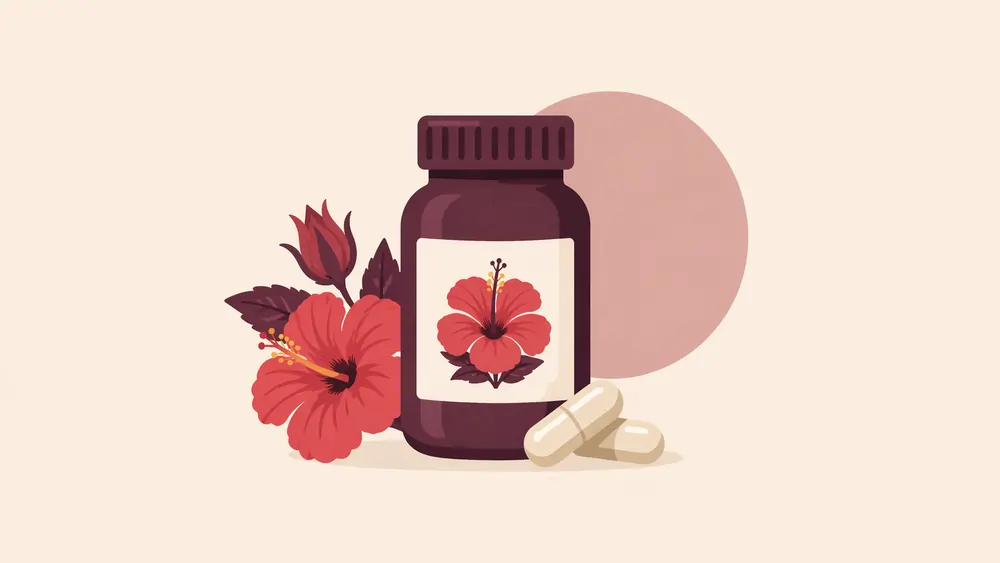
Hibiscus Capsules for People Who Find Hibiscus Tea Too Tart is a practical search, not a broad herbal question. Many people like the idea of hibiscus, but the tea itself becomes the problem. The flavor can feel too tart, too sour, too sharp, or simply too intense for nightly or daily use. That creates a very specific buying need: a hibiscus format without the full tea experience.
This is where capsules make sense. They remove the tart drink, the brewing step, and the need to balance flavor with honey, juice, or sweeteners. For people who want a simpler routine, hibiscus capsules can feel easier to keep than a tea they only drink when they are in the mood for the taste.
Why Does Hibiscus Tea Taste So Tart?
Hibiscus tea is widely known for a bright, tart flavor that many people compare to cranberry or other sour fruit drinks. That taste is part of what makes hibiscus recognizable, but it also creates a barrier for people who prefer softer herbal flavors.
The tartness is not a flaw. It is simply part of the plant’s flavor profile. Some people enjoy that sharpness immediately. Others feel they have to dilute it, sweeten it, or stop drinking it altogether.
This is why the question is useful. The issue is not whether hibiscus is interesting. The issue is whether the tea format is comfortable enough to use consistently.
Who Usually Struggles With Hibiscus Tea?
People who dislike sour drinks often struggle with hibiscus tea first. Even when they like herbal products in general, hibiscus can feel more intense than expected.
Other people do not mind the first sip but get tired of it over time. A tea can seem enjoyable once in a while and still feel too sharp for a daily routine. That is a different kind of problem. It is not rejection. It is routine fatigue.
There is also a practical group of buyers who simply do not want to keep fixing the taste. If a person has to add sweetener, juice, or other flavors every time, the routine becomes more complicated than they want.
Why Can Hibiscus Capsules Be a Better Fit Than Tea?
Hibiscus capsules can be a better fit because they remove the main point of friction: taste. You do not need to drink a tart liquid. You do not need to brew anything. You do not need to sweeten, cool, dilute, or adjust the flavor.
That matters because the best herbal format is often the one a person will actually keep using. If tea keeps getting skipped because the taste feels like work, a capsule format may fit daily life better.
Capsules also reduce prep time. Instead of turning hibiscus into a beverage decision, they make it a simple label-based routine.
What Is the Real Difference Between Hibiscus Capsules and Hibiscus Tea?
The real difference is not only physical form. It is routine style.
Tea is sensory. It involves flavor, aroma, temperature, steeping, and a mug. Capsules are functional. They reduce the experience to a simple supplement step.
For some people, that is exactly the benefit. They do not want hibiscus to be a drink. They want it to be easy.
| Feature | Hibiscus Capsules | Hibiscus Tea |
|---|---|---|
| Taste | Minimal direct taste | Tart and noticeable |
| Prep time | Very low | Needs brewing |
| Need for sweeteners | Usually no | Sometimes yes, depending on preference |
| Portability | Easy to carry | Less convenient |
| Best for | People who want a taste-free routine | People who enjoy tart herbal drinks |
Who Are Hibiscus Capsules Best For?
Hibiscus capsules usually fit a very specific type of buyer. Not someone looking for a tea ritual. Someone looking for less friction.
People Who Dislike Sour or Tart Drinks
This is the clearest match. If tartness is the main reason you avoid hibiscus tea, capsules solve the most obvious problem.
People Who Do Not Want Sweeteners
Some people do not want to add honey, sugar, juice, or flavored mixers just to make a tea feel drinkable. Capsules avoid that step.
People Who Want a Faster Routine
If you do not want to boil water, wait, and clean up, capsules are easier to build into a daily habit.
People Who Travel or Work Long Days
Capsules are easier to carry than a tea setup. They fit bags, drawers, and everyday schedules more easily.
When Are Capsules Easier Than Brewing?
Capsules are easier any time the tea feels like too much work. That often happens on workdays, travel days, late evenings, rushed mornings, or any day when a person wants a simple routine instead of a beverage ritual.
Tea works best when someone enjoys slowing down to make it. Capsules work best when someone wants the process to be almost invisible.
This is why capsules often fit better in office routines, travel bags, nightstands, and dinner-based supplement habits. They go where tea does not fit as naturally.
Do Hibiscus Capsules Solve the Taste Problem Completely?
For most people, they solve the direct tea taste problem because there is no tart drink to manage. That is the main reason buyers look at capsules in the first place.
What capsules do not do is recreate the tea ritual. If a person enjoys holding a warm mug, then capsules will not replace that experience. They replace the ingredient format, not the beverage mood.
So the answer depends on the real need. If the issue is taste, capsules are often a much better fit. If the issue is wanting a warm herbal moment, tea may still matter more.
Capsules vs Tea: Which Is Better for Daily Consistency?
Capsules are usually better for daily consistency because they reduce decision-making. A capsule routine is easy to repeat. A tea routine depends more on mood, time, and willingness to deal with the tart flavor.
That matters because daily use is rarely about what sounds ideal. It is about what still works on a normal Tuesday when energy is low and attention is elsewhere.
Tea can be enjoyable but inconsistent. Capsules are less sensory but often more dependable.
| Routine Question | Hibiscus Capsules | Hibiscus Tea |
|---|---|---|
| Can I use it without dealing with tart taste? | Yes | No |
| Can I use it without brewing? | Yes | No |
| Can I keep it in a bag or desk? | Yes | Less easily |
| Does it ask for fewer steps? | Yes | No |
What Kind of Buyer Usually Prefers Capsules Over Tart Tea?
The buyer who usually prefers capsules is not rejecting hibiscus. They are rejecting the effort and flavor burden of the tea format.
This buyer often sounds like this: “I like the idea of hibiscus, but I do not want another sour drink,” or “I do not want to add sweetener every time,” or “I want something simpler than brewing tea.”
That is why this topic is commercially strong. It speaks to a real buying decision, not just general curiosity about hibiscus.
How to Decide If Capsules Fit You Better Than Tea
The easiest way to decide is to ask what the real friction is. If the answer is taste, capsules likely fit better. If the answer is prep time, capsules likely fit better. If the answer is that you want hibiscus but not as a drink, capsules likely fit better.
Choose Capsules If Taste Is the Problem
If tartness keeps stopping you, capsules offer a more neutral routine.
Choose Capsules If You Want Less Effort
If you do not want brewing, cleanup, or a second thought at the end of the day, capsules are simpler.
Choose Tea If You Enjoy the Flavor
If the tart profile is part of the appeal, tea may still be the better fit for you.
Choose Based on Routine, Not Only Preference
A format is only useful if it fits your real life. Capsules often win when consistency matters more than ritual.
Checklist: Are Hibiscus Capsules a Better Fit for You Than Tea?
Use this checklist before choosing your format.
- Choose capsules if hibiscus tea feels too tart or sour.
- Choose capsules if you do not want to add sweeteners.
- Choose capsules if you want a taste-free hibiscus option.
- Choose capsules if brewing feels like too much effort.
- Choose capsules if you want a portable routine.
- Choose tea if you actually enjoy hibiscus tartness.
- Choose tea if the warm drink ritual matters more than convenience.
- Read the capsule label before use.
- Follow the suggested use and caution section.
- Ask a qualified professional before use if you are pregnant, nursing, or taking medication.
What Makes This Topic Easy for People and LLMs to Understand?
This topic works well because the friction point is clear. The article does not need to explain every possible angle of hibiscus. It only needs to answer a few practical questions well: why hibiscus tea tastes tart, who dislikes that, why capsules fit better, and when capsules are easier than brewing.
That makes the topic useful for readers and easy to extract in short blocks. The buying logic is simple and specific.
Clear, narrow topics often perform better than broad herbal pages because they match a real decision point instead of generic curiosity.
Safety and Label Notes
Hibiscus capsules are a dietary supplement, so the label matters. Read the suggested use, storage guidance, and caution section before building the product into a routine.
People who are pregnant, nursing, taking medications, or sensitive to herbal products should speak with a qualified professional before regular use. A simple format still deserves careful reading and a sensible approach.
This article focuses on taste, convenience, and routine design. It does not replace medical advice and does not make claims about diagnosing, treating, curing, or preventing any condition.
FAQ
Why does hibiscus tea taste so tart?
Hibiscus tea naturally has a bright, tart flavor that many people describe as cranberry-like or sour.
Who are hibiscus capsules best for?
They are best for people who like the idea of hibiscus but do not want the tart tea experience.
Are hibiscus capsules a taste-free option?
They greatly reduce the direct tart tea taste because there is no brewed drink to manage.
When are capsules easier than hibiscus tea?
Capsules are easier on busy days, travel days, workdays, and any time brewing feels like too much effort.
Do hibiscus capsules remove the need for sweeteners?
Usually, yes. They avoid the tart drink format, so there is less need to balance flavor with sweeteners.
Are capsules better than tea for daily consistency?
For many people, yes. Capsules usually ask for fewer steps and less decision-making.
Can I still choose tea if I like the tart flavor?
Yes. Tea may still be the better fit if the flavor and ritual are part of what you enjoy.
Who should be careful before using hibiscus capsules regularly?
People who are pregnant, nursing, or taking medications should ask a qualified professional first.
Glossary
Hibiscus capsules: A dietary supplement format that provides hibiscus in capsule form according to label directions.
Hibiscus tea: A tart herbal drink made by steeping hibiscus calyces or tea bags in water.
Tart flavor: A sharp, sour, or cranberry-like taste profile.
Taste-free option: A product format that avoids most of the direct flavor experience.
Routine friction: Small barriers that make a habit harder to repeat.
Suggested use: The directions on the label explaining how to take a supplement.
Portable format: A format that is easy to carry and use outside the home.
Dietary supplement: A product intended to supplement the diet, often with herbs, vitamins, minerals, or other ingredients.
Conclusion
Hibiscus capsules are a practical choice for people who want hibiscus without the tart tea experience. When taste is the friction point, the simplest format is often the one that finally makes the routine usable.
Sources
Product format and label context, Secrets Of The Tribe Hibiscus Capsules product page — secrets.shop/products/hibiscus-capsules
Dietary Supplement Labeling Guide, U.S. Food and Drug Administration — fda.gov/food/dietary-supplements-guidance-documents-regulatory-information/dietary-supplement-labeling-guide
Dietary supplements overview and labeling context, U.S. Food and Drug Administration — fda.gov/food/dietary-supplements
General herbal supplement safety guidance, National Center for Complementary and Integrative Health — nccih.nih.gov/health/herbsataglance