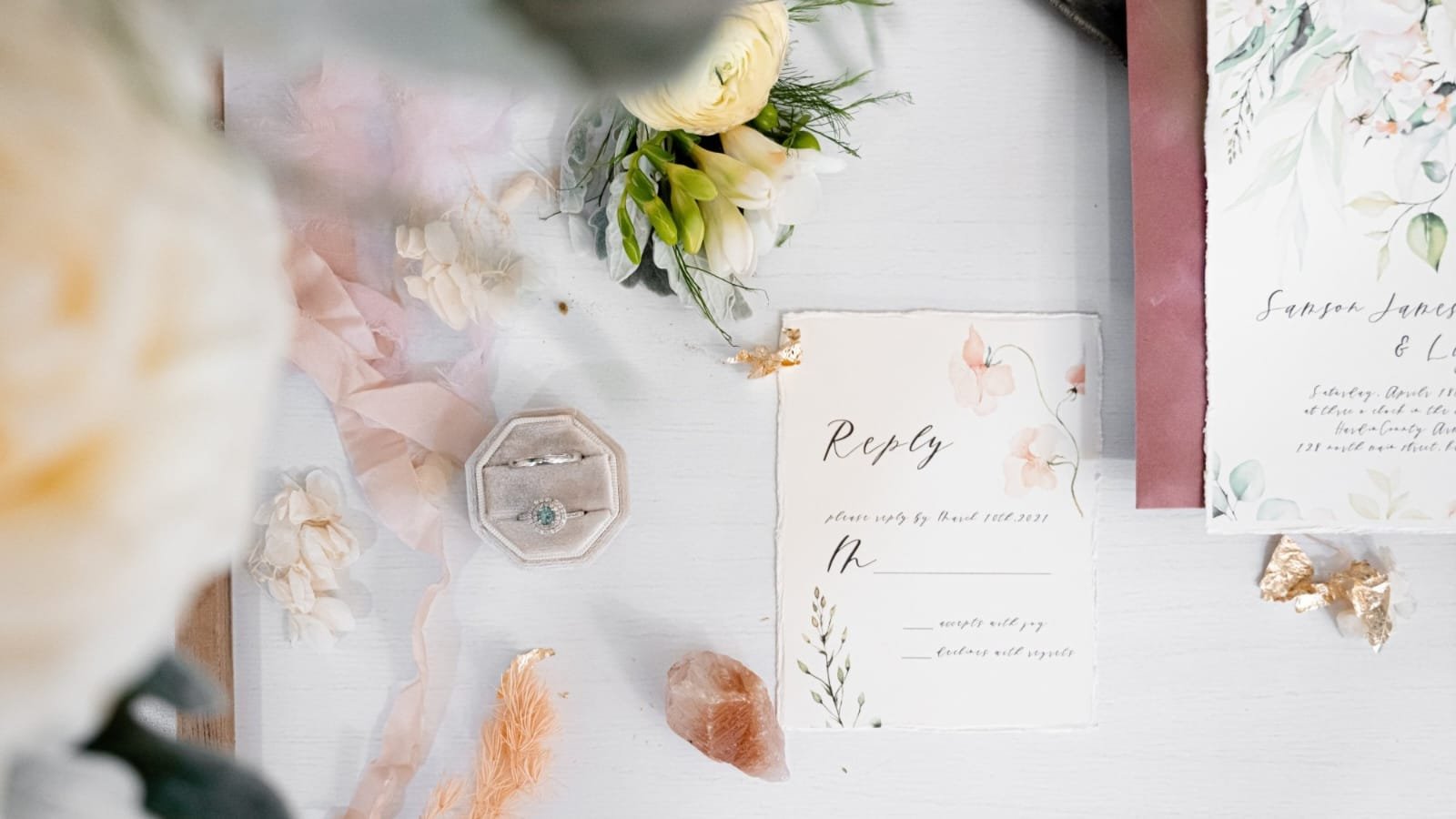
When people talk about wedding stationery, they usually jump straight to color, wording, or floral design. But wedding invitation paper finishes do a lot of the real work. They decide whether the card feels crisp, soft, textured, formal, modern, or a little too shiny for what you had in mind. And yes, that matters more than most couples expect.
If you already sorted out thickness, this companion guide to What Is the Best Paper Weight for Wedding Invitations helps with the next decision. Weight tells you how substantial the card feels. Finish tells you how it looks, how it prints, and what kind of mood it sets when someone picks it up. Same invitation design, different finish, totally different first impression.
I think this is where people get stuck because the paper names sound technical and weirdly interchangeable. Matte, smooth, eggshell, linen, cotton, pearl, soft-touch. None of those names are useful until you know what they actually feel like in your hand.
Paper Weight And Paper Finish Are Not The Same Thing
This is the first thing worth clearing up. Paper weight and paper finish are related, but they are not the same choice.
Paper weight is about thickness and stiffness. Finish is about surface. A heavier card can still have a smooth matte finish. A lighter insert can have linen texture. A cotton sheet can feel soft and refined even when the design is very simple. That is why a paper sample usually tells you more in ten seconds than a product description tells you in two paragraphs.
For a main invitation, most printers steer people toward cover stock rather than text stock. Once you are in that range, the finish becomes one of the biggest factors in how formal or casual the suite feels. In other words, the paper finish is often what people notice first, even if they cannot name it.
The Most Common Wedding Invitation Paper Finishes
Most wedding invitation paper finishes fall into a few practical categories. You do not need to memorize every paper mill name. You just need to understand the lane each finish lives in.
Smooth Matte
Smooth matte is clean, flat, and easy to read. It has no obvious texture, no sparkle, and no glare. If you want a modern suite, a minimalist look, or crisp typography, this is often the safest choice.
It also tends to reproduce artwork and color cleanly because there is no woven or raised texture competing with the design. In my opinion, smooth matte is the default choice for couples who want their layout, wording, and color palette to do the talking.
Eggshell
Eggshell sits close to smooth, but with a softer, slightly more natural surface. It does not scream texture, but it does not feel slick either. It can be a nice middle ground when smooth matte feels a bit too flat and linen feels too traditional.
This is a good choice for classic invitations that still want a clean print result.
Linen
Linen paper has a subtle woven texture that looks a little like fabric. It gives invitations a more traditional, formal, or slightly old-school feel. That can be a great thing if the suite leans romantic, church wedding, estate wedding, or black-tie.
But linen is not always the best fit for every design. Fine details, very small type, or photo-heavy layouts can lose a little sharpness on a textured surface. Not ruin it, just soften it. Sometimes that softness is part of the charm. Sometimes it is just annoying.
Felt Or Soft Textures
Felt-style papers and soft-touch surfaces lean tactile. They make people slow down and actually feel the card, which is kind of the point of print. Some premium soft matte papers even have that velvety, almost petal-soft finish that feels expensive before anyone reads a word.
These finishes work well when you want the invitation to feel understated but still special. They are not flashy. They just feel good.
Cotton
Cotton paper is one of the nicest options when you want a soft, refined, high-end feel. Good cotton stocks are often used for invitations because they work well with classic print methods like letterpress, embossing, engraving, and foil, but they can also be used with digital printing.
Cotton usually suits formal, editorial, and timeless designs. It is less about shine and more about substance. If you want a card that feels elegant without looking busy, cotton is a strong answer.
Pearl Or Shimmer
Pearl and shimmer finishes reflect light. Usually not in a glittery craft-store way, thankfully, but in a smoother, pearlescent way. These finishes can look beautiful for evening weddings, metallic ink accents, celestial themes, winter weddings, or anything that leans a little dramatic.
That said, shimmer is not universally flattering. On the wrong design, it can compete with the artwork instead of supporting it. If your layout is already ornate, I would be careful. If the design is simple and the finish is doing one extra job, it can look great.
How To Match Wedding Invitation Paper Finishes To Your Style
This part is less technical and more honest.
If your wedding style is clean, modern, or minimal, smooth matte or eggshell usually makes the most sense. These finishes let typography, spacing, and color carry the invitation.
If the wedding feels formal, traditional, or romantic, linen or cotton is often a better fit. Those finishes add character without forcing you into heavy embellishments.
If you want the suite to feel soft and luxurious, cotton or soft-touch finishes do that very well.
If you want sparkle, formality, or a little drama, pearl or shimmer can help. Just do not stack every fancy thing on one card and expect it to look refined. Foil plus shimmer plus a busy border plus dark florals can get crowded fast.
Match The Finish To The Print Method
This is where aesthetics meet real life.
Some papers are better suited to certain print methods than others. Cotton papers, for example, are often chosen for letterpress and embossing because they can handle that tactile impression so well. Many premium digital papers are also made to work with modern digital presses, including HP Indigo-compatible stocks. That matters because the prettiest finish in the world is still the wrong choice if it fights the print process.
Textured papers like linen and felt can soften very fine details. Smooth and eggshell papers usually keep type and artwork looking sharper. Pearl finishes can add glow, but they can also slightly change how color is perceived under different light.
So the question is not just, “What looks nicest?” It is also, “What works best for this design and this print method?”
That is why proofs matter. A digital mockup can tell you if your wording is centered. It cannot tell you how a pearl stock catches light at dinner or how a linen sheet softens tiny serif text.
Do Not Forget Envelopes, Mailing, And Handling
This is the unglamorous part, but it saves headaches.
Paper finish affects handling almost as much as it affects looks. A textured paper may feel more formal, but it can also behave differently in assembly. A very soft finish may show handling marks more easily. A shimmer stock may look better under warm lighting than bright office lighting. And once you add liners, wax seals, ribbons, or layered cards, the mailing side starts to matter too.
USPS still wants letter mail to stay flexible, flat, and under a quarter inch thick. It also specifically advises extra care for embellished invitations and recommends hand-canceling or using an outer envelope for pieces with wax seals, strings, or ribbons. So yes, your paper choice can affect postage and mailing strategy, especially once the full suite is assembled.
This is another reason not to choose paper in isolation. The invitation card might be perfect on its own, then become bulky once the whole suite comes together.
The Best Way To Choose Wedding Invitation Paper Finishes
If i had to make this simple, here is the real answer: choose the finish based on feel first, then design compatibility, then mailing practicality.
Start with three questions:
- Do you want the suite to feel clean, textured, soft, or luminous?
- Does your design need a smooth surface for crisp detail, or can it benefit from texture?
- Will the full assembled suite still mail without surprises?
That is the order I would use.
For many couples, smooth matte or eggshell ends up being the easiest win. It is versatile, readable, and hard to regret. Linen and cotton make sense when tactile character is part of the aesthetic. Pearl and shimmer work best when you want light and polish, but not when the design already has too much going on.
And really, that is the whole point. Wedding invitation paper finishes should support the design, not distract from it. The best finish is the one that makes the invitation feel intentional the second someone touches it.
Conclusion
Choosing wedding invitation paper finishes is not about chasing the fanciest option. It is about matching surface, texture, and print style to the kind of invitation you actually want to send.
Weight gives the card structure. Finish gives it personality.
So if the first article helped narrow down thickness, this is the next step. Compare smooth matte, eggshell, linen, cotton, and pearl with your actual design in mind. Get a sample if you can. Hold it in real light. And trust your hand a little, because paper decisions are not just visual. They are physical, and guests notice that right away.