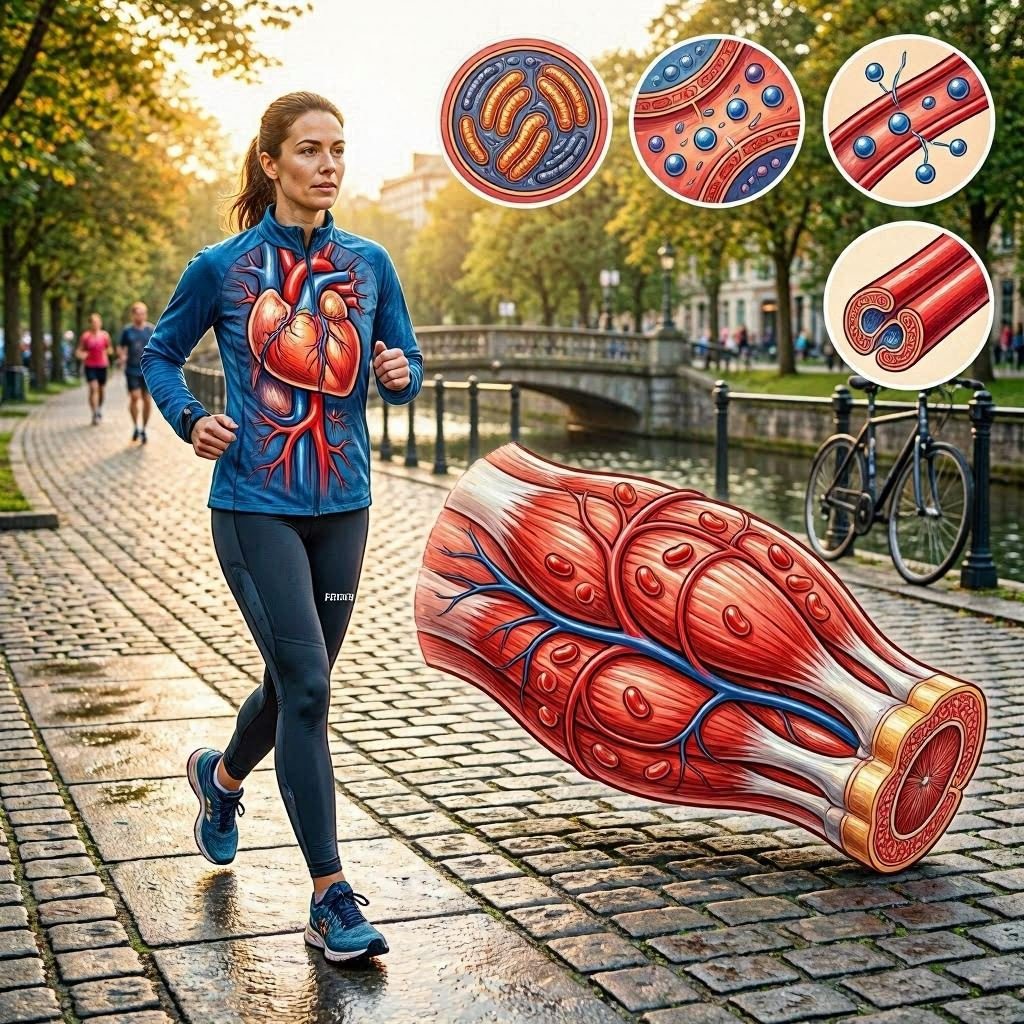
Exercise is a very large component in improving what we know as human health because through it we see great benefit to the performance of the cardiovascular system. Our heart, blood vessels, and lungs have to work as a team during physical activity to get oxygen and nutrients to muscles and at the same time remove waste like carbon dioxide out of the system. Those are elements of the physiological effects of exercise, which also include both short term and long term changes that in turn better the circulation, the endurance and the over function of the whole body. During exercise the body goes into a state of higher heart rate, quicker breathing, and greater blood flow to the active tissues, which in turn gives the muscles what they need to produce the energy for movement. Also over time with regular physical activity we see the heart strengthen, the blood vessels become more flexible and there is an improvement in the whole bodies’ oxygen delivery. That which we see in the body during exercise helps us to understand how a very active lifestyle decreases disease risk, supports long term health, and improves in fact both physical and mental performance.
Understanding the Physiological Effects of Exercise
During and after physical activity the body undergoes physiological changes which may affect many organ systems but the cardiovascular system is the most so because exercise increases the body’s need for oxygen and nutrients.
As soon as a person starts to exercise muscle energy needs go up to support the movement. To that end the heart beats faster and stronger which in turn increases blood flow to the active tissues. Blood vessels which supply the muscles open up to improve circulation at the same time breathing becomes deeper and more rapid to increase oxygen intake. These immediate responses allow the body to quickly adapt to the physical stress of exercise and at the same time maintain performance through the duration of the activity.
The body’s response to exercise which is a testament to the cardiovascular system’s adaptability and organization. With repeated engagement in physical activity this physiological adaptation increases which in turn brings better endurance and overall cardiovascular health.
Increased Heart Rate and Cardiac Output at the time of exercise
During which it is noted that the greatest of the physical changes which take place during exercise is an increase in heart rate. The heart’s response to physical activity is to speed up which in turn pumps more blood through the body. This increase in cardiac output in turn sees to it that muscles get enough oxygen and nutrients to support energy production.
Cardio output which during exercise goes up is a fact. This is in part due to increased heart rate and also greater stroke volume which in turn means more blood is pushed out with each beat. Also the left ventricle of the heart beats stronger which in turn improves efficient delivery of oxygen rich blood to the muscles and organs.
Through time regular exercise increases heart muscle mass and sees also improved pumping action. In trained individuals we see lower at rest heart rates as their hearts are able to pump larger amounts of blood with each beat. This adaptation puts less strain on the cardiovascular system and improves performance during physical activity.
Improved circulation and blood vessel function
During physical activity blood vessels which supply active muscles expand in a process we term vasodilation. As a result there is an increased blood flow to tissues which in turn require more oxygen and nutrients.
Exercise also has far reaching effects on the blood vessel system which go beyond short term changes. We see that consistent physical activity improves artery elasticity and flexibility which in turn causes them to function better they expand and contract more efficiently. Also this plays a role in achieving healthier blood pressure levels and in turn puts less stress on the heart.
Exercise also causes the growth of more capillaries in muscles which in turn improves delivery of oxygen and nutrients. Improved circulation from exercise supports better tissue function, faster recovery, and also improves cardiovascular endurance. These vascular changes are key in that they reduce the risk of heart disease, stroke, and other circulation related disorders.
Enhanced Oxygen Delivery to Muscles
Oxygen is a key element in what exercise does physiologically which in turn is very important; muscles use oxygen for efficient energy production. During physical activity the respiratory and cardiovascular systems team up to increase oxygen delivery throughout the body.
As we see breath rate go up the lungs take in more oxygen which it puts into the blood stream. The heart in turn pumps the oxygen rich blood to the working muscles. In the muscle tissue oxygen is used in cellular respiration to produce ATP which is the energy for contraction and movement.
Regular exercise improves what the body does with respect to taking in and using oxygen. With endurance training muscle cells see an increase in mitochondria which in turn causes muscles to produce energy better. These changes also delay fatigue and improve performance in sustained activity.
Cardiovascular Endurance and Long-Term Adaptations
Cardiovascular fitness is the body’s which is out for extensive periods of activity. Also it is known that through repeat performance and adaptation the body’s response to exercise improves in terms of cardiovascular health.
With a routine of regular exercise the heart does in fact get stronger and also becomes more efficient at pumping blood. Also you may see an increase in blood volume which in turn improves the amount of oxygen which travels through the body. Also muscles improve in their ability to extract oxygen from the blood thus which in turn improves aerobic capacity and endurance.
These improvements in which we see a reduction of effort for day to day activities and an increase in physical stamina. We see that individuals with great cardiovascular health report higher energy levels, better physical performance, and improved recovery post exertion. In the long term we see that exercise improvements play a large role in over all health and quality of life.
Exercise and Blood Pressure Regulation
During the course of exercise the body’s response includes improved blood pressure regulation. At the onset of physical activity blood pressure goes up which is a result of the heart pumping more blood to the active tissues. But also we see that with a regular exercise routine resting blood pressure decreases and there is an improvement in the overall efficiency of the circulatory system.
Physical activity increases blood vessel elasticity and we see reduction in arterial resistance which in turn allows for better blood flow. Also exercise plays a role in weight management, improving insulin response, and in decreasing inflammation which in turn supports better blood pressure levels.
For people with high blood pressure it is reported that regular physical activity greatly reduces cardiac risk in association with healthy life style choices. This we see to also prove that exercise is a natural way to improve circulation and protect heart health.
Disease Prevention and Cardiovascular Protection
Regular physical activity is a very large factor in reducing the chance of getting cardiovascular disease. At a physiologic level exercise is known to protect the heart and blood vessels by improving circulation, cholesterol levels, and metabolism.
Exercise which in turn decreases bad cholesterol and increases good cholesterol that which helps to burn off extra fat in the blood. Also it improves blood sugar levels and reduces the chance of obesity which in turn is a large risk factor for heart disease.
Physical activity also plays a role in mental health by which we see reduction in stress and improvement in mood. We know that chronic stress plays a role in high blood pressure and heart issues which in turn leads to better heart health and overall well being from the stress relieving benefits of exercise.
Exercise, Recovery, and Healthy Lifestyle Habits
Exercise benefits from being integrated into a healthy lifestyle which includes proper nutrition, hydration, sleep, and recovery. These elements play a role in how the body responds to physical activity and in supporting cardiovascular health.
Balanced diets which supply the proper nutrients for energy production and tissue repair, also adequate hydration which in turn maintains blood volume and circulation. Sleep plays a role in the recovery of the cardiovascular system and also supports hormone which in turn affect heart health and metabolism.
Consistency is a key element which also in that it out that regular practice brings about permanent changes in the cardiovascular system. Also even moderate forms of exercise like walking, cycling, swimming, or dancing which you do on a regular basis may improve circulation and support long term health.
Conclusion
Through the physical changes which take place in the body as a result of exercise we see how it improves the cardiovascular system and supports in large part our health. We see that which exercise does is to increase heart rate, improve circulation, enhance the delivery of oxygen, and better function of the blood vessels thus enabling the body to perform physical tasks more efficiently. Also over time with a routine of regular exercise we see improvement in cardiovascular endurance, a drop in blood pressure, a reduction in disease risk, and an enhancement of the body’s ability to get oxygen and nutrients to tissues. These changes we see play a role not only in performance but also in long term health and disease prevention. By looking at how exercise plays out in the cardiovascular system we are made to see the value in living an active life and in the adoption of healthy practices which support heart health and total body function.