Introduction
BlackBau is one option investors can explore when considering real estate investment with blockchain, an emerging approach that combines traditional property investing with blockchain technology and digital asset systems. Traditionally, real estate investments have often required substantial capital, extensive legal documentation, professional assistance, and long-term financial commitments. Blockchain technology is creating new possibilities by allowing eligible real estate assets and ownership interests to be represented digitally through tokens.
Real estate investment with blockchain can potentially make property investing more accessible by enabling investors to purchase fractional interests rather than acquiring an entire property. Through tokenization, a qualifying property or investment interest can be represented by digital tokens recorded on a blockchain network. This approach may also support transparent recordkeeping and, depending on the investment structure and applicable regulations, provide investors with greater flexibility.
Platforms such as BlackBau represent the growing connection between physical real estate and blockchain-based investment systems. Instead of purchasing an entire property, an investor may acquire a digital token representing an economic or legal interest in an eligible real estate asset. The rights associated with each token depend on the specific investment structure, legal framework, and terms of the offering. As a result, blockchain-based real estate investment provides another potential way for investors to participate in the property market while exploring the possibilities of fractional ownership and digital asset technology.
Tokenized Real Estate
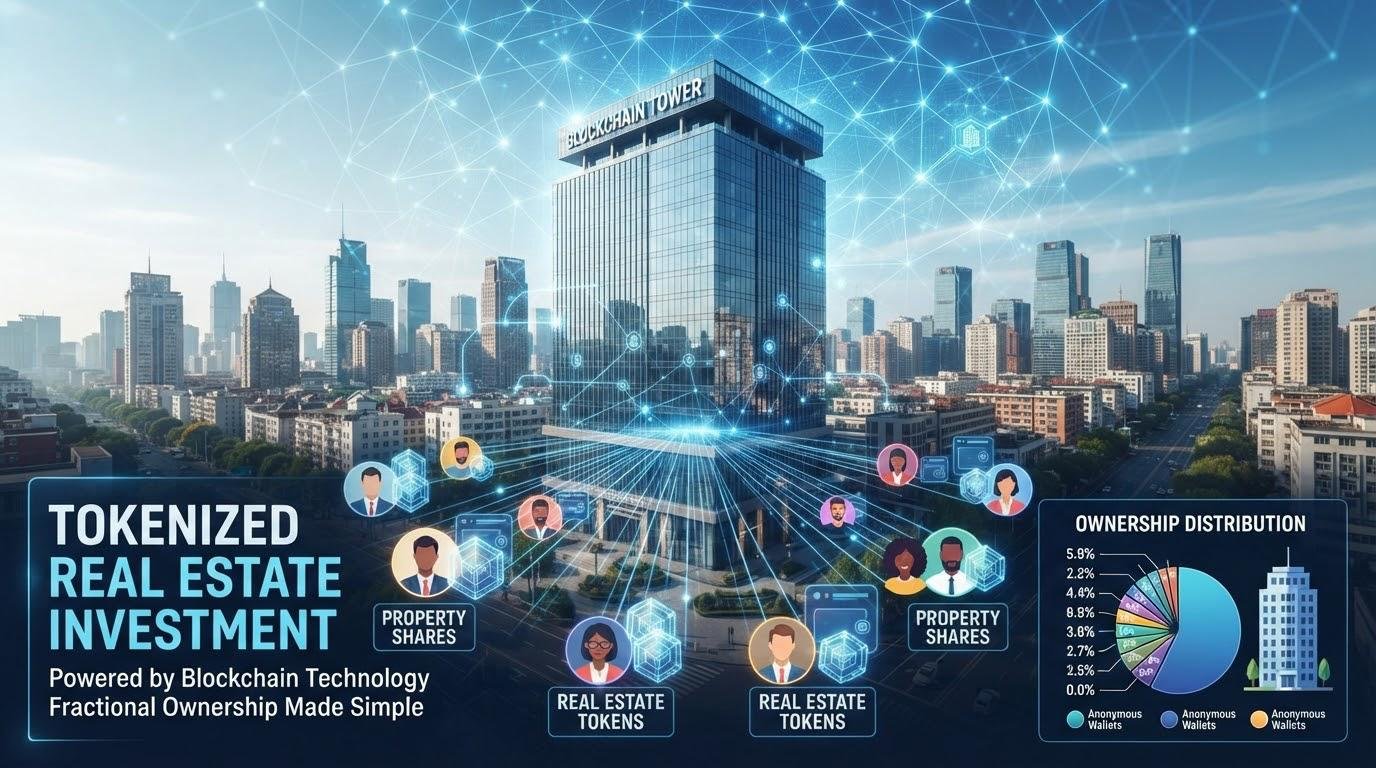
“Tokenized real estate” is the concept of converting real estate ownership units, economic rights, or real estate claims into digital tokens on a blockchain. A “digital object” is not really a thing that exists in the world; it is merely a representation of an object that exists in the world. Rather, a legal construct is developed around the property and blockchain tokens are employed to signify specified interests within the legal construct. For instance, a commercial building may be the subject of a commercial building company or special purpose vehicle, and digital tokens may be interests in the company or special purpose vehicle or in the economic benefits generated by the commercial building. Specific rights of a token are determined by the legal and contractual relationship of the project. This is significant as having a token does not automatically confer direct ownership of the underlying building. Tokenized real estate investment is a blend of traditional property ownership and blockchain technology, where blockchain records can serve as a means to record and manage investment interests in real estate.
How Blockchain Represent Property Interests
Blockchain offers a shared digital record for recording, verifying and tracking transactions based on the rules of the blockchain. This ledger can store data about the tokens and their transactions in a tokenized property scheme. Smart contracts can also have conditions that will trigger certain actions if those conditions are met. For example, a smart contract could facilitate token transfers or provide for certain payments based on rules. Blockchain, on the other hand, does not supplant the legal documents that define the rights to the property. The legal structure of the investor/property owner relationship, as well as that of the issuing company and other stakeholders, will still need to be defined. Successful tokenization depends more than just being able to create digital tokens. It needs a linkage between the blockchain records and the legal rights that can be enforced. In combination, blockchain can offer a clear and transparent digital platform for the tracking of certain facets of property ownership and investment.
Fractional Ownership and Lower Entry Barrier
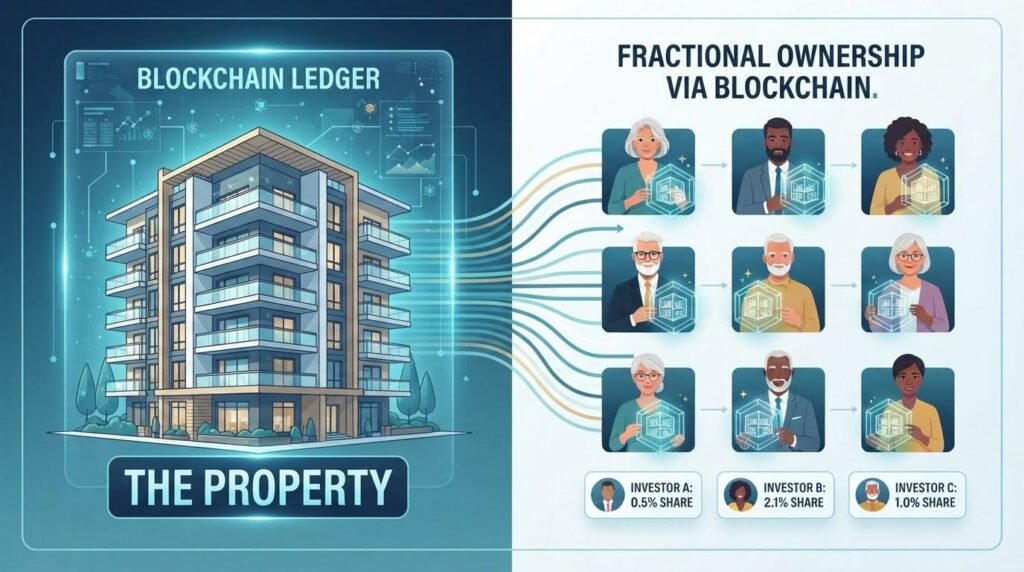
Fractional ownership is one of most talked about benefits of tokenized real estate. Traditional property investments involve buying an entire house, apartment, office building and/or other property. An investment interest can be broken up into numerous fractions which enable a number of investors to be involved in the same underlying investment opportunity. The example mentioned above could be an investment property where one person doesn’t have to invest the whole amount; instead, they could buy many tokens that represent specific interests. Investors can then buy a smaller part of the property instead of the entire value of the property. This may reduce the funding required to join the project, but again, depends on each individual project. Another advantage of fractional ownership is that it can help investors diversify their investment portfolio by investing in multiple properties rather than just one. However, with lower entry requirements the risk of investing in a property does not go away and investors must take their time to consider market conditions, fees, the legal structure, and the property itself in detail before choosing to invest.
Tokenized Real Estate Investment (REI) vs. Traditional Property Investment
The standard real estate market investing process typically encompasses a variety of steps, including property research, negotiations, inspections, legal papers, financing, registration, and hands-on management. Changes of ownership can be lengthy and will involve professional intermediaries, especially when multiple parties are involved. Some of these processes can be enabled by adding a digital dimension via a tokenized real estate investment that can be registered using blockchain infrastructure, so that investment interests and transaction details can be captured. Depending on the legal structure and platform, the processing of token transfers can be made more efficient than the traditional ownership transfer. Investors might also be able to get information regarding their holdings, not simply by paper, but by a digital interface as well. But tokenization does not necessarily mean instant transactions and no intermediaries. Property laws, securities laws, tax law, identity verification and contractual obligations are still applicable to real estate. Due to this, tokenized property investing shouldn’t be seen as the end all be all but rather as a development of the investment process.
The Role of Smart Contracts
The other crucial component of blockchain-based property investments is smart contracts. A smart contract is code that’s built on the blockchain and triggered by specific conditions that are met. Smart contracts can be employed in tokenized real estate to govern the issuance of tokens, record transfers, define specific investor rights, or automate income distribution. If a property has rental income and the investment set up allows the token holders to earn a set amount, a smart contract could enable the calculation and distribution of the income based on pre-programmed rules. In some cases, automation can lessen the amount of manual processing and in some cases, it can make it easier to keep track of certain transactions. Smart contracts, however, do not necessarily make for good contracts just because they run on a blockchain. Even with the best intentions, programming mistakes, poorly written rules, incorrect external information or legal issues can cause issues. To effectively tokenize, there must be solid technology and well-crafted legal and financial agreements.
Online Asset Sales & Investor Entry
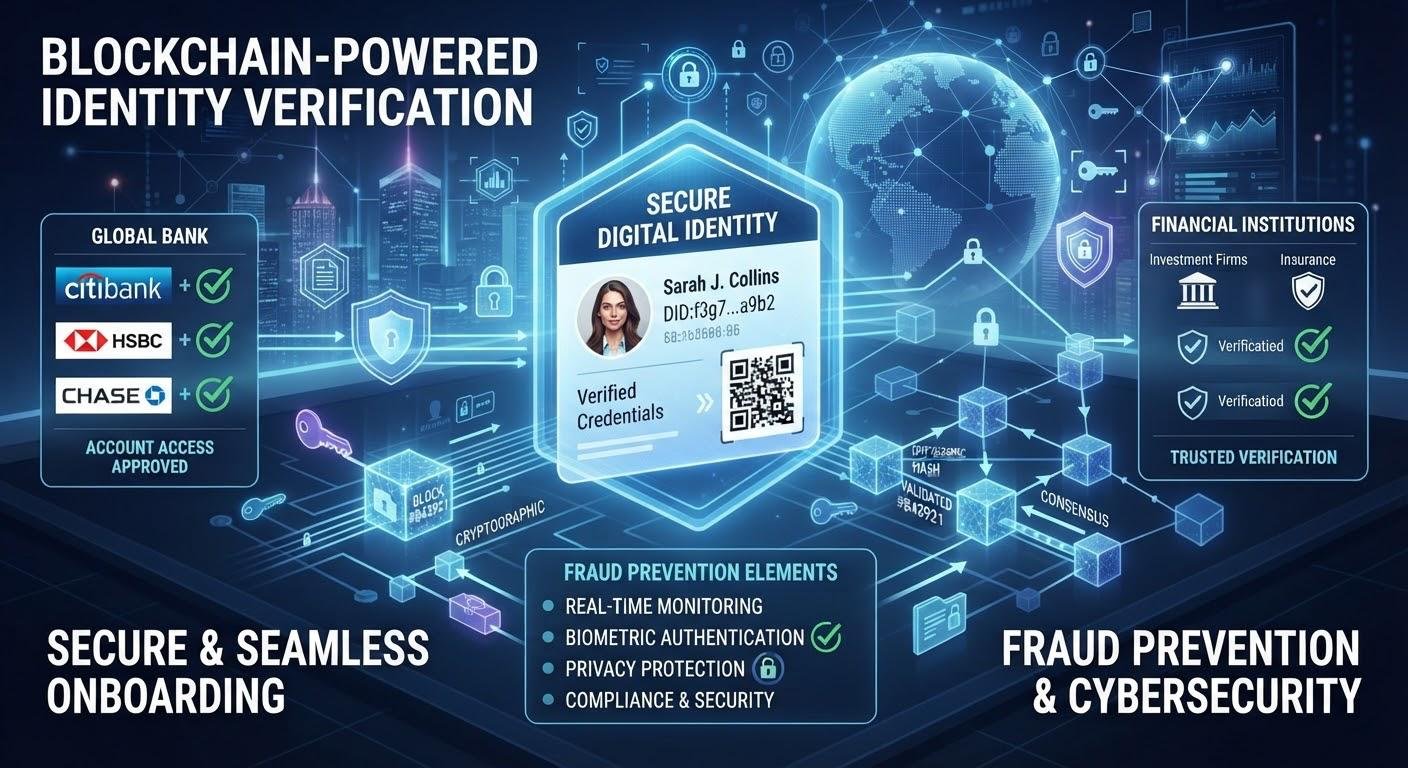
By mashing up typically large investments into interests represented by a token, tokenization can alter the way investors access certain property opportunities. Each project and regulations may allow investors to acquire tokens with a share of an investment vehicle linked to a property. This might help widen the base of those who participate beyond the limited party of investors who can buy the entire property by themselves. Digital ownership records can also facilitate investors’ tracking of their investments, as well as the ability to check transaction logs and view their investment position in an investment framework. But, global or unrestricted access is not universal. Investors may have to meet identity verification, financial suitability, residential and/or tax and/or regulatory conditions. Certain tokens may also be restricted to who can buy or transfer the tokens. Blockchain can thus also enhance the technical reach of real estate investing, while legal and regulatory issues remain to dictate who can and cannot invest in real estate and how.
Transparency and Transaction Records
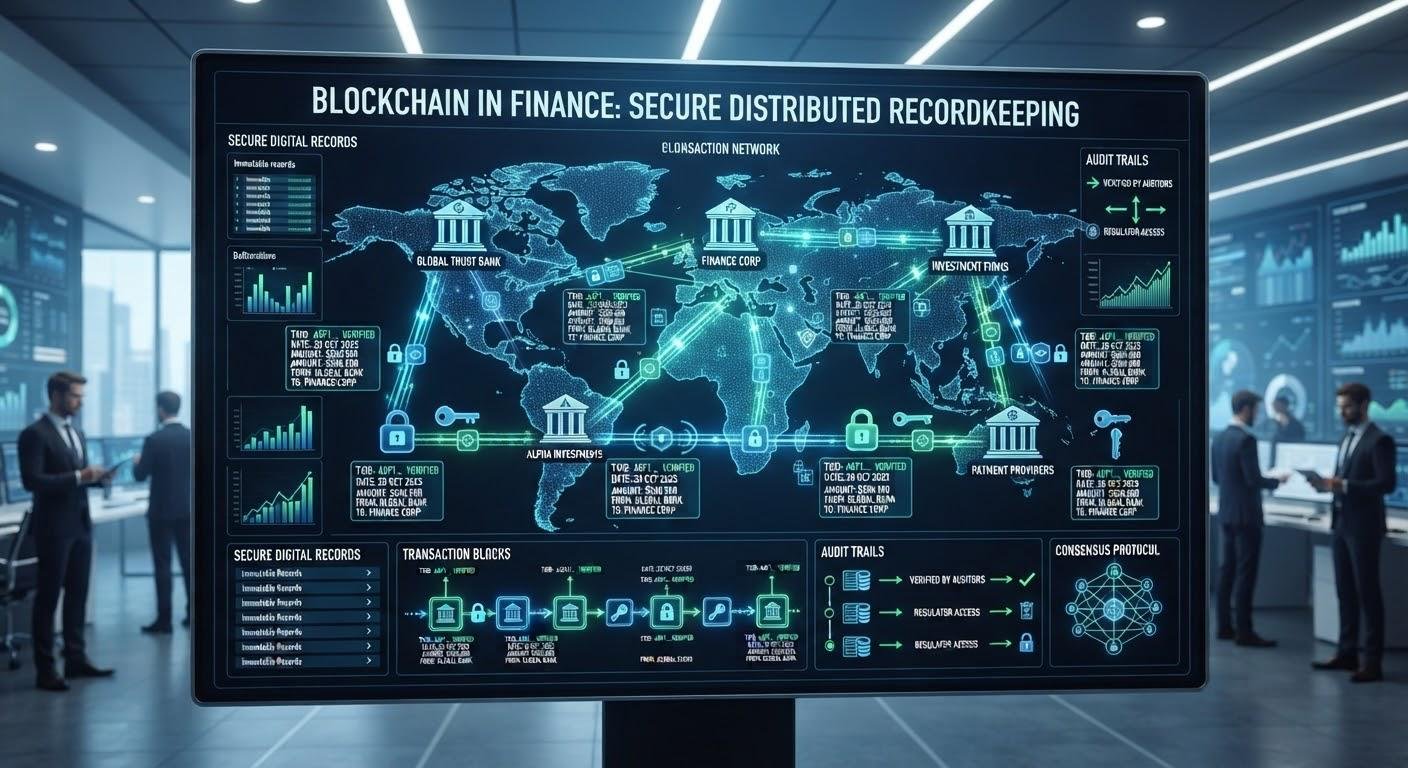
Another possible benefit of blockchain property investment is enhanced transparency of records. When dealing with a traditional property transaction, several documents can be held by multiple parties from the owner, to the lawyer, financial institutions, registries, property managers, and more. Blockchain can offer a common history of selected transactions, permitting to trace token movements and create a uniform account of activity. This can be helpful for auditing and monitoring purposes as it means that pieces of information may not be easily modified if it is known that participants have access to records that can be modified. However, transparency needs to be well crafted. The information entered into a blockchain may be inaccurate, and such information cannot be easily changed on the blockchain, posing privacy issues if sensitive information is published on the blockchain. The implementation of a system should be accompanied by the right controls to ensure data protection, identification, verification of records and access control rights. While blockchain can make sure that every transaction is recorded, it does not ensure that all the information that is linked to those transactions is accurate.
Benefits for Property Owners and Investors.
There are a number of possible benefits for various players in the property market associated with tokenization. This could open up a larger and more diverse pool of investors for property owners and/or property owners could access to investment structures that would have taken much more capital. Digital records may help facilitate more efficient administration, and programmed systems can help to automate ownership records and distributions. Tokenization could also enable more flexible investment models – and if secondary transfer is appropriate and legally allowed, and supported by a proper marketplace – this may be the case. Fractional interests may make diversification simpler for investors, as it enables them to invest in smaller chunks of multiple properties or property types. But, these benefits are contingent on the quality of the underlying project and its legal framework. By itself, tokenization does not ensure property values or profitability or reduce costs. There are still risks for investors that include vacancies, maintenance costs, interest rates, property values, management choices, fraud and overall economic conditions.
The Potential Risks and Limitations Associated with Tokenized Real Estate
Although there are benefits to tokenized real estate, there are many drawbacks. One of the most significant is the uncertainty surrounding the regulation of one token over another and the impact of the rights attached to one token and the jurisdiction in which the investment is offered. Projects can be complex because of the compliance information that includes securities, property ownership, taxation, anti-money laundering procedures, and investor protection. In addition, technology-based risks are introduced such as cyberattacks, breaches of private keys, vulnerabilities of smart contracts, failures of platforms and human error. There are also concerns about liquidity, while tokenization can enable the transfer of an investment more easily, there is a possibility that there are not enough buyers who would be interested in buying the investment. Investors might then end up with an asset that they can’t sell off fast enough at a price that is agreeable. There is also the possibility that the legal rights that are embodied in the token are poorly defined or not enforced. However, even with blockchain technology, it’s crucial to conduct thorough due diligence since the underlying investment dangers in real estate investing remain.
Privacy, Security and Regulation
There are significant privacy and data security issues with blockchain and property. Personal identities, financial information, ownership documents, transaction histories, and other sensitive documents may be involved with real estate investments. Large amounts of information being directly placed on a blockchain may result in a permanent exposure, which may clash with privacy expectations or legal requirements. A more responsible approach would be keeping sensitive data in a secure system and, instead of keeping the proof, for example, a reference or transaction information, keeping it in blockchain. Security is also paramount as digital tokens may have significant value for attackers. Some risks can be mitigated by implementing strong identity verification, secure custody, protecting private keys, conducting smart contract audits, and having well-designed recovery mechanisms. Regulation is also at the core. Governments and financial authorities set rules for the issuance, marketing, transfer and taxation of investment products. In the future, as property markets become tokenized, regulatory clarity will be required to provide more confidence to the investors and businesses.
The Future of Blockchain and Property Ownership
Whether or not real estate tokenization can improve without being unnecessarily complicated when it comes to legal and operational aspects will likely be the deciding factor for the future of the tokenized real estate industry. Blockchain provides valuable assets in the form of tools for the representation of digital interests, for the maintenance of a history of the transactions, for the automation of some of the processes and for the coordination of information among several actors. Ownership, however, is tightly bound up with national laws, land registers, contracts, financial laws and physical property. If blockchain technology is going to be widely adopted, it should be able to work with these existing systems, and not in isolation from them. More standardized tokens might make them more user friendly and, possibly, increase the likelihood of interoperability between platforms. Better regulation could also bring more clarity to the requirements for issuers, investors, custodians and marketplaces. As the technology evolves, the most effective models could just be the ones that leverage blockchain in a targeted manner to enhance particular processes – making them more efficient, transparent and accessible.
Conclusion
In essence, tokenized real estate marks a significant advancement of blockchain technology in the field of real estate investments. Tokenization can enable investors to gain opportunities for fractional participation, programmable transactions, digital recordkeeping, and even greater access by converting defined ownership interests or economic rights into digital tokens. Yet at the same time it is crucial to the understanding that a token is not necessarily equal to an actual ownership of a physical property. The rights that investors have depend on the legal framework for the token, and the regulation defines how investors are able to offer and transfer the token. While blockchain can enhance various real estate investment areas, it cannot eliminate market risk, property risk, regulatory requirements, or the requirement for due diligence. For those who are new to the concept, think of tokenized property as a hybrid model of traditional property investment, legal frameworks, and blockchain digital infrastructure, rather than a replacement for property investment.