Introduction
In financial institutions, a tremendous amount of information is created and shared on a daily basis. Banks will keep a record of deposits, withdrawals, loans, interest payments, account balances and transfers, and investment firms will keep a record of securities ownership, trades, portfolio activity and corporate actions. Payment providers also maintain payment histories as well, which need to be cross-checked with the payment history maintained by banks and other payment intermediaries. In many traditional systems, these records are kept in a different manner, which can result in the need for the organization to compare databases and reconcile differences for a transaction to be completed. In contrast, blockchain provides a new way for the authorized parties to share a “shared” record of transactions. This together with a cryptographic verification can help participants verify that the information recorded has not been improperly altered and provides better bases for financial auditability.
Implications of Financial Records using Blockchain Technology
Blockchain is a form of distributed ledger technology (DLT), which allows transactions to be recorded on multiple computers and not solely by a single central computer. The technology doesn’t have to be applied in such a way that every piece of customer data is stored on a public blockchain in financial data bookkeeping. Permissioned blockchain networks that allow for access and participation to be controlled can be used by banks, investment firms, payment companies and regulators instead. Network rules determine whether or not a network transaction is valid before the record is added to the shared ledger when an authorized network transaction is submitted. When accepted it gets added to an historical record of the transaction that the participating organizations can reference. This common format can help prevent each institution from having multiple records of the same financial event, and can help facilitate a more uniform record keeping system for operational and audit uses.
How Distributed Records Enhance Transparency
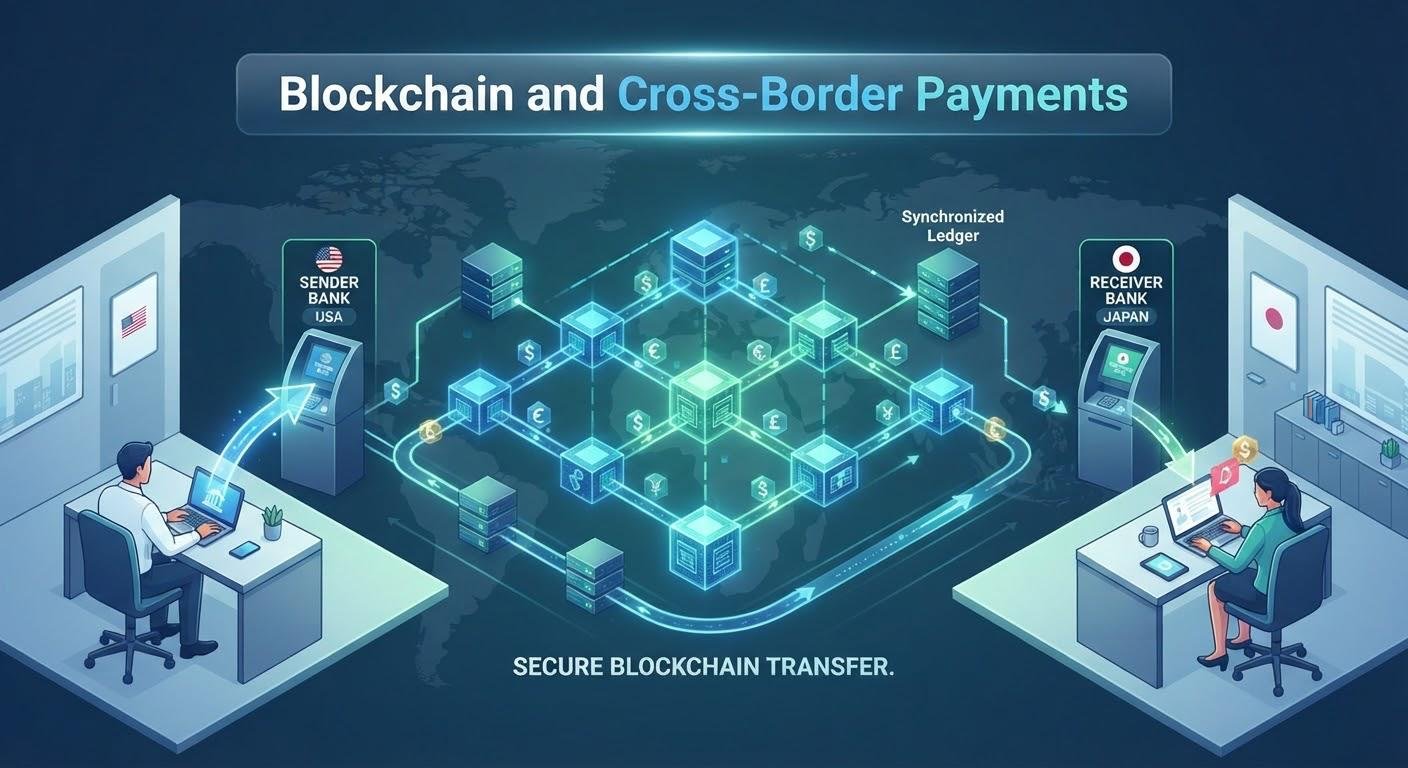
One of the best features of blockchain-based records is that it establishes a common source of records of transactions. In typical financial infrastructure, that same event can get logged in various places: Bank, clearing house, payment processor, custodian, investment firm. All participants may employ their own database, timestamps, identifiers and recon procedures. Approved participants can have access to see the same agreed upon sequence of records based on their permissions, using a distributed ledger. Not all financial transactions are necessarily open to the public as a result of this. Rather, transparency can be planned for the institutions which require access to specific information. Appropriate visibility of relevant records would also be provided to auditors, compliance teams, counterparties and regulators, facilitating the ability to trace transactions and understand the flow of information in the financial system without disclosing irrelevant customer information.
Cryptographic Verification and Record Integrity
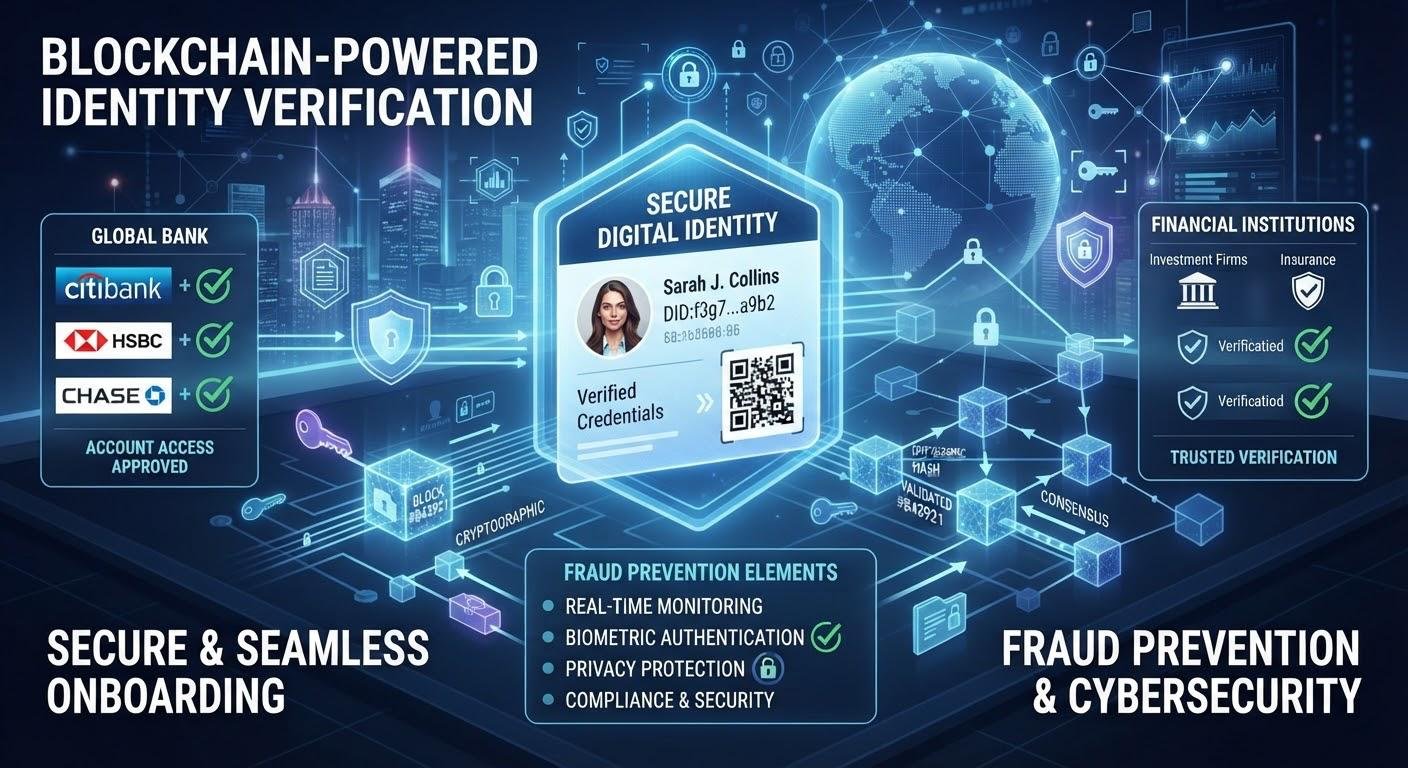
One of the key components of blockchain networks’ capability to secure the integrity of the information they record is cryptography. Digital signatures can be used to prove that a transaction was permitted by the appropriate participant and cryptographic hashes can be used to determine if there’s been any tampering with stored data. These mechanisms don’t ensure blockchain records are always correct either. If the piece of software involved becomes faulty, incorrect data can be accessed by an authorized user and a fraudulent transaction can be entered. Once the information is recorded in valid form, however, cryptographic controls will make it more difficult to hide unauthorized changes in the information. The difference is significant to financial organizations as they depend on legitimate recordkeeping, which isn’t just about thwarting tampering, yet additionally about guaranteeing that transactions can just be created and endorsed by those given legitimate authorization.
Reducing Reconciliation Problems
Reconciliation is one of the most important processes carried out in finance as it is often necessary for an organization to reconcile their records with those of other parties. A bank might compare payments details with another bank, an investment manager might compare a trade with a broker and a custodian might compare securities positions with an asset manager. These variations may occur due to the differences in the timing of the transactions, formatting, entry errors, transactions being entered twice, or transaction reference numbers. Some of these issues could be mitigated with the use of a shared blockchain record that enables the participating institutions to operate on the same set of transactions. Organizations would have a common point of reference without having to exchange files over and over and compare different databases. While this would not stop reconciliation from happening completely as with off-chain systems and external events, it could help minimize duplication and allow teams to prioritize an in-depth investigation of real exceptions.
Supporting Auditability and Traceability
Financial records should be auditable this means that the organizations should be able to show how the transactions were developed, approved, processed and reported. This can be achieved using blockchain which will keep a log of approved transactions, and the corresponding digital signatures or identifiers. An auditor auditing a transaction might be able to follow the transactions through relevant stages, instead of looking at the separate records maintained in different departments or companies. This can help streamline evidence collection and aid organizations in uncovering any unexpected variations or missing parts in a transaction trail. Smart contracts and automation can also document the implementation of business rules that are pre-set, providing further evidence on the time that certain conditions were satisfied. However, blockchain should be considered an audit-enabling tool, not an audit substitute, internal control substitute, external audit substitute or regulatory supervisory tool.

Applications across Financial Organizations
Importance of the use of Blockchain record keeping may differ from one financial institution to another. Permissioned ledgers could be employed for coordinating payment records, loan information, collateral information, or interbank transactions to support banks. Records can be shared between investment firms to provide a history of securities ownership, trade information, fund activity information, and some corporate action information. Payment providers could keep up to date records of transactions between the two participating institutions, which could enhance the ability to track payments. A variety of other use cases where multiple players require access to uniform records, such as insurance companies, pension administrators, custodians and financial market infrastructures, may also be considered. Most useful use cases will probably be those that involve multiple parties who are currently sharing information and have to dedicate a lot of resources to reconciliation. However, when any single trustworthy organization is already able to run an easy database effectively, there doesn’t seem to be any real worth in sharing the document through blockchain.
The Privacy and Confidentiality Issues
Financial information is very sensitive, therefore, privacy is a critical factor to consider when implementing blockchain. Several organizations having a replicated ledger raise questions regarding who may access the information on the transactions, for how long it will remain accessible, and whether it can be deleted when legal and/or business requirements dictate. Confidential financial transactions can be particularly challenging for public blockchains, as they can be accessible to a wide range of people. Networks with permission also need to be carefully architected to have stronger access controls. Organizations can avoid storing sensitive customer data in the conventional databases and only store proofs, references or limited transactions data on the blockchain. While all of these measures help to minimize exposure, the use of encryption, role-based permissions, privacy-enhancing technologies, and robust identity management can further limit exposure, but they will not cure the need for good data governance and legal compliance.
Data Management and the Problem of Incorrect Information
Once accepted, the record’s integrity can be protected through blockchain, but it won’t automatically be able to confirm if the initial data was accurate. This can be referred to as data integrity vs data quality. The blockchain can very reliably store incorrect data if, for instance, an employee enters an incorrect account number in a system used to process transactions and the transaction is correctly validated. Financial institutions must, therefore, have robust data entry, identity verification, authorization, data corrections and exception management processes. They also require secure communication between blockchain networks and the outside, where there is a need to exchange data like exchange rates, identities of customers, prices in the market or legal documents. Governance needs to establish an authoritative source, who can provide information, the process for correcting errors and how to resolve any disagreements without compromising the overall trustworthiness of the record.
Governance, Scalability and Interoperability
Clarity is essential for a blockchain network for financial record-keeping, as there are more than just technical standards and permissions that must be agreed upon by the participating institutions, there are rules for validating the transactions, what entities have the authority to make decisions, and a mechanism for settling disputes. Solving the question of who operates network nodes, who can join, who can change protocols, and who is responsible in the event of a system failure is only possible with technology solutions. A concern too is scalability. A financial institution is running a high volume of transactions and needs to be confirmed quickly, highly available, cost predictable and a fit with the current infrastructure. A successful pilot use will be at the local/regional level and might not be successful at the national/international level. Interoperability is also essential as these banks and financial institutions are already reliant on payment networks, core banking systems, securities systems, identity services and regulatory reporting tools. Standards are thus required in order to facilitate blockchain systems to exchange information with existing technologies for successful implementations.
Considerations on the Regulatory and Compliance Aspects
Financial record-keeping is subject to laws and regulations relating to aspects of customer protection, anti-money laundering, data privacy, accounting, securities markets and record retention. Blockchain systems need to be compliant with these requirements, not that technology immutability supersedes the legal requirements. While maintaining the confidentiality of customer information, regulators might require the right information to be made available. Organizations will also need to establish how the blockchain records will fit with the need to rectify misinformation, keep records, prove the provenance of transactions, and comply with legal orders. The complexity of cross-border systems can be even more complex due to variations in data storage, privacy, financial reporting and digital asset policies across different jurisdictions. Having compliance professionals, legal counsel, auditors, cyber security experts, and operational stakeholders at the table from the early stages on the project is therefore crucial, and should not be a last minute step, since blockchain projects are subject to regulation.
Conclusion
Blockchain can offer a new way for financial organizations to store and ensure that multiple parties have access to the same set of records, especially when multiple parties must depend on the same set of transactional information. Distributed ledgers can help offer visibility, cryptographic technologies can help add integrity to the records, and shared access can help cut down some of the reconciliation tasks that are wrought by disjointed databases. Meanwhile, blockchain is not the best solution for all financial record-keeping purposes. Before a network can be of any benefit, it needs to meet a host of requirements, including privacy, data quality, governance, scalability, interoperability, cybersecurity and regulatory compliance. The best applications will probably be where blockchain resolves a particular issue of coordination and not because it is technologically appealing. If managed properly, and with the right controls in place, blockchain ledgers can be a valuable addition to the financial system, providing more uniformity of information, better audit trails and greater efficiency of collaboration between financial institutions.
Get more well researched information about Blockchain for Financial Recordkeeping here.