Firing up a heavy, fuel-guzzling pickup truck just to move three 50-lb bags of soil or a week’s worth of chicken feed across a five-acre property is a familiar homestead headache. The truck is overkill for the distance, expensive to run for short hops, loud enough to spook livestock, and clumsy to maneuver around coops, raised beds, and narrow gates that were never designed with a full-size vehicle in mind.
A growing number of small-scale growers and hobby farmers are solving this with a compact three-wheel electric workhorse — one that offers truck-like payload capacity, a tight turning radius, and zero fuel costs for routine hauling. This piece looks at how heavy-duty passenger electric tricycles are stepping in as quiet, highly maneuverable micro-pickups for everyday farm and garden labor, and what specifications actually matter when shopping for one.
Dual-Role Utility: Farm Hand Transport & Cargo Hauling
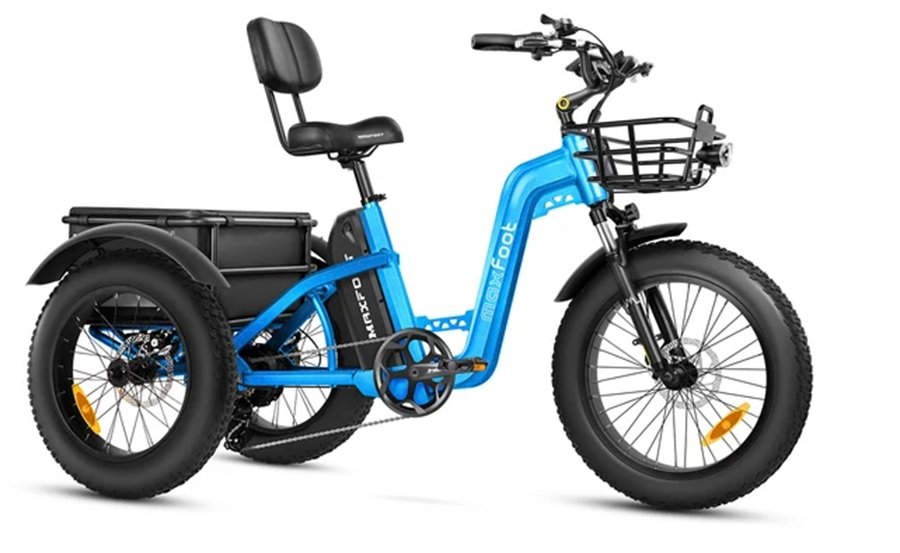
The appeal of an electric tricycle with a passenger seat for homestead work is that it does two jobs with one vehicle, on the same trip if needed. A wide rear platform and bench seat can carry a second set of hands out to a work site in the morning, then switch to hauling bulk feed sacks, fencing wire, or a full tool tote in the afternoon — no separate golf cart or ATV required for each task.
A few design details make this dual role practical rather than theoretical:
- Low step-through frame access — Climbing on and off a trike dozens of times a day during chores is far less taxing on hips and knees than swinging a leg over a traditional bicycle frame, especially when already carrying tools or supplies in both hands.
- Wide, stable rear platform — Rated to support a passenger with a backrest and armrests, or an equivalent load of tools and materials when no one’s riding along, giving the vehicle genuine flexibility between passenger and cargo duty.
- Fat tire footprint — At 20″ x 4.0″ up front and 24″ x 4.0″ at the rear, the wider contact patch spreads weight over more surface area than a narrow bicycle tire, which helps protect garden turf and damp soil from the deep ruts a truck or ATV would leave behind after repeated passes.
- Compact turning radius — Three wheels and a shorter wheelbase than a truck make it far easier to thread between raised beds, fence lines, and coop doors without a three-point turn every time.
For anyone comparing options, models like the MaxFoot MF-33 electric tricycle illustrate this dual-purpose approach well — a 2 seater electric tricycle for adults built with cargo capacity in mind rather than just commuting comfort, which is a meaningfully different design brief than most consumer e-bikes.
High-Torque Drivetrain for Agricultural Loads

Hauling real weight on uneven farm ground is where most consumer e-bikes fall apart — literally. This is the category where drivetrain engineering matters far more than headline top speed.
Motor and torque: A 750W rear-hub motor with a 1400W peak output and 85Nm of torque provides the low-end pulling power needed to get a loaded platform moving from a dead stop on grass, gravel, or a muddy pasture trail, rather than the high-rpm, low-torque delivery better suited to flat pavement commuting. That torque figure matters more than wattage alone for anyone regularly starting from a standstill with a full load.
Differential axle: A rear differential system allows the two rear wheels to rotate at different speeds through a turn, which reduces tire scrubbing and drivetrain strain when the trike is fully loaded and cornering around a barn, greenhouse, or garden bed — a detail borrowed more from utility vehicles and pickup trucks than from typical e-bikes, and one that’s easy to overlook when comparing spec sheets.
Frame construction: A dual-alloy build — a 6061 aluminum-alloy front frame paired with a 7A19 aluminum-alloy rear frame — is engineered to resist twisting under heavy, off-center loads, such as a single side of the rear rack loaded with tools while the other carries feed bags. Frame flex under asymmetric load is a common failure point on cheaper cargo bikes, so this pairing is worth checking on any model under consideration.
Gearing and control: A 7-speed drivetrain combined with a half-twist throttle and a 5-level pedal-assist system gives riders the flexibility to either pedal-assist up a grade or rely purely on throttle when hands are full or ground is too uneven to pedal safely.
Together, these specs are why heavy-duty models marketed as an electric tricycle for adults with a passenger seat and rated for a 500 lbs total payload are being certified for daily work cycles that go well beyond a casual neighborhood ride — hauling actual farm supplies, day after day, not just occasional light cargo.
Brake Safety & Incline Loading on the Farm

Weight capacity is only useful if the vehicle can also stop and hold its position safely, particularly on the sloped, uneven ground common to rural properties.
- Handlebar parking lock — Engaging a parking brake mechanism holds the trike steady while loading heavy grain bags on a sloped farmyard, preventing rollback during the loading process itself rather than relying on a rider’s grip strength alone.
- Dual rear disc brake system — Mechanical disc brakes on both rear wheels provide consistent stopping power when descending a gravel driveway with a full load of livestock supplies, which is a meaningfully different demand than braking a lightly loaded commuter bike on flat pavement.
- Integrated lighting — A headlight, brake light, and turn signal setup adds a layer of visibility for early-morning or dusk chore runs along shared farm roads or unlit driveways.
- Battery placement and certification — A UL-2271 certified battery pack, built around Samsung 21700 cells, is a relevant safety detail for anyone storing a vehicle in a barn or shed near hay, feed, or other flammable materials.
For anyone doing regular hauling on inclines, these braking, locking, and battery-safety features deserve at least as much scrutiny as the motor spec sheet.
Conclusion
For homesteaders and small-scale growers, a heavy-duty electric trike with genuine cargo capacity can meaningfully cut property maintenance costs, speed up daily farm labor, and remove tailpipe emissions from short, repetitive hauling trips that never needed a full-size truck in the first place.
If you’re evaluating options, it’s worth comparing payload ratings, frame construction, and braking systems side by side rather than motor wattage alone — the full trike lineup is a reasonable starting point for seeing how different 500 lb-rated models are specced for exactly this kind of daily work.