Introduction
The accounting profession has changed drastically over the last 20 years and a lot of this change has been attributed to the technology and digitalization revolution. In the past, accounting was mostly dependent on manual bookkeeping, paper documents, spreadsheets, and tedious repetitive calculations were time consuming and resource-heavy. Technology has revolutionized the accounting world, enabling accountants and businesses to conduct transactions more rapidly, accurately, improve financial reporting and make better decisions in today’s business environment. Today’s accountants are not just viewed as a bookkeeper, but as a strategic business adviser with the ability to use complex technological tools to get insights from the data and to help the organization grow.
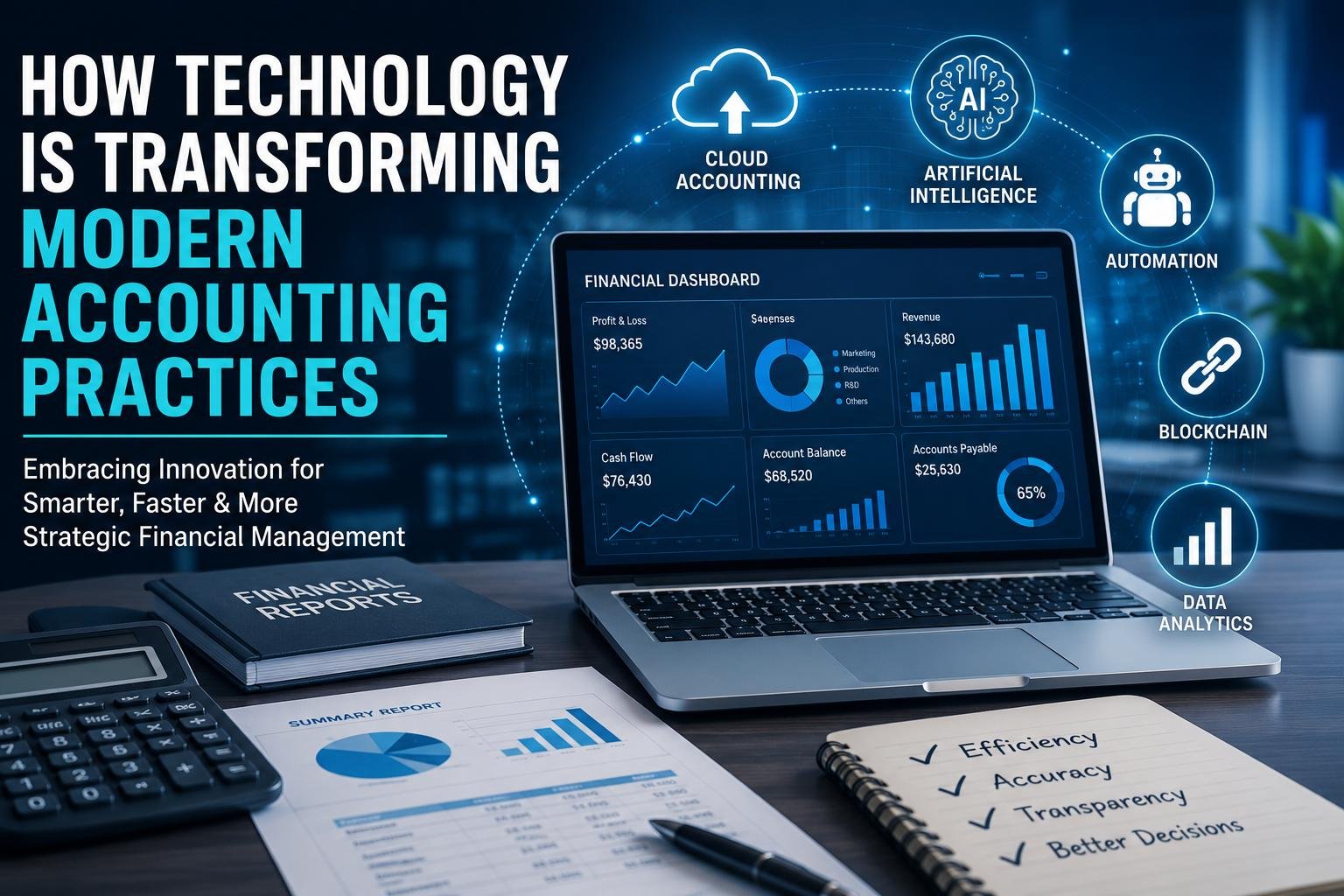
It is not surprising that digital is becoming more popular among companies of all sizes because it helps to keep them competitive in today’s rapidly changing economy. New technologies such as Cloud Computing, Artificial Intelligence (AI), Robotic Process Automation (RPA), blockchain technology and cutting-edge data analysis tools are reshaping the entire process of data collection, analysis and reporting in the financial sector. These technologies help to minimize human error, optimize workflows, enhance compliance and create collaboration between accountants and stakeholders. With the ongoing digital transformation, it is vital for accounting students, professionals and business owners to be aware of how new technologies are changing the accounting profession and how they can leverage the opportunities for efficiency and innovation.
Cloud Accounting Software
Cloud accounting is undoubtedly one of the most significant accounting trends of the modern times. Whereas the classic accounting desktop software is installed on home computers and/or servers, cloud accounting software can be accessed via the web from any location. This adaptability has changed the way businesses deal with their budget and the way accounting professionals supply their solutions to their clients and organizations.
Businesses who are interested in finding out the benefits of cloud accounting software are more aware than ever about how it can enable them to gain access to financial information in real time, improve collaboration and reduce infrastructure costs. The financial reports can be reviewed, transactions can be approved, cash flow monitored and budgets prepared, without the accountant and manager having to physically get to the office. Several different users can access the same financial information at the same time, minimizing duplication and communication between departments. This accessibility was especially critical in today’s era of remote work and businesses being impacted worldwide.
Cloud accounting systems also update software automatically, offer extra cybersecurity capabilities and perform regular backups on the data to be sure that companies are not losing data or suffering from system failures. There’s no need to purchase expensive hardware and software configurations, the cloud-based service can be added when needed, or removed when no longer required and can be subscribed monthly in accordance to the brand’s business needs. Cloud accounting is an excellent solution that provides many benefits that startups, small businesses, and large corporations can all benefit from: flexibility, security, and cost-efficiency.
Some of the Benefits of Cloud Accounting
Cloud technology has brought some operational advantages which enhance and improve accounting processes and financial management activities. The sole positive side is that you can get monetary information when it’s offered. In the past, accounting systems comprised regular updates, causing a delay in the financial data and decisions reporting. The transactions are also automatically synced with cloud and the business owners and accountants can monitor the performance and quickly alter with the modifications in the business.
Another major benefit is regarding more cooperation with stakeholders. The financial information is accessible to all external auditors, accountants, financial managers and business owners, reducing delays of financial information transfer and emails. This co-operative culture helps to improve transparency, faster approvals and improved inter-departmental communication. Moreover, cloud systems perform seamlessly with banking systems, payroll software, inventory management systems and customer relationship management, all of which help create a unified financial setting that reduces the amount of manual data input and chances for error.
Cloud accounting also contributes to better environmental sustainability, as it doesn’t require any paper documents and it decreases paper usage. The use of electronic invoices, receipts, reports and tax records cuts down on administration and makes it easier to retrieve and to store tax records efficiently. These advantages have made cloud technology a fundamental component of modern-day accounting techniques and an essential aspect of international digital business change programs.
The Future of Accounting – Artificial Intelligence (AI)
AI has become one of the most impactful technologies impacting the accounting profession. AI is the technology that enables machines to execute tasks that require human intelligence, such as: Pattern recognition, Learning, Prediction, and Decision Making. AI in accounting is finding its way into accountabilities which are becoming more and more automated, anomaly detection, and insights for business using advanced analysis.
With an artificial intelligence accounting system, invoices can be processed and classified, bank statements reconciled and unusual transactions detected much quicker than manual methods. Machine learning algorithms can learn from previous financial data and user activity to continually enhance performance, leading to increasingly accurate predictions over time. This capability allows the accountant to focus more on strategic aspects of the job, including business advisory services, risk assessment, and financial planning, rather than administrative, repetitive tasks.
Artificial intelligence also offers a lot of benefits when it comes to fraud detection. AI systems can examine massive amounts of deals and spot patterns that can demonstrate bogus exercises or monetary irregularities. Rather than relying on periodic audits, businesses can follow the transactions as they happen, and receive alerts if and when they spot any suspicious transactions. This is a proactive method and will enhance the internal checks and control and will help organizations to reduce losses due to fraud or errors.
The Role of Automation and Robotic Process Automation in Accounting
Today, automation is playing a major role in improving productivity and efficiency in the field of accounting, globally. There are lots of other accounting procedures which are repetitive and can be carried out in a predictable manner and according to a specific workflow. Robotic Process Automation, (RPA), is the use of a software robot to do these things without the need for constant human intervention.
Some accounting functions that can be automated include processing of invoices, payroll administration, calculation of taxes, account reconciliation, expense management and reporting. Data collected from invoices can be used to create software robots which can validate data accuracy, enter transactions into accounting systems, and provide financial statements in minutes. A few hours or days can now be reduced to almost instant with almost no risk of human error in activities that were formerly time-consuming.
Automation doesn’t just save time and money for the sake of speed and accuracy. This allows organizations to save on operational expenses, enhance compliance, and free up human resources for more value-added, judgmental, creative and interpersonal tasks. Automation is not about taking the place of accountants, it’s about transforming how they work by removing repetitive administrative tasks and providing opportunities for professional development in the advisory and analytical domains. It’s an indication of the overall evolution of accounting from transactions to decisions.
The Application of Blockchain Technology and Financial Transparency
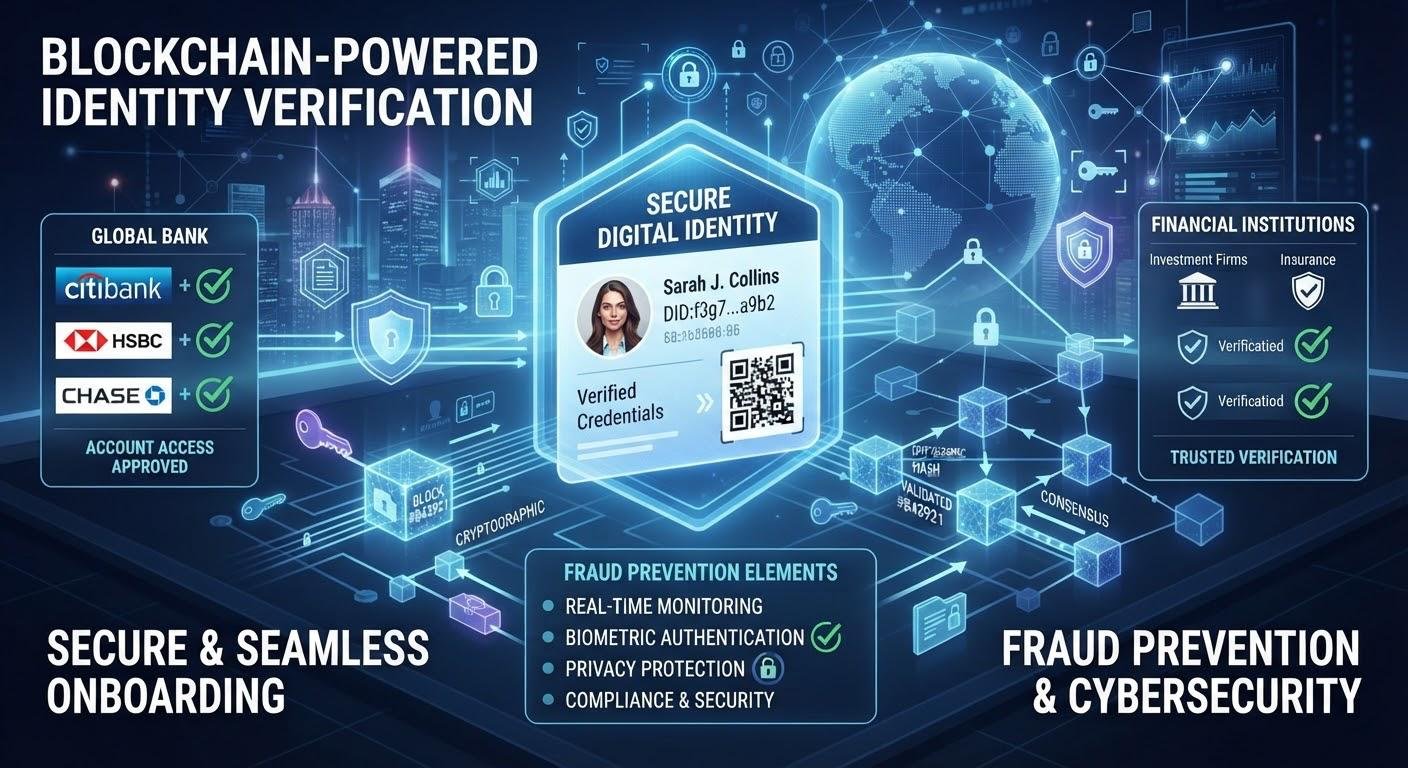
Another innovation that is starting to impact accounting and financial reporting is blockchain. Blockchain is a distributed database that keeps records of transactions in a manner secure from alteration and can be distributed across numerous computers. Every deal is recorded in blocks, which are linked sequentially, thus forming a clear, unchangeable and permanent history of transactions.
The greatest benefit of blockchain is that it can enhance trust and transparency in financial transactions. In the case of traditional accounting systems, they usually use intermediaries like the banks, clearing houses or third-party verification agencies to verify transactions. They are eliminated due to blockchain technology, where all the participants of the network can see and verify the same information at the same time.
The blockchain’s immutability further improves the quality of the audit and lowers the risk of fraud. The ability to audit financial information is more efficient and the auditors can rely more on the accuracy of the information since transaction histories are not easily modifiable. Smart contracts, that automatically trigger contractual actions when specific conditions are fulfilled, further optimize accounting and financial processes, minimizing administrative delays and human intervention. While blockchain is still a relatively new technology in many industries, it holds great promise for revolutionizing auditing, financial reporting and compliance processes.

Analyze Data and make Strategic Decisions.
With more data now available, the significance of data analytics in today’s accounting is paramount. Data analytics is the process of analyzing large sets of data to discover trends, patterns and relationships that can help make informed business decisions. Nowadays, accountants can use analytical tools to go beyond reporting historical data and predict future trends which can assist organizations in planning for the future.
With the help of advanced analytics, companies can predict cash flow, forecast how customers will pay, analyze potential investments, and identify areas of inefficient operations. Historical financial information, in conjunction with market trends and outside influences, can help organizations to create more accurate budgets and strategic plans. By analyzing trends, patterns, and data from past events, predictive analytics can help decision-makers anticipate potential challenges and take proactive measures to reduce risks.
In addition to financial analysis tools, visualization tools can provide added value for financial analysis by displaying complex information through dashboards, graphs, and interactive reports. Executives and managers can easily understand the KPIs even if they don’t have a lot of technical background. This accessibility contributes to the improved ability to communicate and to evidence-based decision making all over the organization. With the increasing amount and complexity of data, analytical skills are now more critical than ever for accounting professionals looking to be relevant in the digital economy.
Financial Reporting and Technology Improvements
The quality, speed and reliability of financial reporting processes have been greatly enhanced by modern technology. With a little human assistance, an automated system can generate income statements, balance sheets, cash flow statements, and management reports. Real-time reporting allows the companies to monitor the financial performance through real time, rather than through month end, or year-end reporting.
The regulatory compliance and transparency are also positively affected. New accounting standards and tax laws are continually emerging, posing further problems for companies with cross-border operations. Technology solutions can help ensure compliance with the regulations, and provide the proper accounting treatments, potentially saving a company from being non-compliant and subject to expensive fines. Financial activity and system changes can be clearly traced with automated audit a trail, which helps to maintain accountability and eases audit procedures.
Also, scenario analysis and business modeling are made easier via financial reporting technologies. Prior to taking a strategic step, businesses can conduct an economic impact analysis of what could happen if they make a particular decision, encounter a particular economy or market disruption. This is a tool to help make better decisions and enhance long-term business planning.
Recognize and Solve the Challenges of Technological Change.
Although the advantages of accounting technology are many, there are a couple of hurdles which any organization will have to deal with in terms of digital transformation. Cyber information is valuable and interesting to cybercriminals and cyber security threats remain to be one of the biggest concerns. It is essential for businesses to have strong security measures, educate staff about security protocols, and regularly update systems to prevent any financial information from being accessed without permission and to stop cyber-attacks.
One of the challenges is that of the implementation cost and complexity. Switching from manual to automated accounting systems can be expensive, as there are costs involved in obtaining the necessary software, hardware, and employee training. Further delays in adopting the process can occur if resistance to automation is created by employees, particularly if they fear losing their jobs to the process. It is very important to have effective strategies and continuous professional development, to be able to integrate technology successfully.
The use of technology and continual changes in technology also place a requirement on the accountant to continually improve his or her skill and knowledge. Adaptability is essential for a more digital workplace or culture, and it can be difficult for those who aren’t. In the accounting profession, skill and knowledge in lifelong learning, certificates and technology will be crucial to career development.
The Future of the Accounting Profession
There will always be a need for strategic financial know-how, and technology will continue to play a key role in the future of accounting. There will be less data entry and manual forensics work done by the accountant and more time spent interpreting information, giving business advice and assisting business strategy. In addition to accounting skills, technical skills that are considered essential for the workplace, such as data analytics, cyber security and digital systems management will also take on increased significance.
The curricula of both education and professional bodies already focus on technology in their future accountant training. New entrants to the workforce will need to learn analytical and technological skills if they wish to be successful in today’s world of work. Businesses will be better equipped to battle in the increasingly complicated overseas business world if they are prepared to be innovative and invest in digitalization.
Technology will allow accountants to be more valuable and more valuable in what they offer by giving them insight, ability to report fast and support them in decision making. Even as automation grows commonplace in the accounting world, human attributes like judgment, ethics, communication, and strategy will remain significant in the accounting profession.
Conclusion
How technology is transforming today’s modern accounting is making it more efficient, accurate, transparent and informative to help in strategic decision making. Cloud accounting software is flexible, provides real-time data access and uses AI and automation to reduce repetitive tasks and improve efficiency. The combination of blockchain technology and data analytics can foster trust, transparency, and provide organizations with insights from financial data.
Of course, the dangers of digital transformation, such as cyber security, the cost of implementation and evolving skill sets are all factors to take into account, but the benefits are considerable. It is necessary for accountants, students and business leaders to be aware of and embrace new technologies to be better prepared to succeed in the digital economy. The future of accounting is not about automation of humans, but only about making accounting systems smarter, faster and more insightful, such that it will contribute to organizations becoming sustainable and successful over the long term.
Get more well researched information about Technology Transforming Modern Accounting Practices here.