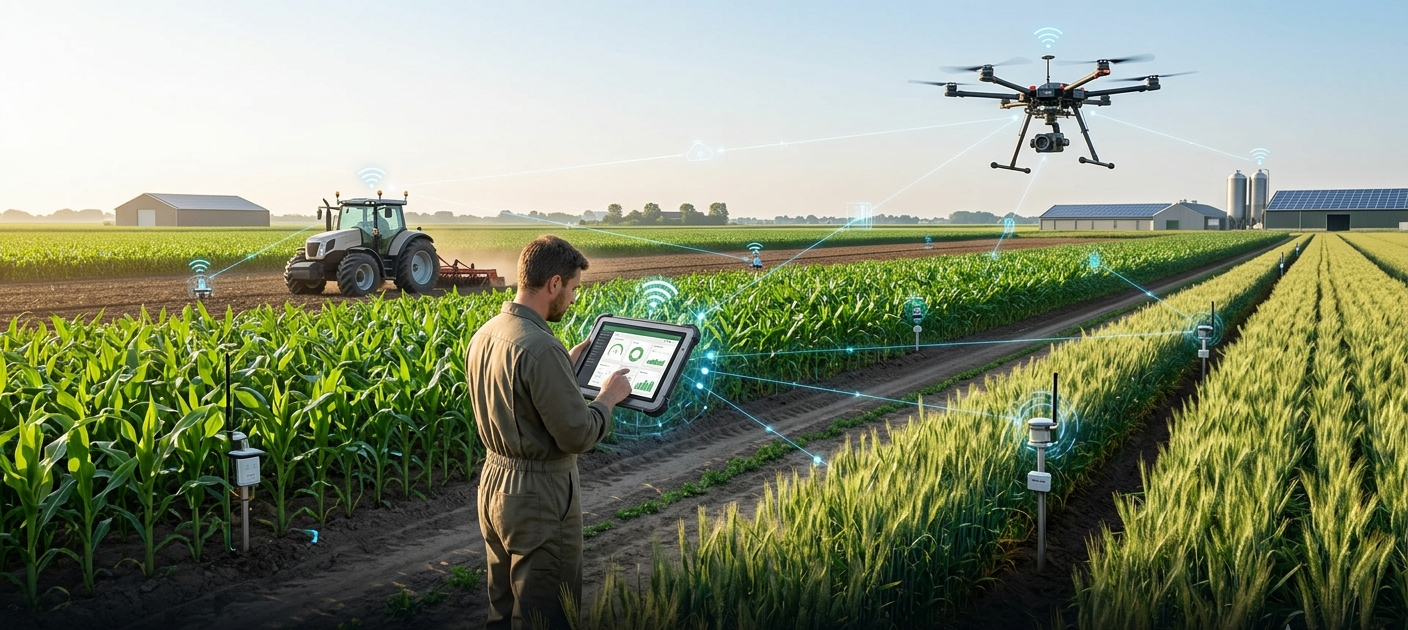
Agriculture has for long looked to observation, experience, and adaptation to changing environmental conditions which has been its base. But present day farming is at an interface of very complex issues which include population growth, climate change, depleted natural resources, increasing production costs, and the push for more sustainable food systems. Also it is the traditional farming practices which are in many cases not putting out the level of performance and precision required by the global food demand.
That is where we see the role of the Internet of Things which is bringing about great change. In smart farming we see the use of connected devices, sensors, automation systems, and data analytics which in turn help farmers to make better decisions and improve productivity. By collecting and analyzing real time farm data, IoT tech is what allows for crop monitoring, resource management, waste reduction, increased crop output and at the same time we see a great environmental responsibility.
Exploring Smart Farming and the Role of IoT in Agriculture
Smart farming is a term we use for the implementation of high tech solutions which in turn improve agricultural performance via automation, monitoring and data analysis. At the core of this is the Internet of Things which is a system of connected devices that put out, trade, and analyze info without constant human input. In agriculture we see things like soil sensor networks, auto, animal tracking systems, agricultural drones, weather stations, and farm management software. These tech tools allow farmers to have a much better picture of what is going on across their land than what we got from past methods. Instead of relying on intuition or set schedules farmers may use present data to determine exactly when crops require water, fertilizer, protection, or harvest. This move from conventional farming to what we term precision agriculture helps to improve efficiency, conservation of resources and we see a more reliable food production.
Soil Sensors: Improving Plant Health with Data Driven Farming
Soil health is a key issue in terms of crop growth and agricultural productivity. Farmers must determine the state of their soil which includes moisture levels, nutrient availability, temperature, and chemical make up to give crops what they need for growth. IoT enabled soil sensors are revolutionizing how farmers care for their land by providing present time accurate info on what is going on beneath the surface. These small connected devices which may be put in any number of places in farmland report back with data which is sent to digital platforms for the farmer’s analysis. Instead of manual soil testing at intervals, farmers are able to see continuous change and to identify which areas require the most attention. This approach supports precision agriculture which in turn sees to it that crops get what they need without over doing it.
In past farming practices we saw that the same amount of fertilizer or irrigation was applied to the whole field which in fact may not have been what different parts of the field required. This resulted in over application of resources, increased costs, and also in environmental issues like nutrient run off. But with the advent of IoT sensors we see a change. Now farmers are able to target treatments which are exactly what each area of the land needs. For instance if a sensor reports that a certain section of the farm is dry, we only water that section instead of the whole field. This in turn improves health of the crops, conservation of water, and also reduces expenses. As tech is taking over in the agricultural sector, what we are seeing is that soil monitoring systems are becoming very important tools for farmers who want to increase their yields and at the same time improve efficiency in the use of resources.

Smart Irrigation Systems: Conserving Water and Improving Productivity
Water management is a major issue in modern agriculture which we see in regions that are dealing with drought, unpredictable rain, or low water availability. Smart irrigation which is a result of the IoT technology is a solution we have. These systems use sensors, automatic controls, and data analysis to track soil moisture, weather reports, and plant needs. As sensors report that soil moisture has dropped below a certain level the irrigation system goes on and puts out just the right amount of water. Also this does away with manual watering timers and stops us from over or under watering which in turn doesn’t do what is best for the growth of our crops.
Smart irrigation has many benefits which go beyond water conservation. We see that these systems which provide crops with the right amount of moisture at the right time improve plant growth, reduce disease issues and in turn increase total farm productivity. Also it is a fact that traditional irrigation methods which base themselves on set schedules do in large scale what is in reality a waste of water they don’t take into account the actual needs of the crop. What IOT based irrigation does is to remove that shortcoming by allowing for real time input which in turn allows the farm to react to present conditions. Also what we are to note is that farmers are able to remote in via mobile apps or computer dashboards to monitor performance of the irrigation which in all makes for easier and more efficient farm management. As water resources are becoming more and more a precious resource, smart irrigation technology is taking us in a direction of sustainable agriculture which at the same time increases productivity and protects the environment.

Livestock Tracking: Improving Animal Care and Farm Productivity
IoT is also changing how we farm our crops and also we see growth in the area of animal husbandry which has seen the introduction of connected monitoring systems. It is a challenge for farmers to manage large scale animal farms which includes health watch, location of the animals, what they are eating and also their overall behavior. We have smart collars and electronic ID systems which farmers are using for their animals. These devices report back movement patterns, temperature of the animal’s body and activity levels which in turn helps farmers to spot health issues early. Also instead of relying only on what they see with their eyes farmers are using digital info to make almost immediate and precise decisions related to animal health care.
Connected livestock systems which also improve farm security and operational efficiency. Tracking devices which report to farmers on the location of animals, monitoring grazing patterns, and which also put a stop to animals which stray from designated areas. In dairy farming we see that the Internet of Things is used for milk production tracking and health issue detection. In large scale livestock operations we have automated feeding systems which give animals what they need based on its requirements. This does away with waste, reduces labor input and in general better manages the animals. By using tech in conjunction with agricultural know-how, the Internet of Things allows farmers to create healthier living environments for livestock which in turn improves productivity and profitability.
Drone Monitoring: Through the Use of Aerial Technology in Agriculture Which Improves Farm Decisions
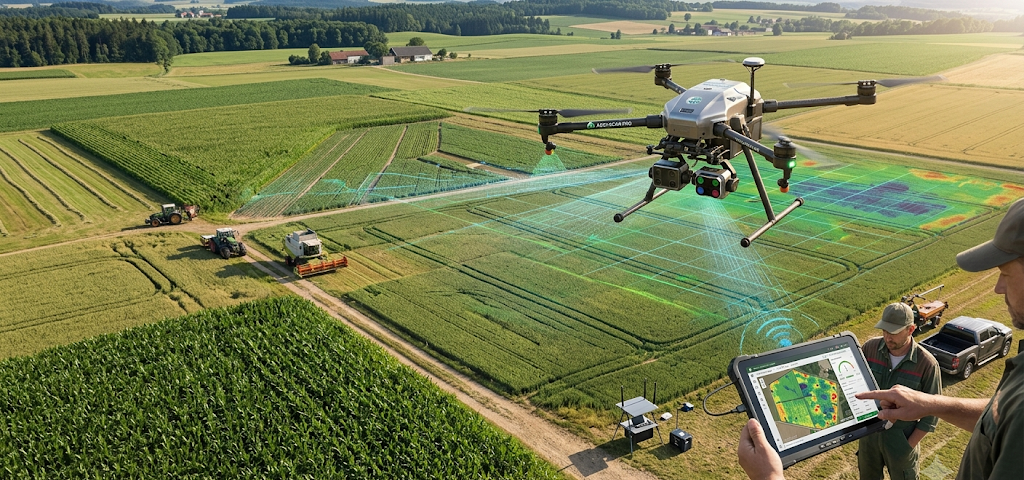
Agricultural drones are a key element of smart farming which they do so by giving farmers an aerial view of their fields. Equipped with cameras, sensors and high tech imaging tools, drones report on crop health, plant health, pest activity and which areas are affected by environmental stress. Instead of farmers having to walk large farm fields to check in on growth we now see them use drones for quick wide area surveys which in turn identify issues. This aerial monitoring which is made available to agric professionals allows for faster response to issues which may reduce yield if left unnoted.
Drones play a role in many aspects of agriculture beyond just monitoring. We see them in crop mapping, spraying, and field analysis. What drones collect in high resolution images of the farm tissue diversity which in turn helps farmers identify what areas of the farm are doing well and which are not. Also some drones are used for the precise application of fertilizer or crop protection products which in turn reduces the use of unnecessary chemicals. By using drone data in combination with soil sensor info and weather systems farmers are able to get a full picture of what is going on in their farm. This integration of many IoT technologies into agriculture is what is making the sector more precise, efficient and able to better handle change.
IoT Solutions for Today’s Food Production Issues
The world’s agricultural sector is at a crossroads of producing more food at the same time it reduces resource use and improves the health of the environment. IoT in agriculture presents solutions to these issues which also seem to improve efficiency and reduce uncertainty. Through real time data collection and automation we see that farmers are able to increase production without at the same time not putting more stress on natural resources or expanding far into natural areas. Also we see that connected tech is playing a role in reducing water use, better application of fertilizers, improved animal care and early detection of issues in the field. Also of note is that as climate change brings about more variable growing conditions and forces farmers to adapt to new environmental issues — these benefits of tech in the field are coming at a very timely issue.
IoT also plays a role in sustainability through better resource management. As farmers see in real time what is required by their crops and animals they are able to cut out what is not needed which in turn reduces environmental impact. Also we see that data from connected devices is a tool for agribusinesses to study long term trends, which in turn improves planning and which also supports in making better investments. While large scale farmers and small farmers from all over benefit from these tech solutions which are tailored to what each of their needs are. As connectivity grows in affordability and access, smart farming has the chance to raise food security at the same time as it supports environmentally friendly agriculture practices all over the world.
The Future of Smart Farming and Connected Agriculture
The issue of what is to come in agriculture sees great growth in the use of IoT with AI, robotics, satellite tech, and advanced analytics. As farms scale up what they put out in terms of data, smart systems will do a better job at forecasting crop performance, identifying risks, and putting forth solutions. AI will take in info from sensors and devices to give farmers insight which in turn improves their decision making. We also see machines which may include automation in the processes of planting, harvesting, and field care do so with greater precision. Also in this we see the role of the farmer change from that of mostly manual labor to that of managing very connected and data based agricultural systems.
Despite what IoT brings to the table in terms of benefits, we see that it’s not without its issues which include high tech costs, internet access issues, security concerns, and also the question of digital skills. We see that what we as farmers require is better access to reliable infrastructure and training in order to get the full value from smart farming tools. But as technology advances we are seeing that which was once very expensive and complex is now more affordable and user friendly. That which we are to see is a great opportunity for growth in connected agriculture which will in turn build us a more productive, sustainable and resilient food system. By putting our agricultural know-how together with what modern tech has to offer we may be able to meet future food demands and at the same time protect our natural resources.
Conclusion
IoT is redefining agriculture which in turn is in the hands of farmers to use as they wish for better results. From soil sensors which protect crop health to smart irrigation systems that save water we also have livestock tracking solutions that improve animal care and drones which give in depth field reports. Smart farming which allows farmers to base their decisions on facts not assumptions is what is leading to better efficiency, less waste, and higher crop yields.
As the world is put to the test with food production issues, IoT is going to play a larger role in the development of sustainable agricultural systems. The future of farming will see a mix of human expertise and intelligent technology which will in turn produce more food at the same time as we use our resources in a responsible way.

What i do not realize is in fact how you are no longer actually much more wellfavored than you might be right now Youre very intelligent You recognize thus considerably in relation to this topic made me in my view believe it from numerous numerous angles Its like men and women are not fascinated until it is one thing to do with Lady gaga Your own stuffs excellent All the time handle it up
Hi i think that i saw you visited my web site thus i came to Return the favore I am attempting to find things to improve my web siteI suppose its ok to use some of your ideas
Somebody essentially help to make significantly articles Id state This is the first time I frequented your web page and up to now I surprised with the research you made to make this actual post incredible Fantastic job
Attractive section of content I just stumbled upon your blog and in accession capital to assert that I get actually enjoyed account your blog posts Anyway I will be subscribing to your augment and even I achievement you access consistently fast
I was recommended this website by my cousin I am not sure whether this post is written by him as nobody else know such detailed about my difficulty You are wonderful Thanks