Introduction
It is sometimes said that accounting is the language of business, because all organizations need to rely on financial information for decision making, measurement of performance and planning for the future. The accounting profession is not only now far removed from bookkeeping and recordkeeping but has expanded far beyond that scope in the business world that continues to grow and in the technology that has transformed financial transactions. Today’s accountants are involved in business planning, risk management, regulatory compliance, fraud detection and financial analysis, among other tasks, which are all strategic in nature. This shift has opened up a host of job opportunities for people who have varying interests, skills, and career objectives.
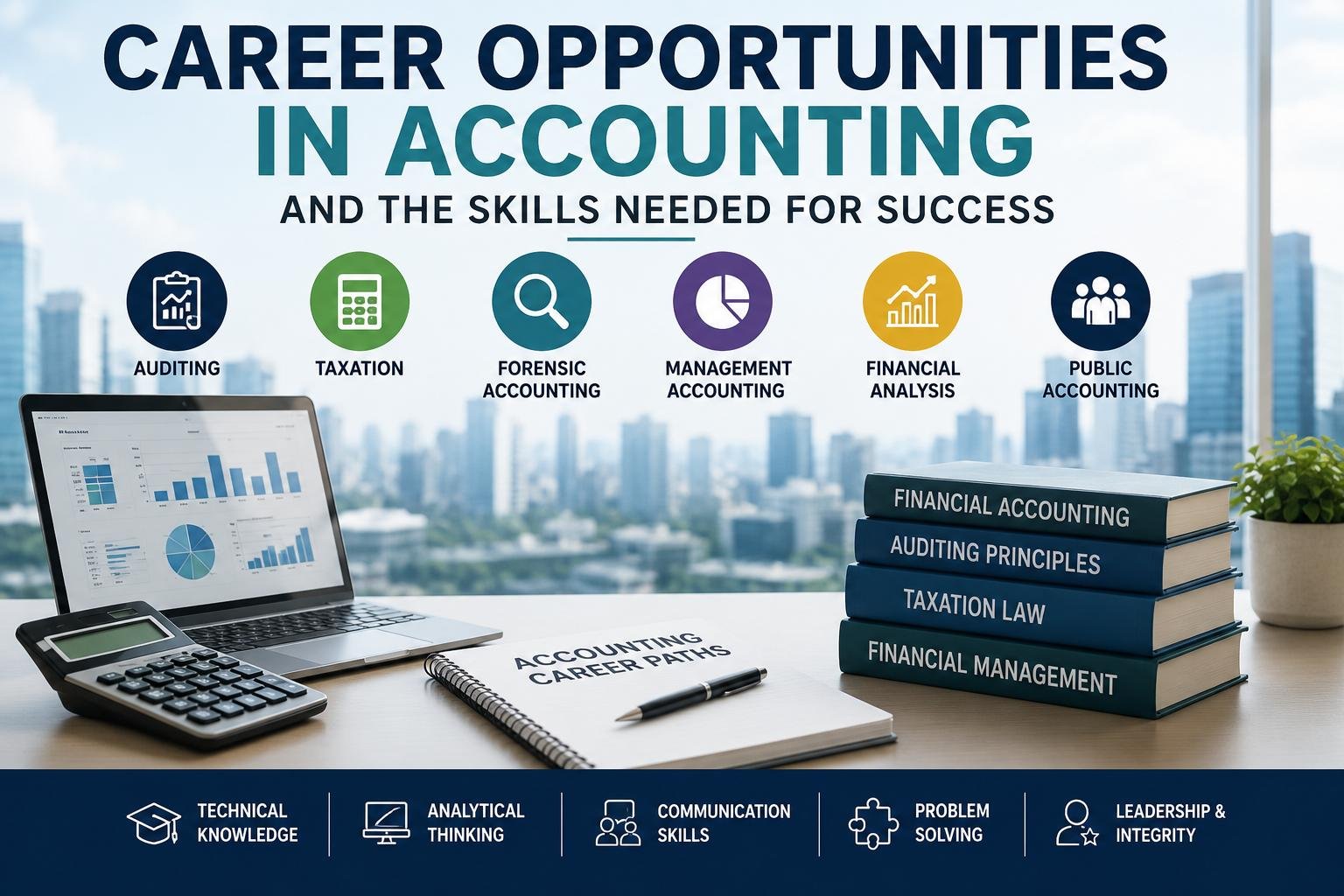
It is important to be aware of the different career paths and opportunities that are available when choosing courses, certifications and developing skills as a student and as a student (aspiring professional). If you like to work directly with clients, on the other hand, you’re interested in financial trends, looking for fraud, or helping with business strategy, there’s an accounting specialization that fits your interests. The exposure to various jobs enables professionals to discover the skills and requirements that are sought by employers in today’s competitive environment.
An accounting career guide can give you more information on the different accounting career paths and help you determine which one might be right for you to choose based on your interests and career goals. The field of IT security is expanding and evolving, and possessing technical knowledge is only part of the equation for long-term success; interpersonal abilities are also crucial.
Why Accounting is a Great Career Path to Choose
Financial management and reporting is something that every organization, big or small, needs and is a necessary part of any business and this makes accounting one of the most steadfast and trusted professions in the world. The role of an accountant is essential in business, where they can help prepare financial statements, keep track of budgets, make sure of regulatory compliance, and aid in strategic decision making. From public funds to transparency, governments rely on accounting professionals for management of public money, and nonprofit organizations depend on accountants to ensure that donations are accounted for and that the organization is held accountable to its stakeholders.
One of the other benefits of an accounting career is that it can be versatile. They can be employed by public accounting firms, private corporations, government agencies, educational institutions, healthcare, banks and consulting firms. There is also entrepreneurial potential in the field, with experienced accountants able to become entrepreneurs and set up their own practices or businesses. Furthermore, accounting qualifications are internationally recognized, offering career opportunities to accountants who want to pursue international or multi-national career paths.
Technological evolution has added another layer of value to the accounting function by making more and more work repetitive, which can be automated, and the rest, analytical and advisory, which is more valuable. In fact, technology has not replaced accountants, it has given them time to think about what their financial information means, to look at business opportunities and make strategic recommendations to the management team.
1. Public Accounting Careers
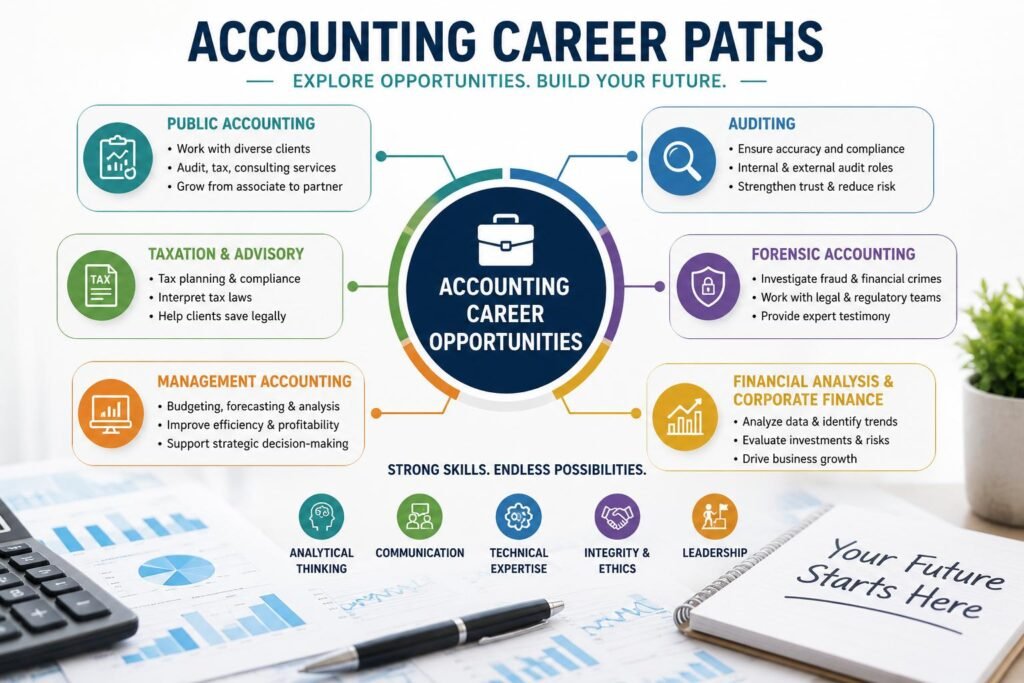
Public accounting is a very popular route into accounting, and usually consists of accounting work for outside clients. Public accountants are employed by accounting firms that deal with businesses, nonprofit organizations, the government, and individuals. They may be tasked with preparing financial statements, auditing, giving tax advice, and business consulting services.
Public accounting provides opportunities to work in a variety of industries and a business setting, which is an ideal choice for those who like to have a variety of situations and work continuously learning. Employees at entry level are expected to get experience fast as they get to work with various clients and deal with various financial matters. Typically, career development for an associate leads to a senior accountant, then manager, senior manager and ultimately partner in the firm.
In the public accounting profession, the technical knowledge of accounting, attention to detail, and capability to work under pressure during busy accounting seasons are desired traits. They also need to be excellent in communicating and handling relationships with other professionals as they often have to interact with clients and make recommendations that impact the business.
2. Auditing as a Career Path
The audit is an examination of the financial records and internal controls to ensure accuracy, compliance and reliability. Auditors play a valuable role in ensuring that organizations do not make mistakes, minimize financial risks and instill trust in investors, regulators and stakeholder. There are two types of auditing: internal auditing, and external auditing.
Internal auditors conduct internal audit within an organization to analyze operational efficiency, assess risk management systems and enhance internal controls. Their responsibilities go beyond financial reporting, and they may also audit the operations, information systems and compliance procedures. External auditors are independent, professional experts who review a company’s financial statements to decide if they fairly reflect the company’s financial position.
The job of an auditor is perfect for someone who likes investigation, problem solving and analytical thinking. Auditors often have to look through lots of financial information and try to find the inconsistencies or any unusual transactions that require them to look into them in greater detail. Professional skepticism, integrity and objectivity are important traits because auditors are expected to be unbiased when evaluating financial information.
3. Taxation and Tax Advisory Career
Another specialization of accounting that has a high potential for long-term security and good career prospects is taxation. Tax experts assist people and organizations meet tax laws and discover legal means to lower their tax burden. They handle everything from filing tax returns to tax planning, tax interpretation and representation at tax audits or disputes.
Tax regulations are intricate, and they constantly evolve, so there is a continuing need for professionals who are knowledgeable and well-versed in how to navigate these regulations and avoid the penalties that may be imposed. The areas of taxation that tax specialists might specialize in include corporate taxation, personal taxation, international taxation, indirect taxes and estate planning.
Tax professionals have to have exceptional research skills and a thirst for knowledge as tax laws are constantly evolving. Here, attention to detail is crucial as it can have major consequences on the client or on the employer if there are minor mistakes. Communication skills are also essential, as tax advisors need to convey complicated tax laws to clients in a manner they can comprehend and use.
4. Forensic Accounting Opportunities
Forensic Accounting is the merging of accounting, auditing and investigative skills in order to uncover fraud, financial crime and conflict situations. Forensic accountants typically will collaborate closely with the legal team, law enforcement, insurance companies, and regulatory bodies to understand the financial evidence and assist with the legal process.
Forensic accounting has become a very sought-after career as financial crimes are becoming sophisticated. They might be involved in investigations of fraud, embezzlement, money-laundering, asset misappropriation, insurance fraud, corruption and fraudulent financial statements. Sometimes forensic accountants give expert testimony in court, and give information to judges and juries that is easy to understand.
It’s an appealing career for folks who enjoy investigation and are good at unraveling complicated monetary riddles. Analytical thinking, persistence, attention to detail and ethical standards are all characteristics that are important to a successful forensic accountant. Communication skills are particularly crucial as forensic accountants may be required to prepare reports for the court or other stakeholders who may lack an advanced understanding of accounting.
5. Management Accounting Careers
Management accounting is more concerned with providing information to internal users for the decision making process in the business, than with preparing information for external users. Management accountants can interpret financial information, cost planning and budgeting, predict future performance and assist companies to enhance efficiency and profitability. They collaborate with managers and executives to create strategies for the organization’s goals.
Financial accountants are more concerned about past information while management accountants are much more concerned about the future and improving performance. They apply their skills in cost analysis, pricing, profitability analysis, investment evaluation and strategic planning. Management accountants, due to their role in the business operations become trusted advisors to the top management team.
Management accounting is a rewarding field for professionals who deal with strategy and improving business operations. Businesses appreciate people who can analyze financial information and make informed business suggestions. It is thus as much a personal skill as a technical accounting knowledge that is important, to communicate the results of the analysis clearly and to influence the decision-making processes.
Financial Analysis, Corporate Finance, and Financial Planning Positions
Financial analysts analyze financial data to make business and investment decisions for businesses. They review past performance, predict future trends, evaluate risks and make recommendations on strategies that will enhance profitability and shareholder value. Financial analysts can be employed by banks, investment companies, corporations, insurance companies or consulting companies.
Financial modeling, budget analysis, investment opportunities and economic trend assessments are some of the tasks that might be involved in the role. Analysts offer helpful insights that affect the decisions of expansion, mergers and acquisitions, product development, and allocation of capital.
Financial analysis can be a fulfilling career for people who have a keen interest in working with numbers and understanding trends. Employers are looking for professionals that have excellent quantitative skills, critical thinking skills, and financial software and spreadsheet skills. Analysts often bring reports to the executives and investors, so the ability to present and tell stories is becoming more important in this field.
Importance of the Technical Skills needed to be a Successful Accountant.
The basic accounting skills are essential to all accounting success. Regardless of the specialization, a solid grasp of the financial accounting principles, accounting standards, taxation policy, auditing process and financial reporting requirements are all still important. Employers require accounting staff to have the ability to prepare financial statements, reconcile accounts and be able to interpret financial information correctly.
Technology is also a vital element of today’s accounting practices. These days, professionals are required to work with software for accounting, enterprise resource planning, cloud applications for finance and data visualization. Knowledge of spreadsheet software, like Microsoft Excel, is another one of the most useful technical skills for accountants, as accountants often utilize financial models, pivot tables and formulas to analyze information.
As financial processes move to digital, the understanding of data analytics, automation tools, applications of AI, and cyber security principles are growing in significance. Technologically aware accountants will be more suited to adjust themselves to the changes in the industry and be competitive in the job market.
Importance of Soft Skills in Accounting
Although it’s important to be technically proficient, employers also know that soft skills can set great accounting professionals apart from the herd. Communication skills are among the most essential as an accountant will often have to explain financial information to other colleagues, investors, clients and managers who might not have an accounting background.
Team work and collaboration is also very useful as accountants tend to be part of a group that may include members of other departments like marketing, operations, human resources and information technology. Interpersonal skills are important for accountants to establish trust, resolve issues and collaborate with other departments.
Problem-solving skills are important since accountants often deal with complex financial problems that require them to have the ability to think creatively and analytically. Flexibility in technology, regulations and business models is growing in significance, too, as the world of technology, regulations, and business continues to change so quickly. Those who are willing to try new ways and are open to new skills are more likely to succeed in today’s working world.
Leadership skills are crucial when moving up the career ladder towards managerial roles. An accountant who is able to inspire team members, lead a project, and impact the decision-making of an organization can progress their career more rapidly and have more opportunities.
Continuing Education and Professional Certifications
There are many professional certifications that can make a big difference in career opportunities and the income you can earn in accounting. Credentials are evidence of competency, professional standards and commitment to lifelong learning. There are also several certifications that can be obtained, depending on the geographic location and career goals, these include Certified Public Accountant (CPA), Chartered Accountant (CA), Certified Management Accountant (CMA), Certified Internal Auditor (CIA), and Certified Fraud Examiner (CFE).
Continuing education is also vital as the accounting principles, tax laws and technologies change on a regular basis. Today, employers are looking for candidates who are engaged in the pursuit of knowledge and skills, attending professional development sessions, study tours and conferences, online courses and workshops. Lifelong learning helps to enhance technical skill and shows adaptability and a focus on excellence.
Experience and work gained through internships, volunteer work and entry level jobs is often as useful as education for students and recent graduates. Experiences in the real world allow professionals to put theory into practice, gain confidence and acquire knowledge in their industry that is valued by employers.
Preparing for Long-Term Success in Accounting
It’s not just about getting a degree or a certification and getting a good career in accounting. Teach yourself new skills and techniques, enhance your interpersonal communication abilities, and stay updated on industry changes and developments. Connecting with peers, attending conferences or events for professionals and networking in professional associations can be helpful for learning and career growth.
Having clear career goals also enables the person to make an informed decision on specialization, education, and career development. Some may wish to get into the partnership at an accounting firm, and others may want the position of chief in a corporation or self-employment. Knowing the strengths and interests of the individual can help inform these choices and lead to greater satisfaction in the jobs that are chosen.
Another important aspect of career success in accounting is to have a high level of ethics. Accountants are critical to helping organizations secure their financial information and their public trust. Thus integrity, honesty and professionalism are values that continue to be important in the profession in all specializations, regardless of the industry in which they practice.
Conclusion
There are many interesting different career paths available to accountants, such as public accountant, auditing, tax, forensic accounting, management accounting and financial analysis. Specializations offer distinct advantages and difficulties, enabling professionals to pursue their interests and abilities while aligning their choices with both their current aspirations and career objectives. The landscape of decision-making and financial integrity is continually shaped by the roles of accountants, who remain vital in today’s data-driven, technologically advanced business world.
There are both technical as well as interpersonal skills that are essential to success in accounting. Employers are looking for professionals who are knowledgeable about accounting principles, ready to adopt technology, are able to communicate effectively, solve problems creatively and are good leaders with an ethical approach. These skills and the dedication to lifelong learning will enable students and future professionals to be prepared for satisfying and successful careers in the dynamic field of accounting.
Get more well researched information about Career Opportunities in Accounting here.