Introduction
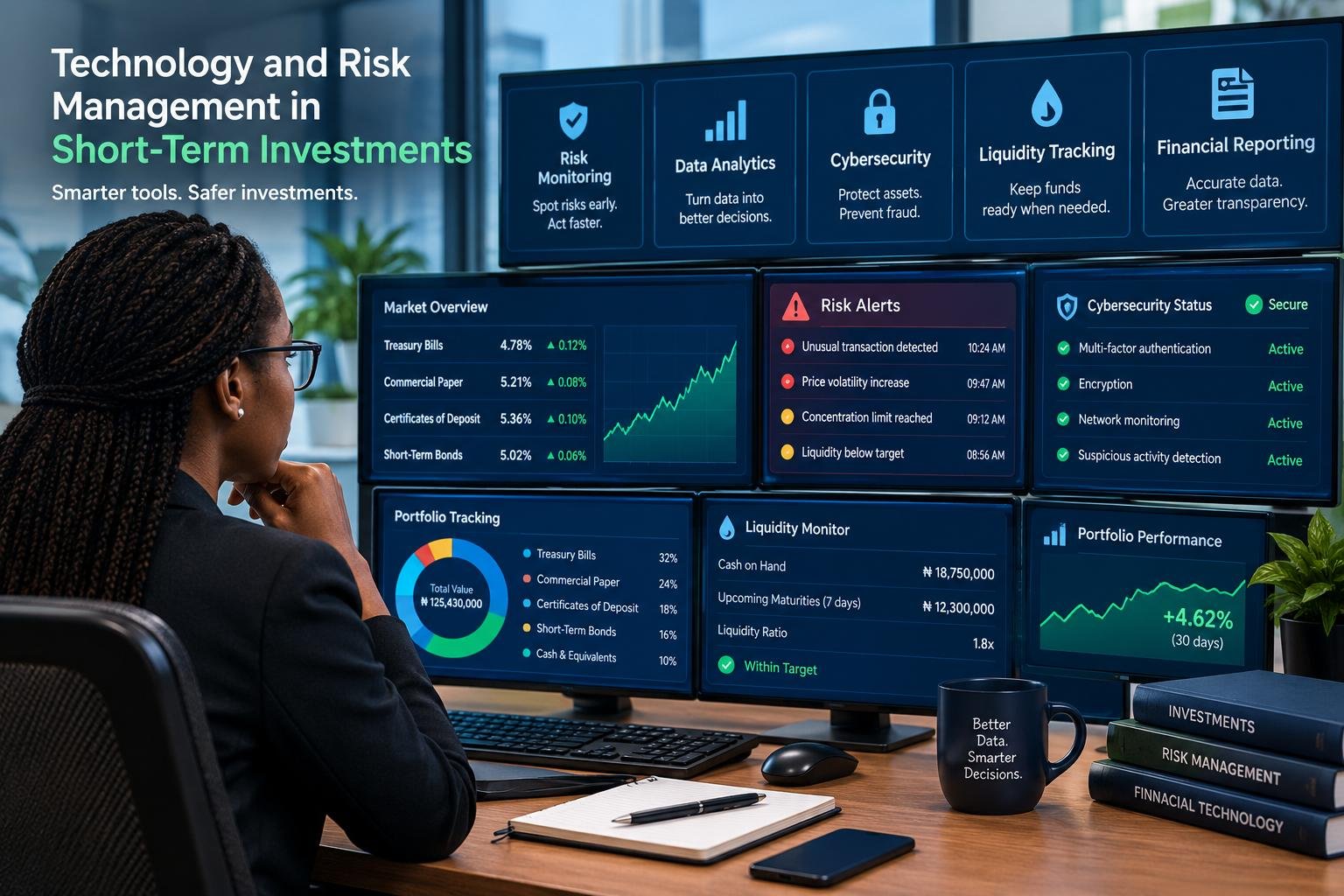
While short-term investments provide financial institutions and investors with potential opportunities to realize returns and maintain the ease of access of investments, they also come with a number of risks. Financial account trading systems and financial accounts can be vulnerable to cyber threats, as can be liquidity during stressed market conditions, interest rates and prices, which can move rapidly. The risks can arise in mere moments or even seconds, making manual checks less, less effective and automated risk-monitoring systems more effective. The use of technology allows investors and institutions to gather information, evaluate their exposure, identify suspicious transactions and react to market fluctuations in real time. In today’s world of risk management, digital tools are a key element in coordinating the flow of market data, portfolio information, analytical models, security controls and financial reporting into a unified process.
How to Analyze Risk in a Short-Term Investment
Short-term investments typically consist of assets or financial instruments that can be readily converted to cash, sold or used in the very near future. They may be treasury bills, money market securities, certificates of deposit, commercial paper, short-term bonds, and other assets with a high degree of liquidity. These tools are sometimes chosen as a means to stability and cash, but can’t be risk-free. There are some risks that may affect an investor’s performance when owning the investment, including interest rate risk, credit risk, market risk and liquidity risk. Technology can aid investors in understanding these risks by providing easy access to collecting vast amounts of financial data and providing greater insight to assess the impacts of shifting conditions.
Automated Risk Detection and Risk Monitoring
Continuous monitoring is one of the most critical investments in technology for investment risk management. Automated risk-monitoring systems can monitor risk metrics such as portfolios, transactions, price fluctuations, risk limits, and more, without your staff having to manually review each position. Once a pre-defined threshold is exceeded, the system may be capable of sending an alert to an investor/risk manager to act quickly. This can be helpful for short-term investments as market conditions can fluctuate quickly and missing the right opportunity to determine a new problem could make the investment result in greater loss. Automation also helps to ensure consistency. A manual process could rely on when employees review the reports, or if there has been an abnormal transaction. A technology-based system can be used to continuously and across multiple accounts or portfolios, apply the same monitoring rules. It can also analyze transactions against approved transaction limits, concentration in a specific issuer or asset class, and transactions that should be watched. Institutions can mitigate the risk of missing important warning signs through digitization and making them repeatable.
How to Measure Investment Risk through Data Analytics
Data analytics is another vital level of security. Financial institutions have access to and produce vast amounts of data ranging from prices and yields, to transaction data and economic indicators, credit information and valuations of portfolios. This data can be fed into analytical platforms, and used to establish patterns and predict measures that enable decision makers to gain insight into risk. Rather than focusing on individual statistics, investors can consider the interactions between the various factors – and how a portfolio can perform under varying market conditions. For instance, an investor with short-term debt holdings can leverage analytics to assess the comparative yield, how well the company or its debtors have been rated, the term of the debt and the rate of interest change. Past information also can be useful in determining times when other investments with similar characteristics had large price swings or were liquidated. More sophisticated systems can be used to simulate what a portfolio might experience if the interest rates increase, if any of the issuers’ credit ratings drop or if liquidity in the market declines. These values are not necessarily indicative of the future but they do provide some indication of values to place limits on them and to make better decisions.
Portfolio Tracking and Exposure Control
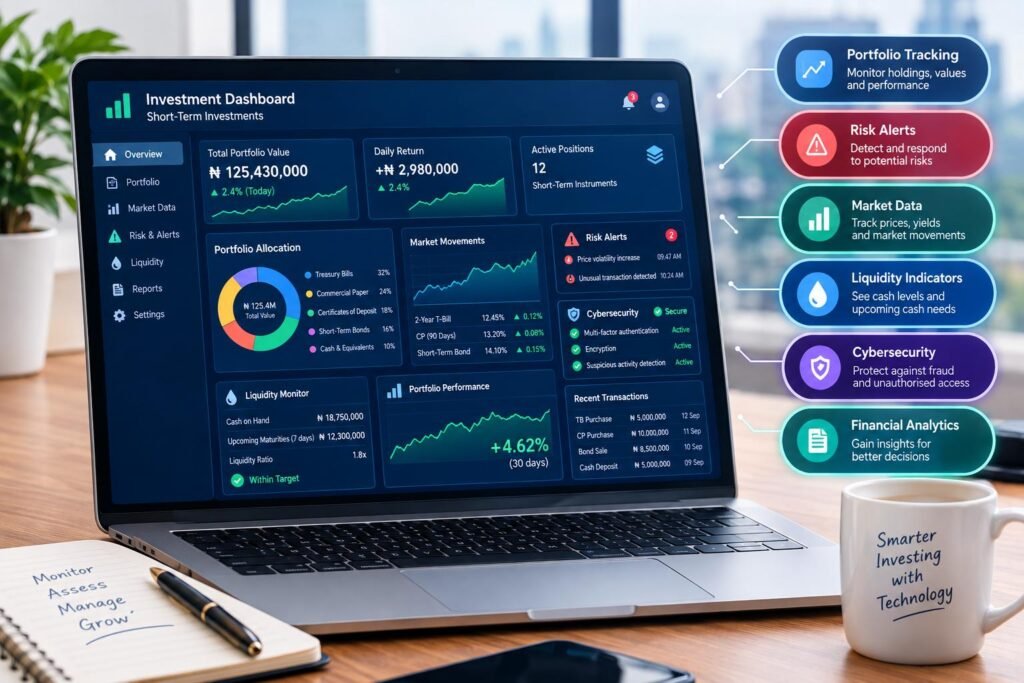
With the help of technology, it’s easier to keep the investment portfolio up to date. Portfolio tracking systems can consolidate holdings, purchase prices, present values, maturity dates, cash flows, yields and transactions. The advantage is that investors have a better idea of where their investments are going and how each investment is added to their exposure. Centers for financial institutions that have numerous portfolios are particularly beneficial, as a risk manager can see the data on a number of accounts rather than relying on separate spreadsheets or delayed reports. Portfolio technology also can aid in diversification and in concentration management. A tracking system can help identify a concentration of short-term investments if a significant percentage is invested in a single issuer, or industry, currency, or type of short-term investment. This will then allow the management to decide if the exposure is allowed under internal policies and regulations. Automated calculations can also demonstrate the impact on portfolio value and expected portfolio returns when the price of markets and/or interest rates vary. This will enable institutions to take steps to adjust before a concentration becomes a major risk.
Cybersecurity and Protection of Financial Assets
Financial risk does not just occur with the movements in the market. The use of digital platforms, online accounts, trading systems, payment networks, and databases are all essential to short-term investment activities and that’s why there is a need for Cyber Security. Successful hacking might result in unauthorized trading, the stealing of confidential information and disruption of trading operations or altering of financial records. However, as more investment processes go digital, investments in the technology behind those processes is a part of protecting the investments. These threats are mitigated by a number of cybersecurity measures in financial institutions. These are such as multi factor authentication, encryption, access controls, network monitoring, endpoint protection, automatic suspicious activity detection and secure backup. Behaviors can also be analyzed to detect and flag off any abnormal transactions or logins from the user that are not regular. With regards to short-term investments, it’s especially crucial to have robust cybersecurity measures in place because of the fast transactions and electronic transfers that can happen in a quick time. Regarding short-term investments, it’s especially vital to have solid cybersecurity measures put in place, as the fast transactions and electronic transfers can provide attackers chances to shift resources rapidly. Additional layers of protection include regular security testing, software updates, employee awareness and incident response planning.
Monitor and Manage Liquidity.
The importance of liquidity risk is particularly significant in short-term investing, as investors may select these investments, in part, because of their ability to withdraw funds as needed. While an investment might seem easy to trade at normal market times, it could be tougher to liquidate during market downturns. Institutions can use technology to keep track of the cash available, liquidity needs that are coming due, maturity of assets, securities trading, and how readily securities can be converted to cash. Liquidity monitoring systems can alert when cash on hand is below a target, or when there are an abnormal number of assets that might be hard to liquidate quickly. They can also make comparisons between flows in/out at different times. Receiving this info allows treasury and investment teams to plan ahead, rather than waiting until their cash flow deficit strikes. In volatile markets, real-time information has the added benefit of being able to provide information when liquidity may be in a more fluid state than traditional reporting cycles.
The Regulatory Oversight of Financial Reporting
Technology helps with risk management in many other ways, including accurate financial reporting. The requirements of investment institutions are the documentation of transactions, valuations, income, gain, loss and cash flow movements and exposures. Digital reporting systems can gather data from various sources, reconcile data, perform calculations and generate reports for managers, auditors, regulators, and other stakeholders. Improved reporting also helps to build a solid base for the risk decisions because managers will be more effective when they have more complete and up-to-date information to work with. Automation can also help prevent mistakes that can happen as a result of repetition in manual data entry. If the financial data is exchanged automatically between linked systems, there might be fewer opportunities to enter it wrongly or have it become out of date. But, technology is not a substitute for human review. However, proper controls, data validation, audit trails and qualified personnel able to interpret data and investigate inconsistencies are still required in institutions. Good reporting requires sound technology, as well as good governance.
The Role Technology Plays in Improving Risk Management Decisions.
The best thing about technology isn’t really that it provides more information. Its true significance is to facilitate decision makers to receive relevant information in time. A risk manager with a view of the entire portfolio, market movements, liquidity indicators, cybersecurity alerts and financial reports on connected dashboards will have a better view of the institution’s position. This helps to ensure quicker responses in case of change in condition. There is also technology that can enhance collaboration. If a risk event occurs, investment managers, treasury, compliance officers, accountants, cyber security and senior executives will need to access the same information. Digital systems can give consistent data and record the actions taken. This enhances accountability and simplifies the ability to assess the decision making process. Machine learning and advanced analytics can also uncover patterns in vast volumes of data that might not be apparent when manually, these patterns may be hard to detect, but must be monitored accordingly.
Challenges of Technology-Based Risk Management
Although the use of technology has many advantages, it also presents its own difficulties. Systems can break, data can be incorrect, software can have vulnerabilities, and models can be poorly designed that can produce misleading results. An overreliance on automated alerts could also lead to alert fatigue if workers are inundated with alerts. Moreover, the technology itself is not cheap and the setup and maintenance can be a costly affair for smaller institutions. So, good risk management involves more than just buying high-tech computer software. Institutions require clearly written policies, accurate data, trained staff, robust access controls, frequent system testing and outage and cyber incident plans. While historical data and automated models are crucial, financial markets are affected by events that cannot be captured by historical data or automated models and thus require human judgment. The use of technology should not take the place of professional judgment but should be used to assist in making it.
Conclusion
The role of technology in the short-term investment risk management will be increasing because of the rise in speed and interconnectedness of the financial markets. Automated monitoring, data analytics, portfolio tracking, cybersecurity tools, liquidity systems and digital reporting provide investors and financial institutions with greater transparency of their assets and liabilities. These technologies enable earlier warning signs to be discovered, more consistent, and faster responses to changing conditions. In the end, technology-based risk management is all about getting information at the right time, and making decisions in the right way. ST investments can be held for a relatively brief time period but the risks involved can arise rapidly and impact portfolios, institutions and markets as a whole. Through robust technology systems, governance and human controls, financial institutions can help safeguard assets, enhance operational resilience, and help drive stability in the market. In the ever-changing landscape of digital finance, financial institutions that embrace technology as a fundamental component of risk management will have a better chance of dealing with uncertainty as they pursue their investment goals.
Get more well researched information about Technology and Risk Management in Short-Term Investments here.