Behavioral economics suggests that transparency influences customer trust as much as price itself.
As millions of visitors travel across the United States during the FIFA World Cup, one cultural difference has attracted attention well beyond the matches themselves.
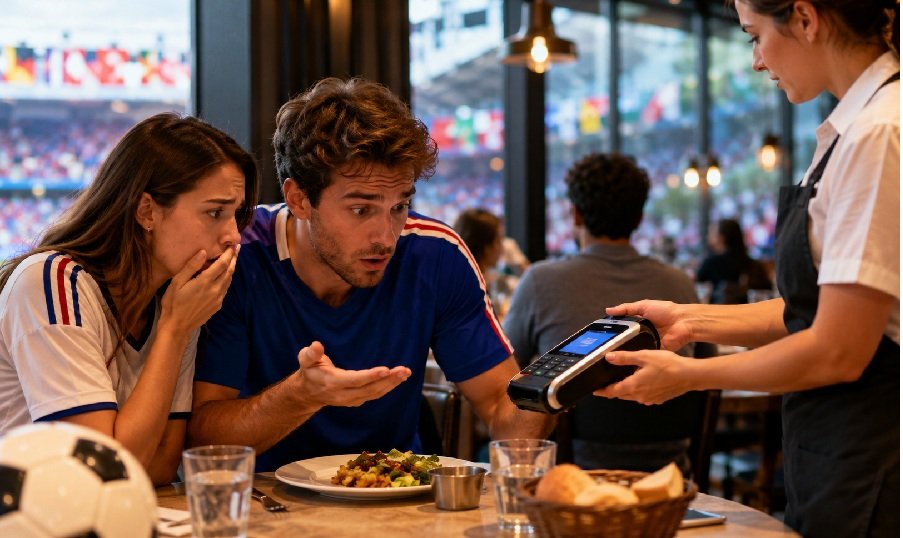
A couple finishes their lunch expecting a bill of around US$42. Moments later, the amount climbs to US$55 after taxes, a service fee, and a suggested tip pops-up on the payment screen. For many Americans, this sequence is routine. For thousands of international visitors, however, it has become an unexpected part of the dining experience.
The discussion, however, goes far beyond tipping. As consumers become increasingly attentive to their spending, restaurants face an important question: is it better to incorporate operating costs into menu prices or keep listed prices lower while adding mandatory charges later in the customer journey?
Behavioral economics offers valuable insights into this debate. Research consistently shows that the way prices are presented can influence consumers’ perceptions of fairness, value, and trust just as much as the final amount they pay.
One of the most studied concepts is drip pricing, a pricing strategy in which consumers make decisions based on an initial advertised price, only to encounter additional mandatory charges later in the purchasing process. In its work on consumer behavior in online markets, the Organisation for Economic Co-operation and Development (OECD) explains that this practice takes advantage of well-documented cognitive biases.
The first is the anchoring effect, in which consumers mentally anchor on the first price they see. The second is the endowment effect: after investing time comparing options and deciding to purchase, people become psychologically committed to that decision and are less likely to abandon it, even when additional costs appear.
The implication is important. The challenge is not necessarily the existence of additional charges, but when they are introduced. Presenting mandatory fees only at the end of the purchasing journey changes how customers perceive the entire transaction.
A complementary study published in Marketing Science reached a similar conclusion. Across six experiments, researchers found that consumers often continue with their original purchase even after discovering that a competing option would have been less expensive, largely because changing course requires additional cognitive effort. Yet those same consumers reported lower levels of satisfaction after completing the purchase.
Taken together, these findings suggest that transparency itself contributes to perceived value. Customers evaluate not only how much they pay, but also whether pricing feels predictable, understandable, and fair throughout the buying experience.
For restaurant operators, this discussion extends well beyond pricing strategy. In an industry where margins remain under pressure, passing costs on to customers is often unavoidable. The greater challenge is doing so without undermining the trust that encourages repeat business.
Behavioral economics suggests that transparency is most effective when it is designed into the customer journey rather than added at the final step. That means operational decisions and pricing strategy should work together. Restaurants that improve kitchen efficiency, optimize labor, reduce waste, and streamline fulfillment are often better positioned to keep pricing simple and communicate unavoidable charges upfront.
In other words, psychology does not replace operational excellence, it amplifies it. Customers may not remember every item on the receipt, but they do remember whether the purchasing experience felt straightforward and fair. As competition intensifies, transparency becomes not only a pricing decision but an operational advantage that helps strengthen customer loyalty.
Ultimately, the lesson from this year’s influx of World Cup visitors may have little to do with soccer. It is a reminder that customer trust begins long before the first bite and long before the final bill.
Author bio:
Alexa Figliuolo is a food technology executive specializing in restaurant operations, delivery infrastructure, and commercial kitchen strategy. She works with restaurant operators across the U.S. and Canada through her role at CloudKitchens.