Introduction
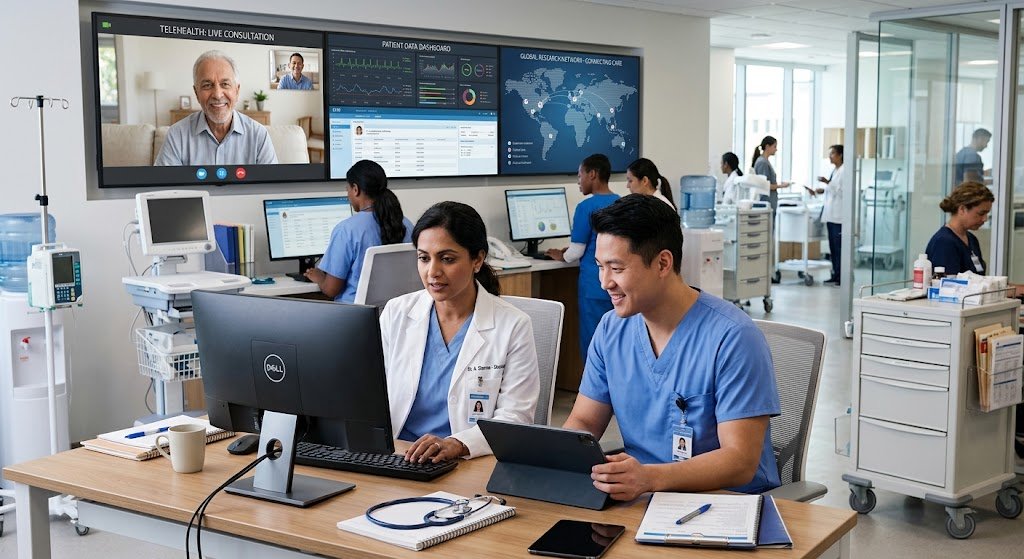
Technology is one of the most influential factors impacting employment and the work environment in today’s era. In the last couple decades, computers, the internet, mobile devices, cloud computing, AI, automation, robotics, and digital platforms have revolutionized the way people work, do their jobs, communicate with their co-workers, and create their businesses. From factory workers to office staff, to healthcare workers, teachers, designers, drivers, programmers, entrepreneurs, and everyone in between, the changes are impacting workers in nearly every part of the world. Technology can enhance productivity and create new career paths, but it can also transform or replace some of the traditional roles.
This is increasingly driving a shift toward a workplace that demands an increasing number of workers and employers to adjust to the workplace of the future, where digital skills, creativity, problem-solving, flexibility, and a continuing drive for learning are increasingly valuable. It is crucial to grasp these changes because the future of employment won’t just be about man vs machine. Instead, it will become more and more about people collaborating with intelligent systems, automated tools, robots and digital platforms to get things done more efficiently and to solve ever more complex problems.
Changing Nature of Work with the Help of Technology
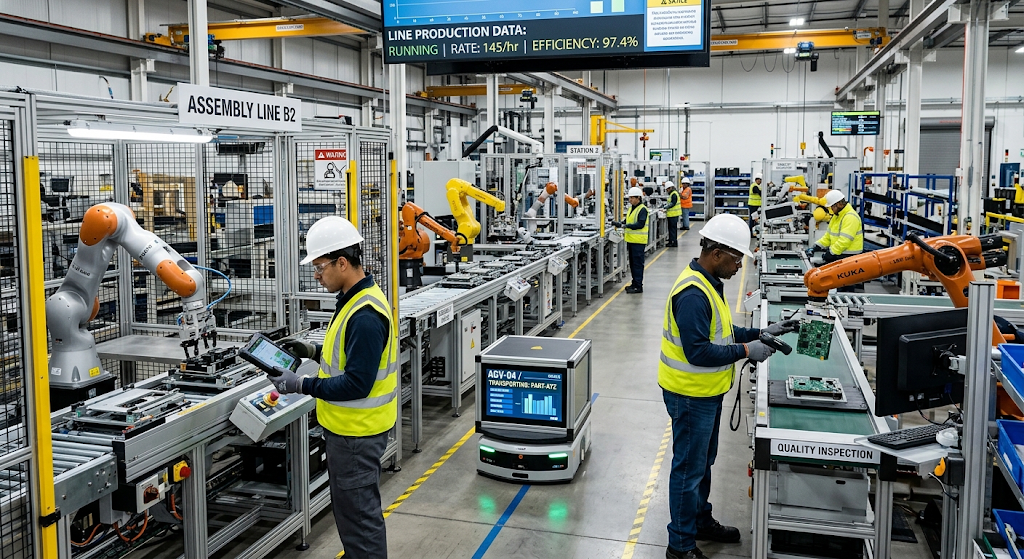
Technological change and jobs are intertwined as technology can either provide new jobs or destroy old ones. For example, automation involves implementing automation systems that enable machines and software to undertake repetitive tasks that would otherwise need human employees. Automated systems can be used in businesses to handle transactions, arrange information, organise and manage inventory, answer simple customer queries, or track production. AI can process vast amounts of data, detect patterns, create content and provide insights for decision-making. The same applies to Robotics, which has transformed industries where repetitive, hazardous, or precision-required tasks are common.
The advent of these technologies, however, does not mean the end of jobs. Rather, a large number of occupations undergo transformation as employees assume new roles that involve making decisions, communicating with others, being creative, supervising, and interacting with people. Concurrently, new professions are created around the development, maintenance, operation, protection and enhancement of technological systems. Technological change is more likely to be seen as a transformation of work rather than the replacement of workers.
The Growth of Automation
One of the most obvious impacts of today’s technology on jobs is automation. Automated software and machines help complete predictable processes quickly and with consistency for organizations. Automated equipment can be used in manufacturing to assemble products, move materials, inspect components, and monitor production lines. Software can be used in office automation to automate data entry, scheduling, invoicing, reporting and other administrative tasks. Automated inventory systems for retailers and digital systems for banks can help with routine transactions and identify abnormal activity.
Such advancements can help minimize mistakes and free up the time of staff members to focus on tasks that demand human judgment. However, individuals who perform repetitive tasks can be in for some big changes as automation grows. Instead of people being done away with, there is an increasing demand for workers that can work with the automated systems, understand the results, troubleshoot unexpected issues, and enhance the process. Staff acquiring these skills can continue to be useful even when computers replace parts of their jobs.
Artificial Intelligence and the Changing Workplace
Many areas of employment are increasingly taking on an important role by the help of artificial intelligence to analyze data, recognize patterns, make predictions, process language and support decisions. AI tools are being leveraged across customer service, marketing, research, cybersecurity, software development, recruitment, logistics, financial analysis, and other areas. These systems can handle information at a much larger scale than can be done manually, which can help to make quicker decisions and improve efficiency for organizations. Conversely, AI is also generating some uncertainty as some employees fear tasks traditionally taken on by skilled workers could be done by more competent systems.

AI will have both positive and negative impacts on different jobs, ranging from significant to minimal. Certain roles might undergo significant transformation with automation, whereas others may involve integrating AI into their current workflows. In many instances, workers that understand how to leverage and utilize AI responsibly and effectively may experience a benefit from adding technological capabilities to human capabilities like critical thinking, creativity, ethical judgment, communication, and contextual understanding.
Relevance of Human Skills amidst Technological Innovations
While AI can accomplish numerous sophisticated tasks, it doesn’t replace the power of human skills. In workplaces where decisions may impact customers, employees, communities and organizations, communication, leadership, empathy, teamwork, creativity, negotiation, adaptability, and ethical reasoning continue to be vital. Recommendations that are generated by a computer system may be reasonable, but in a specific situation, individuals must ascertain if the recommendations are reasonable.
Finally, human workers need to grasp social and cultural contexts that might not be adequately represented in digital data. Hence, technical expertise plus interpersonal and analytical skills will be a valuable asset in the future job market. Digital skills and human skills do not have to be in opposition, but both can help workers. For instance, a person who has knowledge of data analysis but can’t present the results clearly, or a person who has strong communication skills but can’t understand data analysis, may be less helpful than a person who has both skills.
Remote Work and Flexible Employment
As technology advances, including the rise of the internet, cloud-based services, collaboration and communication software, and other innovations, many jobs are now available that can be done outside of the traditional office setting. Remote work is becoming an important aspect of the workplace today, especially for jobs that can be completed on computers and online. Staff can hold video conferences, work on projects via online platforms, share documents in the cloud and even work with other staff in other cities or countries. This flexibility may help organizations locate employees from larger geographic regions and provide employees with increased flexibility in where they work.

But working remotely comes with its own set of challenges such as poor communication, cybersecurity, and isolation, distractions, and time management. Employers need to thus create clear policies and communication practices that will help to maintain employee well-being, organization connection and maintain their productivity. A mix of remote, hybrid and full-time work options may become more common in the future workplace depending on the role and worker/employee preferences.
Robotics and How It Affects Physical Employment
Industries that allow physical tasks to be automated or machine assisted are undergoing a transformation in employment opportunities through the use of robotics. In the modern era, robots are integrated in factories, warehouses, agriculture, healthcare research, logistics, and other areas where precision, repetition, speed, or strength are crucial. Robots are able to carry out some functions in hazardous or challenging environments that could otherwise endanger humans, thus enhancing safety in the workplace. Robotic systems can be utilized in warehouses for goods transport and stock management, and in industry, they can help in production tasks.
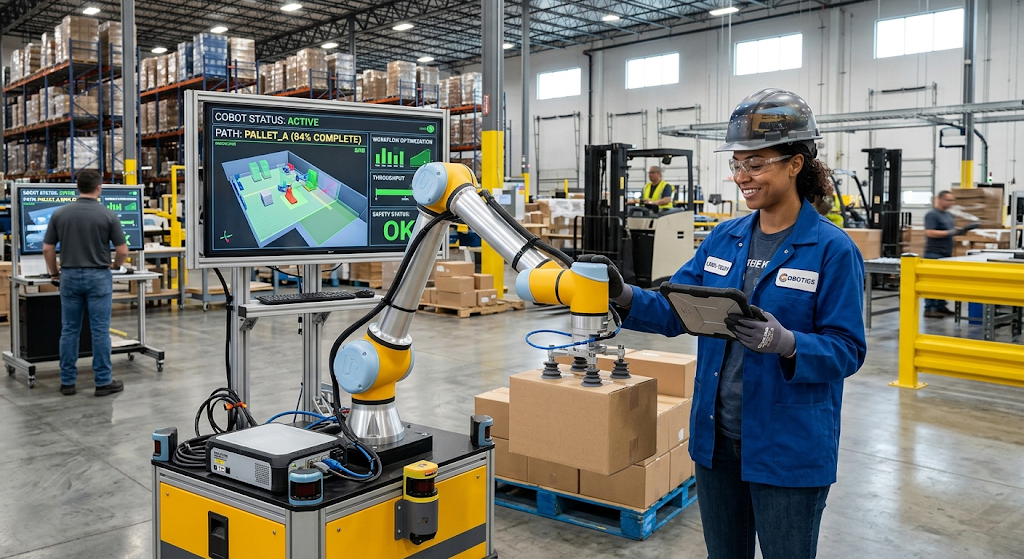
Although the use of robots is growing, it does not mean that humans will not be required to design, program, monitor, repair and manage robotic systems. As machines become more prevalent, workers are likely to have to learn new technical skills. One way in which vocational education and workplace training can make a difference is by preparing employees to take on a more complex role that involves overseeing technology rather than manually doing some of its tasks and taking on responsibilities for which machines are not well-suited.
How Digital Platforms are Changing the Nature of Work
New business opportunities for individuals to provide services, to look for customers, to sell goods and to generate revenue have been born due to digital platforms. Employers and workers can be matched on a professional or online marketplace without the need for the same physicality that often is asked for in the workplace. Freelance staff can offer their services to clients in various locations, including writing, graphic design, programming, translation, consulting, tutoring, and digital marketing. Digital platforms can also be used by entrepreneurs to create businesses without having to have large physical offices or stores.
This has reduced some of the obstacles to the world market and offered opportunities to individuals possessing special skills. But the platform-based jobs can also pose issues of income, benefits, worker protections, competition, and employment classification. For some employees, self-employment and flexibility on platforms is preferable to traditional jobs, while others might prefer the sense of security of a traditional job. Governments, businesses and workers will have to take into account how labour policies need to evolve to meet these new employment relationships.
Skills Required for the Future Workforce
With the continual evolution of technology, workers will have to acquire new skills to be productive in a changing environment. Digital literacy will be essential as many occupations will require employees to use software, platforms, automated systems or tools powered by data. Workers don’t have to be professional programmers, but they should know how to work with digital tools in an efficient and safe way. Data literacy is also gaining in value as information is used to make decisions in organizations. People who are able to read charts, comprehend basic data concepts, detect unreliable data and make reasonable conclusions can help technology-focused organizations better.
Moreover, cybersecurity awareness will be of growing significance, as more work is conducted via connected devices and online systems. Staff need to be aware of some basic controls and what it means to be suspicious of activities such as protecting accounts, and dealing with important information in an appropriate manner. They are technical skills that when coupled with communication, creativity, critical thinking and adaptability will be most effective.
Continuous learning will be one of the essential skills that will be expected of future employees. Knowledge and understanding can be updated quickly, and what you learned years ago might not necessarily be relevant to your current work duties. Look for changes in job roles and an increasing need for new skills in the workplace thanks to new software, AI systems, communication platforms and new automated processes. Those who view education as “school,” rather than as a continuous lifelong process, will have greater difficulties adjusting to the new developments.
Learning can happen at any time and in any place—without going back to school. Professional training, online learning, practical projects, mentoring, workshops, certifications and work-based development programs are pathways for employees to gain new skills. Employers also need to invest in reskilling and upskilling as experienced workers who are able to learn new technologies benefit the organizations. A culture of learning can help workers stay confident and productive, and help businesses embrace technological advancements without having to forfeit valuable knowledge and experience.
Opportunities Created by Technology
Technology offers many potential opportunities for workers, businesses and economies. The rise of new fields like software engineering, cloud computing, AI, cybersecurity, data science, digital marketing, robotics, renewable tech, online education, and a host of others has marked the transformation of the employment landscape.The employment landscape has shifted with the emergence of new industries and occupations in software engineering, cloud computing, artificial intelligence, cybersecurity, data science, digital marketing, robotics, renewable technology, online education, and many others. Technology can likewise help small enterprises and individual entrepreneurs connect with clients outside of their local region.
Now a person with a specialist skill can work with clients in other nations, without having to relocate. Digital education platforms can offer access to training that was not previously available for many learners, and collaboration tools can provide an opportunity for organizations to create international teams. Technology can also enhance access by offering tools that can assist persons with varying abilities in learning and working. But these opportunities reveal that technological change does not only mean machines doing existing jobs. It may also also generate new markets, services, occupations and forms of economic organisation that were not foreseen in earlier times.
Challenges and Risks Facing Employees
Yet, technological change poses significant problems that are not amenable to ignoring. One worry is that job displacement will affect those who have jobs that are highly repetitive and can be automated. When new technology is forced onto the worker, particularly when the technology is not well trained, workers may feel pressure to learn it rapidly. Another difficulty is that of inequitable access to technology and education. Those with access to high-quality education, up-to-date devices, reliable Internet access and professional development opportunities could be more likely to gain from technological change than those who don’t have these resources.
There may also be issues related to privacy, cyber security, monitoring, job security and work-life balance for remote and digital employees. In addition, as AI technology emerges rapidly, its potential for biases, accountability, transparency, and responsible use of automated decision-making is still a concern. To solve these problems, collaboration will be needed between governments, schools, industry, technology providers and employees in order to ensure that technological developments generate inclusive and equitable economic and social benefits, not further inequalities.
Preparing for the Future of Work
To get ready for the future of work, individuals and organisations have to take action. The first step for workers is to understand how technology is impacting their industry and which skills are gaining in importance. Having digital literacy, communication, problem-solving, analytical thinking and adaptability can be strong assets in many professions. Employers can help by providing training programmes, opportunities to try out new technology and engaging workers in decision making regarding technological uptake.
At the same time, there is a key role for educational institutions as students need to acquire skills that match their knowledge with the evolving needs of the workplace. There are a number of policy approaches that governments can take to support digital infrastructure, develop workforces, build worker protections and increase access to education and training. The goal should not be to block out technological advancement, but to ensure that people are ready to engage in an economy in which technology is being more and more made a part of daily life.
Conclusion
The world of work is undergoing a fundamental transformation thanks to technology, which is changing the nature of work, the location of work, the skills needed to do the work and the way that businesses relate to workers and customers. Automation can take over repetitive tasks, AI can assist with tasks involving information, robotics can change the nature of physical work, remote technologies can bring distributed teams together and digital platforms can provide new avenues to income generation. While these advancements are great opportunities, they also pose challenges of job replacement, inequality, privacy, cybersecurity, worker protection, and ongoing skills development.
The future of work will, therefore, also rely on the ability of people and institutions to adapt to technology and its capabilities. Employees with both digital and human skills will be more ready to collaborate with emerging technologies, and employers and government will need to commit to the education, training, and responsible innovation. Finally, technology needs to be considered not only as a job killer but as an opportunity to transform jobs, to generate new opportunities, and to help foster a more flexible global workforce.