Introduction
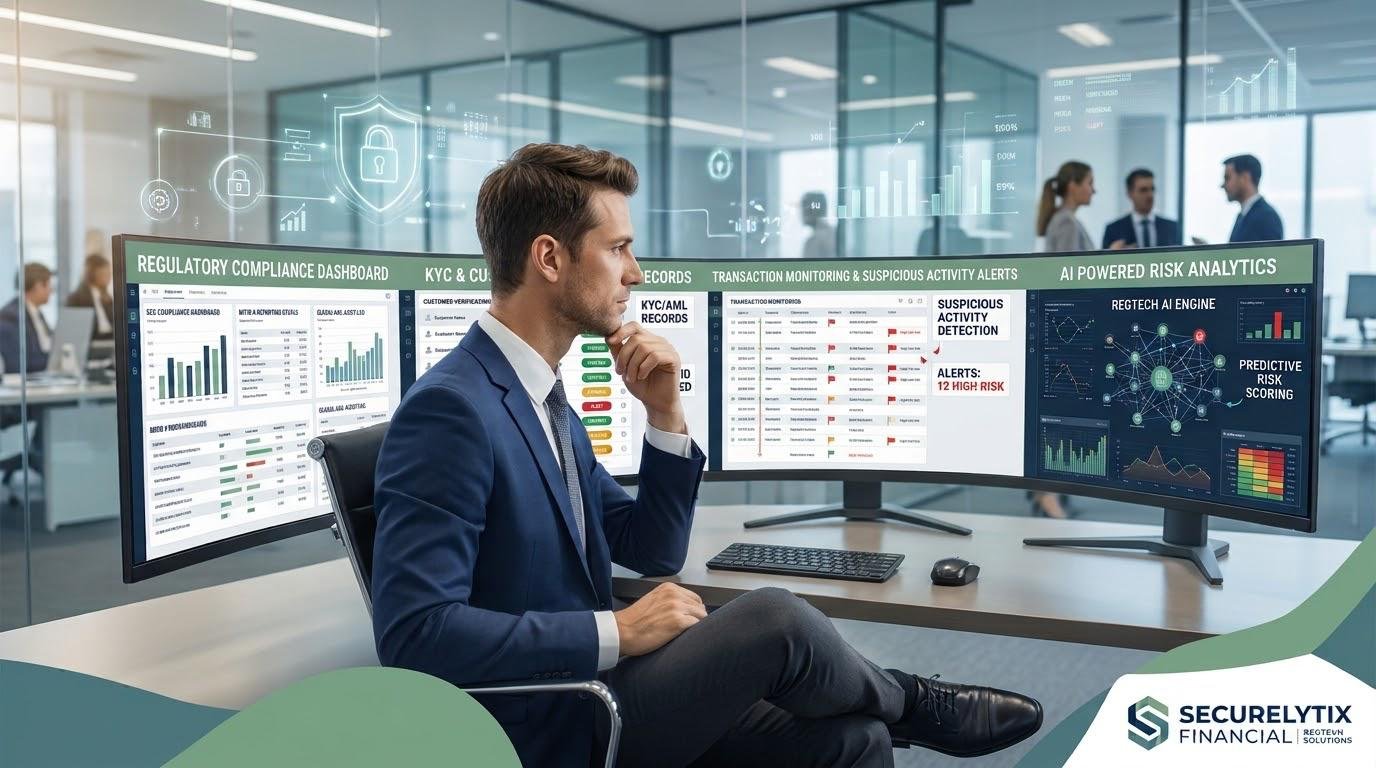
Financial institutions are subject to certain regulations that aim to ensure the security of customers, prevention of financial crimes, and the stability of financial markets. Financial institutions like banks, insurance companies, investment firms and online payment service providers need to verify customer identities, track transactions, report suspicious activity, and keep financial records up to date. The management of such responsibilities can be costly, time-consuming and prone to human error if done by hand. This is where RegTech, or regulatory technology, is helpful. RegTech leverages technology, automation, data analytics, and Artificial Intelligence to assist organizations better fulfill their regulatory obligations. The use of these technologies in compliance procedures allows financial institutions to detect potential compliance issues early, cut down on repetitive administrative tasks, boost the accuracy of reporting, and respond to regulatory changes rapidly without compromising customer trust.
RegTech – Regulatory Technology
RegTech stands for regulatory technology, which aims to streamline and enhance compliance, risk management, and financial crime detection and prevention. Employees are typically required to trawl through large amounts of paperwork, perform checks against regulatory lists, conduct investigations into transactions and prepare reports for supervisory bodies in traditional compliance processes. As banks grow and roll out new digital offerings, these activities can become hard to manage. Many of the mundane tasks are automated in RegTech solutions, information from various systems are collected and information is provided to alerts to indicate activity that needs to be investigated. Popular technologies are data analytics, digital identity verification, secure information management systems, machine learning, and cloud computing. The introduction of RegTech doesn’t mean that compliance professionals are no longer required, though. Rather, it gives them enhanced risk assessment, investigative, and record-keeping tools for making informed decisions.
Automated Know Your Customer Verification
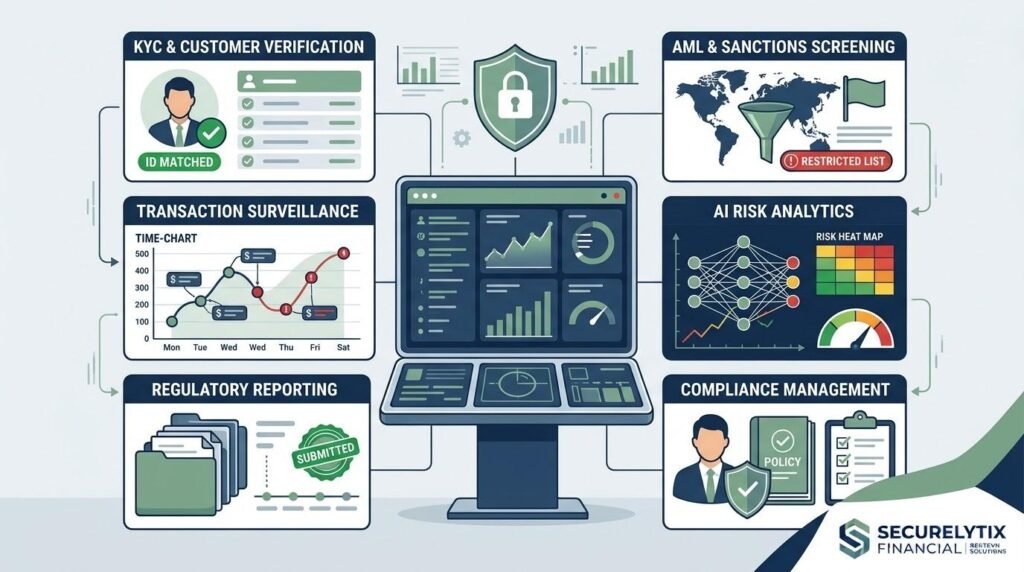
A compliance procedure called Know Your Customer (KYC) is used by financial institutions to verify the identity of customers and the risks they pose. Typical verification processes include collecting identification papers, verifying addresses, verifying account applications, and manually verifying personal information. An automated KYC system can analyze the documents submitted, pull out relevant information, match the submitted data against trusted databases, and flag any inconsistencies. Digital identity verification can also leverage facial recognition, liveness detection and document authentication to determine if an applicant is a real person. These features enable banks and digital payment service providers to sign up valid customers faster and identify fraudulent applications. However, institutions have to safeguard the personal information he or she gathers and establish other means of verifying the identity of the individual when his or her identity is not as certain as it can be using automated systems.
Screening and Monitoring for Anti Money-Laundering purposes
Anti-Money Laundering (AML) systems are used to detect suspicious transactions, which might be linked to crime, terrorism financing, or other illegal financial activity in financial institutions. The RegTech platforms then examine the transaction value, the frequency of transactions, counterparties, geographical data and historical activity to identify suspicious activity. For instance, if a bank encounters a red flag that a suspiciously high number of large transactions occurred in an account it doesn’t typically see, it may receive the alert. In addition to this, the process of ‘sanctions screening’ is carried out to help ensure that customers, counterparties and relevant transactions are screened against relevant sanctions lists released by authorized government or international organizations. Automated systems can match names, aliases, ID information and other available data to determine potential matches. Compliance teams investigate and assess the situation once an alert is triggered and decide on the action to take. These tools enhance coverage of monitoring, but the institutions need to continuously update screening information and scrutinize likely matches before acting.
AI Assisted Transaction Surveillance
AI enhances transaction monitoring capabilities by detecting relationships and patterns that are not captured by traditional rule-based systems. These machine learning models can be used to review vast amounts of payments, transfers, trades, and account activity to distinguish normal activity from potentially suspicious activity. In the case of an investment company, they may utilize surveillance technology to find unusual trading patterns that can reveal market manipulation, or a payment provider could utilize surveillance technology to recognize repeat deals linked to a compromised account. AI algorithms can prioritize alerts based on the estimated risk to help investigators focus on higher-risk cases. There are platforms that are continually learning from cases that have been reviewed and from new information, but their performance relies on the quality of training data and supervision they receive. An automated alert is not necessarily a sign of fraud, wrongdoing or compliance issues and should therefore be viewed as an investigative alert.
Ensuring Regulatory Reporting and Accurate Record Keeping
Financial institutions have to submit numerous reports to the regulators, such as reports on transactions, suspicious activity, financial positions, compliance performance, etc. The manual preparation of these reports often involves having employees gather information from various departments, crosscheck each other’s data, perform complicated and potentially error-prone calculations and adhere to tight deadlines. RegTech platforms can bring together data from interconnected systems, use reporting logic, look for missing pieces, and automatically create standardized reports for inspection and submission. Automated record keeping also provides the ability to establish an audit trail for searching to determine when information was gathered, updated, approved or submitted. The records are useful for indicating compliance in case of a regulatory inspection or audit. Automation has limitations, though, when it comes to the accuracy of the information and reporting rules. Financial institutions need to verify data, have proper controls over access and make sure that their reporting systems are up-to-date with the current regulatory requirements in all jurisdictions where they operate.
Finance Applications in Different Areas.
RegTech can help with various compliance obligations as per the financial services offered. Automated KYC verification, AML, and Sanctions screening, along with access control, help banks safeguard accounts and prevent financial crime. Insurance companies can use analytics to find fraudulent claims, uncover inconsistencies in policy application, and uncover trends in organized insurance fraud. Some of the tools that are used for surveillance include tools for monitoring trading activity, investigating possible market abuse, verifying client information and keeping a record of investment decisions made by investment management firms. Digital payment providers use real time transaction analysis, identity verification and automatic risk scoring to detect fraudulent transfers and safeguard electronic payment services. While the needs of these organizations are different, all of them require accurate information, effective monitoring and timely reporting. RegTech helps them to meet these obligations by having systems tailored to their specific risks and regulatory requirements.
The Issues of False Alerts and Algorithmic Bias
Yet, RegTech can generate false positive alerts because it might mistake legitimate activity for suspicious activity. When a customer receives an unusually large payment or transfers funds from one personal account to another while traveling out of country, it could be a red flag for a monitoring system. Too many alerts result in higher investigation costs, quicker delays to legitimate transactions and difficulty for compliance teams to determine if the alert is a legitimate threat or not. Another problem is the use of AI to generate biased results, because the training data may not contain enough information or may be unrepresentative or based on historical discrimination. For instance, a bad model could continually overestimate the risk of a particular set of customers when there is not enough data to validate that. Financial institutions’ systems should be tested periodically, false positive rates should be monitored, the financial model’s performance should be assessed on the specific customer segments and the detection rules should be changed if needed. Human evaluation of the context, challenging the results that are not reliable and ensuring the decisions are fair and proportionate are still very important.
Data Protection and Cyber Security risks
RegTech platforms handle sensitive data, such as identity documents, transaction histories, financial data, and risk assessments of customers. While this information can help with conforming to the rules, its focus in digital systems can make it an appealing objective for cybercrime. If a successful attack occurs it could lead to disclosure of confidential information, compliance operation disruption or criminals being able to use customer identities. Financial institutions need to therefore put in place encryption, secure authentication, role based access controls, monitoring of systems, etc. and have suitable backups in place. They should also have policies in place for data retention and only gather data for legitimate reasons. Third party technology providers must be evaluated as it can present a risk if the system is lacking. These risks are mitigated through regular security testing, vendor reviews, incident response planning, and employees are trained. Also, organizations should make sure that they handle their data according to the laws and financial regulations in effect.
Comprehensive solution for Emerging Threats and Operational Risk Management
Adapting to the latest methods of financial crime, criminals are leveraging more advanced techniques such as phishing, social engineering, identity theft, ransomware and AI tools. Employees and customers can be tricked by a person posing as an attacker with a convincing message or by a person holding a convincing identity material and by compromised third party services being used to gain access to otherwise protected systems. RegTech adds transaction monitoring, identity control, access review, incident alerting and risk reporting capabilities to operational risk management. Security and compliance teams can benefit from continuous monitoring as it will enable them to detect any unusual activities early, before they can grow into a bigger issue. Automated workflows can also be used to record investigations, assign responsibility and monitor corrective actions. However, institutions need to keep their defenses ever-alive to reflect changing methods employed by criminals and changing expectations and requirements from regulators. Successful risk management is not something that can be achieved through a single automated platform, it’s an all team effort between compliance officers, cybersecurity experts, operational managers and senior leadership.
The Role of Humans in the Process of Importation
There is a balance between using automated and professional judgment when implementing RegTech. While technology can analyze and detect information and patterns quickly and consistently, it can fall short if it encounters situations where information isn’t complete, transactions are unexpected, or provided information doesn’t align with what the technology is programmed to look for. Human investigators add context, assess supporting evidence and decide on a follow-on action for an alert or report. Compliance personnel also provide input in the interpretation of new regulations, approval of changes to monitoring programs, and the explanation of compliance decisions to regulators and customers as needed. Financial institutions should ensure there is clarity over what units are responsible for making automated decisions, keep records of any changes to the models and train staff regularly on how to use the models. Senior management have a responsibility to make sure that technology is used to help the organization comply with its compliance goals, not just to cut costs. Institutions can use automated tools with expert professionals to deliver more efficient, fair, transparent, and accountable service without compromising quality.
Conclusion
The rise of RegTech has made it a key aspect of financial compliance in today’s world, enabling institutions to handle the complex compliance standards, identify suspicious activities, keep proper records, and adapt to regulatory changes. Automated KYC verification, AML monitoring, sanctions screening, AI assisted transaction surveillance, and regulatory reporting streamline compliance efforts, minimize manual tasks, and enhance compliance operations speed and consistency. While these features can be helpful to banks, insurance firms, investment managers, and digital payment providers, they need to be customized/configured to suit the risks and legal obligations of the individual institution. The need for a human touch is evident from challenges like false alerts, algorithmic bias, data protection issues, and third-party vulnerabilities. Those financial institutions who are able to integrate solid RegTech solutions into their existing infrastructure, together with robust governance, competent staff, and frequent security audits, will be more equipped to address operational risks, counter financial crimes and instill trust in the financial system.
Get more well researched information about RegTech in financial institutions here.