Over the next 10 years, the business world is undergoing unprecedented technological change, and new technology will shape the way businesses work, compete, and how they serve their customers. The way small businesses and large enterprises operate can no longer be limited by traditional models, as the use of advanced digital tools is becoming more accessible, more affordable, and features an easy integration. New and emerging technologies like quantum computing, blockchain, 5G connections, and autonomous systems are no longer just experimental ideas—they’re critical to improving efficiency, security, innovation and customer satisfaction. By grasping these trends and proactively incorporating them into their strategies, organizations can better lower expenses, enhance decision-making, bolster their digital security, and deliver more personalized experiences to their customers.
Not all business leaders need to be technology experts in order to implement digital transformation over the next decade. Managers and business owners, on the other hand, should be familiar with the potential of these technologies, where they can be applied usefully, and what they can do for the business. The most successful organisations will be those that are leveraging technology to address real issues like supply chain delays, cyber security threats, inefficient workflows, customer engagement issues and access to reliable data. Leveraging new technologies and sound business practices, companies can create more agile, smarter and more resilient operations that can adjust to market shifts.
Technologies have been impacting business development for years, but they are doing so much more so now. While companies once might take years to implement new systems, today’s markets demand a more rapid pace of adaptation, due to shifting customer expectations, competition and operation requirements. Nowadays, digital platforms, cloud computing, artificial intelligence, automation and state-of-the-art communication networks are indispensable for businesses to compete. Technologies that are at the early stages of development will become ‘must have’ tools for smaller companies to increase productivity and customer relationships over the next decade, and are currently an advantage only available to large businesses.
For small companies these technologies can present an opportunity to compete with larger companies by improving efficiency and eliminating operating restrictions. For instance, a small retailer would have access to advanced analytics that would help them understand their customer’s behavior, blockchain would increase the security of the transactions, and automated systems would let them manage their inventory. These innovations can be applied by large businesses to streamline their operations across the globe, enhance collaboration, and oversee intricate supply chains and customer relationships. The crucial aspect will not only be the technology itself, but the selection of technology that suits the business goals and makes a difference.
Quantum computing
Quantum computing is one technology area poised to impact business in the near future in a major way. Quantum computers are different from the traditional computers which process information with a binary system, and solve certain complicated problems in a completely new way using quantum principles. While generally not a marketplace reality yet, companies are beginning to investigate the potential of this technology to enhance financial modeling, drug discovery, logistics optimization, cybersecurity, and advanced research, among other areas. Those companies that grasp this technology early on will be more equipped to look forward to future opportunities.
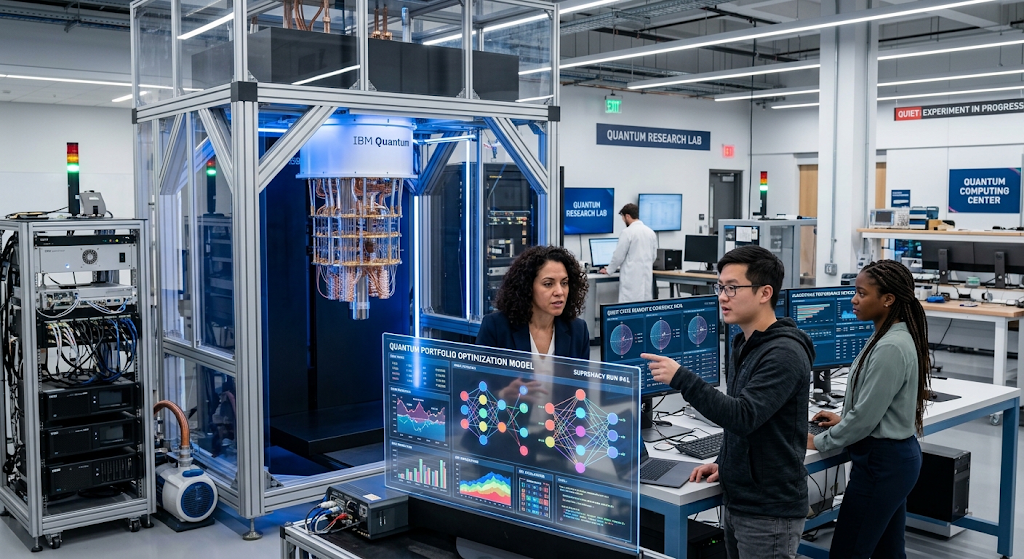
Quantum computing is a new way to compute complex information, and it could prove useful for organizations when they need to solve a problem that they can’t solve with a conventional computer. To the business leaders, the practical relevance is not the replacement of the existing computers in the business companies but an understanding of how the capabilities of quantum can improve strategic decision-making within the business. Quantum computing, for instance, could help financial institutions to better analyze complicated market situations, manufacturers to optimize supply chain management, and pharmaceutical firms to speed up research processes. Once the technology is more developed, companies will probably subscribe to quantum computing in the cloud instead of investing in dedicated hardware.
Small businesses can indirectly benefit from quantum computing via technology providers that are providing services using quantum computing. Small businesses, rather than investing in advanced computing infrastructure, can leverage platforms that embed sophisticated computing features into current business applications. This may give them access to improved forecasting systems, enhanced cyber security systems, and more effective optimization systems. Business leaders should keep an eye on the progress of the technology, determine those sectors where quantum technology offers value to their business and design their internet strategy in a way that enables them to access new technologies as they become commercially viable.
Blockchain
The impact of blockchain technology on business transactions, information sharing, and digital trust will keep revolutionizing the way companies operate. While blockchain gained popularity in the context of cryptocurrencies, the technology has many other applications beyond the digital currency world. A blockchain is a distributed record system where the information is securely stored and verified by multiple participants. This can enhance transparency, minimise fraud and establish more trustworthy business, customer, supplier and partner relationships.
In supply chains, blockchain can be used to enhance visibility and accountability by providing tracking solutions from the point of production to delivery. This is particularly beneficial in sectors that prioritize authenticity, quality assurance, and compliance with regulatory requirements. For instance, manufacturers are able to confirm the source of products, retailers can verify details of products, and customers are able to have more confidence in the products they buy. For companies that rely on intricate global supply chains, blockchain applications can help minimize inaccuracies, boost efficiency, and foster trust with suppliers.
Financial operations can also benefit from blockchain as it can speed up and secure digital transactions. Smart contracts are self-executing contracts that run on the blockchain network and can automate certain tasks when specific conditions are fulfilled, which can help businesses reduce administrative tasks. This can streamline processes like payments, insurance claims, licensing agreements, and supplier contracts. Companies must however take care to identify use cases for blockchain and not just jump on the band wagon due to its popularity.
5G
5G networks will have a major impact on how businesses communicate, gather data, and utilize connected technologies. Unlike previous generations of mobile networks, 5G has higher speeds, shorter delays, and can accommodate a much greater number of connected devices at once. These enhancements will enhance new business models that rely on real time data, smart devices and sophisticated automation. Whether in factories or stores, businesses will be able to operate in more connected and responsive ways.
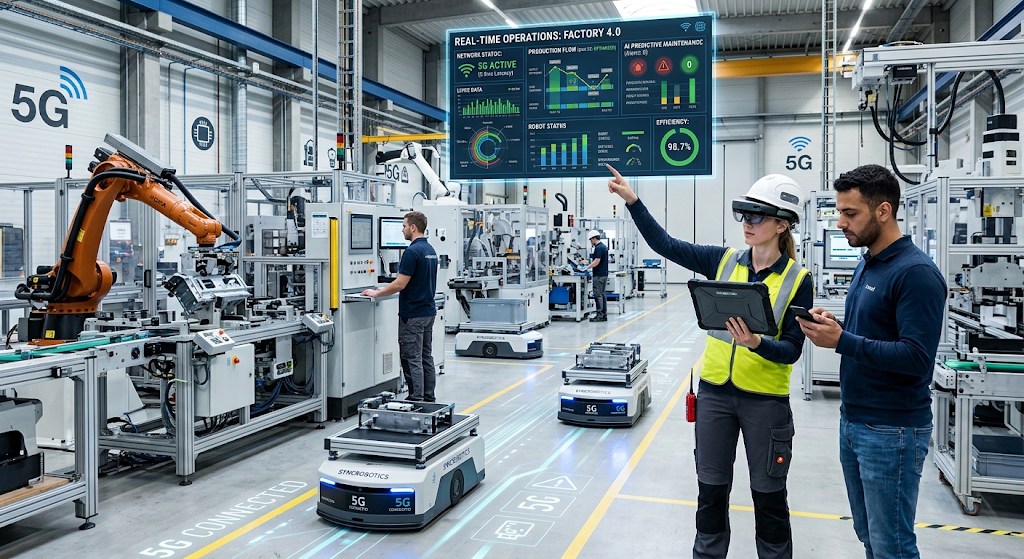
The ability for better communication between devices, employees and customers is one important benefit 5G will bring to business. Sensors that are connected within the smart factory can track machine performance and provide insights into maintenance needs before they arise. Real-time customer data will enable retail businesses to enhance customer shopping experiences and manage inventory more effectively. Logistics companies can monitor vehicles, deliveries and delivery processes more accurately. These enhancements can lower costs, boost productivity and improve customer experiences.
There will also be greater connectivity for small businesses. Various cloud-based solutions, customer management systems, and automated services rely on robust internet connections. A more responsive network means that small businesses can be more efficient without extra costly hardware and infrastructure. For business owners, they should consider how connectivity can facilitate business operations, especially when it comes to working remotely, customer service, digital payments, and online sales.
Business automation
Another key area of technology which will change business operations within the coming decade is autonomous systems. They rely on AI, sensors, machine learning, and automated decision-making processes to carry out tasks with minimal human intervention. Although autonomous technology is commonly believed to be used in self-driving cars and robots, its business uses are far more extensive. Companies across various industries, including agriculture, manufacturing, healthcare and transportation, are already looking at autonomous solutions to enhance safety, efficiency and productivity.
Autonomous systems can enhance logistics and transportation processes, optimize delivery routes, minimize delays, and ensure safe transportation. Intelligent robots can handle the management of warehouse stocks, moving items and speeding up order delivery. Autonomous equipment can monitor crops and analyse environmental conditions, thus helping farmers make better decisions in the agricultural sector. These applications can help businesses accomplish repetitive or complex tasks more efficiently, and also help staff members concentrate on more important jobs.
The use of autonomous systems does not involve the exclusion of human intervention from business processes. Rather, the focus is on capitalizing on human expertise and the capabilities of machines. Automated tools can help employees be more accurate, less repetitive, and provide real-time information to improve decision making. To make sure that the long-term benefits of autonomous technology are realised, businesses need to invest in training their staff to work with automation, redesigning processes and adopting an ethical approach to automation.