Introduction
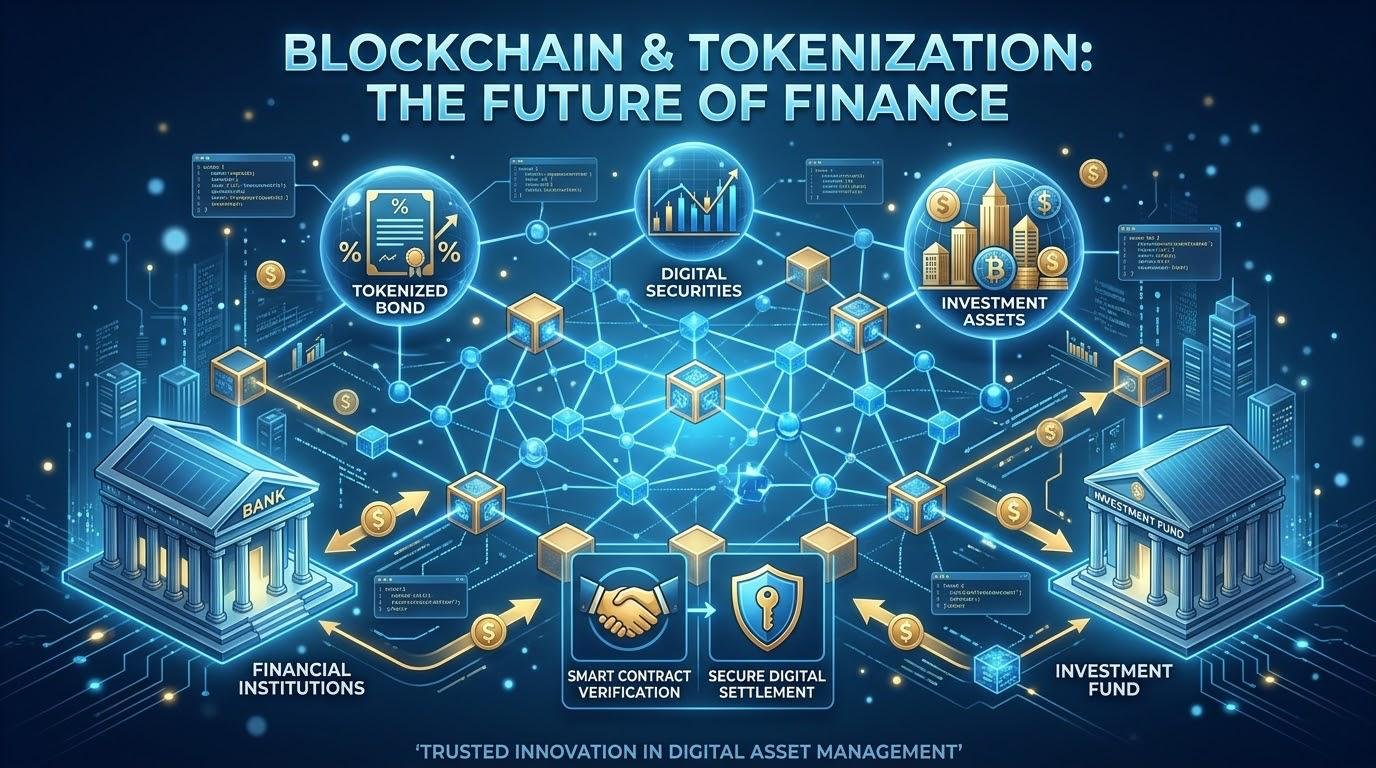
The listing of assets on the blockchain is reshaping the way financial institutions keep track of transactions, handle investments, transfer assets and facilitate payments. In the traditional financial models, several intermediaries are required for a transaction to be completed, there are multiple databases, and all of the transactions take a long time to reconcile. Blockchain technology adds distributed ledger systems to facilitate authorized parties to validate transactions and share a set of accurate records. The extension of these capabilities is tokenization, which involves the creation of a token for an asset, such as a bond, share, real asset interest or commodity. In parallel, stablecoins are the focus of interest due to their promise of stable value relative to other assets, typically tied to a fiat currency. While these innovations provide potential for improving financial operations, the success of their implementation will be dependent on good governance, adequate regulation, cyber security and legally binding rights of ownership.
Blockchain Technology and Distributed Ledgers
Blockchain is a form of distributed ledger technology, which records transactions in a network of computers instead of on a single central database. The transactions are channeled into blocks, tied together and linked to the previous blocks through cryptographic methods to form a chain of blocks or a chronological record. The consensus mechanisms that participants can use will vary based on the system, and may be used to decide which transactions should be accepted. After entering into a transaction, it can be hard to change without being noticed, which makes it easy to see and understand. Once recorded, transactions are hard to change without being noticed, which makes it easy to see and understand. Not all records, however, are accurate and not all transactions are legitimate, with blockchain alone. Financial institutions will still be required to verify information, control access to the network and have clear rules for the network. Permissioned blockchains provide access to approved organizations, whereas public blockchains enable a large number of people participating. The various models provide banks, investment companies and payment providers with flexibility in building the system to meet their operations and regulatory needs.
Representation Financial and Physical Assets with Tokens.
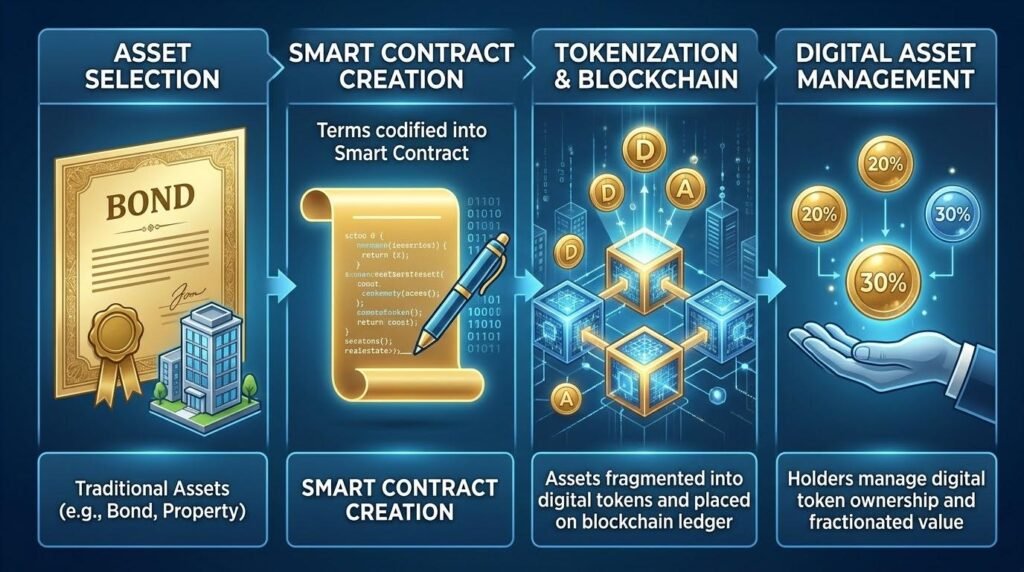
Tokenization is the process of developing a digital representation of a right or interest in an asset on a digital ledger, such as a blockchain, or another programmable digital ledger. The underlying asset can be a government bond, a company share, the interest on a property, a unit of an investment fund or a commodity. An institution can issue tokens representing specific ownership or contractual rights rather than just relying on traditional certificates and on separate databases. These tokens may be split into smaller chunks, which could enable investors to participate in investments that would require a large investment of funds in a different design. However, issuing a token does not necessarily mean that the underlying asset is transferred to the holder of the token. The issuer is responsible for establishing the connection between the ownership of tokens and the asset’s ownership, as well as the applicable law and the rights for investors. Reliable records, enforceable contracts, and suitable legal structures are then imperative to reap any financial rewards that tokenization can provide.
Concept of Tokenization and its Impact on Asset Management in the Modern Era
Tokenized securities are a new category of securities based on blockchain technology that include such assets as shares, bonds and fund interests. These instruments have traditionally been issued and carried by brokers, custodians, transfer agents, exchanges, settlement organizations, all of which have records and/or specific functions. Some ownership records and transaction processes can be executed via an intercoordinated digital infrastructure thanks to tokenization. This can help asset managers with the administration of assets, automated reporting and maybe fractional investment opportunities. Other activities that can be automated using smart contracts include distributing payments or imposing restrictions on transfers. But the securities are still subject to the various securities laws, investor protection measures, and market regulations. Having them available doesn’t mean that they have better returns, lower investment risk, or higher demand. When considering the technology, asset managers should ask themselves whether the benefits of the technology outweigh the costs to operate and improve access to investors and whether the technology has the necessary protections compared to existing technology.
Economics and Financial Transactions, Smart Contracts
Smart contracts are programs that are deployed on a blockchain that will only perform certain actions when certain conditions are met. They can assist in the distribution and payment of interest, restrict transfers, handle eligible transactions and manage asset/payment exchanges in financial services. For instance, a tokenized bond might employ a smart contract to determine and disburse the periodic bond payments to bond-holders that are eligible for them, based on the bond’s programmed guidelines. Automation can help to shorten repetitive admin tasks and prevent a wide gap between the various systems. However, smart contracts are unable to identify on their own if all conditions of the real world are met. They can rely on information provided from the outside, which is provided by the data provider; information errors can lead to wrong results. Financial losses can also happen due to software flaws, poor rules and test designs. Thus, there is a need for code audits, deployment control, tracking, and error correction and/or dispute resolution processes at the institutions.
Securities Settlement and Reconciliation Issues
In traditional securities settlement, there are generally several organizations involved, and before transactions are deemed complete, there must be a comparison of records, instructions and a reconciliation of differences. These may lead to delays, cost of operations, and opportunities to make mistakes, especially when institutions are operating on incompatible databases. The shared transaction ledger could enable authorized participants to operate from identical transaction records, eliminating the need for multiple exchanges and comparison of information. The tokenized nature of securities and digital payment instruments could help to enable quicker transfers and better synchronization of payment and asset transfers and therefore delivery-versus-payment processes – where payments are tied to a transfer of an asset. This may help to mitigate some risks and administrative costs associated with settlements. A shared ledger does not, however, take care of all the reconciliation needs, particularly if there is a need to compare the records with external banking systems, legal registries, or accounting systems. The benefits are dependent on the participation, technical integration, good governance and reliability of the whole settlement infrastructure.
The Role of Stablecoins and Cross-Border Financial Transactions
Correspondent banks, conversion of currency, compliance screening and the varying settlement schedules are often part of cross-border payments. Such transfers can result in higher costs and time lags in the transfer of funds between countries. Stablecoins could offer an alternative form of digital value transfer between compatible networks and enable transactions outside the boundaries of traditional banking. Their usefulness is dependent on the level of their reserves or supporting arrangements, the redeemability, availability of the network, and the regulatory status of the issuer. In addition, certain financial institutions are exploring stablecoins that are not privately issued but are based on tokens issued by the central bank. Tokenized deposits are claims on commercial banks, and central bank digital money is in the form of digital money that is issued by the central bank. There are implications for settlement and financial stability in each of the models. The faster digital transfers, the cheaper they come and the faster the legality, but the user needs to take into account exchange rates, transaction fees, liquidity, compliance, and the fact that a digital asset may not be worth as much as it was intended to be.
Digital Asset Custody and Cybersecurity
Digital asset custody is the securing of digital assets’ security (cryptographic keys and systems used to manage digital assets). The transactions in blockchain are usually based on private keys which, unlike traditional account management, are needed for authorizing a transfer. The loss of a key, breaking it open or allowing unauthorized users to enter can have dire financial repercussions. These risks can be mitigated by the use of hardware security modules, the use of offline storage, multisignature authorization, strict access controls and separate operational responsibilities. They also need to defend against phishing, malware, misuse by those with access, software defects and attacks on services connected to the network. A cybersecurity solution should provide for ongoing monitoring, cyber incident response plans, recovery plans and security evaluations by another party. Important, that not all legal or operational issues are solved when securing custody. Institutions are required to set out who has control of the assets, how customer assets are segregated from company assets, etc. and what occurs in the event of a custodians becoming insolvent, and/or a dispute over assets.
Compliance with Regulatory Requirements and Legal Aspects of Ownership
Financial institutions are bound by existing laws and cannot bypass them due to the fact that they are making use of new technology for the transactions. These can range from securities registration, to anti-money laundering controls, customer identity verification, sanctions screening, taxation, consumer protection and financial reporting, depending on the jurisdiction and the type of asset. Issuers of tokens should have a clear disclosure of the rights of a token holder, such as voting rights, redemption rights, restriction on transfer and dividend entitlement. The legal ownership can be tricky when the token has an interest in an asset within another company, custodian or trustee. When there is a dispute over the ownership of the blockchain record, as may happen if it contradicts a legal register or contractual agreement, legal interpretation may be necessary. Institutions should therefore have procedures that mandate the documentation of incidents, establish dispute resolution processes and outline the responsibilities of the parties involved in fixing inaccurate records. Institutional participation can be fostered only through regulatory clarity, which will also help to build investor confidence and assure investors.
Liquidity, Interoperability and Practical Limitations
While it’s possible that some assets could be easier to split and pass off, it’s not a given that tokenization will lead to a liquid market. Liquidity varies with the number of willing buyers and sellers, depth of the market, transaction costs, of the eligible investor, and the availability of reliable trade venues. Normally transferable tokens that represent a property interest that is unusual or a privately issued security may have limited demand. Interoperability is also a hurdle as various blockchains could follow different standards, have different access control, and apply different transaction rules. Transferring assets from one network to another can create extra security issues and integration with traditional financial systems could be costly if blockchain systems are to be connected to the financial system. Institutions will also need to think about the number of transactions that can be processed, network fees, privacy, the resilience of the system and the environmental footprint of specific consensus mechanisms. The restrictions demonstrate the reasons behind the need for more than token gestures to be successful in adoption.
Blockchain as Exchange of Institutional Applications instead of Cryptocurrency Speculation.
It is worth noting that blockchain and tokenization must be assessed on their own merits, rather than being based on speculations about the price of cryptocurrencies. There are many reasons for significant price volatility in a cryptocurrency, such as fluctuations in demand, market sentiment, regulation, and liquidity. In contrast, an institutional blockchain project can be any aspect of securities administration, transactions, contract automation or asset transfers involving regulated assets. It is not the right time to wait and see if it succeeds because of the token price surge, rather, the effectiveness of its operation, the certainty of the law, security, the reduction of costs, and customer outcomes should be measured. Permissioned ledgers can be used for interbank settlements, tokenized fund units could become an avenue for investment firms and digital settlement mechanisms could be explored by payment companies. Applications have the ability to run without relying on the popularity of a speculative cryptocurrency. However, not all projects are sure to be successful in institutionalization. It makes sense to review actual transaction volumes, independent evaluations and governance structures prior to investing significant time and resources.
The Future of Blockchain and Tokenization in the Financial World
Whether institutions can weave technology and reliable legal and business models together to define the future of blockchain-backed finance will be key. New standards for tokens, digital identities, asset custody and interoperability could help simplify the issuance and management of digital financial asset tokens. A common set of transaction records may facilitate better inter-institutional coordination, and smart contracts can streamline some of the mundane aspects of transactions and aid in efficient settlements. Meanwhile, uncertainty over ownership, fragmented markets, cybersecurity risks, and regulatory differences will also remain important factors that will affect adoption. Financial institutions will have to be careful about new systems, take accountability measures and inform customers of the rights and risks of digital assets. Governments and regulators will also be at forefront in setting acceptable practices and safeguarding market integrity. Blockchain and tokenization are not an end all, be all financial solution, instead, they are expected to emerge, organically, where clear and tangible benefits can be demonstrated.
Conclusion
Blockchain technology and tokenization provide financial institutions with new options on how to record transactions, how to represent assets, how to automate contractual obligations and how to coordinate settlement. When used responsibly, tokenized securities, stablecoins, digital custody and shared ledgers could enhance some key elements of asset management and cross-border payments. But these technologies don’t remove the risk of investing, nor will they guarantee that the investment can be easily sold, or that title to it is automatically conferred upon the investor. They are effective when cybersecurity is strong, regulatory compliance is adhered to, they are interoperable, they are well-governed, and rights are enforceable. Financial institutions should separate out the practical from the promises and assess the benefits (and potential limitations) in terms of measurement. As long as blockchain-based systems are implemented with proper care, they could be a useful addition to the modern financial infrastructure, and offer more coordinated and efficient transactions, with the same protection and trust that need to be observed within financial markets.
Get more well researched information about Blockchain and tokenization in finance here.