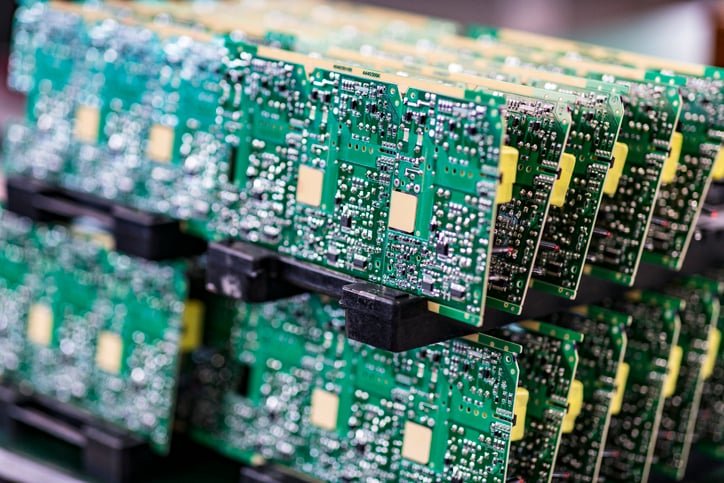
Printed Circuit Boards (PCBs) are a vital part of almost all modern electronics, ranging from industrial controls to consumer goods to everything in between. They are necessary for providing electrical and structural connections for disparate system components. As a part of an engineering team, having knowledge about the processes of an essential item that you are integrating, can enable the optimization of design, budgeting constraints, and maintain reliability for products over time.
For more in-depth information you should view from China one stop PCB fabrication Supplier – LHD TECH
Transforming a schematic from software to a fully realized board encompasses many consecutive ‘chemical, mechanical, and optical’ (as they will be from now on) processes. Each of the steps in the process have to be ‘controlled’ in an environment that is suitable for ‘quality assurance’ or ‘QA’ to eliminate potential defects. Having an imperfect or flawed step in the workflow results in reactive or cataclysmic failures during the assembly or even the final use of the product.
This guide is going to show the creation process of PCBs from beginning to end. It will not leave out the main steps, process of prototyping, assembly process, and choosing the best manufacture. Examining the steps to technical development helps the hardware develops and the team buying the hardware and components the ability to use good practices for the development of electronics that have a low time to market.
Introduction to PCB Fabrication
What is PCB Fabrication?
Translating a chunk of a technology blueprint into a part of a tangible resource that is a part of a circuit. Laminate boards (sometimes copper clad) are the robust bases of the boards on which the individual electronic components are later affixed and used. It is also the standard on which mono or dielectrics and copper foil are bound together to create the paths tailored to the needs of the design.
The Significance of Custom PCB Fabrication
Manufacturers of high-quality circuits are the backbone of the electronic devices since the Printed Circuit (or PCB) governs the overall functionality and durability. As an example, for a high frequency application the circuits must be designed and controlled to suit the characteristic impedance of that frequency which is also the case for apparatus designed for electrical energy to lose mechanical energy.
Substandard circuits will lead to irretrievable mechanical fractures or ruptures of the device, or substandard mechanical failure of the device, and failure of the device to perform the required functions, resulting in safety being jeopardized and the device being completely inoperable.
Elements of PCB Fabrication
The process involves several phases ranging from design verification and preparation of materials followed by inner layer imaging, lamination process, drilling, processing of the outer layer, application of a solder mask, and execution of a surface finish, and at the end conducting a bare-board test. Each step fully depends on and aligns seamlessly with the step that preceded it.
Steps in the PCB Manufacturing Process
Design and Layout of Printed Circuit Boards
The fabrication cycle begins with computer-aided design (CAD) data provided by the engineering team, typically in Gerber or ODB++ formats. Manufacturing engineers run a Design for Manufacturability (DFM) check to ensure the layout meets the facility’s capabilities. This step identifies potential issues such as inadequate trace spacing, acute angles that could trap acid, or incorrect drill hole sizes.
Material Selection for PCB Fabrication
Selecting the correct substrate is a fundamental engineering decision. FR-4, a glass-reinforced epoxy laminate, serves as the industry standard for most consumer and industrial applications. High-speed or high-temperature environments may require advanced materials like Polyimide or specialized Teflon-based substrates. The selected material dictates the board’s thermal stability, dielectric constant, and mechanical strength.
Etching and Drilling Techniques
Once the copper-clad laminate is prepared and a photoresist layer is applied and exposed to UV light, the board undergoes etching. Alkaline or cupric chloride chemical solutions remove the unprotected copper, leaving only the desired circuit traces. Following lamination of the various layers, computer numerical control (CNC) machines drill the necessary vias and mounting holes. These holes are subsequently plated with copper to establish electrical connections between the different layers of the board.
Prototype PCB Fabrication
Advantages of Creating a PCB Prototype
Prototyping provides engineers with the opportunity to pilot their designs and verify them before spending the time and money to take them into full scale production. It helps engineers to identify design flaws and pieces that don’t fit before moving too far into the design cycle. Prototyping helps engineers mitigate the financial loss that can happen when engineers are forced to produce lots of fail boards because the boards are useless due to design flaws and poor functionality.
There are many steps in the fabrication of prototypes. The process uses many of the same steps as the fabrication process yet the focus is more on the time elasticity and flexibility on the process than the price elasticity from scale. Manufacturers use quick-turn fabrication lines that allow for faster set up. Manufacturers produce prototypes in small batches, that, like a single board, can be less than a few dozen, so that engineers can test prototypes and iterate the design, changing values of components and getting the chance to verify the proper functioning of the firmware.
Having a partner for prototyping is different from having a partner for production. When choosing a partner for prototyping, the values that need to be prioritized are speed, and communication that is easy to understand. There are designs for manufacturability constraints that a good manufacturer can give feedback on. Also the manufacturer can assure that they have transparent pricing for low-volume production. Finally, a good manufacturer can utilize special materials to target the desired design tolerances.
Assembly and Testing of PCBs
PCB Assembly Techniques
The next stage after making the bare board is the assembly stage (PCBA). During the assembly stage, different components are soldered to the board. The most common method is Surface Mount (SMT). With this method, different components are placed on a thin layer of solder and are passed through a reflow oven. Once the solder on the board melts, it will form a bond between the component and the board. Since some components are larger and heavier, through-hole technology (THT) must be used. THT connectors go through the board and solder to the back of it. The solder is usually done with a technique called wave soldering.
The Importance of Testing in the PCB Industry
Testing is one of the vital steps in the assembly procedure of all complex systems. The many defects that can go to the PCB products that are purposely hidden (such as a cold solder joint or a microscopic fracture in the PCB traces) can cause a complete product failure. The manufacturer can gain the confidence and reputation they need in compliance with the industry’s requirements and certifications.
Common Challenges in PCB Assembly
Unfortunately, several defects can arise in this stage of the assembly. One of the most common problems is called a solder bridge. A solder bridge occurs when one of the pads, on the solder joint side of the PCB, is covered by too much solder, thereby causing a short. Another common problem is called tombstoning. Tombstoning occurs when, due to uneven heat distribution or uneven application of the solder paste during reflow, a small surface component can end up standing on one end and not making any contact with the solder joint. These problems, among many others, can be identified and resolved in the assembly stage using different methods, such as In-Circuit Testing (ICT) and Automated Optical Inspection (AOI).
Choosing the Right PCB Manufacturer
Factors to Consider When Selecting a PCB Manufacturer
You must understand a potential partner’s production potential, including technical skills, certifications, and production capacity. Analyzing minimum order quantity and maximum production capacity from draft to mass production is important, as is determining lead times. Environmental compliance from ISO and RoHS must be ensured.
When assessing price and quality, remember price and quality are inversely correlated. Lowest price PCB may cut corners to attain their price. This may be in their production process or in the materials they procure. Commonly, R&D is an additional cost, and cutting corners can lead to unexpected costs and increase in total cost. Cost analysis from multiple PCB entails a comparison of cost and quality. Quality can be measured through production yield, their testing plans and historical data on failures.
Quality dual PCB manufacturers are reliable and provide R&D for additional PCB at no added cost. LHD TECH is a quality PCB manufacturer than can ease the development of your R&D PCB in additional to their production and assembly services. With LHD TECH, your quality and performance PCB are ensured.
Next Steps for Your PCB Fabrication Projects
Successfully directing a Printed Circuits Board (PCB) from design to manufacturing requires a balance of diligence, strict standards of design verification, and deep knowledge of materials and assembly technologies. Engineers can offset development risks by putting prototyping and a strong testing feature at the forefront of their efforts. Before going ahead with a new layout, consider your manufacturing partner’s technical limitations and quality demands. There is value in selecting an experienced partner, as they will ensure your designs are transformed into working, high-functioning physical boards that will meet the demands of the modern electronics industry.