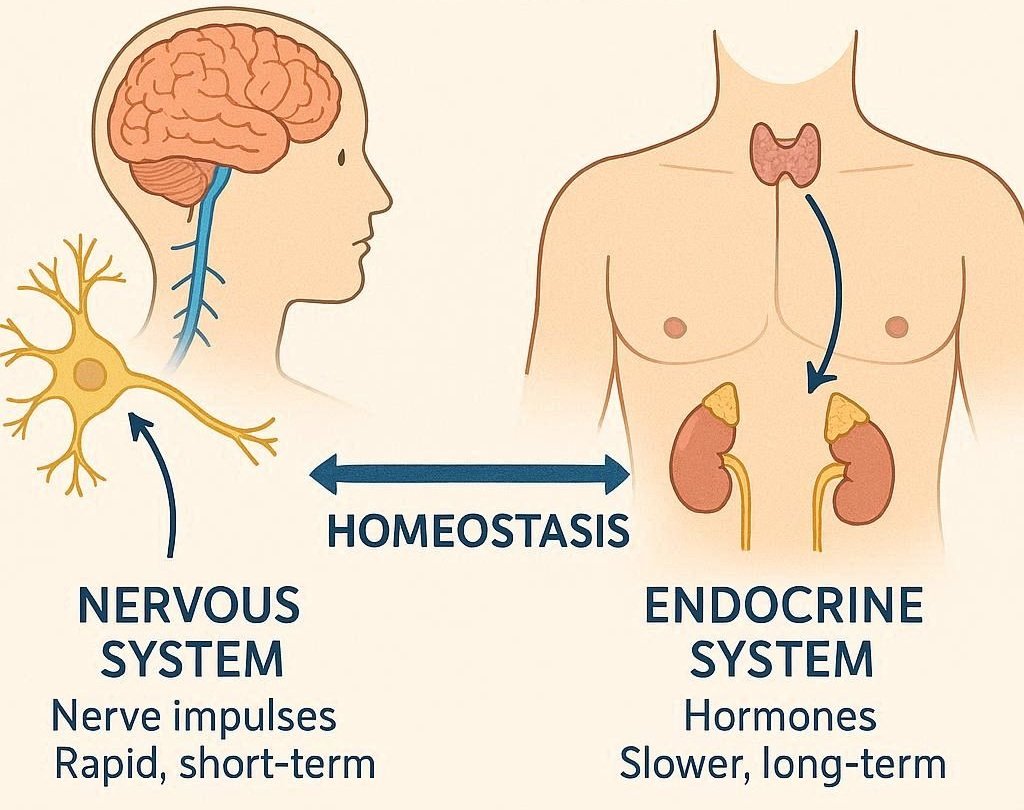
Human body is a very well-organized system, which requires a constant internal balance in order to survive and to be able to perform its functions. Millions of physiological processes are going on every minute; heart rate increases with exercise, the body temperature changes with the climate, blood sugar levels rise and fall upon eating, hormones change in response to stress, sleep, and physical activity. The body despite these changes is incredibly stable in a process called homeostasis. The two primary control systems (the nervous system and endocrine system) are at the core of this stability. These systems coordinate their actions in order to maintain a steady body operation, relay the information and maintain the inner balance when something is not in order.
The nervous system and the endocrine system are closely interrelated, despite the fact that they utilize various means of communication. The nervous system transmits using rapid electrical signals and chemical neurotransmitters, which are what enable the body to respond nearly instantly to changes. Endocrine system, on the other hand, operates on hormones that travel by blood and have slower but longer-lasting effects. These systems combined guarantee that the body is able to react both in the short and long term. One of the most demonstrative cases of the complexity of physiological regulation is their integration, which makes us realize how the body is in a constantly changing environment.
The concept of Homeostasis and Internal Stability
Homeostasis can be defined as the capacity of the body to stay relatively at par with the changes in the external and internal environments. This involves regulation of variables like temperature, blood pressure, blood glucose, oxygen levels, hydration and hormone balance. All body cells require these factors to be kept within a healthy range.
This is possible through the nervous system and endocrine system which are the main communication networks. They keep track of changes, read signals and trigger reactions that bring back the balance. As an example, when blood sugar level increases excessively after meals, the endocrine system secretes insulin. In case the body suddenly comes into contact with a hot surface, the nervous system produces an immediate withdrawal reflex. These illustrations demonstrate the interplay of the two systems in ensuring stability.
The body cannot keep life-sustaining balance without the liaison of the nervous system and endocrine system.
The Nervous System: FastComm and InstantAction
The nervous system is a speedy system. It includes the brain, the spinal cord and the peripheral nerves that comprise a network that transfers electrical signals in the body. It is mainly used to compute changes, information processing and provide fast responses.
To illustrate, when you come in contact with something hot by mistake, the skin has sensory receptors that instantly feel the heat and transmit it to the spinal cord and brain via nerves. Motor signals are relayed back to the muscles within a fraction of a second and the hand is withdrawn.
This is one of the key advantages of the nervous system and endocrine system collaboration because of its quick reaction. The nervous system is in charge of immediate and short term changes which safeguard the body and assist it to adapt to the rapidly evolving circumstances.
The nervous system controls some major functions, which include:
- reflexes
- movement and coordination
- pain response
- breathing rate
- heart rate changes
- sensory processing
Due to the rapid speed of nerve impulses, the nervous system plays a role in the moment-to-moment homeostatic control.
The Endocrine System: Long-term, Less Rapid Regulation
The nervous system operates in seconds as compared to the endocrine system, which operates minutes, hours or even days. The endocrine system comprises glands like the pituitary gland, thyroid gland, adrenal glands, pancreas, ovaries and testes. These glands secrete hormones which are chemical messengers that are released to the blood. Hormones do not follow nerve pathways like nerve signals do, but circulate in the blood to their respective organs. This ensures that they are slower to respond but their effects are likely to be lasting.
To illustrate, insulin is released by the pancreas after a meal in order to decrease the blood glucose. This is not an immediate process as a nerve reflex, but it is necessary to maintain the balance of energy. This speed contrast brings to the fore the complementary nature of the nervous system, and the endocrine system.
The Interaction of the Nervous System and Endocrine System
The most significant aspect of this subject is the co-ordination between the nervous system and the endocrine system. These systems do not operate independently. Rather, they are in constant communication. The primary part which links them is the hypothalamus which is a small yet very crucial part of the brain.
The nervous system signals the hypothalamus which then converts them into hormonal messages to the endocrine system. This renders it as the principal control center of the body in terms of homeostasis.
The hypothalamus aids in the regulation of:
- temperature
- thirst
- hunger
- sleep cycles
- stress response
- hormone release
Due to this fact, the nervous system and endocrine system can be considered as one single regulatory network.
The Pituitary Gland and Hypothalamus Relationship
The hypothalamus liaises with the pituitary gland which is commonly known as the master gland. The hypothalamus transmits messages to the pituitary gland when it realizes that there is a need to change the hormonal levels.
The pituitary gland then secrete hormones which affect other endocrine glands in the body. An example of this is that when stressed, the hypothalamus triggers the release of ACTH by the pituitary gland to stimulate the adrenal glands to release cortisol. It is such a chain reaction that is an effective demonstration of how the nervous system and endocrine system have to work together.
Stress Response: A Classical Citation of Integration
The functioning of the nervous system and the endocrine system is best illustrated by the way the body responds to stress. The fight-or-flight is a response of the nervous system when a person is in danger, is scared, or is under severe pressure, this instant reaction raises heart rate, dilates pupils, accelerates breathing and diverts blood supply to muscles. Meanwhile, endocrine system discharges the hormones like adrenaline and cortisol, adrenaline creates instant physical preparedness whereas cortisol enables the energy to be supplied in the long run.
The combination of this combination of instant nerve impulses and prolonged hormonal impact is evidence of the amazing integration of both systems.
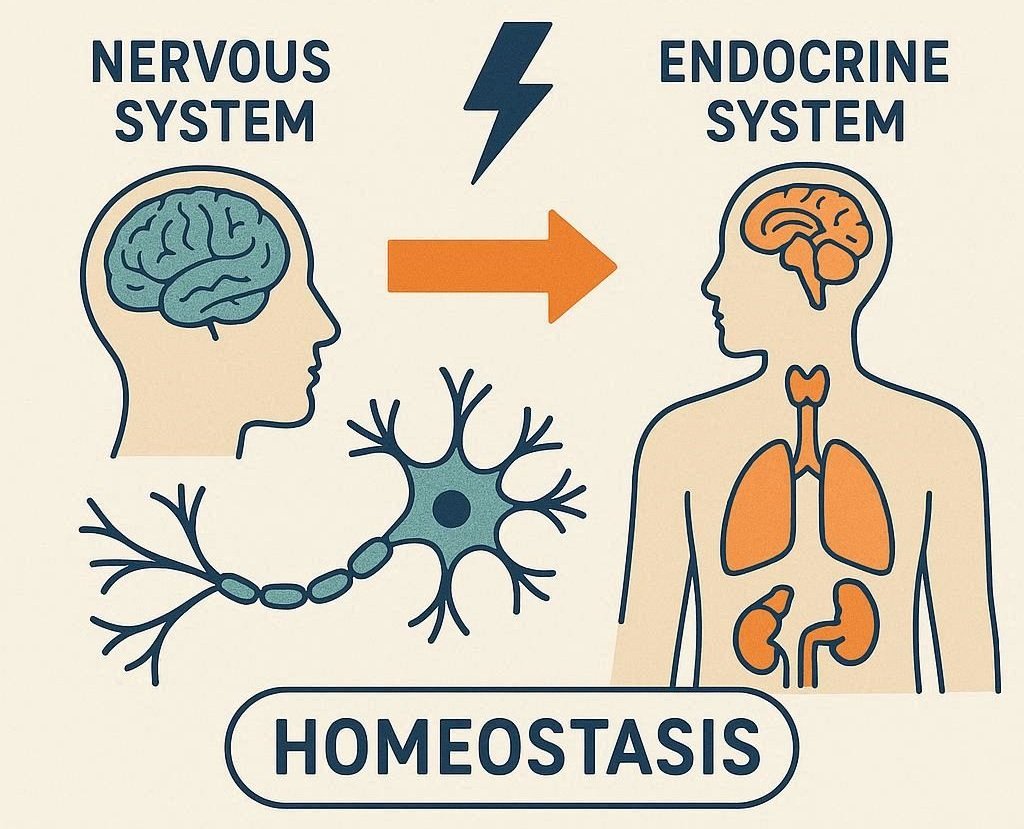
“stress response in homeostasis in the nervous system and endocrine system”.
Temperature Control and Homeostasis
Another great example of this integration is the temperature control. Thermoreceptors in the body relay signals via the nervous system to the hypothalamus when body temperature is elevated, the response of the hypothalamus is to turn on the sweating and the enlargement of the blood vessels around the skin. Meanwhile, the endocrine hormones can also modulate the metabolic activity to aid in controlling the production of heat within the body.
This process clearly demonstrates that the nervous system and endocrine system co-ordinate the responses.
Blood Glucose Regulation
- Both systems are also important in maintaining blood sugar balance.
- Insulin and glucagon release is regulated by the endocrine system via the pancreas.
- Nevertheless, the nervous system affects the appetite, digestion, and glucose discharges during stress.
This cooperation guarantees the healthy energy supply to cells and organs.
The importance of this Communication
The two systems, the nervous and endocrine system are required to integrate as the body requires speed and time:
Rapid nerve impulses would not sustain changes in the long term, emergencies would be too slow with hormones only. They combine to offer precision, flexibility and stability.
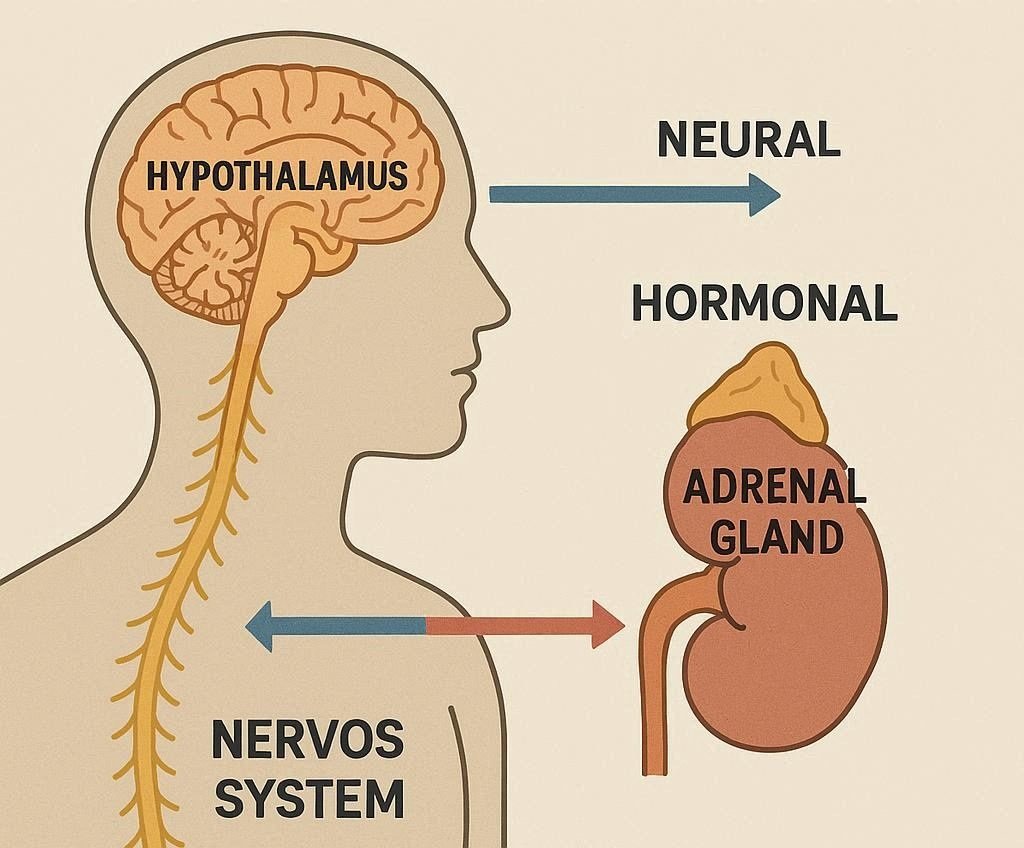
“internal stability communication of the nervous system and endocrine”.
Conclusion
The main homeostasis control networks in the body are the nervous system and endocrine system. They act in concert via quick nerve impulses and slower hormonal messages to maintain temperature, metabolism, responses to stress, blood sugar, and myriads of other body actions.
Their integration and continuous communication is an indicator of the remarkable complexity in physiological regulation, and it is through this mechanism that the body can stabilize itself internally when the world is changing.