Home fitness has exploded in popularity, yet millions of people still find themselves dreading their own workout space. The treadmill collects dust. The dumbbells sit untouched. Traditional home gym equipment simply lacks the engagement needed to keep people coming back day after day. That’s where interactive fitness equipment changes everything — transforming a spare room into a dynamic, responsive training environment that actually motivates you to show up.
But building a smart home gym comes with real challenges. How do you choose equipment that integrates seamlessly with AI-driven apps? How do you avoid overspending while still getting technology that delivers meaningful results? These are the questions most fitness enthusiasts face when stepping beyond conventional gear.
This guide breaks down exactly what interactive fitness equipment is, why it outperforms traditional setups, and which features matter most. You’ll also find practical steps for building an affordable smart home gym, a closer look at the AEKE K1 as a real-world example, and a clear roadmap for integrating AI into your daily fitness routine. Whether you’re starting from scratch or upgrading what you already have, this is your complete starting point.
What is Interactive Fitness Equipment? Defining the Smart Home Gym
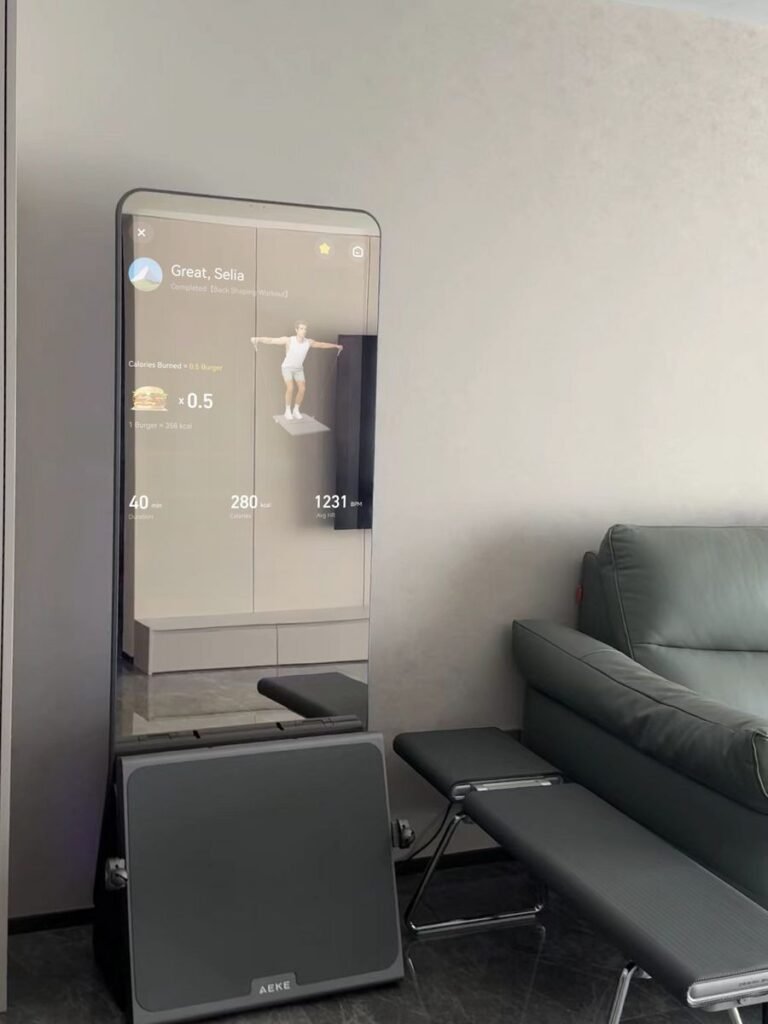
Interactive fitness equipment refers to devices embedded with sensors, processors, and wireless connectivity that respond to your movements, collect performance data, and adapt to your training in real time. Unlike traditional home fitness equipment — static machines that simply let you pedal, lift, or run without any feedback — these smart systems create a two-way relationship between you and your workout. A conventional treadmill tells you nothing beyond speed and time. An interactive one analyzes your gait, adjusts incline automatically, and syncs with a coaching app that remembers your history. The evolution toward smart home gym setups has been driven by advances in AI fitness systems, which can now process biometric data on the fly and deliver genuinely personalized guidance. Connectivity is central to this shift: modern interactive equipment pairs with smartphones, wearables, and smart home platforms, turning isolated machines into nodes within a broader health ecosystem. The result is a training environment that thinks alongside you.
The Key Benefits of a Smart Home Gym for Fitness Enthusiasts
The most immediate advantage of a smart home gym is convenience — no commute, no waiting for equipment, no fixed class schedules. But convenience alone doesn’t explain why interactive setups produce better long-term results than traditional home fitness equipment. The real differentiator is personalization. AI fitness systems analyze your performance history, recovery patterns, and stated goals to generate workouts that actually fit where you are today, not a generic template designed for an average user who doesn’t exist.
Real-time feedback is equally transformative. When a sensor detects that your form is breaking down mid-set, or that your heart rate has crossed into an inefficient zone, the system responds immediately — adjusting resistance, cueing a correction, or suggesting rest. That responsiveness keeps workouts both safer and more effective. Beyond the physical benefits, variety plays a powerful psychological role. Interactive platforms continuously introduce new challenges, virtual environments, and community features that combat the monotony responsible for most abandoned home gym setups. The result is a home workout experience that genuinely competes with the engagement of a commercial gym.
Essential Features to Look for in Interactive Fitness Equipment
Not all interactive equipment delivers equal value. Before committing to any purchase, understanding which features genuinely move the needle — and which are marketing noise — saves both money and frustration. The foundation of any worthwhile smart home gym piece is sensor accuracy: if the device can’t reliably measure force, velocity, heart rate, or range of motion, every downstream recommendation becomes unreliable. Beyond sensing, look for open connectivity that plays well with third-party apps rather than locking you into a single ecosystem. Adaptive workout programming is another non-negotiable; equipment that only records data without acting on it misses the core promise of interactive fitness.
AI and Machine Learning Capabilities
A genuine AI fitness system does more than count reps. It identifies patterns across sessions — recognizing when your strength output drops on Fridays, when recovery is incomplete, or when a plateau signals the need for progressive overload. Machine learning improves these recommendations over time, meaning the system becomes more useful the longer you train with it. When evaluating equipment, ask whether the AI adapts workout intensity automatically, provides form correction through camera or sensor input, and generates periodized plans tied to specific goals like fat loss, hypertrophy, or endurance. These capabilities represent meaningful AI integration in fitness routines rather than a glorified spreadsheet.
Connectivity and Smart Home Integration
Seamless connectivity determines how well your equipment fits into daily life. Prioritize devices that support Bluetooth and Wi-Fi simultaneously, sync with popular health platforms like Apple Health or Google Fit, and pair with wearables you already own. Smart home integration — linking your gym equipment to lighting, thermostats, or voice assistants — adds convenience and helps reinforce consistent workout habits by reducing friction at every step of the process.
How to Build an Affordable Smart Home Gym: Practical Solutions
Building a smart home gym doesn’t require a commercial gym budget — it requires a clear strategy. Start by auditing your actual fitness goals before spending anything. Someone focused on strength training needs different equipment than someone prioritizing cardio or mobility work. Defining your primary training mode prevents the common mistake of buying versatile-sounding equipment that never quite fits any specific goal well enough to use consistently.
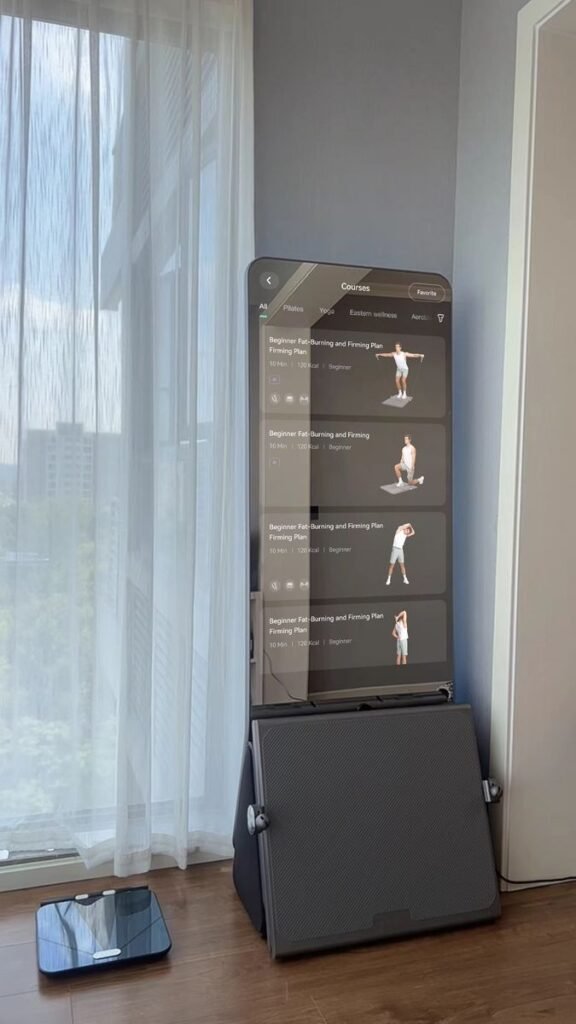
Once your goals are clear, prioritize one anchor piece of interactive equipment rather than spreading your budget across several basic items. A single high-quality smart strength system or connected cardio machine delivers far more value than three mediocre devices with limited AI capabilities. Look for equipment that supports multiple exercise types to stretch your investment further. The AEKE K1, for example, consolidates cable-based strength training into one compact unit, eliminating the need for separate machines that would individually cost more and occupy significantly more floor space.
For cost-effective smart home gym setups, consider these practical approaches: buy refurbished units directly from manufacturers who offer warranties, watch for subscription bundling deals where the hardware cost drops when you commit to an annual app plan, and check whether equipment you already own — a bike, a set of bands — can be upgraded with a compatible sensor attachment rather than replaced entirely. Free and low-cost fitness apps can also supplement premium equipment features without adding recurring expenses.
Space planning matters as much as budget planning. Measure your available area carefully, then choose equipment with a compact footprint and easy storage. Wall-mounted cable systems and foldable frames preserve living space without sacrificing training variety. Combining smart equipment with a few quality free weights covers most training needs at a fraction of a fully outfitted commercial setup.
Spotlight on AEKE K1: An Example of Interactive Home Fitness Equipment
The AEKE K1 illustrates what thoughtful interactive equipment design looks like in practice. At its core, it’s a compact cable-based strength system, but the intelligence built around that hardware is what makes it relevant to a smart home gym conversation. The K1 pairs with an AI fitness system that tracks resistance levels, rep velocity, and workout volume across sessions — building a performance profile that informs future programming rather than simply logging numbers for you to interpret yourself.
What sets the K1 apart as a case study is how it addresses the two obstacles most people face: space and budget. Its footprint fits comfortably in a spare bedroom or garage corner, and it replaces multiple single-purpose machines that would collectively cost far more. For someone building an affordable smart home gym, that consolidation matters enormously. The AI integration delivers adaptive programming suited to strength beginners and intermediate lifters alike, making it accessible without feeling limited. It’s a practical demonstration that interactive fitness equipment doesn’t have to be large, expensive, or complicated to deliver a genuinely connected training experience.
Integrating AI into Your Fitness Routine: A Step-by-Step Guide
Owning interactive equipment is only half the equation. Getting genuine results depends on how deliberately you integrate its AI capabilities into your daily training habits. The good news is that modern AI fitness systems are designed to reduce friction, not add it — but a thoughtful initial setup makes the difference between a tool you actually use and one you ignore after the first week.
Setting Up Your AI Fitness System
Begin by completing the onboarding process thoroughly rather than skipping through it. Most AI fitness platforms ask about your training history, current fitness level, available equipment, and specific goals during setup — and these inputs directly shape the quality of your early programming. Take time to calibrate sensors correctly, whether that means entering accurate body measurements, performing a baseline strength test, or syncing your wearable so the system has reliable heart rate data from day one. Connect the app to your existing health platforms so historical data informs the AI from the start rather than forcing it to build a profile from scratch.
Maximizing Workouts with AI Feedback and Adjustments
Once you’re set up, treat the AI’s real-time feedback as a coaching cue rather than background noise. When the system flags that your rep velocity has dropped or suggests increasing resistance, act on it consistently — this responsiveness is what trains the algorithm to understand your capacity accurately over time. Review your weekly performance summaries to spot trends: persistent fatigue, strength plateaus, or recovery gaps often show up in the data before you consciously notice them. Adjust your programming based on these insights rather than following a fixed schedule rigidly. The more honestly you interact with the system — logging actual effort levels, noting when sessions feel harder than expected — the more precise and useful its recommendations become.
Building a Smarter Home Gym Starts Today
Interactive fitness equipment has fundamentally changed what’s possible in a home training environment. Where traditional setups once offered little more than a machine and a mirror, smart home gyms now deliver real-time coaching, adaptive programming, and seamless connectivity that keep workouts fresh, effective, and genuinely motivating. The benefits extend beyond convenience — personalized AI-driven feedback, variety that combats monotony, and data that surfaces patterns you’d never notice on your own all combine to create a home workout experience that rivals what any commercial gym offers.
Building this kind of setup doesn’t demand an unlimited budget. A clear sense of your training goals, one well-chosen anchor piece of interactive equipment, and a deliberate approach to AI integration will take you further than a room full of underused machines. Equipment like the AEKE K1 demonstrates that thoughtful design can consolidate function, intelligence, and affordability into a single compact system.
The future of home fitness belongs to setups that think alongside you — learning your patterns, adapting to your progress, and removing every barrier between intention and action. Start by identifying your primary training goal, research one interactive piece that addresses it directly, and commit to engaging fully with its AI capabilities from day one. The technology is ready. The only remaining step is yours.