In the present digital age communication is a result of network use. As you browse the internet, stream videos, or send emails many physical devices work in the background. These devices make up the structure of our connection which in turn sees to it that data is passed on from point to point very efficiently.
To see how networks do what they do, first we will look at the basic hardware. For a in depth look, that resource on essential networking hardware is also put together. But this article we have put together to break it all down in a simple and practical way which in turn will make it easy for you to see how each device plays a role in communication.
What Are Networking Devices?
Networking devices which are physical in nature are used to connect computers and also other digital systems. They manage, direct and control data traffic in a network.
These devices play the role of traffic controllers. They see that data packets get to the right place without delay or confusion. Without them communication between devices would be in a state of chaos and poor performance.
Also for each device which has a different role. Some direct traffic while others amplify signals or provide wireless access. Thus it is important to note these differences.
Why Networking Devices Matter
Before we get into each device. Also it is important to note their value.
- They enable communication between devices
- They increase data transfer speed and efficiency.
- They enhance network security
- They support wired as well as wireless connections.
Today’s businesses, schools, and homes are very much dependent on these devices for day to day operations.
Router: Network Manager.
A router is a very important element in networking. It interfaces with many networks and serves to direct data between them.
How a Router Works
A router which receives data packets and determines the best path for them. It uses IP addresses to get the data to the right destination.
For instance when you go to a website your router puts out your request to the net. Then it gets the response back and passes it to your device.
Key Functions of a Router
- Connects to the internet.
- Assigns IP addresses to devices
- Manages traffic efficiently
- Provides basic security through firewalls
Also in present time it is typical for routers to have wireless features. Thus they function as both routers and access points.
Switch: Smart Bridge.
A switch connects devices in the same network. Also it does not like more basic devices which just broadcast to all, instead the switch sends out data only to the intended party.
How a Switch Works
A switch uses MAC addresses for device identification. Upon data arrival it looks at the destination address and forwards as required.
Key Functions of a Switch
- Connects many devices in a LAN.
- Reduces network congestion
- Improves performance and speed
- Supports full-duplex communication
Also in offices and data centers we see great use of switches. Also they play a key role in that which to which we refer as efficient communication.
Hub: Base Distributor.
A hub is a which term for a network component that links many devices together. Also it has less intelligence as compared to a switch.
How a Hub Works
A hub will pass on the data that it receives to all of the connected devices. Also it does not check the destination address.
Key Functions of a Hub
- Connects multiple devices
- Broadcasts data to all ports
- Simple and inexpensive
Today hub use is at a minimum. This is because they produce unnecessary traffic which in turn reduces efficiency. Also switches have mostly taken over.
Modem: Online Gateway.
A modem is a requirement for your network to connect to the Internet. What it does is take digital signals and transform them into a format which is amenable for travel over communication lines.
How a Modem Works
The term “modem” is from modulator demodulator. What it does is take digital info from your computer and turn it into analog signals for transfer. Also it will take in signals which are analog and convert them back into digital.
Key Functions of a Modem
- Connects to your Internet Service Provider (ISP) which.
- Translates between digital and analog.
- Enables internet access
Also modems are included in routers. Thus in many home units both functions are present in one.
Access Point: Enabling wireless connection.
An access point which in turn enables wireless devices to connect to a wired network. It is a key element for Wi-Fi.
How an Access Point Works
An access point is a node that attaches to a router or switch. Also it gives out wireless signals for phones and laptops to connect to.
Key Functions of an Access Point
- Provides Wi-Fi access
- Extends network coverage
- Supports multiple wireless devices
Also in large spaces access points are used. For instance in schools, offices and airports we see their use which they have to do for stable connection.
How These Devices Work Together

Understanding each device separately is a start but to see the full picture how they interact is key.
Typical Network Setup
- The modem connects to the Internet Service Provider.
- The router is connected to the modem.
- The switch expands the network
- Access points provide wireless access
Example Scenario
- When you open a website: Upon opening a website:.
- Your device puts out a request through the access point.
- The router sends and forwards it.
- The modem sends it out onto the internet.
- The response traces the same path.
- In an instant.
Differences Between Key Devices
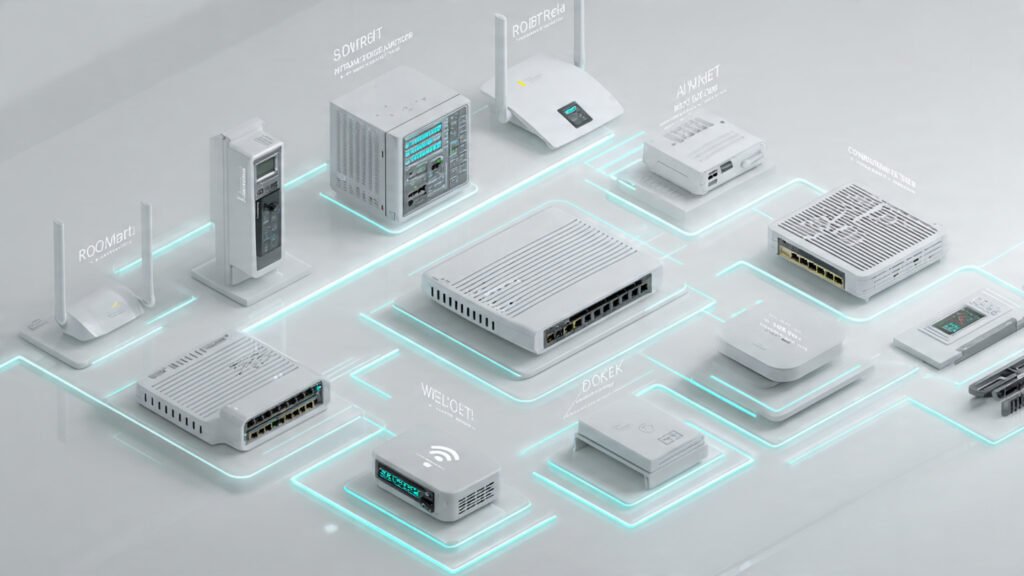
Understanding differences helps avoid confusion.
Router vs Switch
- Router connects different networks
- Switch provides access to devices within the same network.
Switch vs Hub
- Switch transfers data to a certain device.
- Hub transmits to all devices.
Modem vs Router
- Modem connects to the internet
- Router distributes the connection
Each device has a separate function.
Choosing the Right Networking Devices
Choosing the right hardware for your needs.
For Home Use
- Router with built-in Wi-Fi
- Basic modem
- Optional choice for larger homes.
For Offices
- Managed switches
- Multiple access points
- Advanced routers with security features
As well as that which is related to scalability to keep in mind. As your network expands you may require more devices.
Common Challenges and Solutions
Even at the drop of a device issues may happen.
Network Congestion
Too much equipment can slow down the network. But we see that which in turn is improved by the use of switches over hubs.
Weak Wi-Fi Signal
Walls and distance play a role in signal quality which is why we see that adding access points improves coverage.
Security Risks
Unprotected networks are at risk which is why it is important to use routers that have strong security features.
Future of Networking Devices
Technology is in a state of constant change. Also we see that networking devices are getting smarter and more efficient.
- Routers today support the faster Wi-Fi standards.
- Switches offer advanced management features
- Access in points which also offer faster performance.
Also with the rise of smart homes and IoT devices we see an increased demand for reliable networking hardware.
Conclusion
Networking devices form the base of today’s communication. Each device, be it a router or an access point, has a role to play in the smooth flow of data.
While routers do the job of traffic management it is the job of switches to handle internal connections. Also we see that modems provide access to the Internet and access points which enable wireless for seamless connection. Though hubs are out of date they still put in perspective the growth of network technology.
At the end of the matter what we see is that which these devices do they enable you to build, manage and troubleshoot networks better. As tech advances these tools will also transform how we connect and communicate daily.