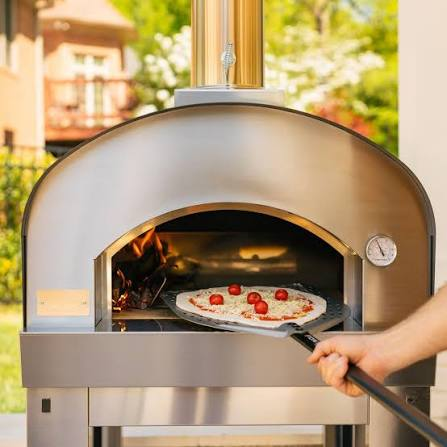
I ruined my first pizza in a proper outdoor oven by being impatient, and I’d bet most people do the same. The air thermometer on the dome read 700°F after about fifteen minutes, so in went the pizza. The top looked promising. The bottom? Pale, soft, and stuck to the peel like it had signed a lease. The air inside an oven heats up fast. The stone floor — the part that actually cooks your crust — lags far behind. Understanding that gap, and giving the oven the time it honestly needs, is the whole secret to preheating. No gadget will save a pizza launched onto a cold stone.
Why the Stone Lags Behind the Air
Flame heats air almost instantly, but a pizza stone or steel is a dense slab that absorbs heat slowly and stores it. That stored heat is what crisps the underside of your crust in the first 30 seconds of the bake. If the stone is 200 degrees cooler than the air, you get the worst of both worlds: toppings that scorch from the radiant heat above and a base that never sets.
This is also why opening the door to “check” is costly. Every peek dumps hot air and restarts part of the process. Trust the timing, check once with a tool (more on that below), and launch with confidence.
Think of the stone as a battery. During preheat you’re charging it; during the bake, the pizza draws that charge down fast — a cold, wet dough pulls a surprising amount of heat out of the floor in ninety seconds. A half-charged battery gives you one decent pizza and then fades. A fully charged one, soaked all the way through its thickness, bakes pizza after pizza at the same quality because there’s reserve heat deeper in the slab still migrating to the surface. That’s the real difference between a 15-minute preheat and a 35-minute one, and you can taste it by the third pie.
Real Preheat Times by Oven Type
Forget the marketing claims of “ready in 10 minutes.” Here’s what actually works:
- Wood and pellet-fired ovens: 25–40 minutes. The fire needs to establish a bed of embers and heat-soak the floor. Rushing this is the classic mistake — knowing how long to preheat a pizza oven running on pellets saves you from the pale-bottom problem entirely, since pellet fires build heat more gradually than gas.
- Gas-fired ovens: 20–30 minutes. Gas reaches air temperature quickly, but give the stone its full soak anyway. Many owners run the burner on high for 20 minutes, then drop it slightly before launching.
- Electric countertop ovens: 15–25 minutes. Smaller mass heats faster, but most models need a full cycle at maximum temperature before the first pizza — and a few minutes of recovery between pies.
What about home ovens with a steel?
A baking steel in a kitchen oven needs a solid 45–60 minutes at the oven’s highest setting. The steel is thick, the oven is weaker, and there’s no shortcut worth taking.
The Pellet Oven Routine
Pellet ovens reward a small ritual. Start the fire with the door or flue open so the pellets ignite cleanly, let the initial thick smoke clear (that smoke tastes bitter on food), then close things down and let the floor soak. If you’re shopping for a pellet pizza oven, look for models with a thick stone and decent insulation — thin floors lose heat between pizzas and stretch your recovery time. While the oven soaks, keep a modest flame rolling across the dome; that rolling flame is what finishes the top of the pizza while the stone does the bottom.
Between pizzas, give the floor two to three minutes to recover. Launch four pies back-to-back with no pause and each one will come out slightly sadder than the last.
How to Tell the Stone Is Actually Ready
Guessing is how pizzas die. Two reliable tests:
An infrared thermometer is the honest answer. Aim it at the center of the stone. For Neapolitan-style pizza you want 750–850°F on the floor; for New York style, 550–650°F. These cost less than a bag of good flour’s worth of ruined pizzas.
The flour test works in a pinch. Scatter a pinch of flour or semolina on the stone. If it turns golden in about 10 seconds, you’re in range. Black instantly? Too hot — wait or sweep the stone. Still white after 20 seconds? Not ready, no matter what the dome gauge says.
Timing Habits That Pay Off
Light the oven before you start stretching dough, not after. Preheat while you prep toppings, set the table and pour a drink, and the wait disappears into the evening. In cold or windy weather, add 5–10 minutes — the oven is fighting the elements, and the stone knows it even if the air gauge doesn’t. And once you’re done cooking, let the oven burn off residue at full heat for ten minutes; tomorrow’s preheat will be faster for it.
If you’re cooking for guests, build the timeline on paper once: fire lit at 6:00, dough balls out of the fridge at 5:30 so they’re relaxed by launch, first pizza in at 6:40. After one run-through, the numbers become habit and you’ll stop glancing at the clock entirely.
Patience, Measured in Minutes
Preheating isn’t dead time; it’s the step that decides whether your crust crisps or steams. Give pellet and wood ovens their 30-odd minutes, gas ovens a solid 20–30, and verify with a thermometer or a pinch of flour instead of hope. Do that, and the pizza that ruined my first night — great top, raw bottom — never has to happen at your house.


