Separating the grain of harvested wheat, barley and similar crops from the straw and chaff is one of the most tiring stages of agricultural production. Once done by hand and with animal power, this work is now carried out much faster with mechanical systems. Knowing how these machines work matters for both correct use and the right choice. Below, we explain the threshing process step by step in plain language.
What does a threshing machine do?
A threshing machine is a piece of farm equipment that separates the cut crop into grain, straw and chaff. The machine usually runs on power from the tractor’s PTO shaft and performs threshing, separating and cleaning in a single operation. This lets the farmer quickly turn the crop from the field into storable grain. Those thinking of buying a machine also start researching threshing machine prices alongside its working principle.
Main functions
- Threshing the stalks
- Separating the grain from the ear
- Chopping the straw and directing it to a separate channel
- Cleaning out chaff and dust
- Transferring clean grain to the tank or into sacks
What are the main parts of the machine?
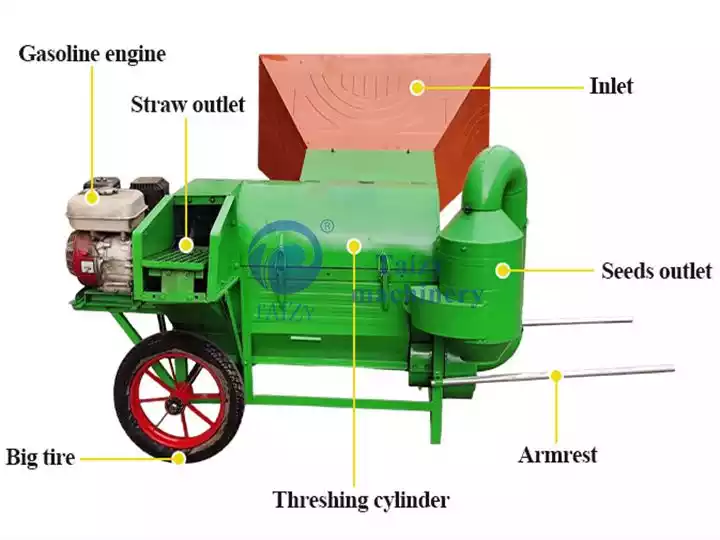
Inside the machine there are several main sections that follow one another. The crop entering through the feed opening reaches the fast-spinning drum, where it is threshed. Then the sieves and fan come into play to separate the grain from the straw and chaff. Each section working properly is a precondition for clean grain and lower grain losses. The number and design of these sections is also one of the main reasons for differences in threshing machine prices.
Main components
- Feed opening and knives
- Threshing drum and beaters
- Oscillating sieves
- Fan and air ducts
- Elevator and grain tank
- Straw outlet pipe
In which stages does threshing take place?
The process begins with the crop being fed steadily into the feed opening. The drum crushes and beats the stalks, freeing the grains from the ears. The oscillating sieves then let the grain fall through while holding back larger pieces, and the air flow from the fan blows out the light chaff. While the cleaned grain is carried to the tank by the elevator, the chopped straw exits through a separate channel, and the threshing machine keeps this cycle running without interruption. The quality of the drum and sieve system determines both efficiency and the difference between threshing machine prices.
Settings that affect efficiency
- Drum speed
- Clearance between the drum and the concave
- Sieve openings
- Fan air setting
- Feed rate
Which crops can it be used for?
With suitable sieves and settings, a threshing machine can be used for cereals such as wheat, barley, oats and rye, as well as pulses such as chickpeas, lentils and beans. Since each crop has a different grain size and stalk structure, settings should be changed for each crop. Cleaning out residue left inside the machine when switching crops also prevents mixing. Models that can work with several crops need extra equipment, which also affects threshing machine prices. For this reason, it should be clear before buying which crops will be threshed on the farm.
Common uses
- Wheat and barley
- Oats and rye
- Chickpeas and lentils
- Beans
- Other grain crops with suitable equipment
What should you consider when choosing a machine?
A farmer who understands the working principle can more easily identify the model that suits their needs. Capacity, compatibility with tractor power, with or without a tank, and elevator layout are the key selection criteria. Threshing machine prices are shaped by these features too; higher capacity and extra equipment usually increase the cost. A nearby service network shortens downtime that may occur during harvest. When comparing quotes, service and spare parts support should be considered alongside threshing machine prices.
Checklist
- Annual harvest volume
- Tractor horsepower
- Crop types to be threshed
- Tank and elevator preference
- Service and spare parts availability
In short, threshing is an orderly process made up of feeding, threshing, separating and cleaning. Understanding this process ensures the machine is set up correctly and used efficiently. When researching threshing machine prices, this knowledge of the working principle also helps distinguish which features are really needed. A machine used with regular maintenance and the right settings will serve reliably for many years.