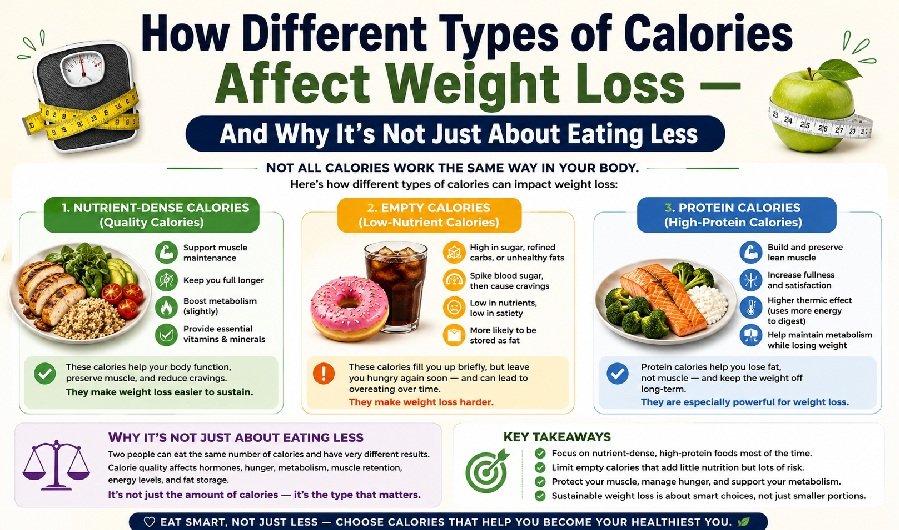
Losing weight is boiled down to one rule: “burn more calories than you consume.” Although calorie balance is important, studies in modern nutrition science reveal that not all calories are created equal. Two foods can have the same number of calories, but have a drastically different effect on hunger, metabolism, hormones, energy levels and fat storage.
That’s why weight loss is not just a matter of reducing calories. In addition to the number of calories, the source of the calories and the interactions among the foods are important. Knowing these differences can help individuals lose weight in a better way and enhance their overall health.
What is a calorie, anyway?
A calorie is just a measurement of energy. Calories provide the body with energy to perform basic functions, including breathing, digestion, movement and brain activity. Calories come from three macronutrients found in food and beverages:
- Carbohydrates
- Proteins
- Fats
Each macronutrient has a certain energy value:
- Proteins: 4 calories per gram
- Fats: 9 calories per gram
- Fat: 9 calories per gram
While these numbers seem like simple, straightforward numbers, the body processes each nutrient in a different manner. This difference also has a huge impact on appetite regulation, fat burning and weight maintenance. Protein calories are the most appropriate for maintaining weight loss.The protein calories are the best to maintain weight loss.
Protein is often the nutrient that is most popular when it comes to weight loss. Protein calories differ from carbs and fat calories. One reason is the thermic effect of food (TEF), which reflects the energy expended by the body for digesting and processing food. It takes more energy to digest protein than carbohydrates or fats. This is because protein helps burn more calories during digestion.
Protein also helps:
- Increase feelings of fullness
- Reduce cravings
- Maintain muscle mass while losing weight
- Support metabolism
Eggs, fish, chicken, beans, greek yogurt and lean meat are foods that can help people stay full longer. Not everyone is the same, but a 500 calorie meal of grilled chicken and vegetables will make you feel fuller than a 500 calorie meal of sugary snacks. That’s why protein-heavy diets can still yield weight-loss benefits even if they contain the same number of calories.
Carbohydrates: Not All Are Equal
Carbohydrates have a bad rap for weight gain, but it’s not just the quantity of carbohydrates that’s to blame, it’s the type.
Refined Carbohydrates
Refined carbohydrates are foods like:
- White bread
- Sugary cereals
- Soft drinks
- Pastries
- Candy
The foods are easy to digest and trigger a rapid rise in blood sugar and insulin. Post energy spurt there is a crash that results in hunger and cravings shortly after. Highly processed carbohydrates can make it easier to overeat as they do not provide satiety.
Complex Carbohydrates
Complex carbohydrates are slower to digest and release energy. Examples include:
- Oats
- Brown rice
- Sweet potatoes
- Beans
- Vegetables
- Whole grains
These foods are typically high in fiber that helps slow down digestion, and the result is a feeling of fullness. Fiber also aids in good digestion and helps to regulate hunger without the need for food. So, 300 calories of oatmeal and fruit can have quite a different impact on the body than 300 calories of soda and cookies.
Fat Calories and Satiety.
Fat is higher in calories per gram than protein or carbohydrates, but this doesn’t necessarily mean fat is bad or fattening. Fat can aid weight loss as it helps to make you feel full after a meal. If individuals are feeling full, they’re less likely to snack as well as overeat later.
These are the types of fat that are good for you:
- Avocados
- Nuts
- Seeds
- Olive oil
- Fatty fish
Fats, however, are high in energy (calories) for small amounts. Foods that are processed and contain unhealthy fats and sugar are often easily over eaten as they are formulated to be very rewarding to eat. The bottom line is to look for healthy fat options, but not too much.
Hormones play a crucial role in any weight loss.Hormones are important in any weight loss. Calories are not the only factor that regulate weight loss. Hunger, fat storage and metabolism are greatly affected by hormones.
Some foods have a different impact on the hormones:
- Protein also affects hormones that control appetite, such as ghrelin.
- Fiber makes you feel full by acting on satiety hormones.
- Foods rich in sugar can cause a spike in insulin levels.
- Consuming ultra-processed foods may alter signals related to appetite.
A constant stimulation of hunger hormones can make a person feel hungry even when he has consumed adequate calories. That makes it difficult to keep a low calorie diet for the long haul. Other hormones that are affected by sleep, stress, and physical activity play a role in weight gain. Chronic stress, for instance, can elevate cortisol levels, which can lead to increased fat storage and emotional eating. That’s why two people with the same amount of calories can have different results in their weight loss.
The problem with the “eat less” approach to weight loss. If you want to lose weight, many people try to simply cut down on their food consumption. Although this can yield immediate results, excessive calorie deficit can lead to issues like:
- Slower metabolism
- Increased hunger
- Low energy levels
- Muscle loss
- Nutrient deficiencies
- Strong cravings
When the body is deprived of calories for an extended time (for a long time), it conserves energy. The more weight you lose, the more difficult it will be to lose more. That’s one of the reasons why crash diets often fail. At first, dieters lose weight, but then feel so hungry and tired that they cannot continue the diet. After a while, many gain their lost weight again. Rather than trying to consume fewer calories, a better approach would be to eat better foods while enjoying a decent calorie deficit.
The importance of food quality.
Fewer processed foods are found to have a negative effect on weight management.Unprocessed, minimally processed foods tend to be more effective for weight management.
Nutrient-dense foods provide:
- Vitamins
- Minerals
- Fiber
- Protein
- Healthy fats
These nutrients promote metabolism, satiety, muscle health and wellness. On the other hand, ultra-processed foods are typically designed to make them eat more. They can add sugar, bad fats, salt and artificial flavors in a way that makes you feel the need to eat more without satisfying you. Thus, individuals can eat a lot of calories without feeling full.
This is a balanced approach to weight loss. A healthy, sustainable weight loss typically occurs when a person makes a combination of healthy eating and regular physical activity and lifestyle management.
Helpful strategies include:
- Increasing proteins and fibre intake
- Switching to whole foods rather than processed foods.
- Managing stress
- Sleeping adequately
- Staying physically active
- Avoiding extreme dieting
Instead of just thinking about calories, prioritizing food quality and healthy eating practices can be more effective for long-term results.
Conclusion
Calories are important for weight loss, but the quality of the calories consumed makes a difference in hunger, metabolism, hormones and health. Protein, fibre-rich carbs and healthy fats have an impact on the body that is very different from highly processed foods which are loaded with added sugar and unhealthy fats.
Losing weight is not just a matter of cutting back on food. It is all about selecting the foods that nourish the body, control appetite, provide energy and promote a healthy metabolism. Knowing the types of calories and their effect on the body can help individuals make informed food decisions and maintain a healthy weight in the long term.