Introduction
Generative AI machine learning is revolutionizing how people create content, communicate, and complete routine tasks. We see it in the writing of articles and creation of images to that of producing videos, music, and computer code which in turn enables machines to put out new content based on what we ask for. Also unlike past software which was based on set rules, Generative AI looks at large sets of data to find out what works best and then it uses that to present back to us. Also these new features of generative AI are finding their way into education, business, entertainment, marketing and software development.
Machine learning is the base for what we see in this tech. We have neural networks, deep learning, transformers, and diffusion models which enable AI systems to identify patterns and produce content. At the same time these tools also put out false info, present bias, and bring up copyright issues. By understanding how generative AI works we are able to better use its features while also being aware of what it’s worth.
Machine Learning and Generative AI.
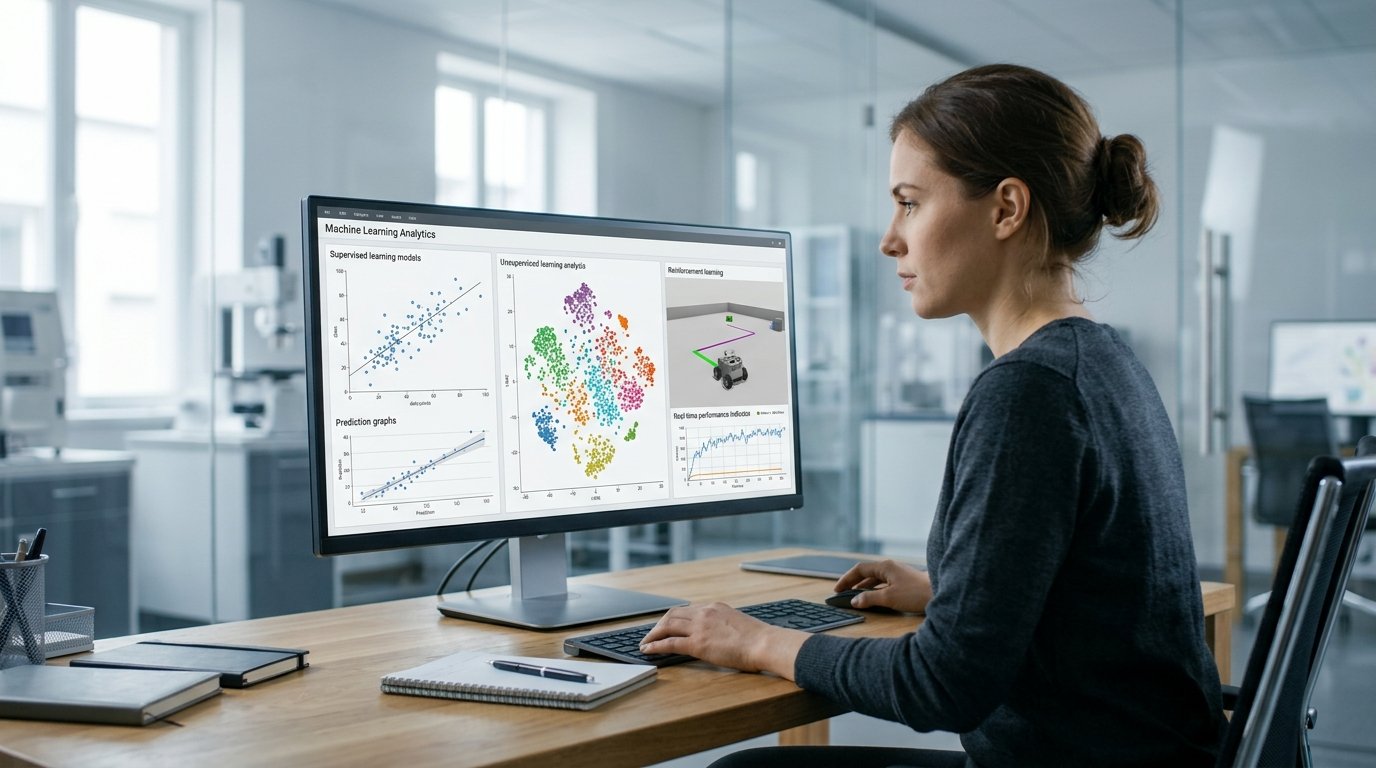
Machine learning which enables computers to train on data sets and in that process learn patterns which in turn reduces dependence on manual programming. In a similar token Generative AI takes this a step further by its machines’ ability to produce new content based on what it has learned. For example a model which had access to large scale text data can produce articles, also a model which was trained on image data can generate images from text descriptions.
These models analyze large sets of data to identify trends which in turn they use to respond to prompts. Also they do not give out precise answers to each request; what we see is that they put out what they have learned to put out. This flexibility which is a trait of Generative AI makes it very useful in creative and practical tasks although at the same time its output is not always accurate or reliable.
Neural Networks and Deep Learning.
Neural networks are systems that consist of layers of artificial neurons which take in and process info and identify patterns. During the training phase algorithms tune the network’s variables to improve performance. Also they are able to recognize very complex relationships in language, images, sound, and other forms of data.
Deep in multi layered neural networks is what we see in the case of deep learning, which at the same time is also where its power is. We see here how AI systems break down language and analyze visual elements as well as determine the relationships of different info. Out of this comes very complex and in depth content from gen AI which is produced, also at the same time it is important to note that performance is based on the model’s training data quality and design.
Large Language Models and Transformers
Large language models which are also known as LLMs are trained on large sets of text to identify patterns between words, phrases, and sentences. They create responses through a process of predicting what sequence of words is most likely given the words that come before it. This all supports the development of writing tools, chatbots and also in the creation of summarization tools as well as in many question answering applications.
Transformers are neural nets which put forth attention mechanisms for identifying the relationship between different elements of a given input. Also they do in large scale language models which in turn produce relevant outputs. At the same time smooth writing is a given but factuality is not, which is why it is up to the user to check into which the AI puts out info before they can be used.
AI that Creates Images via Diffusion Models.

Diffusion models are a large set of tools for creating images from text inputs. What they do is reverse the process which adds noise to images during the training stage. At generation time they take random noise and over time via the users’ prompts transform it into a meaningful image.
For instance a prompt which describes a modern office at sunset will direct an image generator to produce the corresponding image. These tools are used in advertising, graphic design, education and creative projects. At the same time they do have issues with small details, accurate text and consistent object relationships which is where human review comes in.
What Generative AI does for Audio and Video.
Generative AI produces speech, music, sound effects and other forms of audio by learning from sound data. We see text to speech tools which transform written word to spoken language and music generators which create melodies and arrangements from a prompt. Also these apps support in the fields of accessibility, entertainment, education and digital content production.
Video generation is a complex task as the models put out visuals which are more or less the same in successive frames. We see them use diffusion techniques, transformers and also other machine learning tools to go from text or image to motion. While the results do end up very real at times, we still see issues of motion and object inconsistency and poor scene continuity.
What Generative AI does in Terms of Writing out Computer Codes.
AI which has been trained on code samples and related docs. When a user puts out a task they do in fact have functions created, get in depth explanations for foreign code, see what corrections to make, and see prototypes of software. This in turn helps out the developers by which they are able to work faster and also which they are able to get out of the way of rote tasks.
Also what is put out by the generators may be flawed with errors, security issues, or out of date info. Developers do well to review the output, test the results, check the dependencies, and see that it does what is required. Generative AI does best in a support role to programming expertise which in turn does better than in a full scale replacement of careful software development.
Applications of Generative AI.
Generative AI is at work in content creation, customer service, education, design, research, and software development. We see writing assistants which put out articles, chatbots that answer routine issues, and image generators that produce marketing graphics. Also, businesses can use AI for document summaries, response preparation, and support of internal processes. Understanding generative AI machine learning also helps readers explore generative AI content creation and understand how prompts can be transformed into different forms of digital content.
These applications are a time saver and also they enable people to work through ideas faster. But what we see is that the degree of human input required varies by task. For creative sessions like brain storming which does not require much checking in, at the other end of the scale medical info, financial decisions, and customer communications which are put out to the public require that we get it right and be very accountable.
Issues and Challenges of Generative AI.
One issue is that of hallucination which is when an AI system puts forth false or unsupported info that still seems very much the case. We see this play out when we have very realistic output which in turn is not verified as true. Use of reliable sources and fact checking may help to reduce that which may pass off as misinforming.
Generative AI also puts out bias, out-of-date information, and gaps in what it is trained on. Issues of copyright come up when we use protected works for training or for what the AI puts out. As a user or business, you should look at what the law says, licensing issues, privacy policies, and also the results of AI-generated material before you put it forward or distribute it. Understanding generative AI machine learning also means recognizing the importance of data privacy and online security when handling personal information, confidential documents, and AI-generated content.
The Role of Human Input.

Human review processes which play a key role in the accuracy, appropriateness and utility of AI generated content. Writers to check facts, designers to look at images, and developers to test out put. Also businesses evaluate chatbot responses and to put in place clear guidelines for responsible AI use.
Protecting private info and also equal that which is to be responsible for. AI systems should augment human expertise which in turn does not do away with the issue of accountability. By the use of auto generation which at the same time we integrate with critical thought and proper protections, we see a reduction in errors and a better use of the tech.
Conclusion
Generative AI creates text, images, audio, video, and computer code by way of learning from large data sets. At its base is neural networks and deep learning, which also support the use of transformers and diffusion models for different forms of content. We are seeing these tech trends play out in many industries.
Despite the benefits that gen AI provides we are seeing it produce info that is at best accurate and at worst propagates bias as well as issues with regards to copyright and privacy. Also which in addition to the tech’s rollout human in the loop at every stage from fact checking, policy design, and regulation is key. In order to truly implement these technologies into their respective fields’ full potential and also to protect against issues related to the issues mentioned which really is a large part of the challenge we as a public and private sector need to better understand what gen AI is able and not able to do. This will in turn enable us to use it in a way that maximizes its effectiveness and also still holds fast to the values of high quality, accuracy, and responsibility.