Introduction
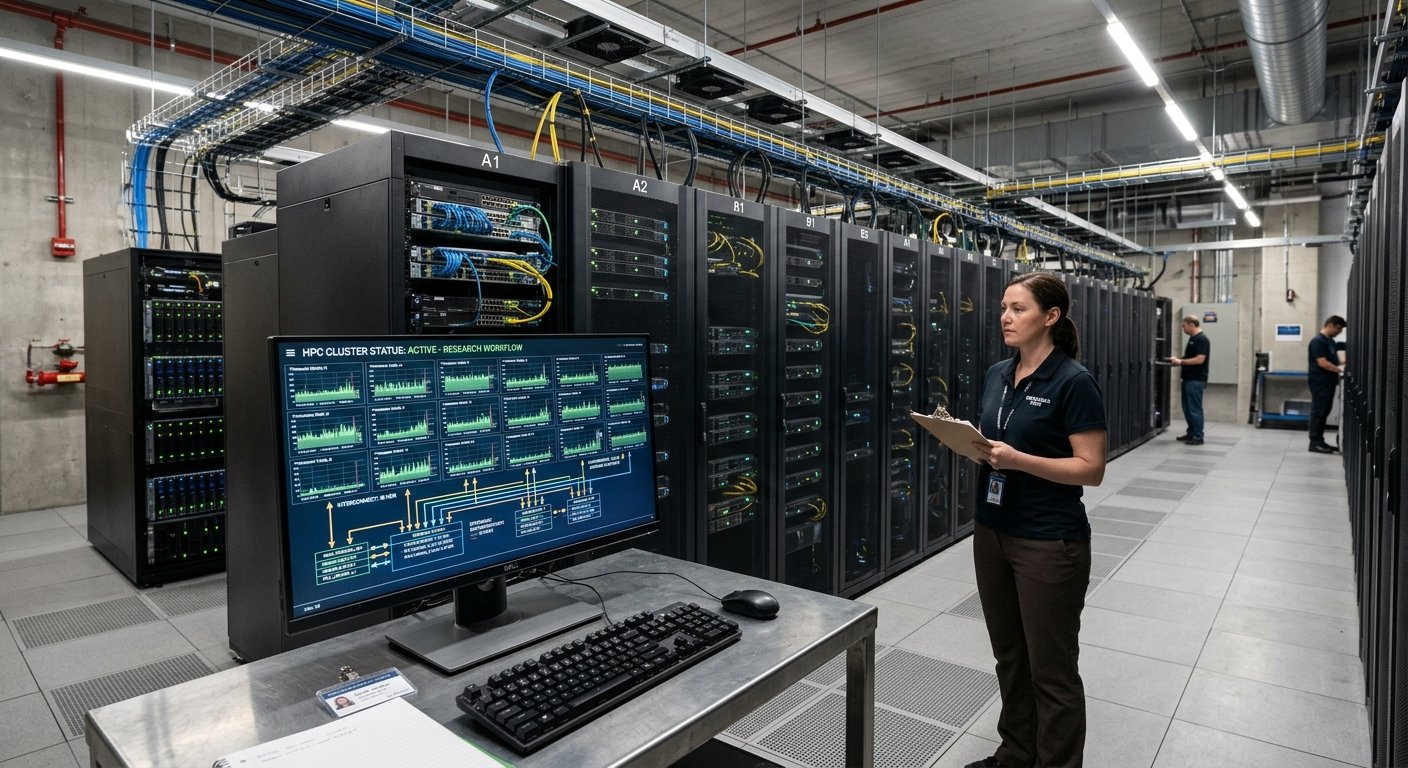
Parallel computing is becoming increasingly important as issues arise for scientists, engineers, businesses and AI developers requiring computing power which can’t be efficiently provided by traditional computing. Parallel computing breaks down suitable tasks into smaller operations so they can be carried out by multiple processing units. This enables complex scientific models, advanced engineering designs, large data analysis and modern AI applications.
With advancements in computing technology, distributed AI systems, high powered GPUs, AI accelerators and highly connected supercomputers are becoming more common. Quantum computing and other modern technologies are being used to solve certain classes of problems. Overall, it’s important to think about how memory, software, energy consumption, communication, and limitations affect these new technologies.
Evolution of Parallel Computing
Parallel computing has evolved from having a small number of processors to thousands of interlinked processors and accelerators. Traditional computers typically have a central processing unit (CPU) to carry out instructions. Modern CPUs can carry out multiple instructions and multiple cores, however some tasks can be too demanding for a single processor. By breaking suitable tasks into multiple processing units you can utilize parallel computing. For instance, a weather forecasting application can split an atmosphere model into smaller parts of the atmosphere and calculate atmospheric conditions simultaneously. This information can then be shared between neighbouring parts of the atmosphere. This can then be combined to give the wider forecast. However, not all programs will benefit from this. There must be enough tasks that can be carried out independently.
With the increasing importance of data, the evolution of parallel computing has increased. Previously high performance computing would be used for scientific calculations, engineering models and numerical modelling. Now we must also be able to handle huge volumes of data and utilise mathematical operations to train and run AI models. This has led to the increase in heterogeneous computing technologies. CPUs can be used for general tasks, GPUs can be used for many similar calculations and specialised accelerators can handle specific tasks. With cloud computing, organisations can rent computing resources to utilise parallel computing. Future development will also be dependent on how well the computing resources, software, memory and data can be optimised.
AI Supercomputers
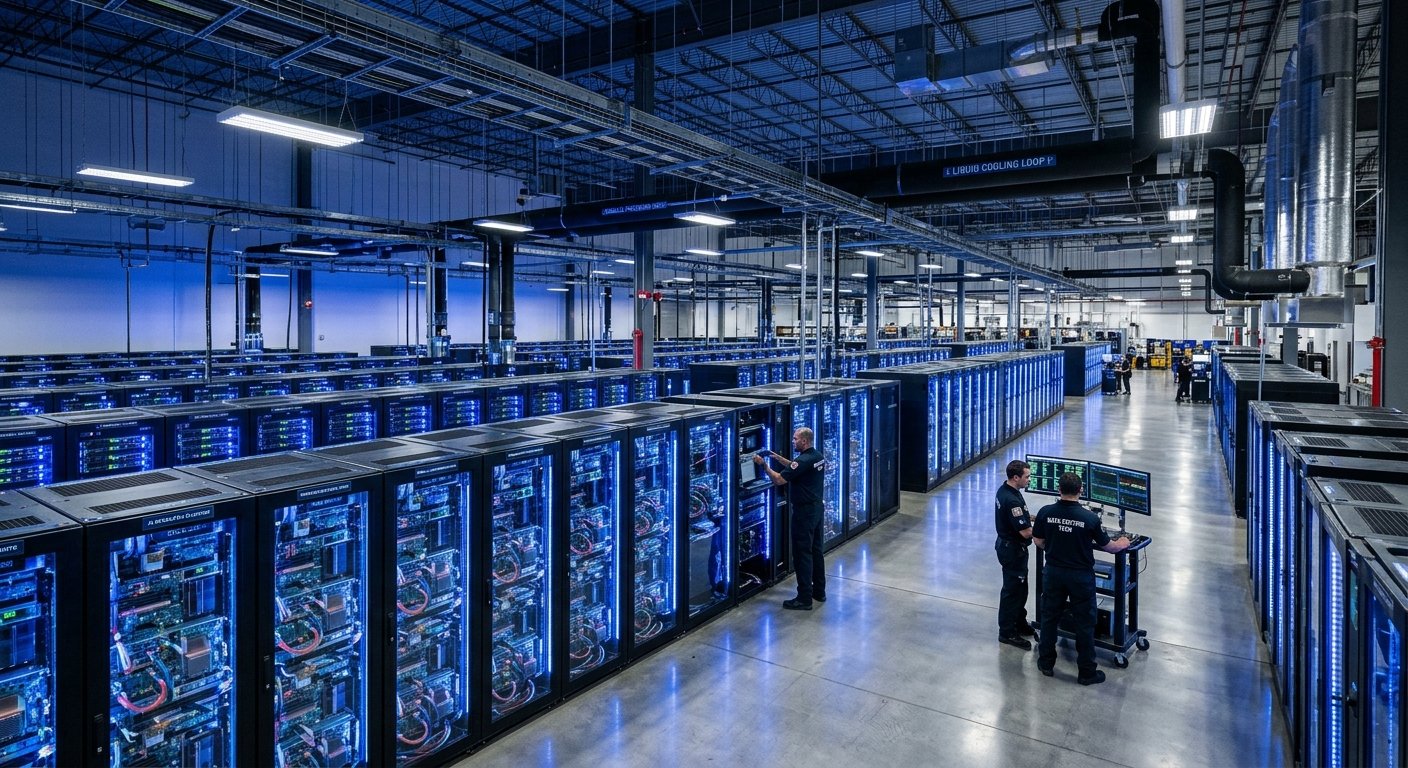
AI supercomputers are high performance systems which are used to handle intense AI tasks. They use powerful processors, extremely fast communication, large memory and specialized software to carry out calculations which can’t easily be done by normal computers. Training a large AI model can require many mathematical calculations using billions of parameters. This can be split across multiple accelerators to help reduce the training time. AI supercomputers can be used to help with scientific tasks such as analysing molecules, climate patterns and finding correlations in astronomical data. This is due to the combination of resources.
However, there is more to building an AI supercomputer. Each device must have enough memory bandwidth, reliable power supply, good cooling and fast communication. If a processor has to wait for data or for other processors to finish their task it can cause the system to lose valuable performance. Large AI models can be too big for individual accelerators so parameters will need to be split across multiple devices. This can cause issues with coordination. Developers will need to decide how to split their models, share their data and update the model without causing too much overhead. Future AI supercomputers will depend on how well they can be set up to train models, keep costs low, be reliable and give useful results in a reasonable timeframe.
Advanced GPUs and Specialised Processors
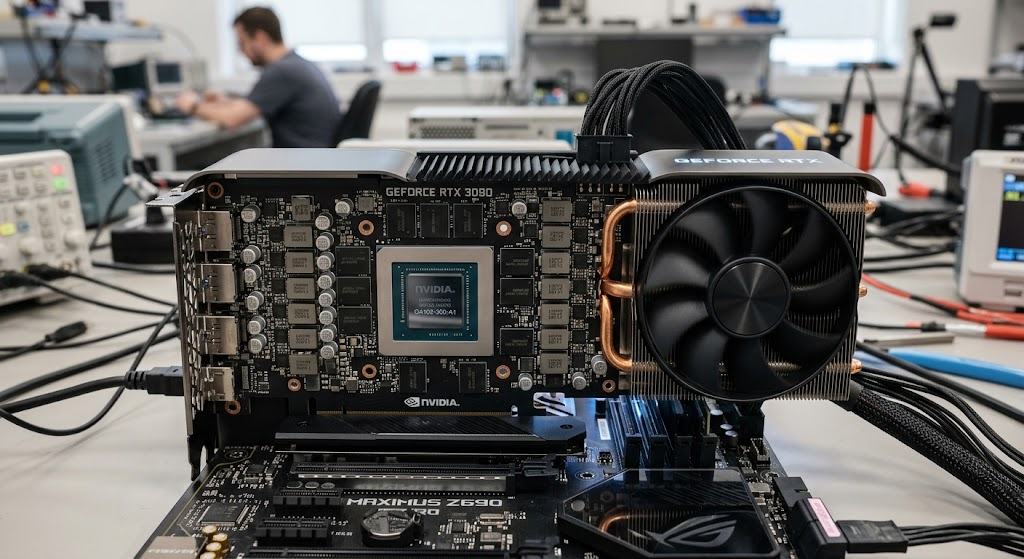
GPUs have become a key component in modern parallel computing due to their large number of processing elements. Originally used to speed up graphical rendering, GPUs are now widely used in machine learning, simulation, image processing and numerical analysis. Many AI tasks require matrix multiplication and other calculations. GPUs can be used for these due to how well they can be used to carry out many operations. Modern GPUs also have specialised components to help speed up certain calculations. They also come with optimised libraries to help developers. This makes GPUs an important resource to use in AI supercomputers and many other high performance applications.
Specialised processors can also help. Tensor processing units and other AI accelerators can be used for operations commonly used in neural networks. Some processors can also be used for low precision calculations to help speed up calculations for suitable AI tasks. Some processors have been optimised for inference, signal processing or scientific calculations. Field programmable gate arrays can be programmed to be used for specific processing pipelines. Application specific integrated circuits can be used for specific tasks. There are some trade-offs with using specialised hardware. The processor may not be very flexible compared to a general purpose CPU. Organisations will need to consider how easy it will be to programme, how compatible it is, how available it is and the overall cost. Future systems are likely to use a heterogeneous approach with CPUs, GPUs and specialised accelerators working together.
Distributed AI
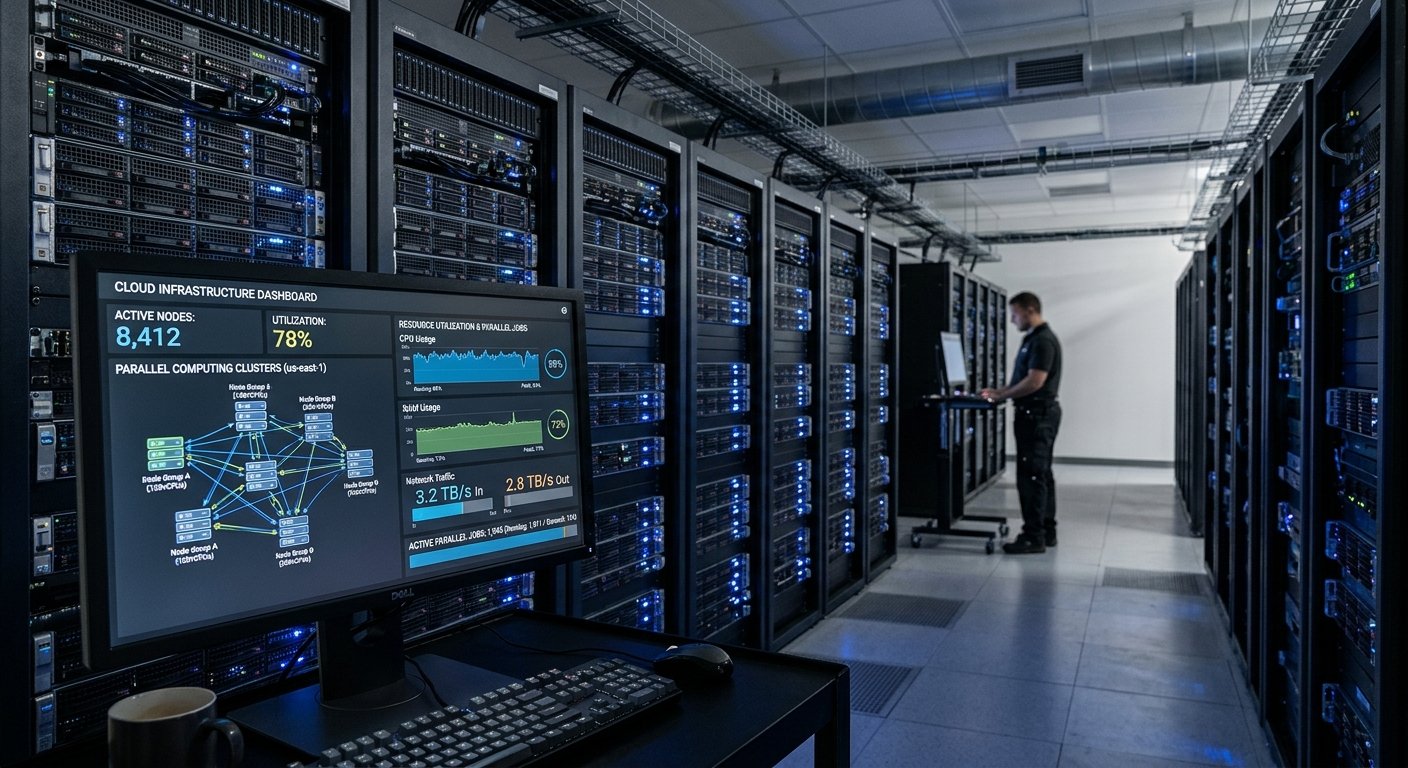
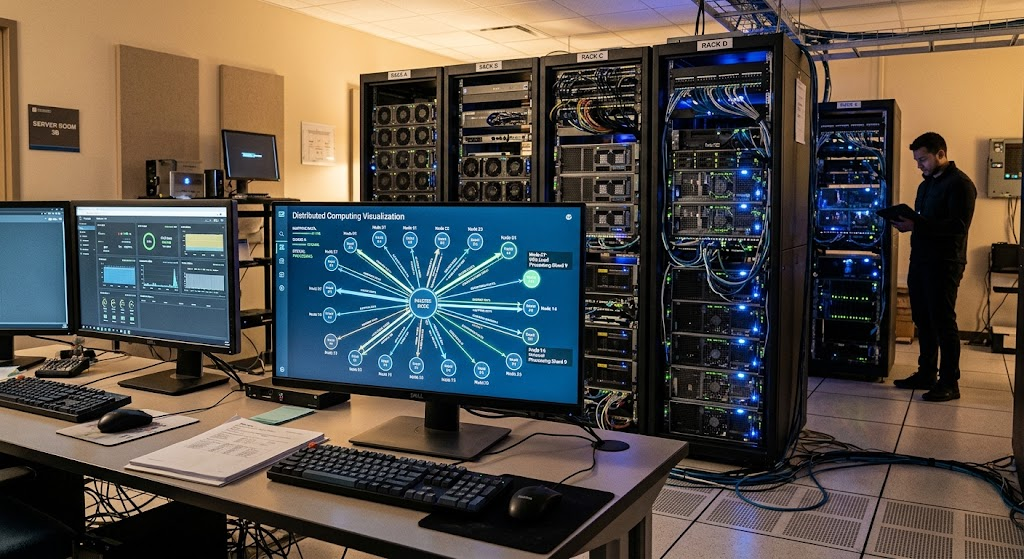
Distributed AI enables artificial intelligence tasks to be carried out on multiple computers or computing devices. This can be very useful if the models are too large for a single device, data is stored across multiple locations or the application needs to be used by users in different areas. This can also be used for distributed training. This can help by splitting the data across multiple workers, splitting the model components across accelerators or both. Distributed inference can also be used to spread the requests across multiple machines. This can help applications handle many users. However, the quality of the network will affect the performance. The tasks must be split fairly across the devices and there shouldn’t be too much information to be sent.
There are multiple different methods which can be used for distributed AI. Data parallelism can be used to split the data across multiple workers. During training they will have copies of the model and will be coordinated. Model parallelism splits the model across multiple devices due to it being too large. Pipeline parallelism can be used to split the model into sequential stages across different devices. These can be used together but will require coordination. Congestion, failures, imbalance and synchronisation will cause the performance to drop. Organisations will need to consider security, data governance and the cost of sending information. As distributed AI becomes more popular, it will be important to optimize the scheduling, have reliable communication and have better tools for monitoring.
Hardware/Software Co-Design
Hardware/software co-design refers to designing processors, memory, programming tools and applications to provide the best performance. Traditionally software developers would design software for hardware which had been designed independently. However, with co-design the needs of important tasks can be identified and hardware/software can be designed to work efficiently. For AI computing, developers can identify what mathematical operations are commonly used and what precision is needed. An accelerator can then be designed to carry out these operations efficiently. Software can then be developed to utilise the accelerator. This can improve scientific modelling as processors and software can be optimised for repeated calculations, data layouts and communication. This can improve overall performance.
This can be used to improve programming languages, compilers, operating systems and workload scheduling. Compilers can analyse the program and restructure suitable operations to improve instruction scheduling, memory and parallelism. Runtime systems can send workloads to different CPUs and accelerators depending on availability. Hardware designers can also provide features to help improve communication between processors. However, there are some challenges with co-design. The software may not be very compatible, it may be expensive to programme and it can be difficult to maintain in the future. Software may be optimised for one accelerator and will require a lot of changes to work efficiently on another. The most successful systems will have targeted improvements alongside reliable interfaces.
Memory Systems
Memory is one of the most important factors when considering parallel computing. Without data the processors can’t carry out any calculations. Fast processors can cause a problem with the time and energy required to send information. This is often referred to as the memory wall. As processors improve, memory may not be able to keep up. AI applications require lots of data to be read from the parameters and data sets. Intermediate values are created and values need to be updated many times. If the processors have to wait for information they may not get much improvement from having more arithmetic resources. Future systems will need to improve memory bandwidth, memory size, memory placement and communication between processors.
There are many technologies available to overcome these problems. High bandwidth memory can be used to provide a large amount of memory close to the processors. This can be useful if there is lots of repeated data. Caching can be used to store frequently used data close to the processing units. Data can be structured to help programs access memory more efficiently. Some systems have high speed connections to share data between processors and accelerators. Software can be used to reduce the memory requirements. Tiling can be used to break down calculations into smaller blocks to fit more into the fast memory. Checkpointing can be used to save certain intermediate values so long running calculations can be recovered. New memory technologies may be able to provide more memory or persistent memory. However, it will depend on the latency, reliability, cost and software. Having better memory systems will be key to making future parallel computers more efficient.
Energy Efficiency
Energy is becoming a key aspect of high performance computing. Large computing systems require a lot of energy to power the processors, memory, communication, cooling and other aspects. If the computing resources aren’t controlled the cost of running the system can increase. As AI models and scientific modelling increases organisations will need to consider how much useful work they are getting per unit of energy. This has led to the creation of specialised processors to carry out certain operations more efficiently, improved cooling technologies and software to avoid unnecessary calculations. In many applications having a more efficient system will provide more real world value compared to having a faster peak speed but using much more energy. Energy efficiency will play an important role in future systems.
Using software and workload scheduling can help improve this. Systems can direct suitable calculations to the most energy efficient processors. This will avoid wasting expensive accelerators. Resources can also be allocated based on workload. Developers can also use suitable precision calculations to avoid unnecessary calculations. Cooling can also be used to help remove heat from the tightly packed systems. However, if the system is made more efficient it may cause an increase in overall energy usage. This is often referred to as a rebound. If it’s cheaper to carry out calculations, organisations may run more workloads. A realistic sustainability plan will need to consider overall energy usage, cooling, manufacturing, lifespan and how useful the work is. Future supercomputers will need to find a balance between speed, accuracy, reliability and responsible resource usage.
Parallel Programming Techniques
Parallel programming techniques will determine how well developers can utilize multiple processors to solve a problem. Traditional methods include splitting tasks into threads, distributing calculations to separate machines and using vector instructions. Modern systems have many different types of processors which can make it harder to programme. Developers may have to coordinate between CPUs, GPUs, AI accelerators and networked machines. Frameworks can be used to help. Tools such as OpenMP and MPI are still important in high performance computing. GPU frameworks and high level libraries can be used for accelerated workloads. In the future there will likely be more automatic ways to find parallel opportunities and choose the right resources.
Compilers and artificial intelligence can help improve parallel programming. Advanced compilers can identify dependencies between operations, find opportunities to vectorise and create code for different processors. Task based programming can be used to define a workload as a list of operations and dependencies. This can then be scheduled by runtime systems. Automatic tuning can be used to test different setups to see what thread counts, memory and execution methods work best. However, some tasks will have dependencies which won’t allow them to be run in parallel. Incorrect synchronisation can also cause unreliable results. Developers will need to ensure that improvements don’t affect the numerical accuracy. Better programming tools will make parallel computing easier to use. However understanding data dependencies, communication and workload characteristics will still be useful skills.
Quantum Computing
Quantum computing is very different to traditional parallel computing. It uses quantum mechanics to represent information. Traditional computers use bits which have a value of either 0 or 1. Quantum computers use quantum bits (qubits) which can be put into quantum states which are combinations of the possible values. Quantum systems can also have entanglement which can correlate the quantum states. Quantum algorithms use these properties along with carefully designed operations and measurements to solve certain problems differently to classical algorithms. However a quantum computer shouldn’t be thought of as a classical computer with vastly more processors. The quantum states can’t generally be read out to give a full list of answers and useful results will depend on the algorithm and problem.
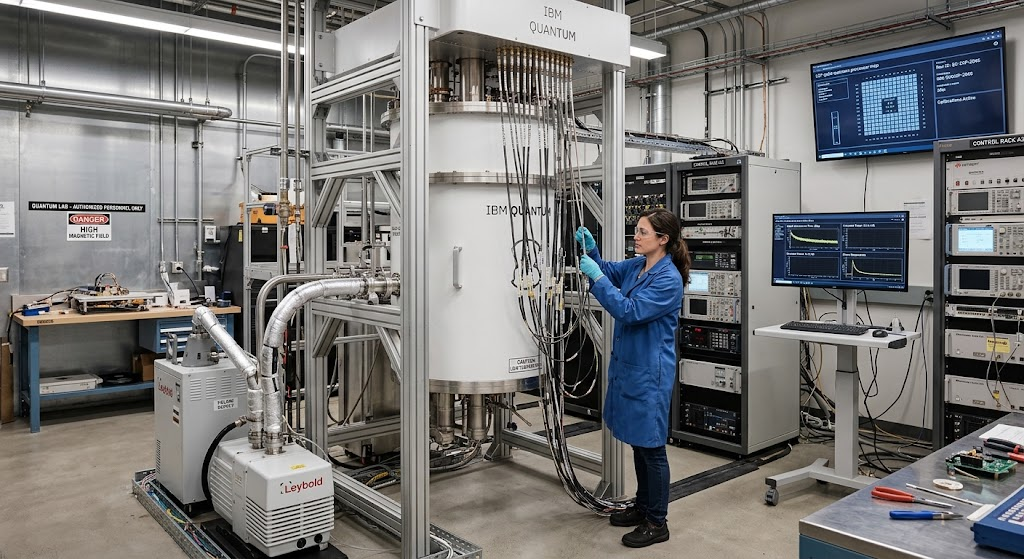
Eventually quantum computing and traditional parallel computing may work well together. Classical supercomputers can be used to help with control systems, simulations, data analysis and optimisation for quantum research. In the future a classical computer could be used to set up a problem, a quantum processor used to carry out a specialised calculation and then classical hardware could be used to analyse the results. Researchers are looking into using quantum computing for quantum chemistry, materials science, optimisation and other tasks. However the real world benefits will vary depending on the problem and there are some technical limitations. Many quantum devices are sensitive to noise and errors can occur which can disrupt the calculations. Quantum error correction can help with this issue but requires extra resources and complex control. Quantum computing is a promising area of development but won’t completely replace CPUs, GPUs or classical supercomputers.
10. Real World Applications of Future Computing Technologies
- Scientific Discoveries
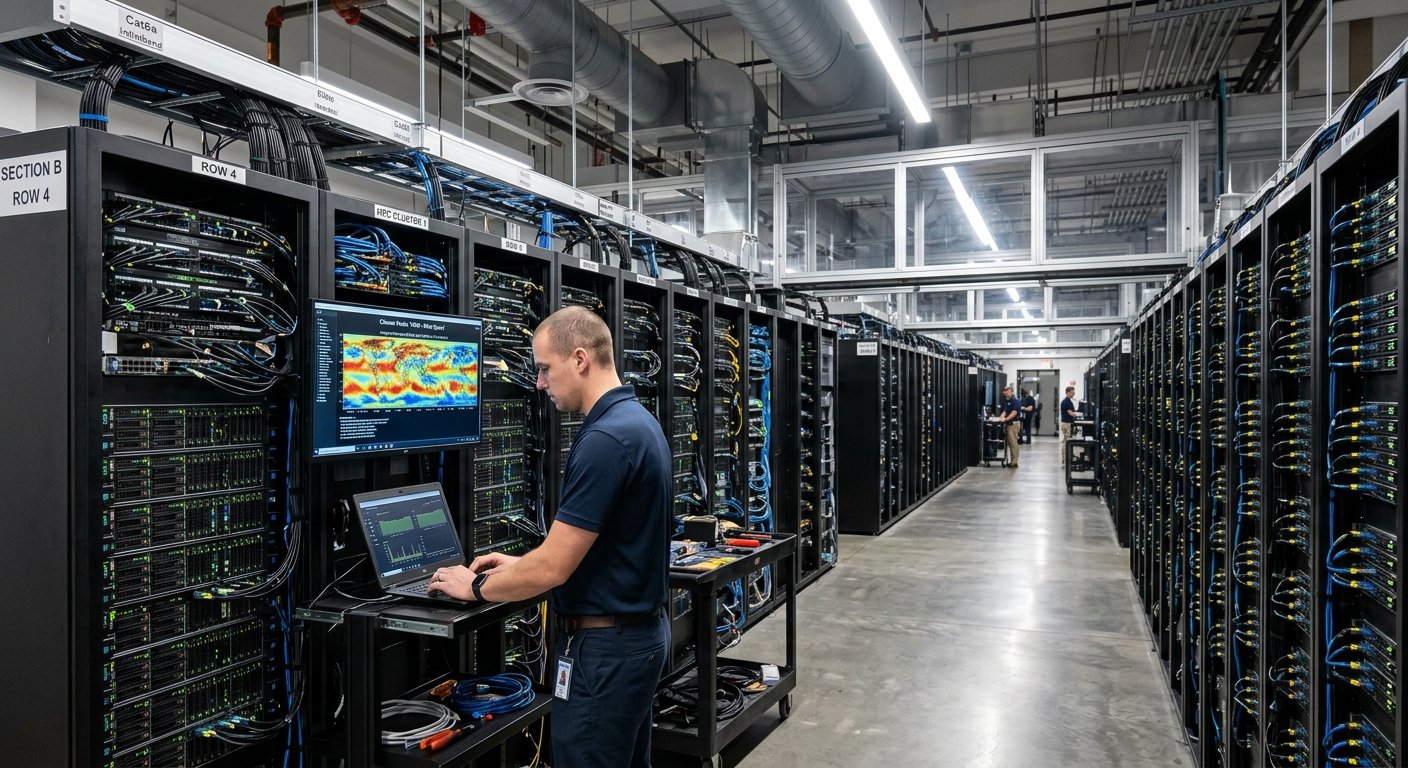
Scientific research is becoming increasingly reliant on computing systems to analyse complex systems and large amounts of experimental data. Parallel computing can be used to carry out climate modelling, fluid dynamics, astronomical data analysis and chemical processes. Climate models break the atmosphere, oceans and land into sections to calculate how conditions change over time. More computing resources can improve the resolution of the calculations, more detailed models and larger amounts of simulations.
However the quality of the results will depend on the science and data. AI accelerators can also be used to help find patterns in observations or quicker approximations for certain calculations. Quantum computing may eventually be useful for some molecular and material issues but this will require further technical development.
- Engineering
Engineering uses parallel computing to simulate how products will behave. Aircraft designers, automotive engineers, energy researchers and construction specialists will use numerical models to understand how strong structures are, how fluids behave, how heat is transferred and other physical processes. This can involve millions of variables and calculations will need to be carried out many times. By using parallel computing different sections or components can be calculated simultaneously. If the workloads can be split effectively this can help improve the time taken.
GPUs can be used to speed up suitable numerical calculations. Large clusters can be used to carry out simulations which can’t be done by a single workstation. AI models may also be used to help with design by finding promising configurations. However the results will need to be checked to ensure they follow the laws of physics, experimental data and correct validation. Having faster calculations will only be useful if they give sufficiently accurate predictions.
- Financial Modelling and Risk Analysis
In the financial industry high-performance computing can be used to solve complex mathematical problems. This can include scenarios such as Monte Carlo simulations, where probabilities of different scenarios can be estimated by randomly sampling from probability distributions and seeing what happens. If there is enough independence between each simulation then this can be split across multiple processors or computers. Using parallel computing can allow analysts to test more scenarios quickly. However, financial modelling involves making assumptions, dealing with uncertainty in the data, adhering to regulations and also has limitations in predicting.
Although faster processing can be achieved, the uncertainty in some scenarios may still exist so may not result in better financial decisions. AI can be used to aid pattern recognition and analysis of data, but care must be taken when validating the data to ensure the system is reliable and not biased. Quantum computing has been looked at due to its ability to solve certain optimisation and simulation problems, but generally has no clear benefits in real-world financial situations. Most applications rely on classical high-performance computing.
- Large Scale AI
One of the biggest drivers for using parallel computing is large scale AI. Training machine learning models can involve heavy matrix computations. This can mean there is a lot of iteration across the data and many accelerators need coordinating. Training can be done in a distributed way, allowing different devices to train different parts of the data or different sections of the model. Specialised hardware can be used to speed up the mathematical process. Once trained, the inference systems can be set up to distribute requests across a number of servers.
This can be used for many different applications such as language processing, image recognition, aiding scientific processes and automation in industry. However, larger models can require significant amounts of electricity, memory and investment in the infrastructure. There can also be issues with the data quality, security, reliability and validation of the output. In the future improvements will be made by creating more efficient training methods, reducing wasted processing and small effective models.
Technical Challenges and Limitations
There are several issues that can arise with parallel computing. Firstly there may not be much parallelism in certain scenarios. Some processes are dependent on others so cannot be done in parallel without affecting the computation. Amdahl’s law shows that any serial part within a program can restrict how much faster the program can run with extra processors. Communication can be an issue with many devices needing to communicate with each other. As systems get larger this can take up more of the execution time. Bottlenecks can occur when there isn’t enough memory available, some processes may not be balanced, programming can become complex and the hardware will not be compatible. Larger systems will also contain more components that could potentially fail, meaning fault checking, recovery and checkpointing becomes more important.
Large AI supercomputers require lots of money to purchase the required hardware, stable electricity and specialised areas. Accessing advanced processors can be difficult due to a lack of availability or infrastructure. Security can also be an issue when using a distributed system. Data must be protected when moving between machines. Developers also find it challenging to keep applications running as hardware becomes more advanced. Quantum computing can be difficult to implement due to issues with qubits, error correction, scaling and finding useful algorithms. Although some limitations can be overcome with emerging technologies, you should look at the tangible results of the technology. To successfully implement new technologies, realistic testing, correct cost analysis, reliable software and knowing which problems will really benefit from the technology will be important.
The Future of Parallel Computing
The future of parallel computing is likely to be a mix of different technologies. CPUs will still be used for general purpose tasks, GPUs will still be used for highly parallel tasks and specialised processors will be used to speed up certain tasks. Improvements in high bandwidth memory, communication and distributed software will help reduce bottlenecks. Co-designing hardware and software can help make applications more efficient by making the processor match the most frequently used operations. Improvements in programming tools and automatic optimisation can help developers make use of more complex systems. This can lead to quicker discoveries in science, more detailed models in engineering and greater access to AI. However the cost of infrastructure and electricity must be manageable.
Quantum computing may become useful for certain tasks. As hardware becomes more reliable, error corrected and algorithms discovered this may be useful for certain tasks. It is most likely to be used to complement classical computing. This can be used in hybrid systems, where certain operations are performed on the quantum processors and other operations are performed on classical machines. However, it is uncertain how soon this will be useful and many important problems will still be best solved using conventional computers. Any improvements in the future should be looked at based on how well they perform in real-world situations. Accuracy, time, energy and cost should all be considered. Organisations will need to choose the correct technologies for their needs. Overall the future of parallel computing will be a combination of good hardware, efficient software, scientific knowledge and responsible resource management.
Conclusion
Parallel computing is becoming more advanced with the use of multiple processors. CPUs, GPUs, specialised accelerators, high speed memory and distributed systems are being used. AI supercomputers show how the technologies can be used for demanding tasks. With co-designing of hardware and software, better programming practices and energy efficient processing, future systems can become more effective. Distributed AI can help organisations manage workloads across multiple machines. Improvements in memory and networking can reduce any delays.
Quantum computing provides a completely different way of computing. It may be used for certain scientific and mathematical problems but is not a faster version of classical parallel computing. Each technology has its own strengths and limitations. As technologies improve the most meaningful improvements will come from knowing which method of computing to use for each problem. Realistic performance can be measured and the right balance of speed, accuracy, affordability, reliability and energy efficiency can be found.