Introduction
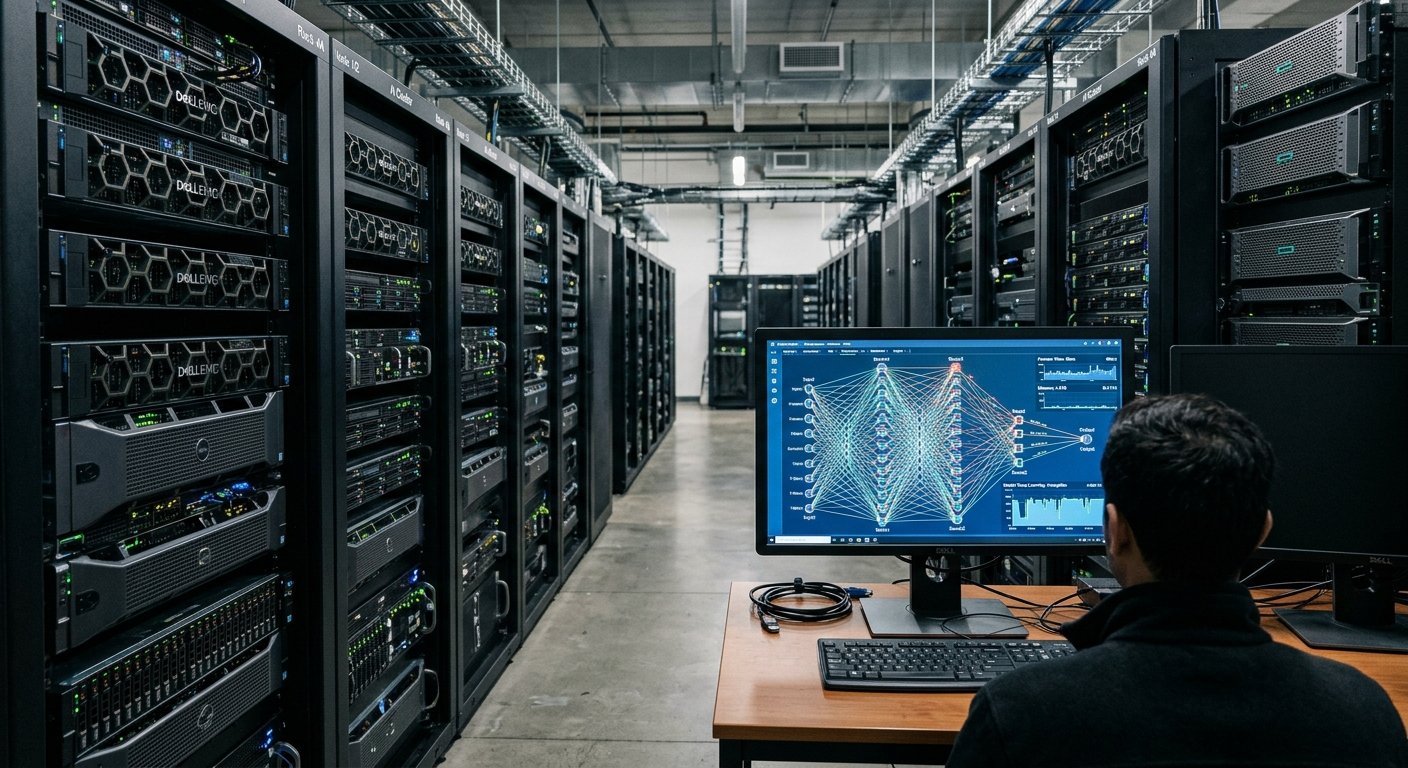
Today, with the advent of new technology, a vast quantity of data is created and complex problems solved by ever more powerful computing systems. Many scientific and industrial applications require more computing power than can be efficiently provided by an ordinary computer, ranging from forecasting extreme weather to creating new medications, designing aircraft and exploring distant galaxies. This is where High Performance Computing (HPC) is significant. high-performance computing is a term that describes the use of high-speed computing systems, several processors, high-speed communications and specialized software to carry out complex calculations and process large quantities of data quickly.
HPC systems can partition the tasks for a difficult workload across several processors or several computers communicating with each other instead of a single computer doing all the work. This helps researchers, engineers, businesses, and government entities to tackle any problems that would otherwise take a much longer time to solve. With the continued advancement of data intensive technologies, HPC will continue to be a critical backbone for scientific discovery, industrial advancement and technological innovation.
What is High Performance Computing (HPC)?
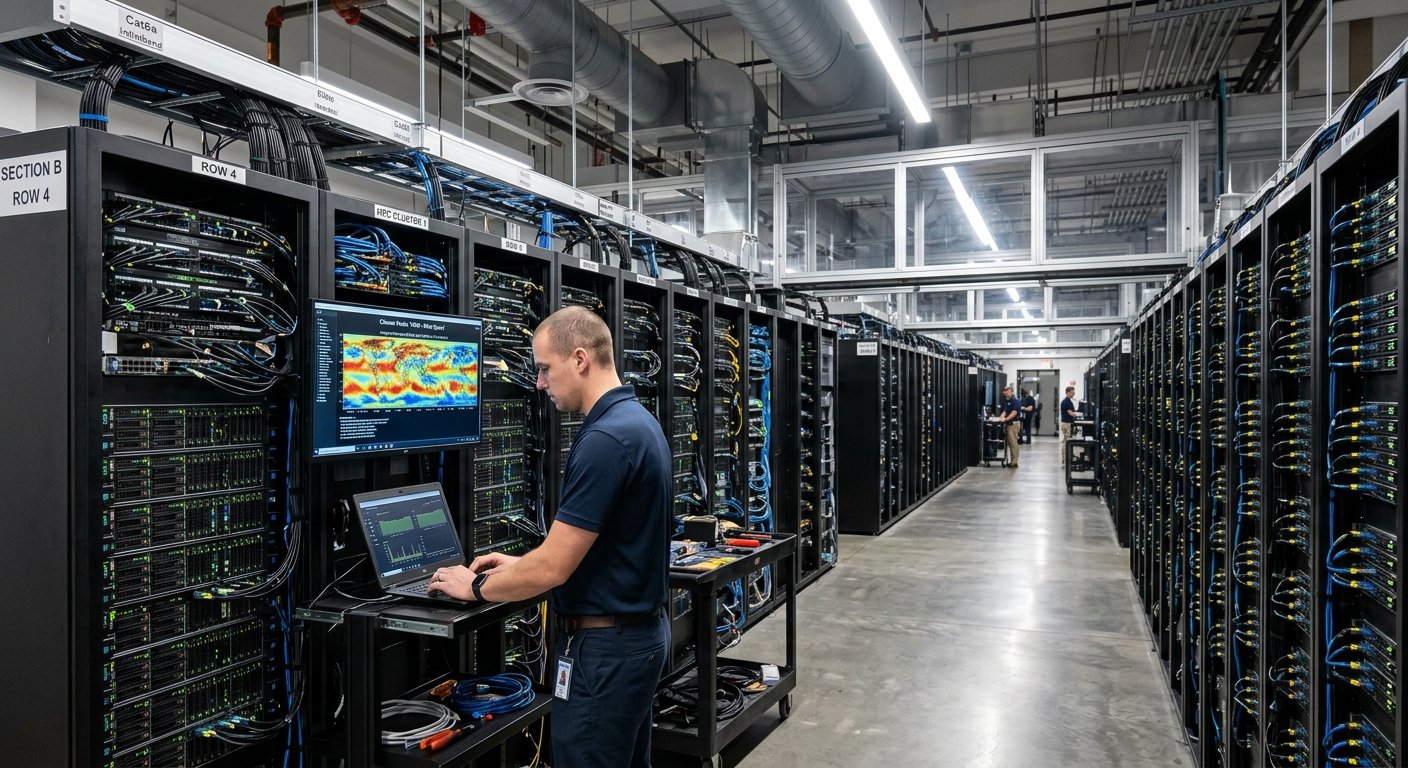
High performance computing (HPC) is a computing methodology that involves the use of powerful hardware and software to solve complex computational problems rapidly and efficiently. Typically includes the use of supercomputers, computing clusters, parallel processing, high-speed networks, and specialized programs and applications that are capable of managing loads too heavy for normal computer systems to handle. Standard home desktop computers are good for everyday computing, including surfing the Web, editing documents and using common applications. But simulating global climate patterns, analysing billions of chemical compounds, or modelling aircraft behaviour under a variety of conditions could involve billions or trillions of calculations. HPC systems are built to handle these workloads, dividing up the calculations among numerous processing units. High-performance computing is then not just a very powerful computer, but rather a coordinated computing environment designed to provide high levels of computing power, handle large amounts of data and meet the challenge of complex problems within a reasonable time frame.
IBM’s overview of the technology states, “High Performance Computing (HPC) technology brings together computing resources to manage complex computational tasks. Measurement of HPC performance can include many factors including processing speed, execution time, memory size, communication speed, and scalability with added computing resources. There are some HPCs oriented towards simulation of mathematical models, and others oriented towards processing large amounts of data or advanced AI processing. They can be configured variously based on the problem being solved, the volume of data, and the performance needed. While supercomputers are well-known, HPC can be accomplished with clusters of ordinary servers via high-speed networks. This flexibility enables the universities, research institutions and enterprises to benefit from HPC resources according to their technical requirements and respective budgets.
Principles of High Performance Computing?
The principle of high performance computing is to use computing resources and to coordinate them to accomplish difficult tasks. Its important technique is parallel computing, or breaking a problem down into smaller operations that are processed concurrently. For instance, a climate simulation could break up a geographical region into many regions and have different processors simulate the climate in each region. The system then communicates the information between these processors and aggregates the outputs from the processors to form the entire simulation. This can drastically shorten the execution time if a workload can be effectively divided. But not all problems are necessarily parallelizable equally. Some operations are dependent on the outcome of previous calculations and others involve a lot of communication between processors. Therefore, the design of HPC software must be carefully considered to reduce unnecessary coordination, distribute workloads and avoid individual processing units remaining idle while waiting for other units of a task to complete their work.
Communication, storage and workload management are also critical components of an HPC environment. During a calculation, processors may be required to share intermediate results, access large data sets or synchronize their progress. Fast storage systems facilitate access to the info needed by apps and high-speed interconnects cut delays in communicating. The workload schedulers distribute computing resources between various workloads to ensure that users and applications will be able to access sufficient computing resources. Users can set the number of processors, memory, time limits, etc. before starting a simulation/analysis. Then the system arranges the task based on its policies and capacities. After the workload completes, the data generated can be gathered, analysed and then saved for later use. These elements can be integrated into an HPC system to accomplish complex scientific, engineering, and commercial calculations that aren’t possible on less powerful systems.
Key Components of an HPC System
1. Powerful Processors
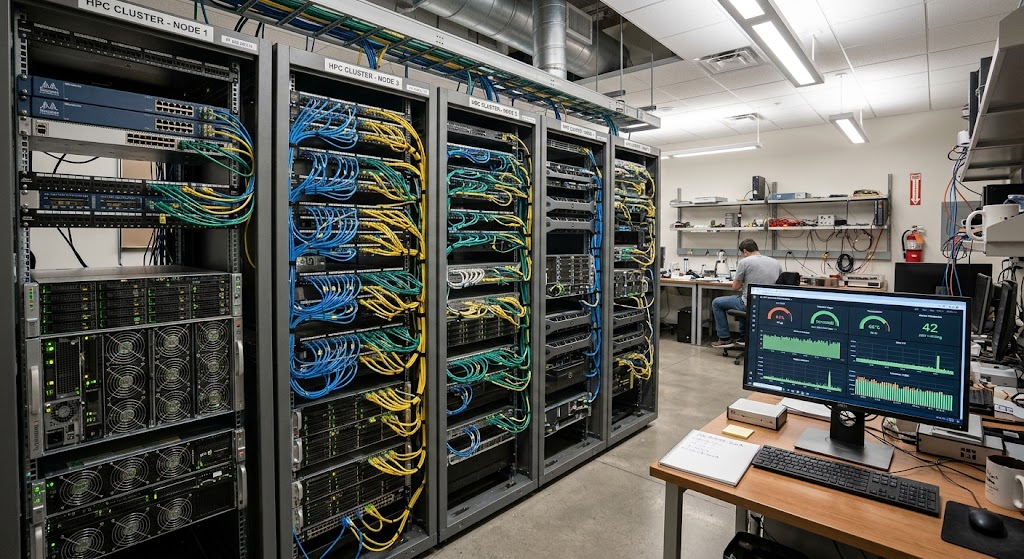
Processors carry out calculations to enable HPC. A variety of systems are made up of central processing units (CPUs), graphics processing units (GPUs), or both. CPUs can perform a broad variety of different operations effectively, such as the complicated branching and coordination needs of tasks. The GPUs have a lot of processing elements arranged in parallel, which makes them useful for certain tasks like scientific simulations, matrix operations and AI, among others.
The optimal processor configuration relies on other factors of the application, not solely on the number of processors. Increasing the number of processing units doesn’t necessarily speed up all programs, as communication overhead and memory restrictions and sequential operations can limit performance. To adapt to the requirements of the application, HPC designers choose processors and optimize software to utilize the hardware available in their computing system.
2. High-Speed Networking
In an HPC environment, the computers and processors can share information by using networking. Multiple servers hosting a workload typically must share intermediate results, coordinate calculations and access shared resources. For applications sending and receiving data often, ordinary network connections could delay the process, causing a problem. HPC systems thus employ high-performance interconnect technologies that offer high bandwidth and low latency.
Bandwidth is the amount of data that can pass through a connection in a given amount of time, and latency is the delay for data to be sent and received. Both properties are important to the performance of a distributed application. When thousands of processing units work together on a single simulation, a fast network is particularly important. If there is no efficient communication, processors could be waiting for information for extended periods instead of doing useful calculations.
3. Memory and Storage Systems.
HPC applications tend to be memory and storage hungry applications, as they process large sets of data and produce significant amounts of results. Memory is used to temporarily store numbers that are used in calculations, and Storage is used to store data sets, application files, simulation results and research records. When applications require a lot of information to be accessed many times, high bandwidth memory and fast storage technologies can help with performance. There are parallel file systems, whereby multiple computing nodes are able to read and write data simultaneously, that are used by some HPC systems.
This decreases the likelihood of any particular storage device becoming a limiting factor when numerous processors require access to the same data. Good storage practices also make it easier for researchers to maintain critical results and store big volumes of files, as well as back them up. Even the most powerful HPC system can be underperforming if the information the processors need to continue processing has to wait for them.
4. Specialized Software and Workload Scheduling
Software solutions are necessary to distribute calculations, manage resources and coordinate complex workloads on the HPC hardware. Developers are supported by parallel programming frameworks and scientific libraries to develop application programs that utilize multiple processors effectively. Computing resource access is managed by operating systems and cluster management tools, and workload schedulers manage the jobs based on availability, priority, and cluster resource requirements.
In some schedulers, jobs are stored in a queue until they have free processors and memory. This helps to avoid any competing workloads overloading the system, and allows administrators to utilise expensive computing resources efficiently. Execution time, processor utilization, memory usage, network traffic and other metrics are then measured using performance monitoring tools. These software elements enable an HPC system to function as an integrated system, not a set of high-performance machines.
High Performance Computing vs. Traditional Computing
The difference between high-performance computing and conventional computing is in the scale, organization and purpose of the computing resources. The typical computer serves for common everyday uses, personal productivity, communication, and most common business use. They can be very efficient when they have good processors, a lot of memory and are used for tasks involving large data sets or large numbers of computations. To overcome these challenges, HPC systems work together by sharing tasks and collaborating among the various units, and rely on specialized software designed to meet the needs of the specific workload. The HPC environment can spread out work over many processors or several servers connected together rather than relying on a single computer for most of the work. This is useful when a problem can be broken down into independent or partially independent tasks that are able to be executed concurrently.
A major distinction is the treatment of resources and their assessment. A conventional computer is normally used by one or a few users, while an HPC cluster can be used by a large number of researchers or teams that submit jobs that may allocate varying computing power requirements. Workload schedulers manage these jobs, designate resources and minimize conflicts. Other aspects of HPC environments, such as scalability, storage throughput, network latency, parallel efficiency, and performance measurement, are also more important. However, for all computing problems, HPC is not the optimal solution. When opening a document or sending an email, thousands of processors aren’t generally required. The goal is to appropriately match computing power to the problem’s solution. While conventional computing still works fine for standard workloads, HPC can be particularly valuable when a job demands more than just the resources of a standard computer, and involves large-scale simulation, data analysis, or other intensive computing tasks.
15 Benefits, Applications, and Examples of High-Performance Computing
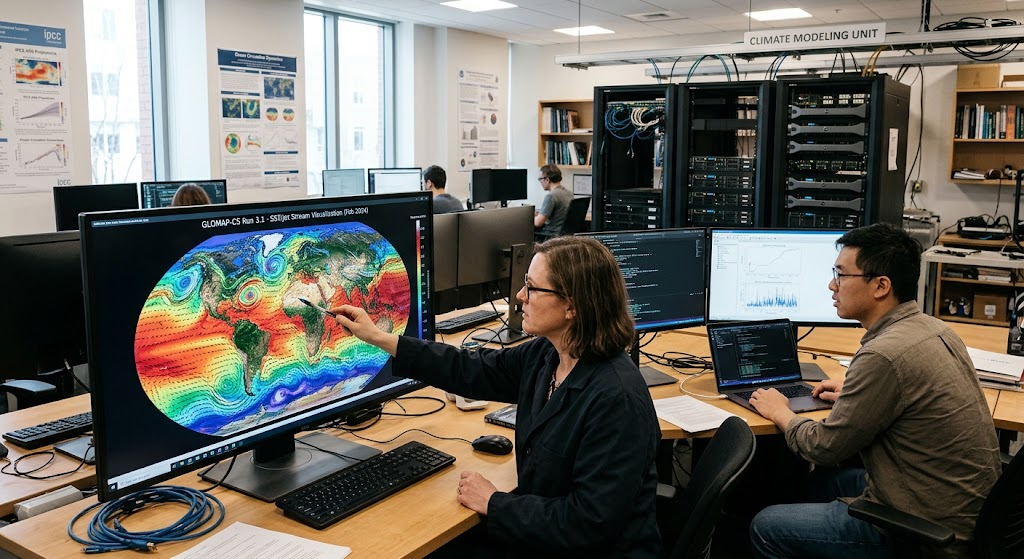
The scientific, healthcare, engineering, financial, manufacturing and other applications of high-performance computing offer significant benefits. How much it can help people explore complex problems at a scale or speed that would otherwise be hard to achieve is its greatest value.
With the following 15 examples, HPCs can be used to advance research, to make better decisions, and to make technological progress.
1. Climate Modelling and Weather Forecasting
Climate modelling and weather forecasting rely on intricate calculations of mathematical models, which describe the atmosphere, the oceans, land surfaces and interactions between the parts of the Earth system. HPC helps meteorologists and climate scientists to process huge amounts of observational data and to perform detailed simulations of the evolution of environmental conditions. A higher resolution, more complex physical models, and greater number of simulations to explore uncertainty will be possible with more computing power.
HPC can be used in weather forecasting systems to predict storm formation, precipitation, heat waves, and other meteorological phenomena. These systems also are used by climate researchers for long-term study of temperature, sea level and precipitation changes. While the atmosphere is complex, and observations are imperfect, forecasts are made possible by HPC, allowing researchers to consider more scenarios and offer useful information for agriculture, infrastructure planning, disaster preparation and environmental policy.
2. Pharmaceutical Research and Drug Discovery
The creation of a new drug is a complex process that requires extensive research into biological processes, chemical compounds, molecular interactions and likely treatment results. HPC is used in pharmaceutical research for molecular simulation, analysis of large biological datasets and for studying the interaction between potential compounds and a protein of interest. These calculations can be used to narrow down the number of potential candidates that can be tested in the laboratory and save time in the evaluation process of the unsuitable potential candidates. The high performance systems also enable computational chemistry, protein modelling and research on the relationship between genetic differences and responses to disease and treatment.
But prediction in the computer does not substitute for experimental studies in the lab, clinical trials or regulatory evaluation. They offer proof that can be used in conjunction with experimental data to make decisions. HPC enables more complex models to be evaluated and larger data sets to be analysed, thus helping to develop research methods that can lead to better understanding of diseases and the discovery of new treatments.
3. Engineering Simulations
Engineers use HPC to simulate the behavior of structures, machines and materials under a variety of conditions. Computational fluid dynamics (CFD) models, for instance, the flow of air around a building, water through a pipe, or fluid around a vehicle. Structural simulation can predict the behavior of bridges, buildings, and other structures when subjected to loads, vibrations, temperature, and more. These calculations are useful to engineers to find any potential weakness and avoid building costly physical prototypes.
HPC is very useful when a model has millions of variables or needs detailed calculations for many areas of a structure. Engineers can make comparisons between various designs, consider potential failure modes and optimize product performance by repeatedly simulating. While physical testing and professional engineering judgement are still critical, HPC can minimize some of the early physical experiments and inform teams to explore more design possibilities within the available development time.
4. Genomics and Medical Research
Genomics is the study of structure, function and variation of the genome. In the modern era of genomic research, the volumes of data generated are very large, and complex computational tasks are needed to process, compare, and interpret these data. HPC enables scientists to analyse the information from DNA sequences, to identify the variations in their DNA, to investigate relationships between genes and disease, and to compare the biological information in large populations. Medical scientists can also use the genomic information in conjunction with other scientific data to study mechanisms of disease and inter-individual variation.
These analyses can aid research on inherited diseases, infectious diseases, cancer and other complex health problems. High-performance computing is particularly beneficial when researchers have to run analyses on numerous data sets or when researchers are interested in testing complex statistical models. Projects should also implement suitable privacy protection, access controls and data governance protocols to ensure the security of individuals’ information, as genetic information can be sensitive.
5. Financial Risk Analysis
Computational models help financial institutions estimate market risks, analyse investment portfolios, explore economic scenarios and analyse how interest rates or asset prices may affect financial results. These models may need to be re-computed over many different market scenarios. HPC is a tool that allows analysts to perform numerous simulations within reasonable timeframes, process vast quantities of market data, and analyze complex mathematical models. One of the possibilities is a financial institution reviewing the impacts that various combinations of market fluctuations or economic shifts might have on its portfolio.
Advantages of faster computation include the ability to consider more scenarios and to revise some risk estimates more often. But more computing power is not the key to correct predictions. The results are dependent on the quality of the data and the limitations of the models and methods used, as well as the assumptions that have been incorporated. While HPC helps in analyzing and making decisions, it can’t remove the financial uncertainty.
6. Space Exploration and Astronomy
From interpreting data from telescopes to modelling the behavior of stars and galaxies, space exploration and astronomy presents a variety of complex computational problems. These are the types of tasks that can be carried out using HPC; calculations on huge astronomical data sets, and the search for patterns within observations and the study of physical processes that can be difficult to recreate in the laboratory. Simulations can be used to understand how galaxies form, how objects in the universe interact with each other, how the universe evolves, and the movement of objects in the universe.
Space agencies and research institutions also rely on advanced computing for spacecraft design, mission analysis and processing of data from scientific instruments. Computing is a key component to deriving useful information from the growing amount of data being generated by telescopes and space missions. HPC does not take the place of physical observation and experimentation, but it assists scientists to interpret evidence and compare their theoretical predictions with information gathered from the universe.
7. Digital Marketing and Brand Building.
AI and machine learning systems can be resource-intensive, especially if they are trained with large datasets. HPC systems involve processors, memory, networking, and storage to distribute appropriate AI workloads among multiple computing units. Special-purpose accelerators, such as GPUs, can execute the calculations required to train a neural network effectively. Another use case for HPC is for scientific applications of AI, such as image analysis, molecular studies, language processing, and the prediction of complex physical systems.
Distributed training involves several processors or servers computing on different pieces of a problem; the processors need to be coordinated effectively to ensure that they remain productive. Data quality, computational expenses, and the environmental effects of large workloads are also of importance for researchers to consider. Used correctly, HPC can allow experimentation to be accelerated, model development to be scaled up, and explore problems that demand cutting edge computing power and analytical techniques.
8. Scientific Research and Complex Calculations
Conventional computers are often not fast enough or powerful enough to perform calculations for scientific research purposes. Physicists can model particle interactions, chemists can model molecular behavior, and mathematicians can model numerical problems involving a very large number of variables. Many processors can be used together to carry out these calculations with the help of HPC. The use of large-scale simulations can assist scientists in the study of hypotheses, the testing of theoretical predictions, and the study of conditions which are not easily or even reliably created in the laboratory.
Other researchers can also carry out several different experiments in a computer simulation and vary parameters to see how the parameters affect the results. Powerful computers are not enough to get the right answer if a simulation is not constructed the right way. They are based on mathematical models, data inputs, numerical methods, and validation based on relevant evidence. However, HPC offers a tremendous way of exploring difficult questions and enriching the research agenda.
9. Energy Exploration and Production
In the energy sector, advanced computing is employed to explore existing geological formations underground, assess energy resources and develop better energy systems designs. In the field of oil and gas exploration, HPC can be used to aid in seismic imaging, a process that uses measurements to help scientists understand the structures below the earth’s surface. These analyses require a large amount of data and complex mathematical techniques. HPC also enables research on renewable energy, such as modelling the flow of wind around turbines, analysing solar energy systems, and modelling electricity networks.
Engineers are able to assess designs of various equipment and investigate the performance of energy systems at varying operating conditions. With increasing energy loads and organisations looking for ways to increase their efficiency, computational models can be used to support planning and investment decisions. These models are useful if the data they use is of high quality and if they are interpreted correctly, but HPC can be used to provide a more detailed analysis than many smaller computing systems can.
10. Automotive Design and Testing
HPC is used by auto manufacturers to simulate vehicle performance, test safety-based designs, as well as simulate aerodynamic efficiency. Engineers can use computational fluid dynamics to analyze the flow of air around a vehicle and use structural simulations to predict how components will react to forces under certain conditions. Manufacturers can also simulate engine characteristics such as behaviour, thermal management, vibrations and more. The virtual tests enable engineers to evaluate design alternatives before creating physical prototypes, cutting down on costs and development time.
The application of HPC is also pertinent to the development of electric vehicles, where engineers model the performance of batteries, heat transfer, charging behavior and energy efficiency. While simulations can’t replace the physical crash test or road test and other physical evaluations, they can help point to problems that can be addressed earlier in the design process. HPC helps speed up development of vehicles and enhances the engineering process through the support of more detailed, repeated testing.
11. Aerospace Engineering
In Aerospace engineering, an engineer designs aircraft, spacecraft, propulsion systems, and other devices which must function within harsh physical constraints. HPC is used for modelling air flow, aerodynamic forces, heat transfer, structural stress and combustion processes. For instance, engineers could explore the effect of the shape of an aircraft wing on lift and drag, or model the response of components in a spacecraft to extreme temperature changes. The equations carried out in such simulations are frequently complex and the computational meshes are large, modelling the physical objects with a fair level of detail.
With HPC, engineers can work on numerous calculations at once, consider possible design variations, and investigate conditions that might be costly or impractical in the lab. This information can be used to inform prototype development and testing. But there are still stringent validation, physical testing, and engineering and regulatory considerations to follow for safety-critical aerospace systems.
12. Materials Science
Materials scientists investigate the characteristics and actions of materials like metals, polymers, ceramics, semiconductors and advanced composites. By modeling atomic interactions, examining crystal structures, and predicting material behavior under various conditions, researchers can leverage HPC to make informed decisions about material properties and performance. These calculations can help in the production of new materials used in electronics, construction, transportation, medical devices and energy storage devices.
A computational model can be used to study potential compositional effects on performance and stability in batteries. High performance systems can also be used to pre-screen materials for possible use before more costly testing in a lab. These techniques can be used to reduce the possible set of choices and inform experimental investigations but computational predictions should be compared to actual experiments. HPC aids in the discovery of materials that are more durable, efficient, and perform well.
13. Cybersecurity Research
Advanced computing is employed by cybersecurity experts to examine vast amounts of security logs, analyse network behaviour, assess defensive systems and study malicious software in a controlled environment. HPC can process massive amounts of events and detect statistical patterns which can be used to determine if there is any suspicious activity. It can also be utilized for training of machine learning models for defensive monitoring and testing of security tools with large datasets.
Intensive calculations are needed for some cryptographic research to assess the properties and performance of mathematical techniques. But just because a system has computing power doesn’t mean it is secure. Good security also relies on proper system design, regular software updates, access control and training of staff. With proper use and management, HPC can enhance the scope of security analysis and contribute to the creation of more effective security strategies and protocols to combat digital threats.
14. Manufacturing Optimization
HPC is used by manufacturers for better production planning, modelling of industrial processes and analysis of how to minimise waste. In a complex manufacturing operation, there can be interactions between machines, materials, temperature, manufacturing schedule, and supply chain. Engineers can use computational models to examine the impact of modifications to a single component of a process on the system as a whole. A manufacturer can, for instance, simulate the heat distribution in the process of metal production or compare the production schedule to find opportunities to shorten the delays.
HPC can also be used to develop digital twins, models of real-world systems that can be refined with operational data. The models could be used by organisations to explore potential improvements without making any change to the actual equipment or production processes. Their accuracy relies on the model being a valid representation of the actual process and the validity of the input data. Despite this, HPC can still help with informed operational decisions and systematic process improvement.
15. Prediction and Emergency Planning of Disasters
To plan for and predict disasters, organizations need to know what events might be critical, and what communities or infrastructure might be at risk. HPC facilitates hurricane, flood, wildfire, earthquake and other hazard simulations, which are able to calculate details over a large geographical area. For example, flood models can integrate terrain data, precipitation data, river data and drainage data to explore potential water flow.
Wildfires can be simulated to reflect the impact of the weather, vegetation and terrain. Such models can be used by researchers and emergency planners to consider scenarios, assess infrastructure vulnerabilities and plan responses. When there is incomplete information or rapidly changing environmental conditions, predictions are uncertain. But the extra processing power of HPC can facilitate more comprehensive modelling and aid authorities to make plans based on scientific evidence in the event of an emergency.
HPC Performance Measurement and Workload Scheduling
Measuring performance is essential because a system with many processors does not necessarily complete every task quickly. One common measurement is floating-point operations per second, usually expressed as FLOPS, which describes how many floating-point calculations a system can perform in one second. Larger systems may be measured in teraflops or petaflops, representing trillions or quadrillions of floating-point operations per second respectively. However, theoretical peak performance does not necessarily reflect the speed an application achieves in practice. Real-world performance depends on software efficiency, memory access, communication overhead, storage speed, and the proportion of a workload that can run in parallel. Benchmark tests help organizations compare systems using defined workloads, while application-specific measurements show how effectively a particular system performs the tasks that matter to its users.
Workload scheduling is another important part of HPC management. Shared computing environments may receive hundreds or thousands of jobs from different users, with each job requiring a specific amount of processing power, memory, storage, and execution time. A scheduler evaluates resource availability and determines when jobs can run. Some systems use batch scheduling, where tasks wait in a queue until the required resources become available. Administrators may apply priorities, reservations, resource limits, and usage policies to support fair and efficient access. Performance monitoring tools can then reveal whether processors are being used effectively or whether jobs are limited by memory, network communication, or storage. By analysing these measurements, administrators and developers can identify bottlenecks, improve resource allocation, and reduce unnecessary delays. Regular performance evaluation helps organizations obtain greater value from their investment in HPC infrastructure.
Challenges and Limitations of High-Performance Computing
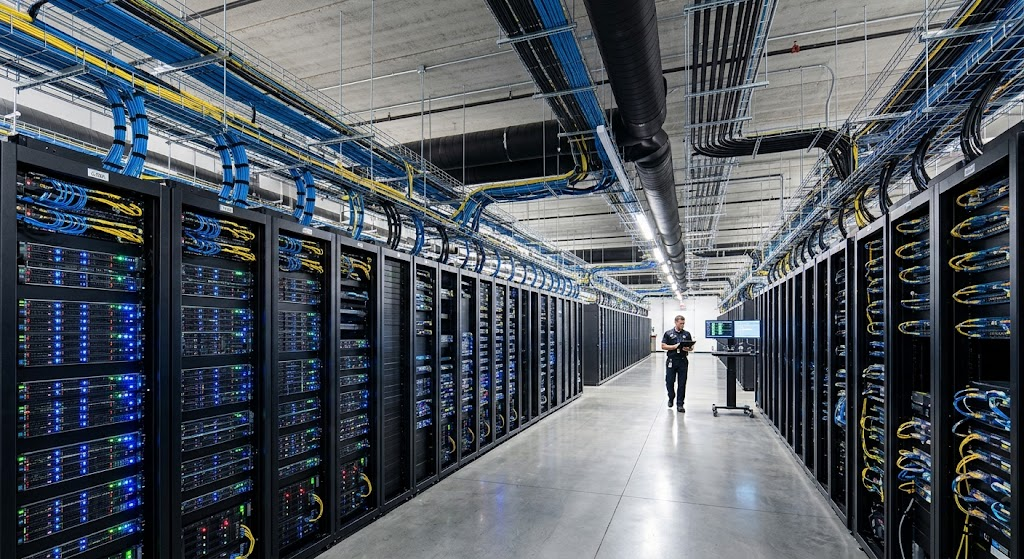
Despite its advantages, HPC introduces significant financial and technical challenges. Building a large computing cluster or supercomputer requires investment in processors, accelerators, networking equipment, storage systems, cooling infrastructure, and specialized facilities. Organizations must also budget for electricity, maintenance, software development, system administration, and eventual hardware replacement. Energy consumption is especially important because thousands of processors operating together can generate substantial heat. Data centres need effective cooling systems and carefully designed power infrastructure to keep equipment operating reliably. Another challenge is programming complexity: applications must often be redesigned or optimized to use multiple processors efficiently. Some workloads scale well as additional resources are added, while others encounter communication delays or sequential operations that limit the benefits. Consequently, organizations must evaluate whether the expected performance improvements justify the financial and operational costs of adopting HPC.
Data management, security, and staff expertise create further challenges. Scientific projects may generate enormous datasets that require fast storage, reliable backups, clear retention policies, and suitable methods for transferring information between institutions. Moving large files across networks can take considerable time, even when the computation itself is relatively fast. Organizations must also protect sensitive research data and ensure that users receive appropriate access to computing resources. Specialized HPC environments require knowledgeable administrators, software developers, engineers, and researchers who understand parallel programming and performance analysis. Recruiting and retaining these professionals may be difficult for smaller organizations. In addition, complex workloads can produce errors that are difficult to reproduce or diagnose. Effective planning, documentation, training, security controls, and monitoring are therefore necessary to ensure that HPC systems remain reliable, cost-effective, and suitable for their intended purposes.
Cloud-Based HPC and Its Growing Accessibility
Cloud-based HPC allows organizations to access powerful computing resources through cloud service providers instead of purchasing and maintaining every component of a physical supercomputing environment. Users can provision virtual machines, specialized processors, storage, and networking resources according to their workload requirements. This approach can be particularly helpful for universities, research teams, startups, and businesses that need substantial computing power for occasional projects but cannot justify building a dedicated facility. A research group, for example, may rent computing resources to run a large simulation and release them when the project finishes. Cloud platforms can also make it easier to increase or decrease capacity as requirements change. This flexibility can reduce the need for large initial hardware investments, although cloud computing is not automatically cheaper than owning infrastructure for workloads that run continuously.
Organizations considering cloud-based HPC should evaluate pricing, data transfer costs, storage charges, security requirements, and the availability of suitable hardware. Moving very large datasets into and out of a cloud environment can introduce additional expenses and delays. Some workloads also require specialized network performance or tightly coordinated processors that must be configured carefully to achieve good results. Data governance is another consideration, especially when research involves confidential business information, personal data, or regulated records. Organizations should assess service reliability, backup arrangements, access controls, and the practical requirements for moving data between providers or back to local systems. Hybrid computing, which combines local infrastructure with cloud resources, can offer a useful alternative for some organizations. By choosing an appropriate deployment model, users can gain access to HPC capabilities while managing cost, performance, and operational requirements.
The Future of High-Performance Computing
The future of HPC will be shaped by improvements in processor architecture, energy efficiency, networking, storage, and software. Specialized accelerators are becoming increasingly important for workloads that can benefit from large numbers of parallel operations, while improvements in interconnect technologies help processors exchange information more efficiently. Researchers are also exploring ways to reduce the energy required for large simulations and data-intensive workloads. Better cooling systems, efficient processors, and improved scheduling can help organizations use computing resources more responsibly. Another important development is the closer integration of HPC with artificial intelligence and data analytics. Scientific teams can combine simulations with machine learning techniques to analyse results, identify patterns, or estimate outcomes for selected problems. These approaches can complement traditional scientific methods, although their accuracy and usefulness must be established through careful evaluation and validation.
Cloud services and collaborative computing environments are also likely to influence how organizations access advanced computing resources. As tools become easier to use and infrastructure options expand, more research teams and businesses may be able to undertake computational projects that previously required dedicated supercomputing facilities. At the same time, increasingly complex applications will demand continued attention to cybersecurity, data governance, programming skills, and responsible resource management. Quantum computing is another area of research that may eventually complement some conventional HPC workloads, but it is not a general replacement for today’s supercomputers and remains limited by the maturity of available technologies. Overall, future progress will depend not only on building faster machines but also on improving algorithms, software, energy efficiency, and the ability of researchers to translate computing results into meaningful discoveries.
Conclusion
High-performance computing is an essential technology for solving complex problems that require substantial processing power, large datasets, and advanced computational methods. By combining powerful processors, parallel computing, high-speed networks, storage systems, and specialized software, HPC systems can perform demanding calculations more efficiently than conventional computers for suitable workloads. Its applications extend across climate modelling, pharmaceutical research, genomics, engineering, finance, astronomy, artificial intelligence, manufacturing, and disaster planning.
These capabilities help researchers investigate complex questions, enable engineers to test designs, and allow organizations to analyse information at a greater scale. However, adopting HPC requires careful consideration of infrastructure costs, electricity consumption, cooling, data management, software complexity, and specialist skills. Cloud-based services offer another way to access HPC capabilities without building an entire facility. As technology develops, HPC will continue to support scientific discovery, industrial innovation, and evidence-based decision-making. Understanding its capabilities and limitations helps organizations choose appropriate computing solutions and use advanced computational resources effectively.