Introduction
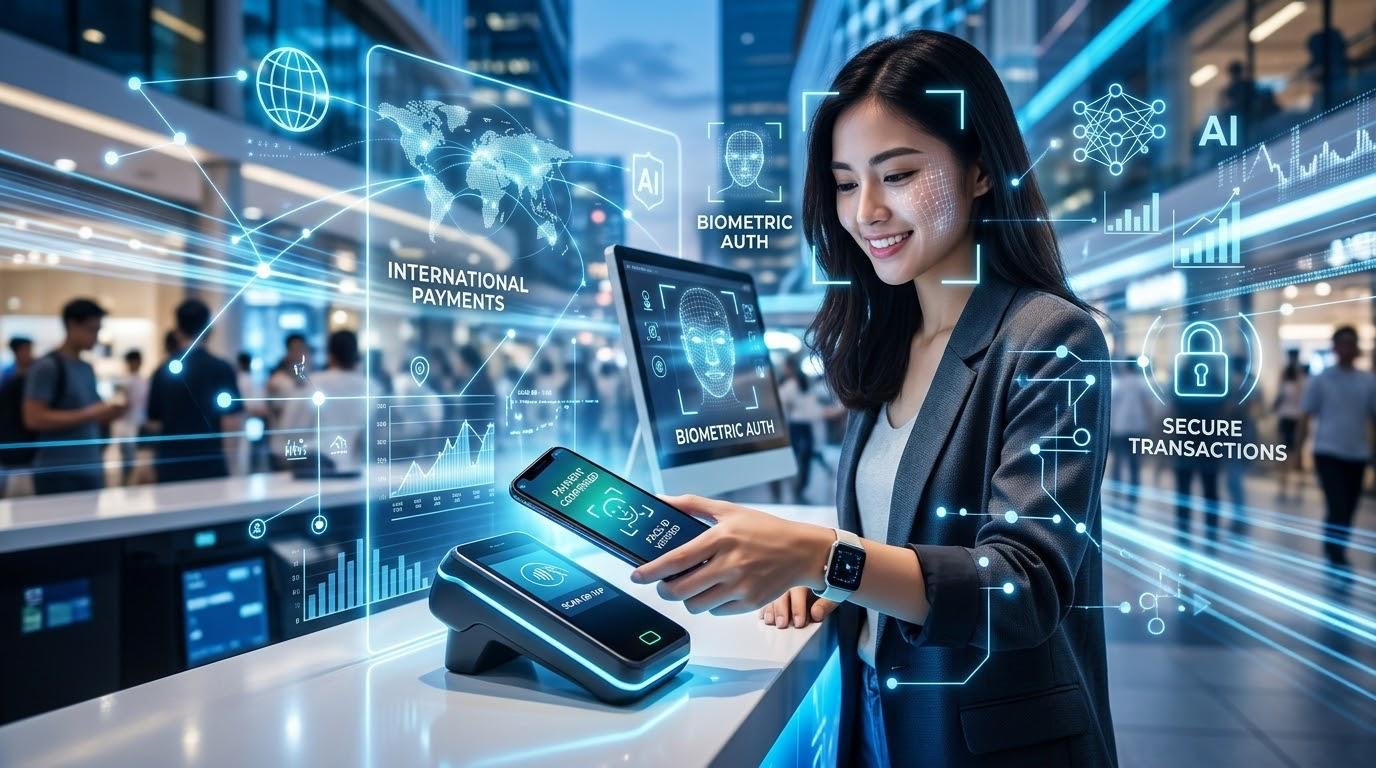
As technology advances, people are starting to use different methods of paying for products and services. Contactless payment is one of these technologies which have seen a rise in popularity. Contactless allows you to use your contactless card, smartphone or smartwatch to wave your payment device over a compatible payment terminal. This will help make everyday payments much easier and simpler. Contactless payments are becoming very popular in supermarkets, restaurants, transport, shops and other businesses. Knowing how contactless payments work, how they are safe and what you need to use them can help you make the right choices about what you want to use.
What is Contactless Payment Technology?
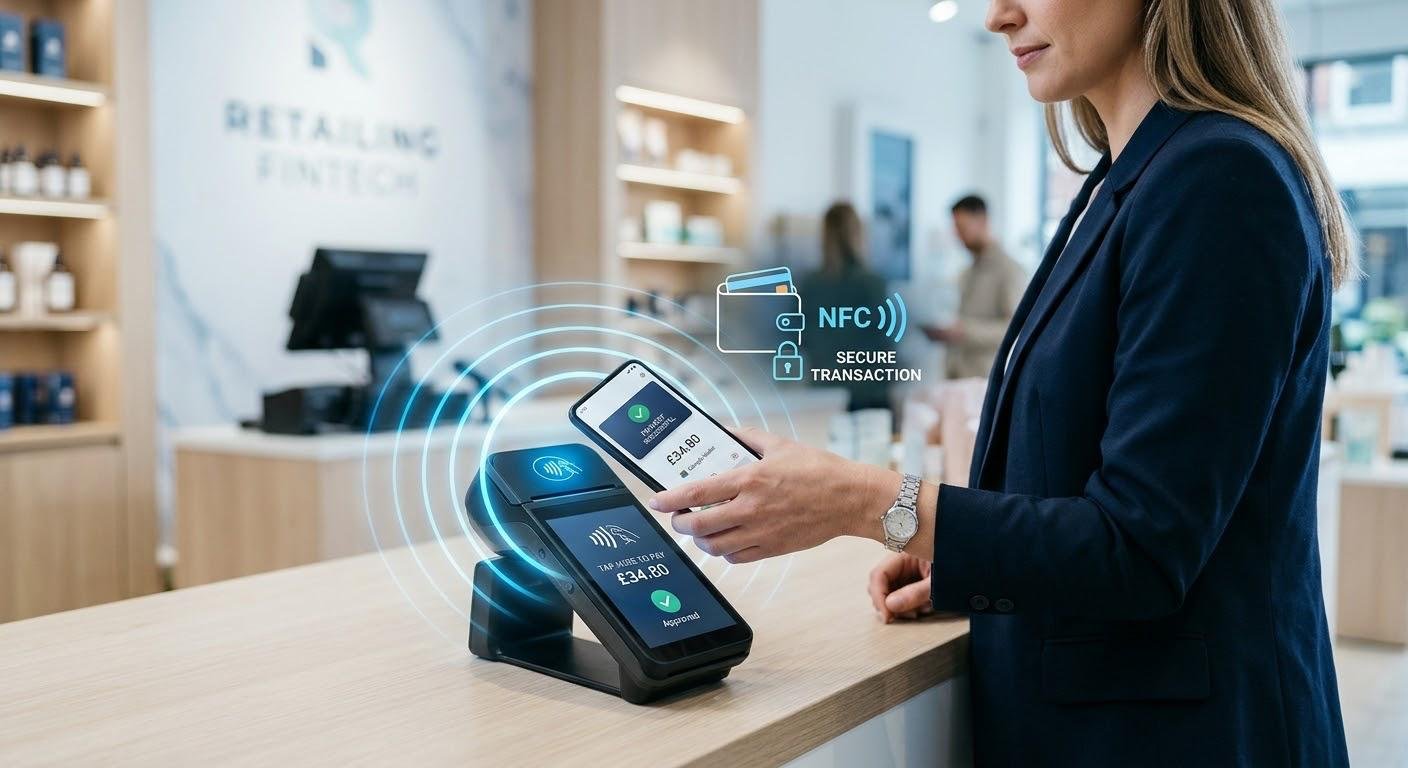
Contactless technology allows you to make payments electronically by waving your payment device over a compatible POS. You can use a contactless card, smartphone or smartwatch. The payment devices will communicate with the terminal using wireless technology. This technology allows you to use your contactless payments using contactless debit and credit cards which have been set up to use this technology. This payment process is quick and usually only takes a few seconds. Even though you aren’t physically touching anything, the payment will go through our normal banking and payment systems.
Near Field Communication
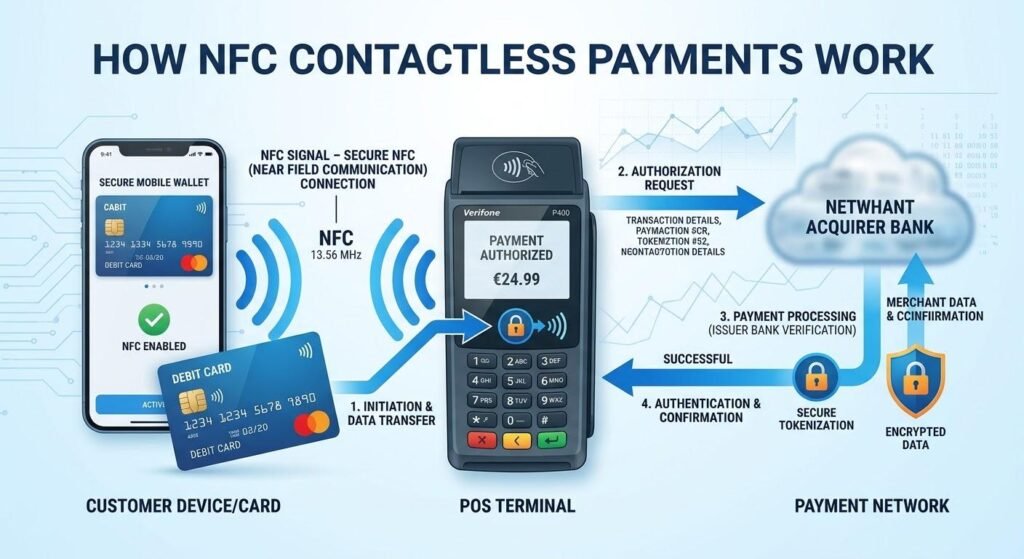
Near Field Communication is a wireless technology which allows devices to communicate with each other. This can be done by placing compatible devices within a very short range, usually a few centimetres. This technology is intentionally set up to have a very short range. This means it can be used securely for payments between cards, mobiles and payment terminals. Near Field Communication is a short range wireless connection technology which allows compatible devices to communicate. (Investopedia) In contactless payments this can be done by using an NFC enabled card or smartphone to communicate with the payment terminal. This is very quick and doesn’t require you to connect to the internet.
Tap to Pay Process
When using tap to pay, you will need to bring your NFC enabled payment card, smartphone or smartwatch close to a compatible POS. The payment terminal will connect to the payment device and request your payment details. The payment device will send the required payment information. This will then be sent to the merchant payment processor and the relevant card network. The bank will then look at the payment details and decide if it is valid. This will include looking at your account, available funds/credit and security details. If the payment is valid, the bank will approve the payment and send this back through the payment network. The terminal will show you that the payment has gone through and you can leave with your purchased item(s). If you cannot authorize the payment, the terminal will show you that your payment has been declined.
How Mobile Wallets allow you to make Contactless Payments
Mobile wallets are digital apps which allow you to store your payment cards on compatible smartphones and smartwatches. Examples include Google Wallet and Apple Wallet. There are different payment services available depending on your country. Once you have downloaded one of the compatible apps, you can add any eligible debit, credit or pre-paid cards. You will need to follow the instructions given by your bank or wallet provider to verify your card. Once you have added your card to your wallet, you can begin using it at participating merchants. Depending on your device and payment service, you may need to unlock your phone, authenticate using fingerprint, face recognition or passcode. You will then need to wave your phone over the terminal. Mobile wallets can also store other digital items such as loyalty cards, tickets and transport passes.
How Tokenization keeps your Payments Safe
Modern mobile contactless payments have security features. One of these features is tokenization. This replaces your sensitive payment details, including your card number, with a different digital token. When adding your card to your mobile wallet, the payment service will collaborate with your issuing bank and payment network to create or assign a token to your device. Your token will then be sent along with your secure payment details. This means your card number isn’t shown to the merchant. Tokenization will also make it harder for criminals to use stolen payment details. This is because the token has been created for a specific payment situation/device. Along with encryption and authentication this helps keep your digital wallet safer.
Contactless Payment vs. QR Codes
Even though contactless payments using NFC and QR codes both allow you to make digital payments, they work differently. NFC uses wireless communication between a compatible payment device and terminal. QR codes use a machine readable image which contains payment details or a link to your payment. Usually you will need to scan the merchants QR code using your smartphone camera or payment app. Some systems will ask you to show your QR code for the merchant to scan. QR payments usually require you to have a camera and the correct app. Whereas NFC payments require you to have compatible NFC hardware and a payment service. Both payment types can be a good alternative to using cash however it will depend on the merchant having the correct infrastructure, financial institution support and payment services.
Contactless Payment vs. Standard Card Payments
Standard card payments usually require you to insert your debit or credit card into the payment terminal. You may also be asked to enter your PIN. Some older systems may ask you to swipe your card. Contactless card payments don’t require you to do this. Instead your card will use the contactless chip and antenna to communicate wirelessly with the terminal. Both payment types will still require your card to be approved by the card issuer, payment network and merchants payment processor. However, contactless payments will usually be quicker to complete as you won’t need to insert/remove your cards. It is important to note that you won’t lose the standard card features. Most contactless enabled cards will still be able to be inserted into compatible terminals. This is useful if you need to use chip and pin verification or if the contactless feature isn’t available.
How to use Contactless Payments
To use contactless payments you will need compatible hardware. Physical cards will need to have a contactless chip and antenna. These are usually recognized by having the contactless symbol on them. Smartphones will usually need to have NFC enabled, the correct operating system and a compatible digital wallet. Smartwatches will need compatible hardware and a payment app. The merchant will also need to have compatible payment terminals. Just because you have an NFC enabled smartphone doesn’t mean you can use contactless payments everywhere. You will need your card issuer, card type, wallet provider, operating system and merchant to support this service. Be sure to check your device requirements and what your financial institution requires.
Availability of Contactless Payments
Contactless payments are available in different countries. This depends on your financial institution, payment network, regulators and technology providers. Not all digital wallets will be compatible with all cards. In Nigeria, contactless payments are beginning to become available. Google announced in October 2026 that Google Wallet and Google Pay are available in Nigeria. This means eligible Android and Wear OS users can make contactless payments using compatible cards from participating financial institutions. However not all banks in Nigeria will be eligible. Be sure to check if your card is eligible. Apple Pay also has their own requirements. At the moment, Nigeria isn’t listed as one of the available countries. This shows it is important to check if contactless payments are available locally.
Limits on Contactless Payments
There may be limits on contactless payments. This will depend on the payment network, financial institution, merchant and local regulations. In some markets you may be able to make small payments by just tapping your card. If you want to make a larger payment you may need to enter a PIN, fingerprint, face recognition or other form of authentication. Some banks will have limits on how much you can spend. They may also ask you to insert your card after a few contactless payments. This helps reduce the risk of your card being used without authorization. There is no set limit globally. The amount you can pay without entering additional information will depend on your country, card issuer, card type and payment terminal. Be sure to check with your bank. Just because you’re asked to enter a PIN doesn’t mean your contactless card is broken.
Advantages of Contactless Payments
Contactless payments are very convenient which is why they are continuing to be used by consumers and businesses. You can make payments quickly without having to search for cash, insert cards or enter payment details multiple times. This can be very useful in busy shops, restaurants, supermarkets and public transport. You also don’t need to give your payment cards to the cashier. Mobile wallets can also be very convenient as you can store multiple eligible payment cards. Businesses can benefit from faster payments which can help speed up the checkout process. Even though there are many benefits to contactless payments, they will only be useful if you have reliable payment terminals, network and financial institution.
How to keep your Contactless Payment Devices Secure
Even though contactless payments have security features, you should be responsible with your devices. Smartphone and smartwatch users should ensure they have strong screen locks, biometric security and don’t share their passcode. You should also ensure you are using the latest software as this often includes important security updates. Only download wallet apps from official app stores. Don’t enter any payment details into suspicious websites/apps. Physical contactless cards should be kept in a secure place and regularly checked for any unusual activity. Enable notifications so you can see if you’ve made any unknown payments. If your phone, smartwatch or payment card is lost or stolen you should contact your card issuer or wallet provider straight away to block the payment method. If your device supports it, you can lock and wipe your device remotely.
Disadvantages of Contactless Payments
Even though there are many benefits, contactless payments do have some disadvantages. If you try to pay with a terminal that does not support NFC, your card isn’t enabled for contactless payments or your mobile device does not have a compatible payment app you may not be able to make a payment. If there is damage to your hardware, low battery, account restrictions or payment network issues you may not be able to make a payment. There may be restrictions in certain regions. If you’re travelling internationally or using a card from a foreign bank this may cause you some issues. You may also worry about someone making payments without your authorization. However, your bank and wallet providers will have security measures in place to reduce this risk. Contactless payments are a convenient option but you should still know that they shouldn’t replace basic financial security. Be sure to have an alternative payment option.
Conclusion
Contactless payments have changed the way we make payments. You can use your contactless card, smartphone and smartwatch to make payments by just tapping. Near Field Communication allows your payment devices to communicate with compatible terminals. This means your payments can be authorized by your bank and payment networks in seconds. Mobile wallets can also be very convenient as they allow you to store your eligible payment cards. Tokenization also helps keep your sensitive financial information safe. Even though contactless payments are different to QR codes and standard card payments, they all provide an alternative way of making electronic payments. They will only be available if you have compatible hardware, financial institution, merchant terminals and regional requirements. Be sure to know what the payment limits are and take practical steps to keep your devices and account safe. As the digital payment infrastructure continues to develop, contactless payments are likely to be an important part of modern banking.
Get more well researched information about Contactless payments here.