Introduction
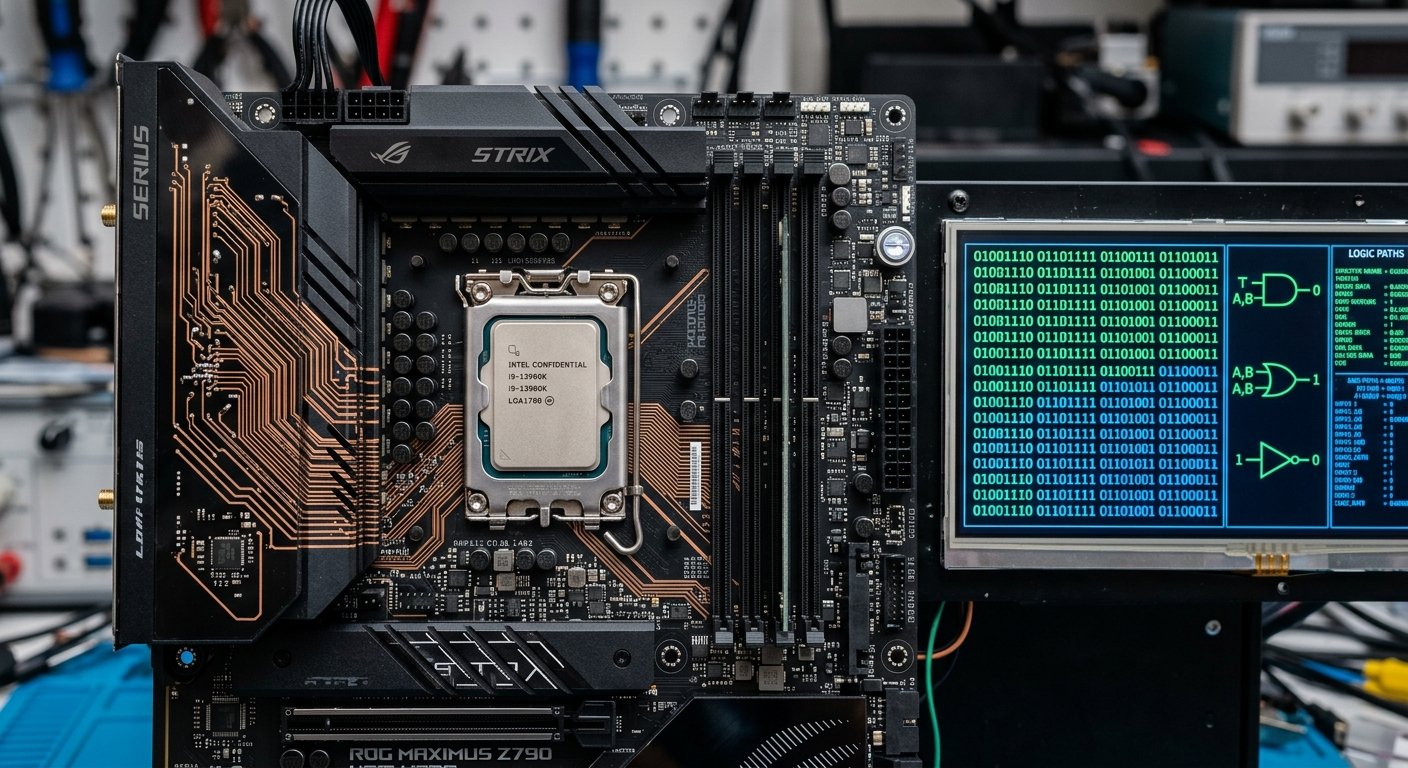
Programming languages, software programs, artificial intelligence, and more and more sophisticated hardware are commonly linked to computer science. But there is a mathematics that underlies these visible technologies which enable computers to represent information, solve problems, make decisions, and communicate efficiently. Discrete mathematics is the study of objects that can be counted while continuous mathematics is the study of quantities which can change continuously. This is of special significance for computing since computers ultimately deal with discrete entities like bits, characters, records, instructions, nodes and connections. Mathematical ideas like graphs, sets, relations, functions, logic, combinatorics and probability are used in many current computing applications, many of which are so common that people do not realize that mathematical structures are being used. Learning these concepts can thus offer more than just a theoretical understanding; it gives insights into many of the processes that underlie the feasibility, reliability and efficiency of digital technologies.
When analyzing computers and complex information, the discrete nature of structures becomes apparent. A social network can be modeled as a graph of users and connections, a database can be defined in terms of sets and relations, and a computer program can be studied via mathematical logic and functions. Probability and combinatorial thinking are essential to artificial intelligence systems that deal with uncertain information, and mathematical structures are crucial in cybersecurity for safeguarding data and confirming identities. Even in the case of apparently “visual” technologies like computer graphics, objects, coordinates, connections, algorithms are all represented in discrete ways. The examples show that discrete mathematics is not just a set of abstract formulas that are learned in college classrooms. It offers practical resources for modelling problems, designing algorithms, structuring information, and comprehension of the behaviour of computing systems.
Discrete Mathematics and Software Development

Discrete mathematics has applications in many of the most direct applications of everyday computing, most notably in software development. Logical conditions, sets, functions, relations and sequences are common objects of work for programmers when designing applications. For instance, programs can use conditions based on boolean logic that can evaluate to true or false. Multiple conditions can be combined in an application to use logical operators like AND, OR, NOT to determine if a user is allowed to use a feature. Functions are also crucial as they enable programmers to create functions that take inputs and return outputs. Some of the discrete mathematical concepts, like arrays, lists, trees, stacks, and queues, can also be explored in terms of data structures. These structures will influence the organization and retrieval of information, which in turn will impact on software’s performance and reliability.
Another practical use of graph theory is in software engineering. A software project can be described as a set of components and dependencies, and the graph of the relationships between the components constitute the relationships between the software components and the project. Dependency relationships are used to build systems and figure out what files or modules should be processed when the changes have taken place. The use of graphs can represent aspects of programs, and control-flow graphs can be used to understand the possible paths through a program, which helps developers and analysis tools. Testing can also gain from the use of graph-based models, as different execution paths can be explored in a systematic manner. Developers can use discrete mathematical thinking to reason about complex software systems as opposed to just sections of code. This makes it easier to maintain, find out what it depends on, find errors, and design efficient algorithms in the use of computational resources.
Applications in Artificial Intelligence.

The mathematical models play a crucial role in AI, enabling the representation of knowledge, relationships, uncertainty, and potential decisions. When an AI system has to operate on separate entities or relationships between entities, discrete structures are extremely helpful. Graphs can be used for a variety of networks of connected entities such as people in a social network, places that are connected by roads, or ideas that are related in a knowledge graph. These structures can then be used as the basis for searching algorithms, which can be used to find paths, relationships, or solutions to specific problems. For instance, a navigation system might store the positions as nodes and the roads as connections between nodes, and then use algorithms to calculate the shortest path between the nodes. These same ideas can be seen in the field of recommendations, language technologies, robotics and knowledge representation.
The other important aspects of artificial intelligence are probability and combinatorics. In the real world, information is often incomplete and uncertain, and AI systems must have mathematical tools to make predictions about the likelihood of various outcomes. Uncertainty in events, classifications and predictions can be represented using a probabilistic model. Combinatorics, on the other hand, is the study of how to count and arrange possibilities that are distinct rather than continuous. This is particularly helpful when you need to consider numerous combinations, choices, or steps. The selection of a model, feature, parameter, or classification is often part of the machine learning process. While the current generation of AI is also very much dependent on the fields of mathematics, such as linear algebra and calculus, the use of discrete mathematics is essential where systems are used for categories, logical relationships, search spaces, symbolic rules, and structured information.
Discrete Mathematics for Cybersecurity

Discrete mathematics is a field of mathematics applied to the field of cybersecurity to safeguard computer systems against unauthorized use, abuse, and loss of data. The rules are based on logic because systems need to know whether specific conditions are met at all for access to be made or an operation allowed. Logical relationships can be used in access-control systems to decide what actions can be taken by users, devices or applications. The sets can also be used to group users based on permissions, to describe a collection of protected resources or to describe security policies. Relations can be used for user to resource relationships. These mathematical models help security systems to make consistent decisions rather than relying on manual decisions.
Graph theory can also be used for cybersecurity analysis. Networks can be represented graphically by nodes and edges, where nodes are devices and edges are communication channels. Security analysts will use these graphs to determine vital systems, potential attack routes, strange connections, and places to get compromised. Graph-based analysis is especially beneficial for large networks to help structure the examination of relationships among numerous devices. Another application of discrete probability is to help security teams think about risks and uncertainties. Through mathematical modeling and use of practical security measures, organizations can gain insights into security vulnerabilities and develop more informed approaches to security. Interactions with access control, network analysis, authentication, risk assessment, and security policy design also contribute to the value of discrete mathematics for cybersecurity, although not in the field of cryptography.
Databases and Information Management
Another obvious illustration of the discrete being made into usable technology is databases. In the relational database model, information is stored in tables made up of rows and columns, and relationships between tables are established by connecting various sets of data. A mathematical basis of this model is given by sets and relations. The table can be thought of as a collection of records, and the relationships between tables enable a database to tie customers to orders, orders to products, and payments to orders. These collections are then used for database queries, which select, join, filter, and sort records based on the criteria provided. This mathematical view enables the designers of a database system to design a system in which data can be stored with minimal duplication and inconsistencies.
Another consideration in defining the relationship between pieces of information is functions and relations. For example, using principles of relationships among attributes, database normalization is used to organize the data in appropriate structures. The keys are used to identify records uniquely and foreign keys are used to establish relationships between tables. There are direct parallels between set operations (union, intersection, difference) and related database query operations. These are not just theoretical explanations, but principles which affect the way actual database management systems handle requests and minimize data inconsistencies. These are fundamental to modern information systems, including e-commerce platforms, financial applications, and government databases, which rely on them to manage vast amounts of data and ensure its reliability and precision.

Networking and Communication Systems
Computer networks can be naturally modeled using graph theory since they are made up of devices connected with communication links. Two basic network graph representations: vertices represent computers, routers, switches or servers and edges represent physical or logical connections. This graph can then be used by algorithms to find the path between devices, locate connected components and optimize the flow of information. These concepts are used by routing protocols to decide on which ways it should flow in a network. One of the main reasons why shorted path algorithms are important is because they can be used to find efficient paths based on distance, cost, delay or reliability criteria.
Another use of discrete mathematics is in the analysis of reliability and performance of networks. There can be several routes between two points in a network, so that if one route is cut off, communication can still flow through other routes. In general, graph theory can be used to understand connectivity and to determine the critical points of the network such that if they are not functioning, they will have a significant impact on the network. Combinatorics can be used to look at how many possible configurations or communication paths there are; probability can be used to model events that are uncertain, such as packet loss and component failure. The more complex the networks, the more these mathematical tools are useful. Internet infrastructure, wireless communication, cloud computing and distributed systems are all systems composed of multiple different components, and discrete models are a valuable tool for understanding and managing them.
Cryptography and Secure Communication.
One of the most familiar uses of mathematics in computing is in cryptography — the design of secure communication relies heavily on carefully crafted mathematical processes. Structures such as those from number theory, modular arithmetic, combinatorics and discrete mathematics are used in modern cryptographic systems to encode information in ways that can’t be easily understood by those who are not supposed to see it. For example, public-key cryptography is based on mathematical relationships that allow for certain operations that are easily performed by the party to whom they are sent, and where the ability to reverse the operation is difficult for those who are not. Digital signatures are based on mathematical methods to give proof of the information’s origin and its integrity.
Discrete mathematics also helps to explain why cryptographic algorithms can be used for security. The distinguishing property of a cryptographic system is that operations must be easy to perform and problems must be difficult to reverse without being provided with some secret information. The security of many systems is thus in part dependent on the difficulty of specific mathematical problems. Another example is hashes, which map data to a fixed-size value; these are used to check integrity, authenticate data etc. Cryptography is a good example of the practical significance of mathematical structures, because subtle modifications in mathematics can have a significant impact on the security of digital communications, Internet services, and stored information.
Computer Graphics and Digital Representation.
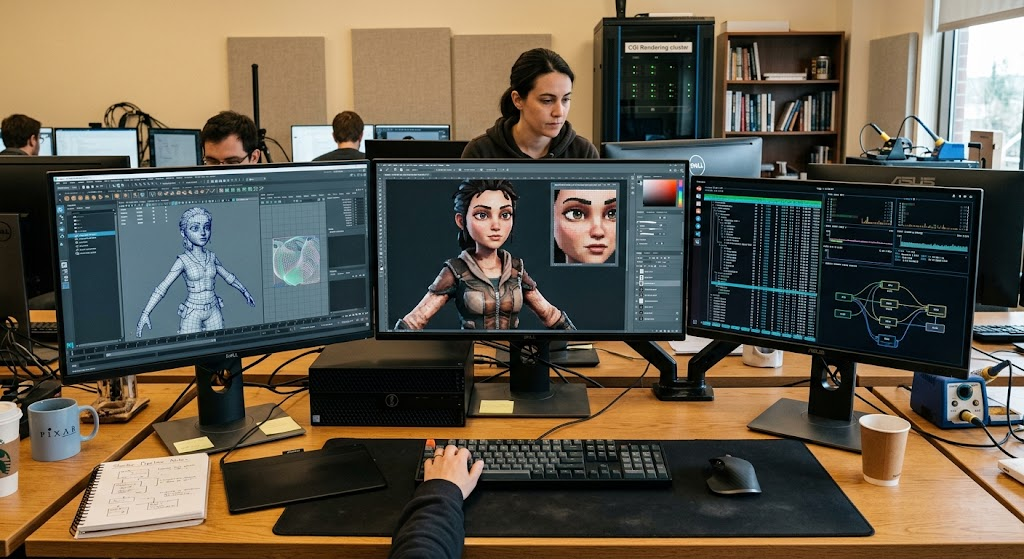
While the primary purpose of computer graphics seems to be creating images, animation and visual effects, the mathematics behind computer graphics is needed to represent and manipulate digital images. Discrete sets of points, lines, edges, polygons and other objects can be used to model a computer-generated scene. Relations between various parts of a model can be illustrated as graph-like relationships. Sets can be used to represent sets of objects or sets of pixels, and functions can be used to describe transformations that can be applied to particular coordinates. Such structures enable the processing of complex scenes in a systematic manner and not as individual objects by graphics software.
The concepts of discrete mathematics are also applicable to image processing and digital representation. Finally, a digital image is actually made up of individual “pixels,” or picture elements, in a grid, and each pixel contains a numeric value representing characteristics like brightness or color. These pixels can be used in algorithms to detect edges, recognize patterns, compress images or make transformations. Combinatorial techniques may be helpful in considering various ways of arranging visual elements, and graph algorithms may help with processing an image on a path or segmenting an image. These underlying representations are fundamental to video games, computer-aided design, animation software, scientific visualization and user interfaces. For this reason, there is a portion of the bridge between abstract data and the visual experiences created by computers that is provided by discrete mathematical structures.
Operating Systems and Computer Architecture
Operating systems manage numerous discrete resources, including processes, memory blocks, files, devices, and permissions. Because these resources have relationships and dependencies, discrete mathematical models can help operating-system designers understand their behavior. Process scheduling, for example, involves deciding how a collection of processes should share processor time. Different scheduling strategies can be analyzed according to measurable properties such as waiting time, response time, and throughput. Queues provide a useful conceptual model because processes may wait for access to limited resources before they can continue executing.
Graphs become particularly important when analyzing dependencies between processes and resources. In situations where processes depend on resources held by other processes, a cycle in the dependency structure can indicate the possibility of deadlock. Operating-system algorithms can therefore use graph-based techniques to detect or prevent certain resource-allocation problems. Logic also appears in system permissions, configuration rules, and process-control decisions. At the hardware level, digital circuits themselves are built from logical operations, with Boolean algebra providing a mathematical language for describing how gates and signals interact. From low-level hardware to high-level operating-system behavior, discrete structures help computers coordinate separate components and operations.
Information Systems and Decision-Making
Information systems combine people, processes, data, and technology to support organizational activities and decision-making. Discrete mathematics contributes by providing ways to represent and analyze the relationships among these elements. A business information system might contain customers, employees, products, transactions, departments, and suppliers, each forming distinct categories of information. Sets and relations can describe how these entities interact, while functions can represent processes that transform inputs into outputs. Such mathematical thinking helps system designers build organized models of real-world processes before implementing them in software.
Graphs can also support information-system analysis by representing workflows, organizational structures, and dependencies. A workflow can be viewed as a series of states and transitions, allowing designers to examine how information moves through an organization. Decision systems can use logical rules to determine what action should occur when particular conditions are met. Probability may assist with forecasting and risk analysis when outcomes are uncertain. These applications demonstrate that discrete mathematics is valuable not only to programmers and mathematicians but also to analysts, database designers, system architects, and technology managers. By representing complicated organizational processes using structured mathematical models, information systems can become easier to analyze, automate, and improve.
Why Discrete Mathematics Remains Essential
The continued growth of computing has not reduced the importance of discrete mathematics; instead, it has expanded the number of situations in which discrete structures are useful. Modern technologies increasingly involve large collections of connected objects, complex decision processes, massive databases, distributed devices, and automated systems. These are precisely the kinds of problems that discrete mathematics is designed to represent. Graphs can model connections, sets can organize collections, relations can describe associations, functions can represent transformations, logic can formalize decisions, combinatorics can analyze possibilities, and probability can handle uncertainty. Together, these concepts provide a flexible mathematical vocabulary for describing many forms of computational activity.
The practical importance of these concepts becomes particularly clear when efficiency and reliability matter. A computer may be capable of processing billions of operations, but inefficient algorithms can still consume excessive time or memory. Discrete mathematics helps computer scientists reason about algorithmic complexity, identify efficient approaches, and prove whether certain procedures behave as expected. It also provides methods for modeling problems before implementation, reducing the risk of designing software around incorrect assumptions. As artificial intelligence, cybersecurity, cloud computing, databases, networking, and automation continue to evolve, the ability to reason about discrete structures will remain valuable because the underlying problems involve information that is separated into identifiable objects and relationships.
Conclusion
Discrete mathematics is deeply embedded in computer science and modern technology. Its concepts are visible in the algorithms that power software, the graphs that represent computer networks, the relations that organize databases, the probability models used by artificial intelligence, and the logical systems that support cybersecurity and operating systems. Cryptography demonstrates how mathematical structures can protect information, while computer graphics shows how discrete representations can be transformed into complex visual experiences. Information systems similarly use sets, relations, functions, logic, graphs, and probability to model organizational processes and support decision-making. These applications demonstrate that discrete mathematics is not an isolated theoretical subject but a practical foundation for understanding how computers represent, process, connect, and protect information.
As technology becomes more interconnected and computational problems become more complex, the importance of discrete structures is likely to remain strong. New programming frameworks, artificial intelligence systems, communication networks, and information platforms may change the way technology is implemented, but they continue to depend on fundamental ideas about objects, relationships, choices, and information. Learning discrete mathematics therefore gives computer science students and technology professionals a useful way to look beneath the surface of modern computing. Rather than seeing mathematics as a separate academic requirement, learners can recognize it as a set of practical tools for designing algorithms, modeling systems, analyzing problems, and building reliable technology. This connection between mathematical reasoning and technological innovation explains why discrete mathematics remains an essential foundation for computer science.