Introduction
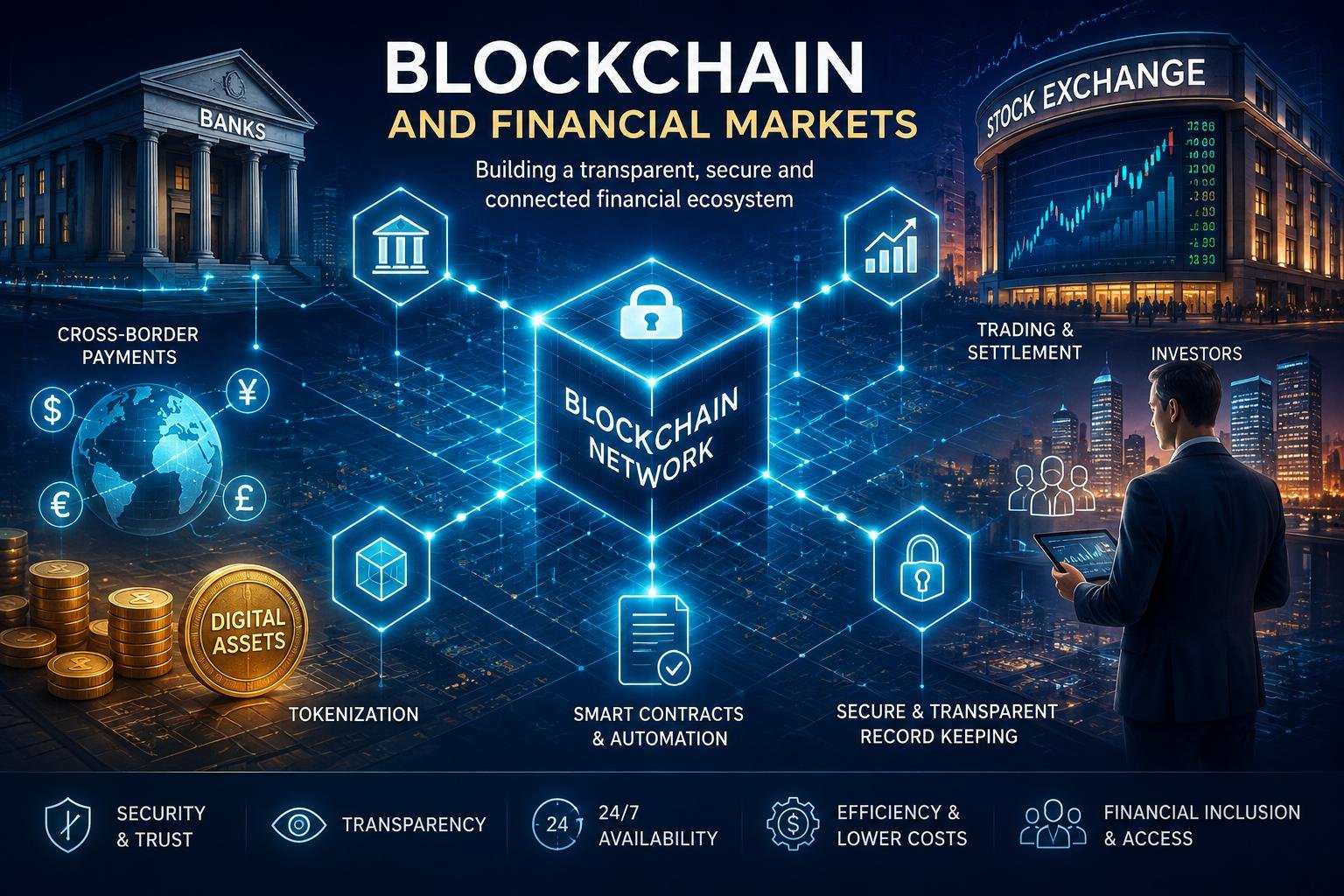
It is no longer just about cryptocurrencies, but blockchain technology also has the potential to impact the banking, investment and capital markets sectors. Blockchain’s essence is the ability for many parties to access and modify records without relying on a single central database. The concept is closely related to the distributed ledger technology (DLT) that enables information to be recorded and synced across a network of participants. This may impact the way financial institutions process, validate, settle and record transactions. Financial processes are traditionally costly, time-consuming, and rely on interconnected systems from various institutions that banks and other financial entities rely on. The use of blockchain technology could lead to further synchronization of financial records, minimize duplication, increase transparency, streamline some processes, and present new regulatory, privacy, scalability and cybersecurity issues.
Blockchain Technology
Blockchain is a distributed ledger technology that is used to record transactions on a network of computers instead of in a single central authority. Transactions are added to blocks and blocks are linked together in an order that is chronological, meaning that the record is continually growing. Transactions can be processed in a variety of ways that differ from one blockchain to the next, pending approval by various consensus methods. After the information is recorded, it may be difficult to alter this information as later records rely on the earlier information. This property can make it easier to keep track of the history of changes than systems in which it may be possible to change information in a centralized database without undergoing the same network-wide verification. In the financial sector, however, blockchain is not a magic solution to ensure information is accurate or that trusted institutions are not needed. The value relies on the network design, governance, information quality, security measures and rules set by the participating organizations and regulators.
Application of Blockchain Technology in the Banking Sector.
Digital Assets and Tokenization
Digital asset generation and administration is certainly one of the most noticeable financial uses of blockchain. A digital asset is a digital version of an asset or ownership, whereas the tokenization is the process of creating a digital token for an existing asset or financial interest and attaching it to a blockchain. Financial institutions could potentially tokenize securities, deposits, funds, commodities or other means of value in such a manner that the information about the ownership of the asset may be represented digitally. Some assets can be easier to transfer, split into smaller interests or be part of automated financial processes, through tokenization. For instance, a paper-based security might be able to be digitally represented with data that indicates who the owner is and how the security can be transferred. This would enable some investment products to be more programmable and accessible. However, tokenization doesn’t eliminate legal and regulatory obligations related to ownership.
Cross-Border Payments
Internationally, blockchain could impact payments by offering a single transaction platform for different institutions in different countries. Conventional cross-border payments involve several banks, payment networks, currencies and settlement systems and therefore have multiple touch points for the exchange of information and reconciliation. An alternative is to use systems based on the blockchain, which would enable participating institutions to share the information on the transactions through a common ledger, thereby eliminating some of the reconciliation needs and providing greater transparency about the payment’s availability. In some blockchain-based payment procedures, digital central bank money, commercial bank money or regulated stablecoins might be employed. Resolving the issue of settlement faster may be of great value to businesses that carry out their activities internationally and require transferring funds across international borders. But cross-border blockchain payments need to overcome foreign-exchange regulations, anti-money-laundering regulations, sanctions screening, consumer protection and national differences in regulations, so technological efficiency isn’t the only thing that will make payments easier across the globe.
Blockchain Technology in Securities Trading
Modernizing Trade Processing
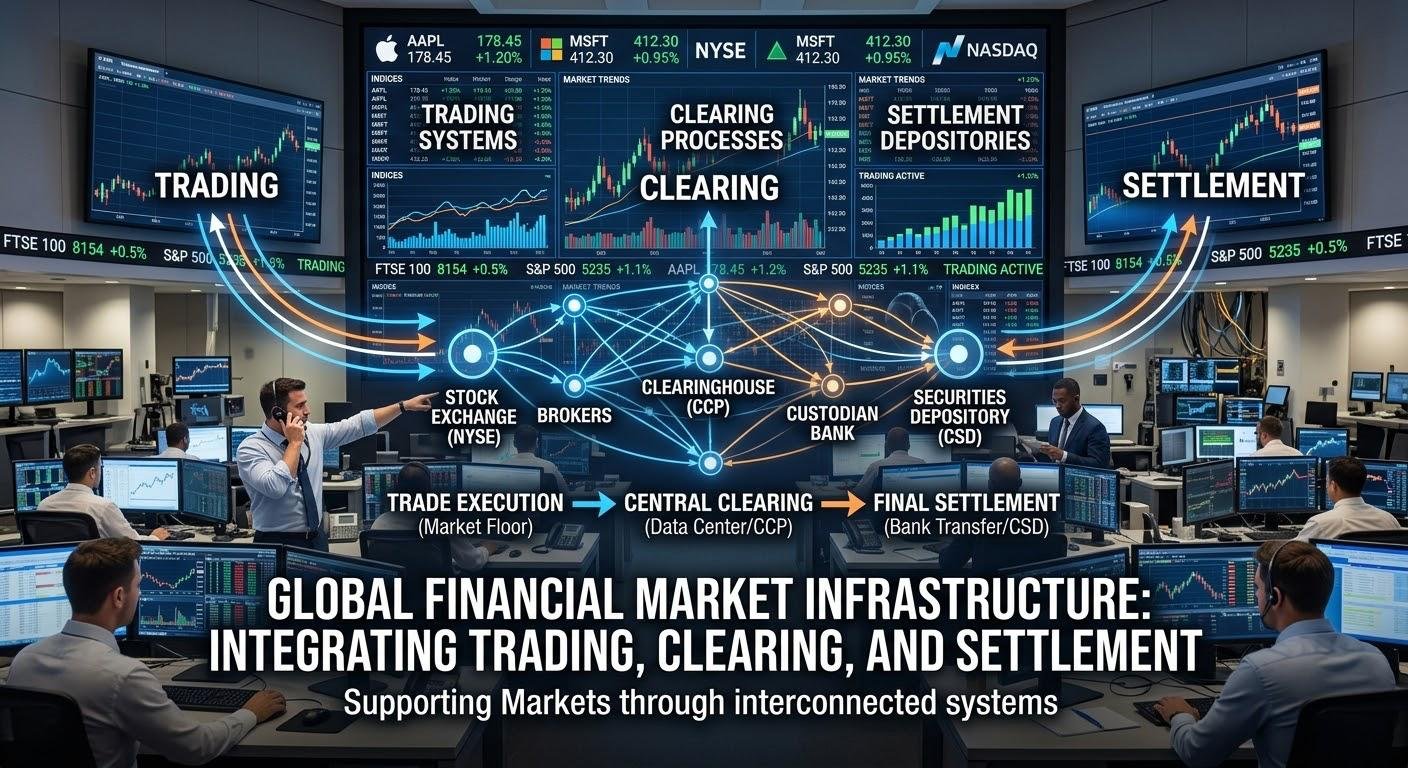
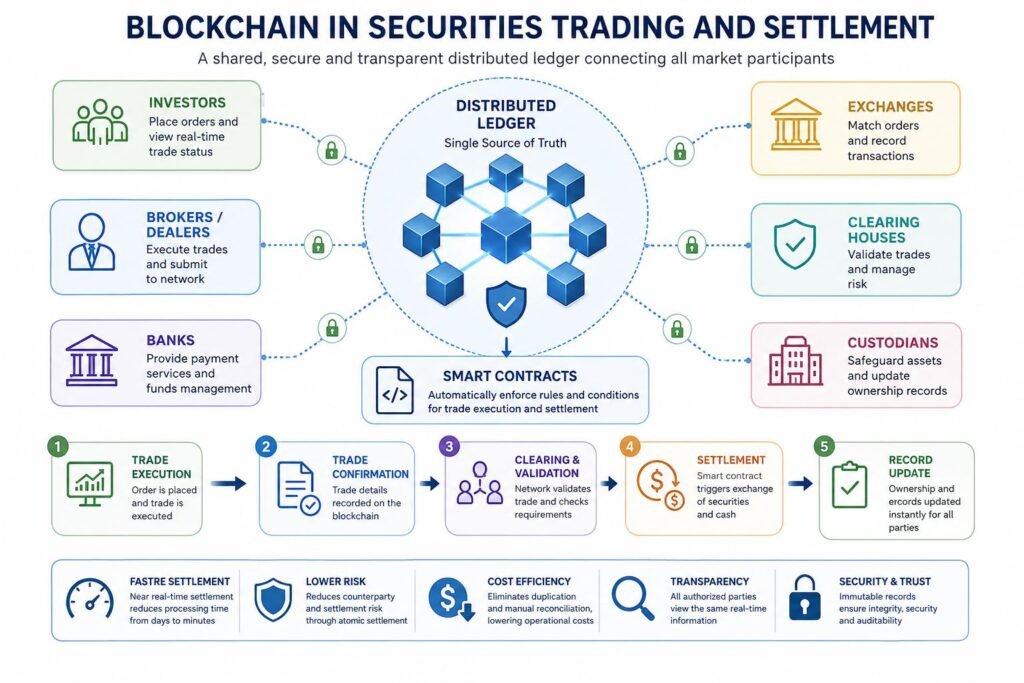
There is more to securities trading than meeting buyers and sellers. Once a trade is made, financial institutions need to confirm the trade, update the ownership information, let the custodians know of the trade, do the settlement calculation and finally settle the transaction. These activities might require multiple organizations to keep multiple records of the same transaction. The blockchain might provide for an inter-enterprise shared record that is accessible to authorized participants on the basis of permissions. A blockchain network would enable relevant stakeholders to operate off of the same data of transactions, rather than having to maintain their own data and do their own reconciliation. This could help to minimize the duplication of effort and enhance the velocity of information flowing in the financial market. This potential benefit is particularly important if there are multiple middlemen in the transaction. But blockchain-based securities markets have a long way to go before they will replace the trading and settlement systems built around the current large-scale securities market at scale, as they still need to be well designed in terms of governance, market infrastructure, investor protections and appropriate regulatory oversight.
Faster Transaction Settlement
There are several other areas where blockchain may make significant changes, including settlement. Traditional financial markets can have a lag time between the time of a securities transaction and the time when securities and cash are actually transferred. Institutions need to deal with settlement risk, keep records and arrange for coordination with others for this period. If both parties to the transaction are virtual, a blockchain-based system could have the effect of bringing the transfer of the asset and the payment closer together. Sometimes this is called the atomic settlement because the transfer can be built such that it can only happen when the conditions for the other transfer happen. The potential benefits of faster settlement would be to mitigate some of the counterparty and operational risks and to enhance capital efficiency. However, getting there will take technology that is compatible, payment methods, legal validation, and stable technology. The technology has to also be capable of coping with huge numbers of transactions without impacting on performance or security.
Creating Smart Contracts and Financial Automation
A smart contract is a set of computer code that gets stored and run on a distributed system (usually blockchain). Can automatically execute actions if certain conditions are met, smart contracts could be utilized in financial markets to automate activities like interest payments, dividend distributions, dealing with collateral, deal settlement or a few insurance and loan processes. An example of this would be an agreement that has rules associated with it that say: Once a certain condition is true, this payment should be made automatically. This might minimize the need for manual efforts and speed up and standardize some monetary processes. Smart contracts can also be used to develop financial products that are programmed, where the rules of a contract are directly related to the processes of transactions. A smart contract however, is not a full legal contract. The agreement under which these developments are occurring needs to be legally interpreted and governed.
The Role of Library in Identity Verification and Financial Inclusion
One of the other areas where blockchain technology could help financial institutions is identity verification. Banks and investment firms need to identify customers and undertake the know-your-customer and anti-money-laundering procedure before offering a variety of services. In today’s day and age, customers have to send the same information over and over to various financial institutions, as each one keeps its own records of its customers. One blockchain-based identity system could enable verified credentials to be shared between verified parties without having to have every institution start from scratch to verify the credentials. Customers might be able to specify what information they give and who can have particular credentials. These systems could also enable the digital onboarding process and potentially help individuals who struggle with conventional identification methods. But it’s important to note that financial identity systems have to work finely with convenience and privacy. Personal data shouldn’t just be made public on a public blockchain, and entities need robust rules about consent, access, information security and the rectification of inaccurate data.
Financial Record Keeping & Audit Trails
A financial institution has a vast store of information on transaction, customers, assets, payments, contracts, regulatory activities and much more. Blockchain could offer a shared record and a time-stamped history to aid in the traceability of some financial transactions. Records can be linked in a chronological sequence, thus authorized users can more easily trace the history of a transaction or an asset. This might facilitate auditing, reconciling, reporting and internal controls. As an example, an institution can adopt a permissioned blockchain for the records which several departments or external parties have to refer. Participants could use the same information in the databases, with the right access levels, without having to repeat comparing the databases. This isn’t to say that there is any guarantee that blockchain would automatically mean accurate records. When this incorrect information is entered in the system, the ledger can effectively keep this information. So, financial institutions would still require robust data-validation protocols, governance structures, cyber security safeguards and checks and balances, and human oversight for the information flowing into the ledger to be valid.
Application of Blockchain in Risk Management and Regulatory Compliance
Another potential use of blockchain in financial technology is the enhancement of risk management and regulatory compliance, which further boosts the availability and traceability of financial data. Identifying suspicious activity, calculating exposures and creating regulatory reports are often a multi-system process for regulators and financial institutions. A permissioned blockchain, in theory, would allow authorized users to have a consistent record of what’s going on with the relevant transactions, thereby cutting down some of the reconciliation work. Smart contracts could also be written to establish particular rules, for instance when certain conditions have not been met, a transaction could be prevented. Moreover, it would be easier to follow the trace back of certain financial activities after they are done if there is a clear audit trail. But don’t think of blockchain as an alternative to compliance professionals or regulatory institutions. Financial crime may include the use of sophisticated activity which is not detectable by technology. Any blockchain infrastructure needs to be used in addition to transaction monitoring, customer due diligence, sanctions screening, risk assessments and human judgment used by institutions.
Advantages of Blockchain to the Financial Markets.
The use of blockchain in the financial sector isn’t limited to quicker transactions. A great benefit is that it could be possible to have a common source of knowledge for several authorized participants. This may simplify the reconciliation of different institutions that have their own version of the transactions. Blockchain can also enhance transparency as authorized users will be able to follow transactions based on the rules of the chain. Use of smart contracts for automation could help to minimize manual work and decrease expenses on suitable tasks. Some assets might be more programmable with tokenization and fractional ownership structures may be possible. The more quickly a transaction is settled, the less period of time that parties are subject to certain risks of a transaction. Another key aspect of blockchain is that it could run 24 hours a day, making it possible to facilitate financial transactions beyond the standard nine to five business day. Unfortunately, these benefits are not promised. The utilities are dependent on the participation of multiple parties, the technical suitability, legal acceptance, the quality of governance, and the flexibility of blockchain systems in terms of integration with the current financial system.
Risks and Challenges of Blockchain Technology
While blockchain has the potential to become a universal base for financial markets, there are still many challenges that need to be addressed. Scalability is a key consideration as financial institutions deal with a large volume of transactions and must be highly reliable. Certain blockchain networks might not be able to offer the velocity and capacity needed for large financial markets. Another difficulty is the level of privacy required, as financial transactions may contain very confidential information. Records in a public network may be at odds with the data-protection requirements, and permissioned networks must be careful of who is able to access the information. While blockchain is an exciting technology, it is equally essential to realize that there may be risks in its applications, wallets, smart contracts, and connected systems. Hence, cybersecurity is key. Legal and regulatory issues also arise regarding ownership, jurisdiction, consumer protection and the use and regulation of digital assets. Last but not least, financial institutions can’t simply apply blockchain without a change in the way they do business. Often, interoperability between banks, exchanges, investors, payment providers, regulators and technology companies is required to reap the greatest benefits.
Future of Blockchain Technology for Banks and Investments
It is expected that blockchain will not replace the current financial systems but phase-in over time. Permissioned networks, tokenized assets, digital settlement systems and programmable financial instruments are likely to be more prevalent in the financial services sector, such as banks, and capital-market institutions. If the legislation and market infrastructure evolve to the point that it will support more institutional uptake, then tokenization may be especially significant. Financial institutions can also leverage blockchain, artificial intelligence, cloud and digital identity systems and sophisticated analytics to build more automated financial services. To make any real efficiency, different blockchain networks and traditional databases will need to communicate, which is why interoperability will be vital. Regulators will also be a key factor to the speed at which financial products can mature on the blockchain. Solutions with a clear operational use case will likely be most successful, as will solutions developed with a view to using blockchain as a new technology.
Conclusion
How financial information is shared, verified, transferred and recorded is being transformed by blockchain and distributed ledger technology and could reshape selected aspects of banking, trading and investment. Financial institutions are interested in the technology, as seen in applications like digital assets, tokenized securities, smart contracts, cross-border payments, identity verification, transaction settlement and financial recordkeeping. Depending on the context, blockchain has the potential to simplify some of the reconciliation needs, automate some processes, enhance traceability of transactions and enable quicker settlement in appropriate environments. Meanwhile, issues of scalability, privacy, cyber security, regulation, governance, interoperability, and data quality are not to be forgotten. The blockchain’s future in financial markets will hinge on figuring out where distributed infrastructure delivers quantifiable value, rather than on replacing all the current systems. With the continued evolution of technology, regulation and industry standards, blockchain may play an increasingly significant role in the evolution of a more digitally native, automated and connected financial system.
Get more well researched information about Blockchain and financial markets here.