What is Smart Farming?
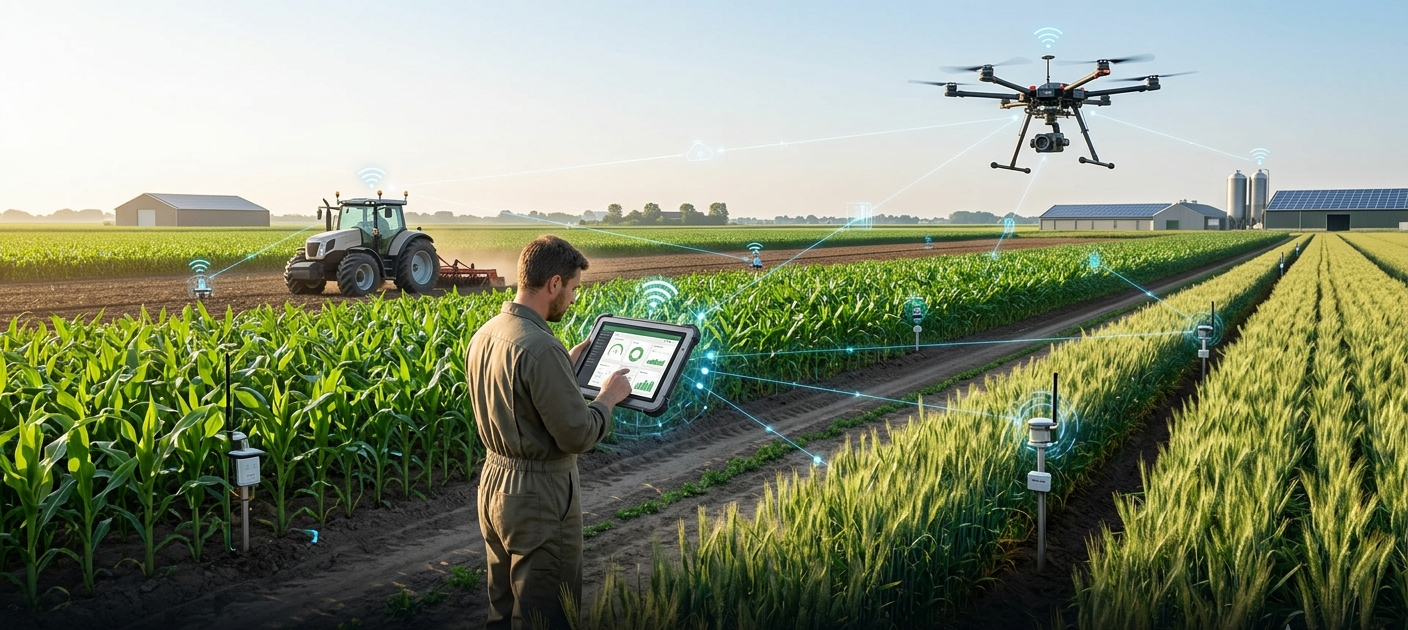
Smart farming involves digital technologies such as connected devices, data, and automation to support farmers in their decision-making process and precise management of agricultural operations. Farmers can use information from soil sensors, weather stations, satellites, farm machinery, livestock monitoring systems, and software, instead of just observation, experience, and fixed schedules. These can illustrate what is going on at various locations within a farm and assist farmers to act on the changes they see. Smart farming doesn’t imply farmers aren’t needed. Instead, it provides farmers with more information and tools that can help them make decisions regarding plantings, irrigation, fertilization, pest management, harvesting and livestock care. Smart farming is becoming more and more linked with the Internet of Things, precision farming, remote sensing, robotics and predictive analytics, and in 2026, the smart farming system which allows information to flow from field to digital platforms and back to actual farm work. Modern smart farming is a blend of data, digital technologies, AI, IoT and precision agriculture which work together to enhance farm management and improve resource utilisation, explains the Food and Agriculture Organization (FAO).
A key advantage of smart farming is the shift from general decisions to more specific, data-derived decisions. Traditionally, a farmer can apply the same treatment to a whole field because it is hard to determine precisely where the extra water, fertilizer, and/or care is needed. With sensors, GPS, satellite imagery, and other technologies, a farm can instead be divided into smaller management zones. Data from those areas can be used to look for variations in the moisture, growth, temperature, or other properties of the soil. For instance, if one part of the field is muddy whereas the other is dry, an automated irrigation system may be able to adjust its watering accordingly instead of watering all areas at the same time. This is very similar to precision agriculture that relies on the detailed location and timing information to direct agricultural operations.
How AI Is Transforming Agriculture
This is why AI is revolutionizing agriculture.This is how AI is changing the face of Agriculture.
In modern agriculture, AI is playing an increasingly vital role as it processes enormous amounts of data that humans can’t handle, manually. Weather data, soil sensors, satellite imagery, drone data, farm equipment, crop photos, and farm management data can all be used to find patterns with AI systems. AI can assist in determining if there is a potential for crop stress, detect unusual changes, predict the timing of certain activities on the farm, and make resource decisions based on the system and data quality. For instance, a system of image analysis could analyze photographs of leaves and find visual patterns that correlate with specific plant diseases; another model could use weather data and historical data about farms to estimate conditions that may stimulate the development of a disease. AI can identify patterns in agricultural data, assist in decision-making, enhance resource utilization, and help in monitoring and tracking agriculture and disease-related applications, FAO has pointed out.
AI’s role in agriculture is not just about making predictions; it’s also about the process of making them.AI’s value in agriculture is not just about prediction, it’s about how predictions are made. The bigger the benefit is in bringing together various pieces of information and sharing them with farmers at the appropriate moment. That is why, AI in agriculture is getting linked with digital advisory services, precision farming, crop monitoring and predictive analytics. An alert could be sent to the farmer, for instance, that one area of the field has vegetation conditions that are unusual, based on the information from the sensors and satellites. The farmer can then be able to personally go and look at that area before deciding what action to take. In this model, AI serves as an assistance tool instead of an absolute authority. It is important to remember that its recommendations rely on the information that is used to train or operate the system and that agro-ecological conditions are different in each location. This means that local knowledge, field inspections, and expert agricultural information can still be valuable components of the system even in the presence of advanced AI tools.
Key Technologies Used in Smart Farming
AI and Machine Learning
AI and Machine Learning.Artificial Intelligence and Machine Learning.
With the help of AI and machine learning systems, agricultural software can analyze vast amounts of data and uncover patterns and connections that might not be apparent to a human eye. Yes, machine models can be trained with historical instances and then applied new information, but its application will be useful only if the historical information is of high quality, relevant and representative. These systems can be used for plant-image analysis, crop monitoring, yield estimation, weed identification and agricultural forecasting in crop farming. AI can also use information from several sources in one, rather than working with each data source individually. For example, a soil moisture sensor, rainfall sensor, temperature sensor, and crop growth sensor could all be included in a system to assist a farmer in deciding how much to irrigate. While these technologies can minimize manual data analysis, farmers must know what the technology is measuring and know to look out for situations in which the technology might not apply.
IoT Sensors and Connected Farm Equipment
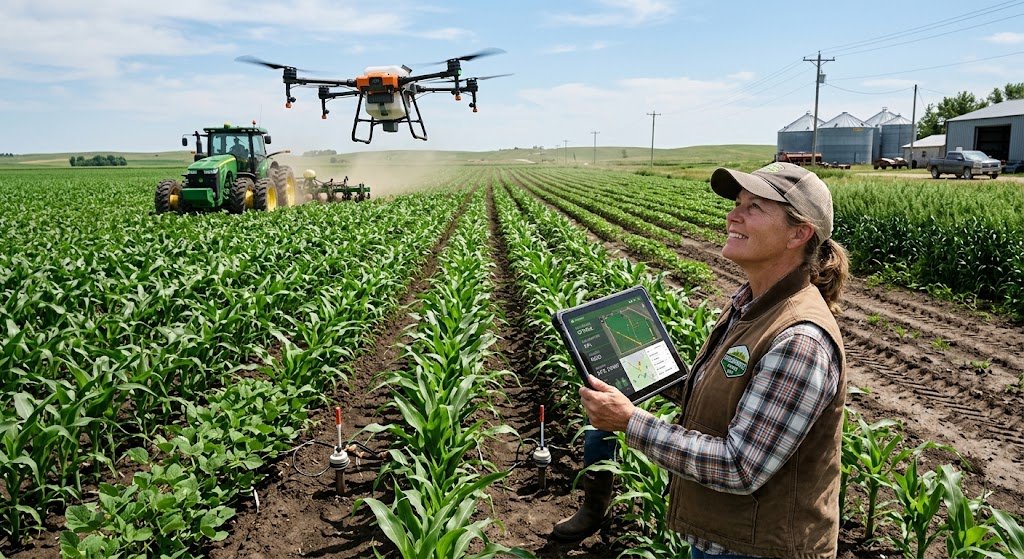
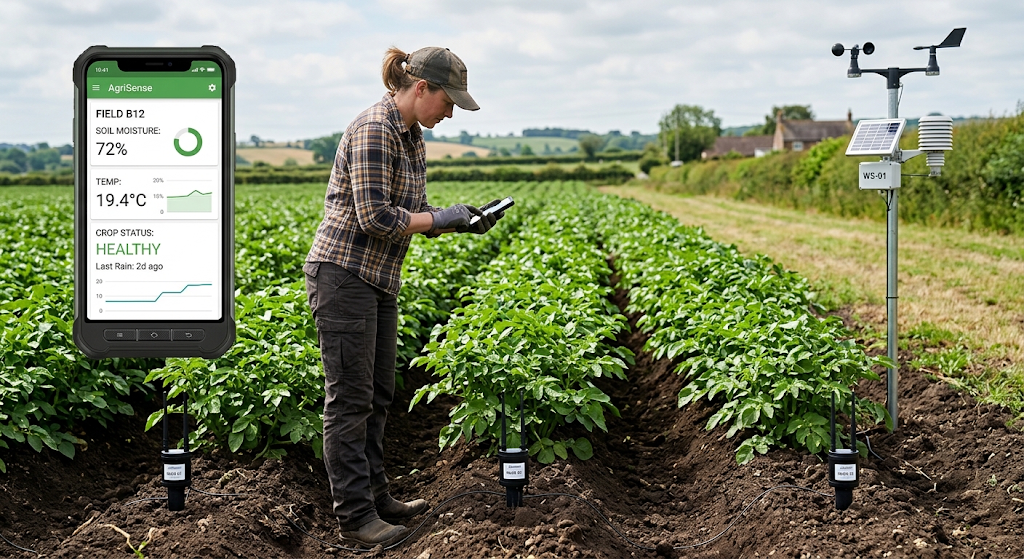
Inso-called “Internet of Things” or IoT involves physical devices that are able to gather and share information via digital networks. Agriculture: Sensors for IoT can be placed in soil, greenhouses, water systems, weather stations, machinery, storage areas, or for livestock. For instance, a moisture or temperature sensor can be installed in the soil and send data to a farm management platform. The weather station may measure humidity, rainfall, wind or temperature. The connected equipment may also be able to transmit data on fuel consumption, machine performance, machine location or operating conditions, etc. When paired together, farmers can get a more comprehensive view of what is going on on a farm, but do not need to inspect each location on an ongoing basis. In agriculture, sensors and other technologies have been documented that can deliver information to support more targeted decisions around crops and livestock.
The use of drones and aerial monitoring
The use of drones and aerial monitoring.The use of drones and aerial monitoring.
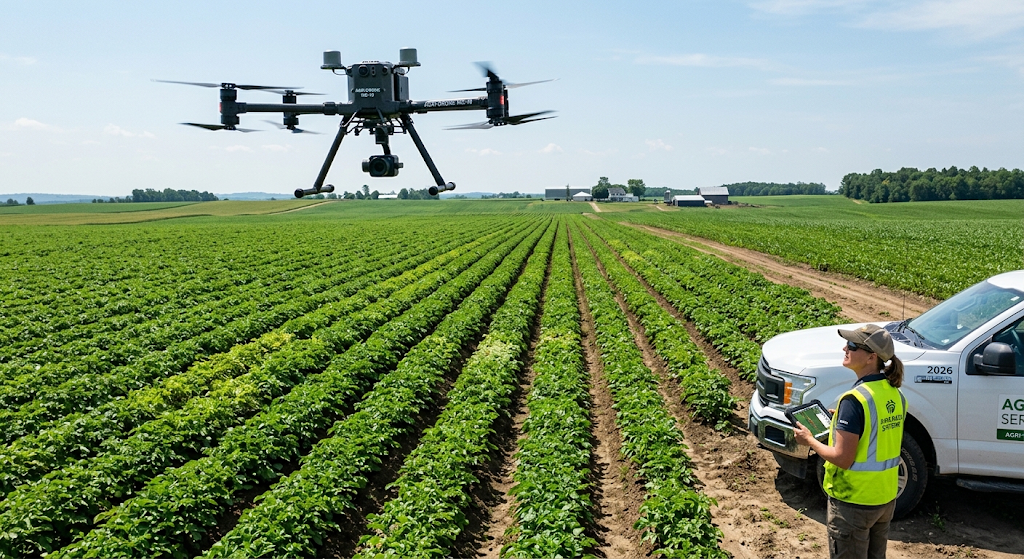
The agricultural drone offers a bird’s-eye perspective of farmland and can take photos and/or other images at relatively low altitudes. Aerial image allows a farmer or agricultural specialist to pinpoint field sections that need more attention, rather than accessing a whole field to visually explore each section. The drones can capture visible-light or multispectral images, depending on the equipment, which can show variations in vegetation and field conditions. Drones can thus assist in crop scouting, mapping, monitoring and assessment of stressed areas. They can also be used to inspect inaccessible areas on a farm. But drone operations depend on appropriate gear, operators, battery management, maintenance and adherence to aviation and privacy regulations. It is thus most useful if the information obtained from the technology is used in an ill-defined farming decision rather than just gathered because aerial imagery is available. According to USDA research, unmanned aerial vehicles (UAVs) are valuable platforms for high-resolution agricultural remote sensing and crop stress monitoring.
The use of GPS and Precision Agriculture
Use of GPS and Precision Agriculture.Use of GPS and Precision Agriculture.
Agriculture machinery and software are now able to become aware of where the agriculture operation is occurring through GPS technology. GPS can be used as part of precision agriculture and, when coupled with digital maps and other data, can enable farmers to manage various parts of a field based on the conditions under which they are grown. Positioning information can be used to direct the repeatability of planned routes with tractors and other equipment, minimize unnecessary overlap, and document the location of specific operations. GPS data can also be used with soil maps, yield data, satellite images and prescription maps to inform variable-rate application. A farmer may have different needs for various parts of a field, and thus be able to use different seed rates, soil preparation, fertilizer applications, watering rates, or other crop inputs in different areas of the field. Precision agriculture, in turn, relates location information with farm management. However, it is not only GPS technology that makes it effective, it is also the accurate data, appropriate equipment, proper calibration, and proper agronomic decision making.
Automated Irrigation Systems
Another area that smart technology can play a practical role in water management is the control and monitoring of water use. Automated irrigation systems are able to link pumps, valves, timers, weather data, and soil-moisture sensors together, allowing the system to run irrigation based on programmed conditions or on soil-moisture sensor data. A simple system can operate on a schedule, or a more sophisticated system can take into account soil moisture, and weather, and turn on the irrigation as appropriate. This can help farmers not to water after a set time if there is abundant moisture in the field. Smart irrigation can also help ease the task of managing various sections of a farm separately. But automating doesn’t mean water savings automatically follows. The sensor placement must be appropriate, systems must be kept in good working order and irrigation decisions must be based on the crop, soil, climate and available water. Smart irrigation is best used in conjunction with good water management not in place of it.
Agricultural Robotics
The robo revolution in agriculture is another step in the automation of farming. Agricultural robots can be developed to carry out activities like crop monitoring, weed removal, harvesting some products, material transportation or repetitive activity. Other robotic systems feature cameras, sensors, GPS, computer vision, and mechanical parts to find objects and execute certain tasks. A robot in a field, for instance, can use cameras to differentiate plants from soil surrounding the field, and to locate weeds that need to be addressed. Robotics may be especially applicable for repetitive tasks that are not easy to do efficiently over a large area. Agricultural environments are, however, a little complicated as they may have uneven ground, unpredictable obstacles, and varying weather conditions, with plants of varying sizes in the field. Therefore, agricultural robotics should be carefully designed, maintained, and then operated under conditions that are suitable for a specific agricultural task to be reliably performed.
Utilization of satellite imagery and remote sensing in GIS
Agricultural conditions can be detected in very large areas by using satellites without having to go to each field personally. Earth observing satellites can be used to deliver data that can be used by researchers and agricultural bodies to track vegetation, precipitation, soil moisture and change over time. Satellite imagery can also be used in conjunction with weather and field data as well as other data sources to aid in agricultural analysis. According to NASA, crop monitoring, rainfall, soil moisture and general food production conditions are all applications of data from satellites that observe Earth. Satellite data can be used to improve land selection for more detailed field checks, to track crop growth and as a planning tool for large-scale farming in smart farming. However, it may not be useful if there is a lot of cloud cover, which affects the resolution of the image, frequency of updates, or if farmers or agricultural services do not interpret the data correctly.
How Smart Farming is helping the Farmers
The importance of Smart Farming for Farmers.
Smart farming has a potential to impact agriculture in a number of ways, as it is interrelating measurement, analysis and action. It is one of the biggest advantages that it offers. Human farmers cannot monitor every plant, animal, soil condition, weather event, or machine use at all times, whereas digital systems have the ability to monitor at intervals or periodically. This information can help make unusual conditions more straightforward to perceive prior to them turning into bigger concerns. Smart technology can also be used to minimise wasted inputs when the data is correct and there are varying requirements throughout different areas of the farm. The costs associated with fertilizer, irrigation water, fuel, pesticides, seeds and labor can all be substantial, and it is this focus on the use of these resources that can be valuable. What actually happens on the farm, however, is a function of the technology chosen, the implementation and decisions based on the information. Smart farming, therefore, should be considered as a set of tools and not a promise of increased production.
Early problem detection is another potential benefit. A crop could suffer from water stress, pest pressure, nutrient issues or disease prior to the time the damage is visible in a whole field. It can be done using sensors, drones, satellite imagery or AI-based image analysis, all of which are able to identify abnormal patterns that prompt specific areas for further investigation by farmers. Early identification does not necessarily mean that a problem will always be solved successfully, but it can provide more time for an appropriate response. Data can also aid in record keeping by providing the farmer with information about when fields were planted, irrigated, fertilized, treated, or harvested. These records can be used over several seasons to see how management practices affect results. This means that information developed throughout the farm operation can feed back into future planning, if used with proper interpretation and accuracy.
Crop production – Smart farming
Smart farming can start even before sowing seeds in the field in the production of crops. The farmer can use the information from the field maps, soil data, weather information, and past production records together to determine when and where specific activities should occur. Sensors can give information about the soil during the growing season, while drones and satellites can give different perspectives on the development of the crops. This data can then be used by AI systems to help organise and analyse the data, enabling farmers to determine where more attention needs to be given. If one area of a field seems unusually dry, for instance, the farmer may dig into the ground and find that he has not been irrigating the area properly, or that it is a naturally dry area, or there is a difference in soil, or it may be due to weather conditions, or for some other reason. This is important because technology should flag questions and help to make decisions – not take the place of the questioner and/or the decision maker.
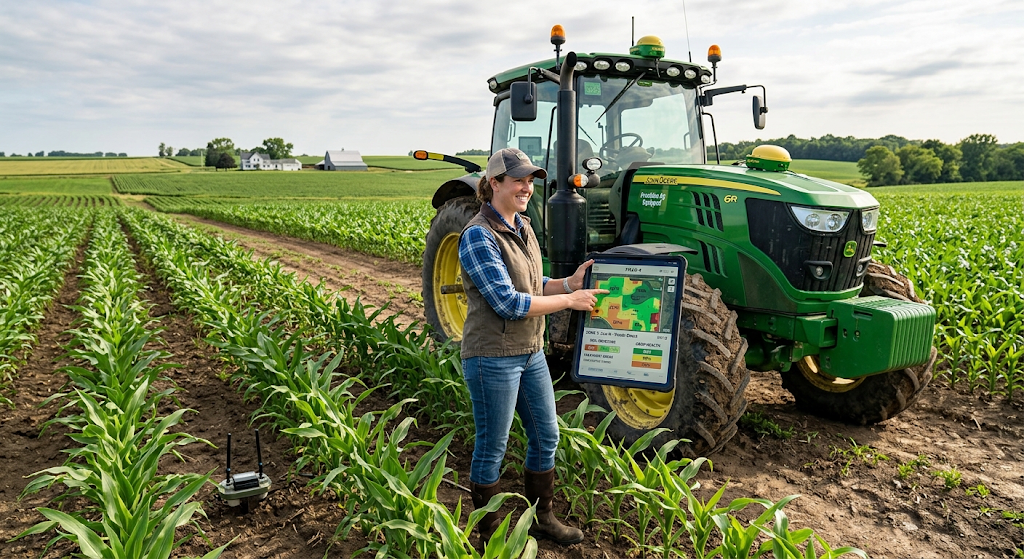
Another time where data might be of great value is the harvesting process. Harvesting data can be captured by modern farm machinery related to production, machine performance, crop condition and location. If this information is available in a farm management system, farmers can create records of the performance of various sections of a field. Those records can then be used to compare with soil data, weather patterns, planting dates, fertilizer inputs and other management considerations. This can assist farmers in gaining a better knowledge of their land over time. The goal is not just to gather more data, but to convert data into information to aid in actionable decisions. The work on agro-informatics by FAO also aims to link agricultural data, geospatial technologies, remote sensing, and information systems so as to transform raw data into information that can be used for action.
The use of smart technology in livestock farming
Use of smart technology in livestock farming.
Smart farming even extends to the farm animals themselves: there are technologies to make it easier for farmers to keep track of their livestock and the conditions surrounding them. Depending on the systems, information can be gathered on animal movement, feeding habits, location, temperature or other measurable conditions. Farm software can arrange this data for farmers to see if they can find any changes that are unusual which might need to be addressed. If an animal’s behaviour is very different to what it is normally seen doing then the farmer may wish to look at it in more detail. Technology can also help in monitoring housing, water systems, feed management and environmental factors. These tools do not replace in-person animal observation by farmers and animal-health professionals. Instead they can offer extra details that can assist with identifying situations earlier that should be addressed and that can aid in record keeping in larger livestock operations.
The significance of data in the contemporary agricultural sector
The importance of data in modern agriculture.
Many smart farming technologies are linked by data. A sensor by itself simply produces measurements, while a drone produces images and a GPS receiver provides location information. Their worth lies in the ability to store, aggregate, analyse and relate the information to a particular agricultural decision. Farm management software can club all the records related to fields, crops, inputs, machinery, weather, labor, livestock, and financial activities. Then historical and current data can be fed into predictive analytics to forecast potential future scenarios. Historical weather and crop data may be used to explore trends with planting or harvesting dates, for instance. The conclusions drawn are only as good as the information they are based on and good data collection and record keeping are important. Data stewardship and security, equity and equitable approaches, and responsible use of data are central to the FAO’s digital agriculture and AI systems roadmap.
Issues of Smart Farming
Although it has potential, smart farming has some challenges. The first is cost. Significant investment can be required in sensors, drones, GPS, robots, automated irrigation systems, connectivity, software subscriptions, repairs and training. Technology can be technically good, but not viable to a farmer if the cost of the technology exceeds the benefit that it yields. Internet connectivity and electric power are also significant as many digital systems require communication networks, charging, cloud services, or reliable power. For rural farmers in environments where connectivity or electricity is limited, there are technologies that can function without internet access, process the production locally, require minimal power use and/or work with other means of communication. Researchers at FAO have identified the following barriers to the adoption of digital and automated technologies in agriculture: cost, lack of knowledge and skills, infrastructure, connectivity, electricity and enabling policies.
Another challenge is technical skills and maintenance. Farmers must learn to use a device as well as to understand what it is telling them. If a sensor is not properly calibrated, it may give false readings, and if the equipment is broken or malfunctioning, it may result in missing data. Software may also need to be updated, supported and work with compatible hardware. Other aspects of privacy and ownership are also of concern as digital farming systems can gather in-depth data on land, production, machinery, finances, or livestock. Farmers should be aware of who is responsible for that information, how it is kept, who has access to it, and how it could be utilized. Smart farming is responsible farming, which is more than just purchasing equipment. It needs the right training, infrastructure, maintenance plans, data transparency, and technologies that are suitable for plant needs.
Smart Farming and Small-Scale Farmers
Smart farming is not exclusive to large commercial farms, but the expression of smart farming can be different for small-scale farmers. Digital agriculture doesn’t require a high-cost, autonomous tractor, a fleet of robots and a private satellite system. Agricultural information services via mobile devices, inexpensive weather service, low-cost soil sensors, farm data systems, co-sharing equipment, community-based services, or agricultural advisory services are examples of more accessible tools. Sometimes farmers can obtain the technology by cooperates, extension services, service providers, research institutes or other arrangements, instead of buying each one of them. This will make it possible to lower the cost of expensive equipment for each farmer and bring beneficial information to the farmer. The importance of digital agriculture for everyone and its adaptation to local conditions, especially for smallholder farmers and marginalised groups, has been stressed by FAO.
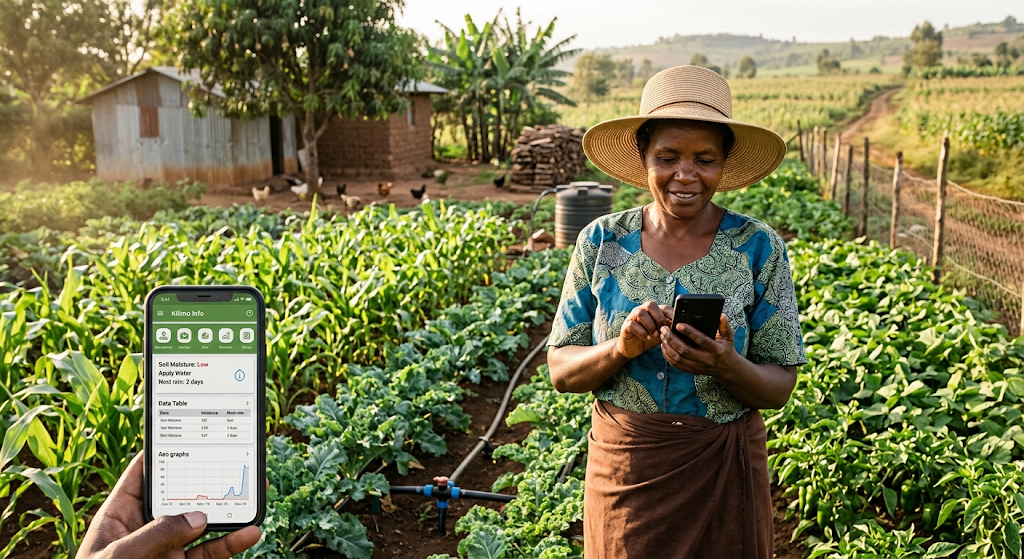
This is especially true for developing agricultural markets such as many African farming communities. Even within Africa farmers face a variety of situations and so there is no panacea technology package that will perform in a similar way in all situations. Whether a digital solution is useful or not depends on connectivity, electricity, size of the farms, climate, crops, access to finance, existing agricultural practices and training in technical skills and languages. A “smart” farming system should thus be useful for a practical solution to a practical problem at an appropriate cost, and not for the sake of novelty. In some markets, mobile tools, solar power, offline capabilities, local language user interfaces, shared services, and training might be key features to consider. The ongoing digital agriculture activities of FAO focus on context adaptation, capacity building, inclusion and responsible innovation, as opposed to the assumption that the same digital model can be replicated in other agricultural regions.
The future of Agriculture: AI and Technology
The future of farming is about to be more about combinations of technologies than single technologies. Soil data can be gathered by a sensor, regionally by a satellite, field-specific by a drone, weather data can be obtained from a weather system, and the information may be integrated by AI software to give a recommendation or alert. Digital maps then could be used on farm machinery to carry out a targeted operation. This establishes a joined up agricultural system with information flowing between measure, analyse, decision and action. As farmers try to foresee conditions rather than deal with them after they occur, predictive analytics could gain even more significance. Meanwhile, the possibilities of smart farming will rely on the affordability, understandability, security, maintainability, and suitability of such systems in various farming environments.
As more data is gathered around agriculture and more digital advisory services are available, AI is likely to be more useful in the future. Farmers may be engaged with agricultural software via a mobile device, voice interface, dashboard or automated alerts instead of a complicated computer system. AI technologies are not taking the guesswork out of farming, however. The weather may not turn up, biological systems are complicated, and data gathered in one area may not be directly applicable to another. Judgment based on the human mind will therefore be required. The most effective method will probably be a mix of technology information, farmer experience, agricultural research, and professional expertise and local knowledge. Technology can be used to increase the information available to farmers without assuming that all agricultural decisions can be distilled into a simple algorithm.
Conclusion
Smart farming in 2026 is a significant advancement in the collection, analysis, and utilization of agricultural information. These technologies, including artificial intelligence, the Internet of Things, IoT sensors, satellites, precision agriculture, automated watering systems, robotics, farm management software, and predictive analytics, are providing farmers with novel methods to see into fields, control resources, track animals, and adapt to new conditions. Such technologies can be used in more focused water, fertilizer, energy, and labour application, and to enable earlier detection of problems and improved record keeping for farmers. But smart farming isn’t the same for everyone, and technology doesn’t always translate to better harvests. However, factors like cost, connectivity, electricity, technical skills, maintenance, data privacy and accessibility still remain critical. Practical and locally appropriate solutions are particularly relevant for small-scale farmers and agricultural markets. In an ever more data-centric agriculture, the main objective should be unchanged: technology to provide farmers with improved information and applicable tools to support their land, crop, animal and resource management decisions.