Artificial Intelligence (AI) has emerged as a crucial resource that companies of all sectors can not do without in the modern fast-paced business world. Although one may think of AI as a phenomenon associated with large corporations, the role of AI in small and medium-sized enterprises (SMEs) cannot be overestimated. Some of the challenges that are encountered by SMEs include limited resources, high costs of operations and inability to scale operations effectively. Nevertheless, AI could offer an effective solution that will allow these companies to simplify the processes, minimize costs, and expand at a reasonable scale.
Understanding AI’s Potential for Small Businesses
AI is a term used to describe systems or machines capable of simulating human intelligence to carry out activities such as decision making, problem solving and learning. When applied to SMEs, AI can be applied in automating repetitive processes, optimization of business processes, and offering meaningful insights to aid in decision-making. However, contrary to many individuals, implementing AI does not entail huge budgets or big-scale infrastructures. As a matter of fact, a number of available AI resources and applications can be used by small businesses to enhance efficiency and minimize costs.
AI Applications in Small Businesses
1. Automated Customer Service
One of the most important areas of a business is its customer service. Nonetheless, small teams may be easily overwhelmed by handling customer queries, complaints, and feedback. AI has the potential to greatly improve the customer service processes by automating the process of customer response to commonly asked questions and delivering 24/7 services.
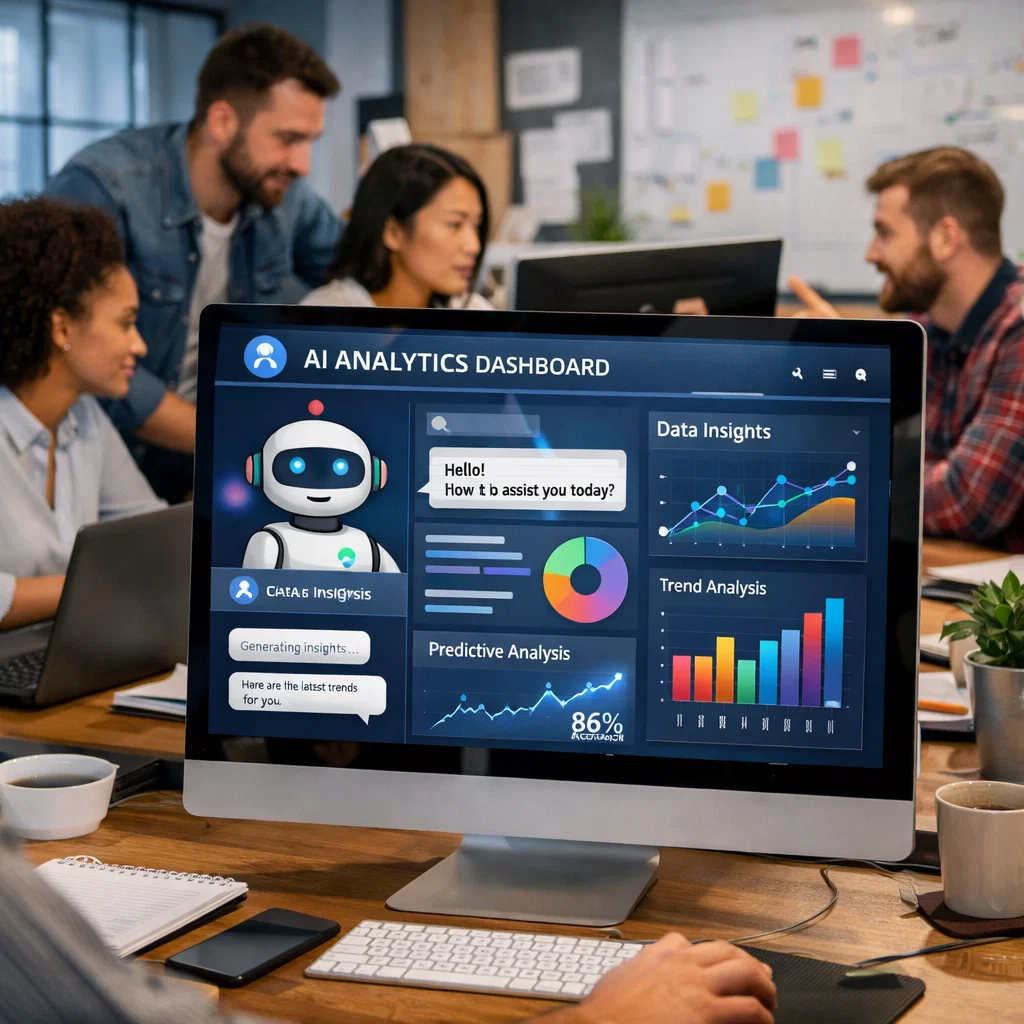
As an example, chatbots that are powered by AI can serve diverse customer queries in real-time, thus cutting on the waiting time and enhancing customer satisfaction. These chatbots are capable of answering questions, solving problems and even referring customers to the relevant department in case of more intricate issues. This automation will make sure that even small businesses will be able to deliver high levels of customer service without having to have large numbers of human resources.
Among the ways AI is changing customer service can be seen in the example of automated customer service solutions proposed by IBM. The AI tools developed at IBM enable companies to provide personalized, quick, and scalable customer service, which makes providing a consistent and efficient customer experience easier to SMEs.
2. Inventory Management
Inventory management is very essential to small businesses which should maximize the stock while reducing costs. Inventory management systems can be combined with AI to forecast the demand pattern, automated reordering of stocks, and avoid overstocking or shortages.
With the help of AI, historical sales data, existing market trends, and seasonal demand can be analyzed, and correct predictions can be made as to which products are most likely to be in high demand. This predictive method assists SMEs to manage inventory levels in order to eliminate the chances of overstocking, which can tie up capital, and understocking, which can result in loss of sales.
As an example, small retail shops can apply AI-based tools to monitor the performance of products, and issue automatic warnings when they require replenishing. This does not only make inventory management a lot easier but also enhances cash flow since businesses only order what they require, when they require them.
3. Marketing Optimization
The field of marketing is one of the most important spheres where AI can help small businesses a lot. The AI can be used to automate multiple marketing campaign components so that businesses can reach their target audiences more efficiently and at a reduced cost.
By being able to analyze customer behavior and preferences, AI can assist SMEs in personalizing their marketing activities. As an example, AI is able to divide customers by their interactions with the business, and deliver personalized emails, offers, and recommendations. This is a focused strategy that will increase customer interactions and boost conversion.
Moreover, AI-based tools are able to optimize digital advertising campaigns on the fly. Based on the current performance data, they will be able to optimize bidding policies, choose the most successful ads, and optimize the targeting of the audience. These tools are useful in making sure that marketing funds are utilized efficiently to its fullest extent in SMEs that have limited marketing budgets.
4. Financial Management and Forecasting
Managing finances is a problem that small businesses usually face, particularly with regards to forecasting and budgeting. Financial processes can be automated with AI, minimizing the possibility of human error and offering enhanced financial insights.
The accounting software based on AI is able to log costs, classify transactions, and create financial statements without human involvement. Moreover, AI has the potential to assist businesses with forecasting the cash flow based on the historical financial data and market trends. This would enable SMEs to make sound decisions regarding investments, spending, and expansion plans.
The AI-driven financial software can also find the areas where the costs may be minimized, which will allow businesses to remain competitive. As an illustration, AI may examine the usage of utilities or scan vendor agreements to propose possible overhead reduction strategies.
5. Staff Productivity and Performance
Small business enterprises tend to have a small number of staff and it is important to maximize productivity so as to grow the business. It is possible to optimize the workforce management with the help of AI, which can automate tasks, including scheduling, payroll processing, and performance tracking.
Artificial Intelligence (AI) can evaluate performance of employees and give managers an idea of how to enhance efficiency and productivity. As an example, the AI can examine work patterns and propose the best methods of scheduling or allocating tasks among team members. With this automation, managers are relieved of their workload, and they could focus on making strategic decisions.
Also, AI can be applied in the training and development of employees. Artificially-intelligent personalized learning tools can provide customized training courses depending on both the needs and performance of employees, and this way, the workforce is constantly evolving to meet the skills that are required by the company to grow.
The Advantages of AI to SMEs
1. Cost Reduction
Small businesses can greatly save costs by automating processes, decreasing the number of people employed, and minimizing human errors, which can be achieved through AI. Using AI to automate activities such as customer service, inventory management, and marketing, SMEs will be able to divert precious time and resources to other more strategic business processes.
2. Improved Decision Making
AI helps SMEs with information-driven data that can aid in making a more informed decision. AI has the ability to reveal patterns and trends that could not be observed by humans because of the amount of data they have to analyze. This enables businesses to make better decisions regarding inventory, marketing, pricing, and customer engagement.
3. Scalability
Small businesses can efficiently scale their operations with the help of AI. As the business expands, so does the number of customer interactions, orders and tasks. The AI tools are able to cope with this excess workload without necessarily having to increase the number of employees accordingly. This enhances the ease with which SMEs can increase their operation without the overhead costs increasing accordingly.
4. Enhanced Customer Experience
AI assists SMEs provide a smooth and personalized customer experience that is crucial in creating customer loyalty. Through the automation of customer service, businesses may offer quicker response time and more pertinent interaction. AI-based personalization enables companies to meet the needs and preferences of their customers in a unique way, increasing customer contentment and loyalty.
Addressing the challenges to AI adoption by SMEs
Although AI has many opportunities for small businesses, it also has challenges to its adoption. These challenges include:
- High First Mover Costs: Small budget constrained businesses may also not be able to afford the initial cost of AI tools. Nevertheless, numerous AI providers have scalable solutions to provide to SMEs at affordable prices.
- Absence of Expertise: AI implementation needs technical skills, something that might not be present in small businesses. To address this, SMEs can identify AI solutions that have user-friendly interfaces or collaborate with AI service providers that can provide training and support.
- Data Privacy Concerns: Small businesses need to ensure that they are compliant with data privacy regulations when using AI tools. One should also select AI solutions that comply with the data protection regulations and protect the data of customers.
Conclusion
AI is not only an instrument of the large business anymore but it is also a game-changer to small and medium-sized businesses. SMEs can remove wastage of customers, inventory, marketing campaigns and financial activities by automating and streamlining their operations. Small businesses can save money, make more informed decisions, and grow effectively without having to spend a lot of resources or infrastructure with the help of the appropriate AI tools.
The availability of AI solutions to SMEs will only increase as technology keeps on advancing and is of lower cost. By adopting AI, small businesses can look forward to remaining competitive, keeping up with the new changes in the market, and offer a better customer experience, which will be a guarantee of success in the ever-digitized world in the long run.