Introduction
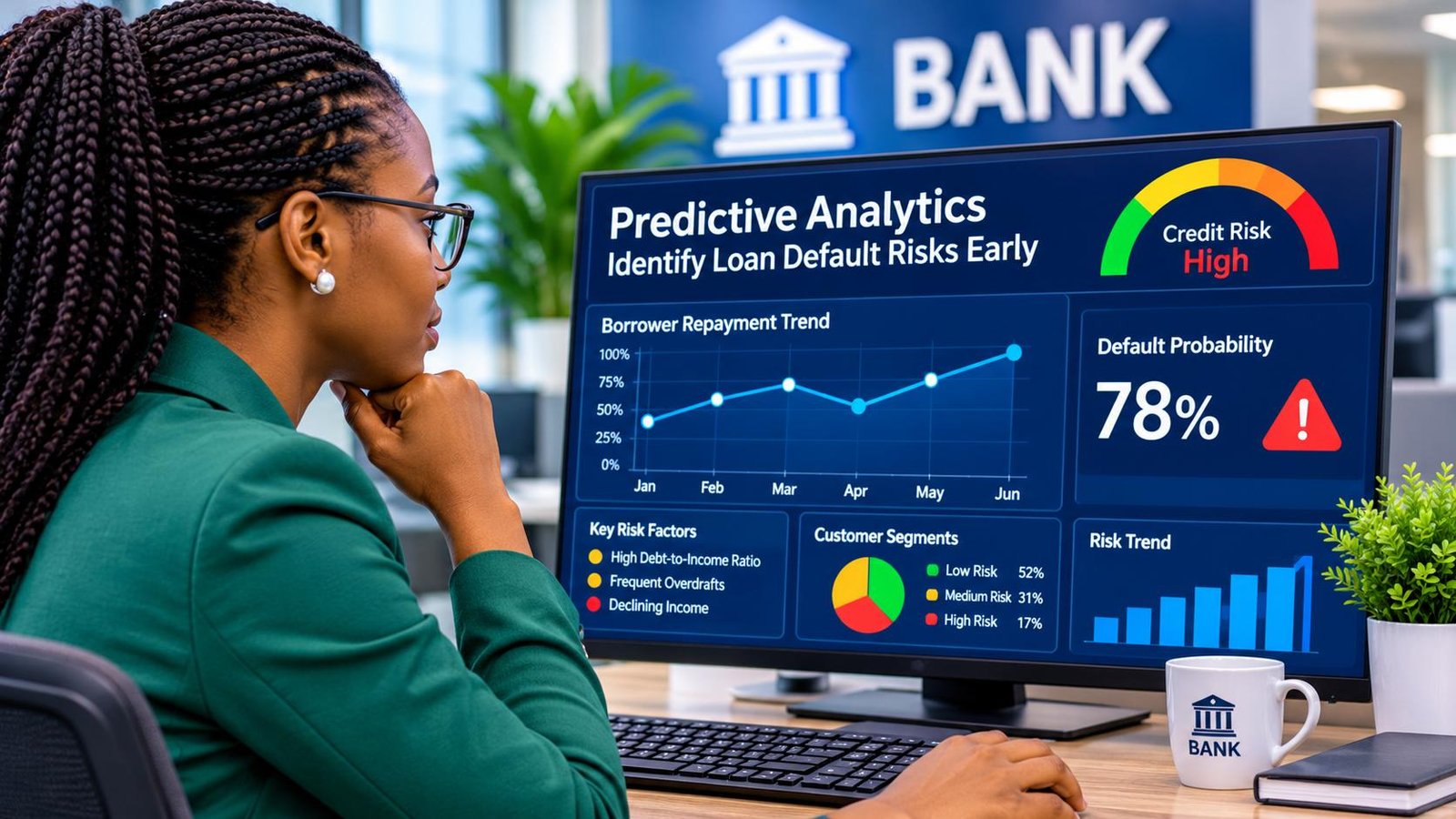
Loan defaults can cause issues for banks, micro finance institutions and digital lenders. Traditional methods used by lenders can often fail to identify the early signs of a potential issue with the borrower’s ability to repay. Lenders will look at the credit history, income statement, collateral and manually assess if a borrower will be able to repay their loan. However, predictive analytics can help to gain insight into the likelihood of defaulting on a loan using past data. Financial institutions can use this data to identify potential risky borrowers in advance through statistical and machine learning models, ultimately improving lending decisions by gaining a more accurate view of potential risky borrowers.
15 Ways Predictive Analytics Are Helping Banks Identify Potential Loan Default Risks
1. Analyze Past Loan Repayment History
Understanding a borrower’s past repayment history can give useful insight into how likely they are to default on their loans in the future. Using Predictive Analytics lenders can look into past loan applications, repayment dates, late repayments, outstanding balance and default history. This helps identify common trends that may show the borrower has a higher likelihood of defaulting. This can be done by comparing different customer segments to build predictive models that can identify potential red flags. Lenders can accurately identify whether potential applicants are more likely to default through looking at patterns.
2. Debt to Income Ratio
The debt to income ratio shows how much of the borrower’s monthly income is used to pay back debts. Lenders can use this to identify if they have enough financial capability to take on more debt. If a high amount of income is being used to make loan repayments, rent payments etc then they may have issues making new payments. By looking at the debt to income ratio alongside past defaults lenders can identify potential customers who may be getting close to becoming over leveraged. This helps lenders decide on the correct loan amount and repayment terms, whilst reducing the risk of approving applicants who may add financial pressure.
3. Changing Spending Habits
Tracking the spending of borrowers can help identify potential financial issues. Lenders can use predictive analytics to look at spend patterns to identify any unusual spikes in spend, low account balances, frequent overdrafts and a drop in saving. This can include customers who previously had sufficient funds but are now spending most of their income due to financial pressures. Lenders can compare current spend patterns with past spending habits to identify any changes. If there are concerns identified by predictive models then lenders can look into their financial situation and consider taking action to help them including changing repayment terms and providing financial advice.
4. Job History
Job history can be an important factor in identifying whether a customer will be able to consistently make repayments. Lenders can look at job history, salary payments, consistent income and changes in income to understand how financially stable they are. If they do not have stable employment or income then they may find it harder to make repayments. Digital lenders can look at changes in business income for self-employed and small business owners. This data can be combined with repayment history to give lenders a better understanding of whether they will be able to repay. This helps identify potential income related risks.
5. Bank Account Activity
Having detailed bank account activity can help lenders understand the borrower’s financial activity. Lenders can look at deposit, withdrawal, transfers, regular payments, account balance and frequency to identify any potential issues. Lenders can identify if the customer is having financial issues by looking at frequent overdrafts, low account balance, failed direct debits and inconsistent income deposits. This can help identify potential repayment issues that may not be shown in credit reports. Lenders can continuously look at bank account activity so they have up to date understanding of their current customers.
6. Machine Learning Models
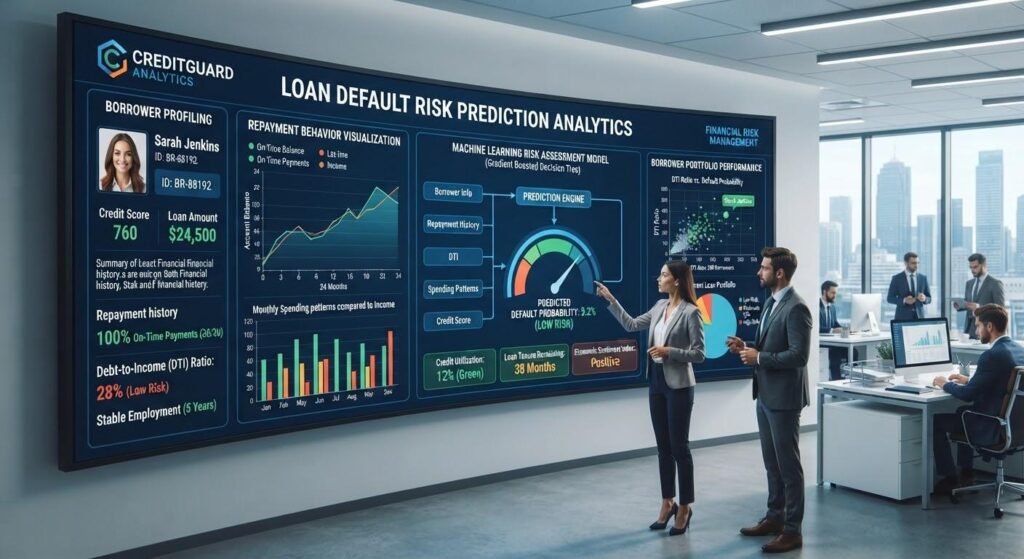
Machine learning can help improve the accuracy of predicting loan defaults. Algorithms such as logistic regression, decision tree, random forest, gradient boosting can look at borrower characteristics and repayment history to predict the likelihood of defaulting. More advanced models can look for patterns in risk factors which may not be identified through traditional methods. For example if they have a moderate level of debt but have decreasing income and frequent overdrafts then they may have a higher risk. Research has been carried out on Predictive Analytics in Loan Default Prediction which shows how predictive models can be used to identify lending risks.
7. Early Warning Indicators
Using Predictive Analytics will help lenders identify early warning indicators. This can include low account balance, frequent loan extensions, missed utility payments, low deposits and an increased use of short term borrowing. Using predictive models lenders can identify if the customer is facing financial issues. Lenders can look into any concerning patterns before they become late. This can lead to repayment changes, financial advice and other actions to help the customer avoid defaulting. This can improve financial institutions understanding of potential issues.
8. Economic Indicators
Economic indicators can impact whether borrowers can make repayments. Inflation, high unemployment, rising interest rates, currency fluctuations and lower economic activity can create added pressure on households and businesses. Predictive models can incorporate these economic indicators to understand how they may impact different borrower types. Rising inflation can cause household costs to increase and less income available for repayment. Businesses working in struggling industries can see a decrease in revenue. By looking at these trends banks can identify potential increases in defaults.
9. Accurate Credit Limit
Lenders can use predictive analytics to identify how much credit to offer. Lenders can accurately assess how much they can offer based on the borrower’s financial capability and likelihood of defaulting. Customers with a stable income, manageable debts and consistent repayment history may have a larger credit limit. Applicants with multiple risk indicators may have a more conservative credit limit. This can help reduce over lending and ensure borrowers do not take on more than they can repay. Digital lenders can use this to give more consistent credit limits using up to date customer information.
10. Improved Loan Underwriting
Loan underwriting is the process of assessing the financial details of the applicant to decide whether to approve their application. Predictive analytics can help to improve this process by analyzing credit reports, income, transaction history, job history and previous borrowing. Models can quickly analyze these indicators to give a risk assessment. This can reduce the need for manual checking. Predictive underwriting can also help differentiate between customers with similar credit scores but different financial behaviors. This can help lenders make more informed decisions.
11. Changes in Borrower Behavior
After obtaining a loan the borrower’s financial situation may change. Someone who was able to repay may now have a reduction in income, increased costs or unexpected financial responsibilities. Predictive analytics can help lenders understand how their customers are behaving throughout the loan period. Models can look at current financial indicators and compare this to previous data. This can help identify any unusual behavior. For example if the customer has usually had enough in their account but now frequently has issues then they may need closer attention. This can help lenders identify issues and take action before they become late.
12. Industry and Business Performance
Businesses can be at risk of defaulting due to their industry performance. Lenders can use predictive analytics to look at industry trends, fluctuating income, demand, costs and economic activity. Businesses working in an industry with decreasing demand or increasing costs may find it harder to meet their financial responsibilities. Using predictive models lenders can identify businesses who may be facing repayment issues based on industry information. This can help lenders make more informed decisions on loans.
13. Personalize Lending Terms
Financial institutions can use predictive analytics to personalize their lending terms based on the borrower’s risk level. Those with a good chance of repaying can receive favorable lending terms including low interest rates, flexible repayment terms and larger credit limits. Those with moderate risk indicators may receive smaller loans, shorter repayment terms, extra paperwork and other suitable terms. This can help lenders control their exposure. However, lending terms should be based on accurate, relevant and fair decisions so customers are not negatively impacted by incorrect predictions or personal factors.
14. Improved Loan Portfolio Management
Banks need to understand the overall risk of defaulting for all their outstanding loans. Predictive analytics can help lenders look at their loan portfolio based on customer segments, industry, location, and loan type and repayment terms. This can help identify any customer segments that are becoming more likely to default. For example predictive models may identify that customers in a certain industry are having increased issues with repayments due to economic changes. Financial institutions can use this to adapt their lending strategy, improve monitoring, effectively allocate provisions and have a healthier loan portfolio.
15. Take Action at an Early Stage
Lenders can use predictive analytics to take action at an early stage. If models identify customers who are becoming more likely to default then lenders can contact them. Lenders can look at repayment terms, provide financial advice and consider rearranging any eligible loans. For example if the borrower is having temporary issues with their income then changing repayment terms can help. This can improve customer relationships as well as helping financial institutions reduce potential credit loss. However, predictive analytics should be used to identify potential issues and not automatically penalize the customer.
Challenges of Using Predictive Analytics for Loan Default Prediction
Unfortunately predictive analytics does have some limitations to overcome. Data quality can be an issue as incomplete, outdated or inaccurate data can lead to incorrect predictions. If there are significant changes in the economy then models may struggle. False positives can occur meaning reliable customers are seen as risky. False negatives can also occur meaning risky applicants are seen as reliable. Historical lending data can also be biased leading to unfair outcomes for certain customer segments. Financial institutions should regularly check the performance of their models, test accuracy, update data sets and ensure suitable human oversight. Transparency should also be ensured and that they are complying with any data protection and lending regulations.
Conclusion
Predictive analytics is transforming how banks and digital lenders identify loan default risks. They can gain more detailed and early insight into borrower behavior, repayment capability and changes to the economy. By using past repayment history, income, transaction history, machine learning and economic predictions financial institutions can identify any potential issues. This can help improve underwriting decisions, correct credit limits, personalize lending terms and improve loan portfolio management. To ensure success lenders should ensure they have accurate data, accurate models, regularly check performance and avoid unfair risk identification. By combining predictive analytics with responsible human decisions banks can improve credit risk management and help borrowers maintain sustainable financial responsibilities.
Get more well researched information about Predictive analytics for loan default prediction here.