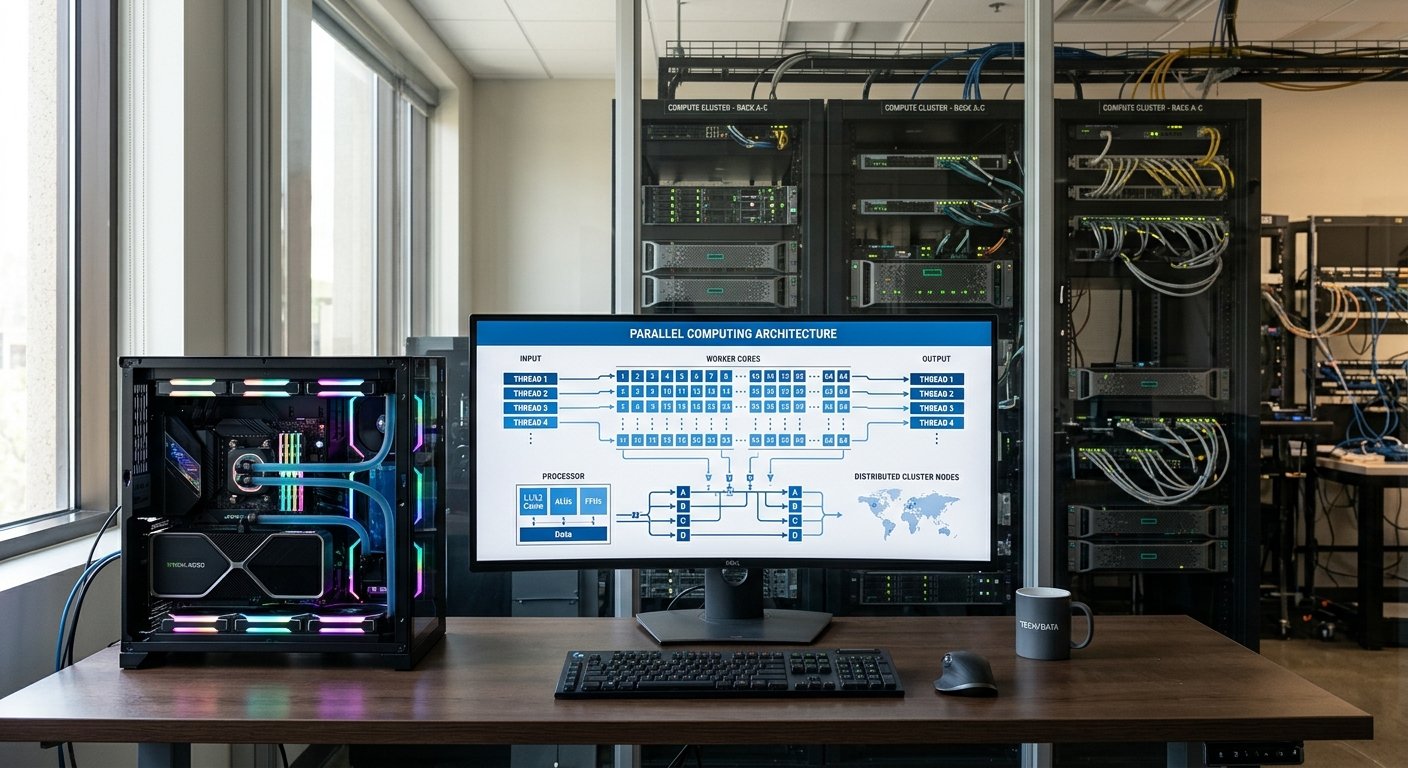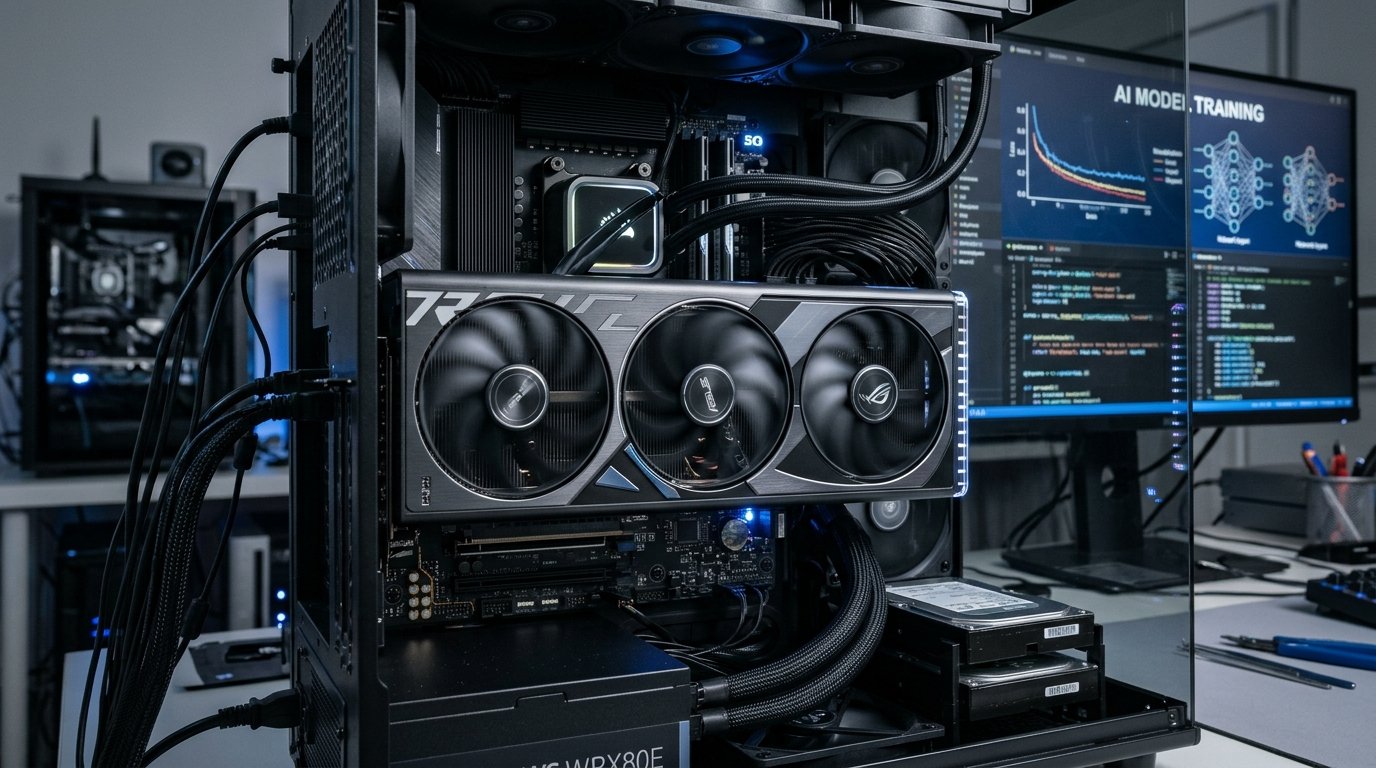
Artificial intelligence (AI) is a crucial component of current technology, driving everything from intelligent chatbots and image recognition technologies to self-driving cars and scientific research. The specialized computing technology that is behind many of these innovations is called the graphics processing unit (GPU). GPUs were initially used for rendering images, visual effects, and animation but now they are powerful processors that can take on the immense mathematical needs of AI systems.
They can handle a vast number of calculations in parallel, which makes them well suited for applications in machine learning and deep learning, where algorithms analyze large amounts of data and perform complex calculations. With the ever-evolving complexity of AI models, the need for faster and more efficient computing power is continually increasing. By grasping the advantages of GPUs, their limitations, and how they work, we will begin to understand how they’ve become vital to today’s development of Artificial Intelligence.
What is GPU Computing
Using a GPU for tasks other than graphics rendering. A GPU has many processing units capable of performing many operations at once, unlike a central processing unit (CPU) that has a relatively small number of powerful cores capable of handling a wide variety of computing tasks at once. This architecture makes GPUs particularly well-adapted to applications that perform the same calculations on large sets of data. These are common operations that are done by Artificial Intelligence applications in image processing, text analysis, modification of neural network parameters and predictions. GPUs can parallelize tasks into many computing units, allowing for the completion of specific computations much more quickly than they could be done on a CPU by itself. While GPUs are not ideal for all tasks, their parallel processing power becomes valuable when working with tasks that require significant mathematical processing.
GPU computing has revolutionized the way that researchers and developers approach complex problems that require a lot of computing power. Previously, GPUs were mostly known as the graphics processors in video games, animation, computer-aided design, and so on. But scientists found that many scientific and mathematical problems would also benefit from the same many-core parallel architecture that is employed for rendering complex visual scenes. This insight created a new concept of GPUs, as general purpose computing devices. Today, GPUs can be programmed with AI-specific frameworks and libraries, enabling them to be used for training AI models, processing massive amounts of data, simulating scenes for scientific research and other intensive applications. This has led to GPU computing being a critical component in the development of modern AI infrastructure, and has helped researchers to test larger models and analyze more data in reasonable time.
How GPU Architecture Works
GPU Architecture is the design of a graphics processing unit that is used to organize its processing cores, memory systems and other elements into an efficient computational structure. The modern GPUs are equipped with many processing cores arranged together into larger clusters, which perform instructions on a large number of data elements. The design varies from manufacturer to manufacturer and generation to generation, but the typical theme of GPUs is throughput: doing a lot of calculations over a long time interval.
Unlike CPUs, this is not needed for responding to a variety of instructions, complex control flows, and low latency execution of a single task. GPUs are also designed with specific hardware for specific tasks, such as matrix multiplication and other mathematical computations that are frequently utilized in AI. Being familiar with the GPU architecture of the GPUs can help understand why these processors are powerful for workloads that require lots of parallel computation.
Processing Cores and Parallel Execution
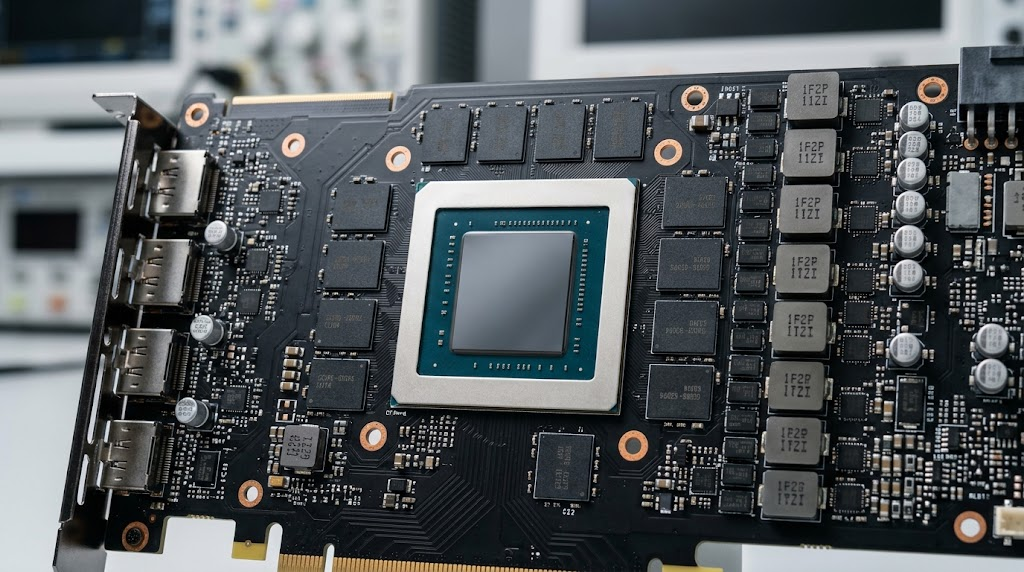
A characteristic of a GPU is its capacity to carry out numerous operations in parallel. Modern GPUs have thousands of parallel relatively small processing cores or execution units, depending on the particular model. These resources enable a GPU to break up a large computational task into smaller chunks, and run multiple chunks concurrently. For instance, a large batch of numerical inputs to a neural network may be able to undergo many calculations on the available resources of a GPU. The processor performs multiple operations in parallel and thus improves overall throughput rather than performing all operations sequentially. This is very helpful for training deep learning models which repeatedly make predictions, compare those predictions to the results they expect, and tweak millions or billions of parameters in the process.
The number of cores is not necessarily the same as the actual performance of a GPU, however. Each core has a different instruction set, and there are some GPUs with dedicated matrix and tensor cores. Other factors that affect performance include memory bandwidth, clock speeds, software optimization, and workload characteristics. In addition, all algorithms are not “task-oriented”. There is not always a lot of parallelism, as some operations rely on the result of previous operations. So when it comes to assessing the capabilities of a GPU, you can’t just look at the number of processing cores. When deciding on a development platform, developers need to take into account the computing power, memory capacity, software support and application needs.
Storage and Data Transfer
Memory also is a key element in GPU architecture which processors access before they do calculations. GPUs usually use high bandwidth video memory which we also refer to as VRAM to put in model parameters, input data, intermediate results of computation and other info which comes up during the process. High memory bandwidth what we see is that it allows a GPU to very quickly move large sets of data between memory and processing units. Also in AI we see this play out a lot where neural networks may go back to very large sets of numbers again and again. If the processor is cranking out results but the memory is not keeping up in terms of what it is putting into the processor we may see the GPU under utilized while it waits for info. That creates a memory issue which in turn reduces overall performance even if the processor has very large scale computing power.
GPU memory size also determines what AI tasks a device is able to perform. A model must fit its required variables and other working data into what is available in memory or use methods which put that info across many memory locations. Very large neural networks usually require more memory, also during training which see an increase in the amount of info the system has to hold for calculating gradients and adjusting parameters. When a model outgrows available GPU memory developers may have to reduce batch sizes, use more compact numerical formats, break the task into parts which run on separate devices, or shift some of the math to system memory. While these solutions make training a go they may also add in extra issues or drop performance.
What Makes GPUs Great for AI?
Artificial intelligence is a field which uses heavy math which includes matrix multiplication, vector calculations, and element-wise transformations. Neural networks use these mathematical tools to turn input data into what is useful to them and also to put out predictions. In the course of training they will run through examples, determine errors, and change internal variables to better what they are putting out. Also we see that many of these processes can take place at the same time in different elements of a set which is what the GPU does very well. By running large scale operations at the same time, GPUs are to do in a short amount of time what would take much longer to do otherwise. We see this benefit especially when dealing with large sets of data or models which have very complex interconnections of math.
GPUs also out fit machines with special numerical formats which in turn improve computing efficiency. Today many of the latest devices are equipped with hardware that speeds up matrix operations which in turn require less bits than that of conventional full precision calculations. We see that reduced precision arithmetic may improve throughput and lower memory requirements when the work load and model put up with the resultant numerical differences. We have Mixed precision training which is a technique that combines different numerical formats to play out speed, memory use, and accuracy. Also these features are very valuable in that we see today’s AI models require huge numbers of math operations. At the same time it is also true that performance improvements are a function of which software supports which hardware features and also that the algorithm in question does not see large drops in accuracy when the chosen numerical format is used.
The Role of GPUs in Machine Learning and Deep Learning
Machine learning is a field within artificial intelligence where computers are trained to recognize patterns from data as opposed to being programmed with a set of rules. In some cases machine learning algorithms do well enough on CPUs for small sets of data and when the math is not too complex. But very large scale calculations which are more common in some types of this field may greatly benefit from the use of GPUs. Deep learning is a subset of machine learning that uses artificial neural networks with many layers to learn very complex data structures.
We see wide application of these networks in image classification, speech recognition, language processing, recommendation systems, and generative AI. As the data sets and the networks themselves grow in size, so do the computer requirements for training and operating these models and that is when we see the value of using GPUs increase.
Neural Net Training
Training neural nets is a process in which we present data to a model and adjust the model’s parameters which in turn improve the models’ predictions. We go through a forward pass which is when info travels through the network to produce an output, at the same time we do a loss calc which is the difference between what we got out and what we wanted. In backpropagation we determine the gradients which tell us how each parameter did in the error. Then we use an optimization algorithm which in turn uses those gradients to update the parameters. This process is very math heavy which is why we use GPUs which are great at parallel processing. Thus GPU acceleration is key in shortening training times and also in the ability of researchers to work with larger data sets, more complex structures, and different model designs.
In large scale models which have millions to billions of parameters the benefits of GPU training are very much so. We see that training these models which may go over large amounts of data for each computational step, is a requirement. While a GPU will speed up many of these processes, total train time also includes memory issues, data input, device communication, and the performance of the training software. In very large training projects we see the breaking up of calculations across multiple GPUs which may be in the same server or in many different machines. This scales out the computing power available but also brings in issues of sync, network communication, energy use, and system cost.
AI Inference
AI which is the operation of a trained model on new data to return a prediction, a classification, a recommendation or a generated response is what we see in AI inference. For instance, an image recognition application may use inference to determine what is in a picture, and a language model may give an answer to a user’s question. As opposed to training which is the model’s learning phase, inference does not usually see the model’s parameters change. That said it can still be very compute intensive which is the case with large models or when many users are at once. GPUs which do many operations at the same time are used to speed up inference in these cases which also require high output and low response times.
The best hardware for your inference needs will depend on the application. A large language model that is used by many, say in the thousands of users, may require a high powered GPU which also has large memory capacity, but a small scale classification model that is used on a low end device may run just fine on a CPU or a special AI chip. Also we see that some services put more value in throughput which is the number of requests that are handled in a given time frame while others in latency the time it takes to finish a single request. We also have that which developers do to better this is via quantization, batching, model tuning, and efficient memory use. Thus which hardware and software set you choose is very important in terms of performance, operating cost, and output quality.
GPUs and CPUs Compared
Central in modern computing we see that CPUs and GPUs play complimentary roles. CPUs which are the main players here are put together to run a wide range of instructions and to co-ordinate what goes on in a computer. They also have very complex control logic, large caches, and perform best when it comes to individual instruction sets. Also they do very well with operating systems, application logic, file management, database coordination, and tasks which see a lot of branching or sequential dependencies. On the other hand we have GPUs which put more of what they are into performing large scale parallel operations. Thus they do very well in matrix calculations and other numerical based work which is common in deep learning.
Neither is a processor which outperforms the other in all cases. A CPU may outperform a GPU on a light load which is due to the fact that we see an increase in overhead from the processes of transferring data to the GPU and also in the initiation of computational operations. Also it is also the case that CPUs come out on top in which an application requires a great deal of sequential processing or which use software that does not support the use of GPUs. As for the time when a work load is very parallel in nature the GPU is the better choice as it is able to keep its computing resources very busy. In many AI systems what we see is the CPU taking care of data preparation, application control, and communication with other components in the system and the GPU is used for the heavy lifting of neural network operations. This in turn what we see is a very effective approach which is the best of both worlds from both types of processors which in many reports out does what either one is able to do by itself.
Below is a summary of their main characteristics:
| Feature | CPU | GPU |
| Primary design | General-purpose computing | Highly parallel computation |
| Processing resources | Relatively few powerful cores | Many thousands of processing units. |
| Best-suited workloads | Sequence of actions, control flow, and a range of instructions. | Parallel numerical workloads and matrix operations |
| AI training | For light or short workloads. | For large scale deep learning models. |
| AI inference | For light duty models and low volume workloads. | For heavy duty models and high volume inference. |
| Memory considerations | Uses system RAM and processor caches | Often uses dedicated high-bandwidth memory |
| Power consumption | Varies by processor and workload | Can be substantial for high-performance accelerators |
| Typical applications | Operating systems, applications, and computing in general. | Deep learning, scientific modeling, graphics, and large scale data processing. |
What we see is that which tasks modern AI infrastructures’ put CPUs and GPUs together. CPUs which play in the field of flexible instruction set management and system coordination, while the GPU in that of speeding up calculations which do well with parallel processing. What we find is that which config is best is a play off of workload size, software compatibility, latency issues, memory needs, and also what the budget is. Instead of replacing CPUs what GPUs do is extend the compute range of present day systems and also what they are able to do which in some cases would take much longer.
Tensor Calculations and Specialized AI Hardware
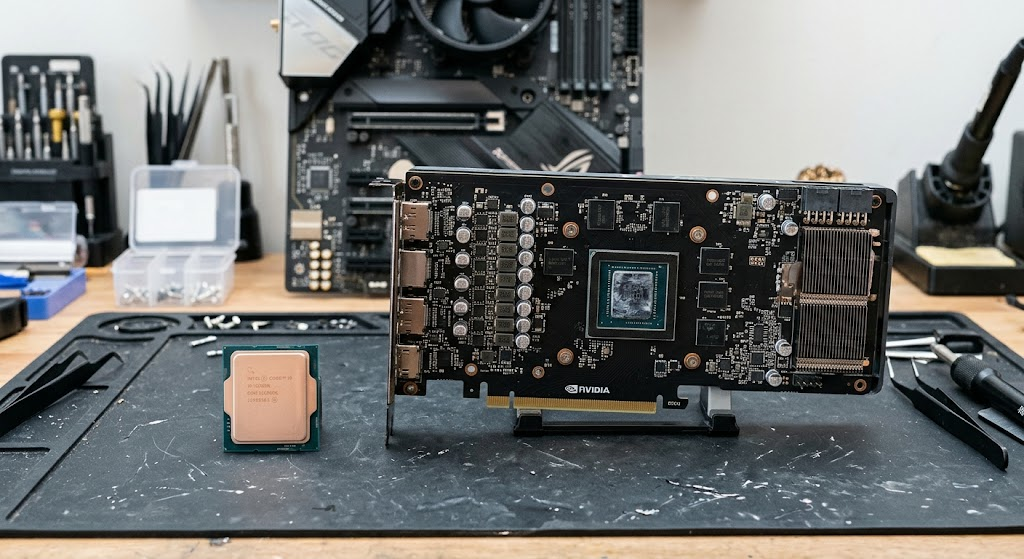
Tensor operations are at the core of what modern deep learning does. A tensor is a very flexible mathematical object which includes in its definition a scalar, vector, matrix, or any other high dimensional array of numbers. In neural networks we use tensors to put in data, to use model parameters, for in between layer results, and to put out results. Also we see that many neural network layers which are very large in scale do in fact operate on matrices or multi dimensional arrays which is why efficient tensor processing is so important for performance. We see that GPUs play a role in this via parallel execution and also in many of the latest models we have dedicated hardware for matrix multiplication and related functions. This dedicated hardware is designed to do many number calculations at the same time which in turn increases the amount of AI computation done per second.
The concept of tensor core is to put forward the idea of specialized matrix processing hardware which is a feature in some of the NVIDIA GPUs’ products other manufacturers have developed their own ways to speed up matrix and AI operations. This hardware is able to support many numerical formats which in turn includes the reduced precision formats that in turn improve computational throughput. We see these features in transform models, convolutional neural networks and other structures which perform large matrix operations. Also it is in the case of special hardware that we see great benefit when it is used with compatible software libraries and numerical formats. Also developers must look at the accuracy requirements which some of the reduced precision calculations may affect. Thus for effective AI optimization it is not enough to choose a powerful processor but also to develop appropriate algorithms and use the right software.
GPU Compute in AI
GPU technology is a wide ranging platform for AI which has found application in many sectors. What sets it apart is the speed at which it processes large sets of numbers which in turn is applied to visual info, language, prediction, and scientific modeling. In health we see GPUs which speed up analysis of medical images and also support very complex bio data research. In manufacturing AI which uses image analysis to identify defects and which in turn improves quality control is a common use.
Also in finance we see the use of machine learning for forecast, risk analysis and fraud detection. Researchers use the power of GPU enabled systems to model very complex systems which would be too great a task for traditional computing to handle. Thus we see that GPUs do not play into one particular AI practice or industry, instead they are a very general purpose computing resource for diverse data intensive analysis.
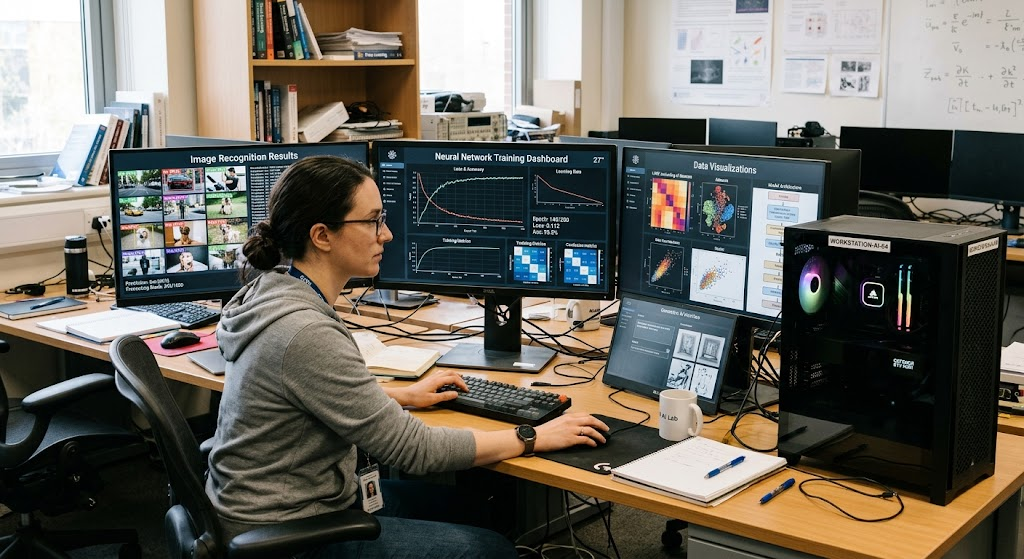
AI Which Generates Content
Generative AI is a term for systems which create new content in the form of text, images, audio, video, and computer code. Large language models, image generation systems and other generative models use extensive math in both their training and in what they do at scale. GPUs speed up the matrix operations which in turn train these systems and also run outputs from the models. For example a language model may look at a sequence of words and determine the probability of what may come next, while an image gen model may take numerical input and out of that produce an image. These operations may range from millions to billions of calculations based on the model and what it is doing. GPU acceleration makes these systems practical by decreasing processing time and thus increasing the volume of what infrastructure is able to handle.
Generative AI is to put into perspective the issue of memory capacity. We see that large models require memory for their parameters and that inference systems may also require additional space for intermediate activations and cached info. When a model doesn’t fit into a single GPU’s memory we see that developers may distribute it across many GPUs or use techniques like quantization and memory efficient execution. While these methods may expand the range of what hardware can support, we do see that they also introduce more engineering complexity. As generative AI grows in deployment we see that organizations have to balance model quality, response time, memory needs, energy use, and the cost of maintaining GPU infrastructure.
Image and Computer Vision
Computer vision allows computers to interpret visual info from photos, videos, medical scans, and industrial images. Most computer vision systems use deep learning which applies math transformations to image data. Convolutional neural networks, vision transformers, and related models at scale can require large resources. We see that GPUs speed up the matrix operations and other processes in these models which in turn allows for better performance in training image classifiers, object detection, segmentation and facial recognition tech. Once trained, these models also use GPU power to quickly analyze images in fields like automated inspection, agricultural monitoring and medical imaging.
The utility of GPUs in computer vision goes beyond training speed. In real time applications which require analysis of multiple video streams at the same time or processing of new images with minimal delay a GPU is a great asset. By the way of executing many operations at once a GPU can fulfill these needs. That said, what we see in practice is that performance also depends on image resolution, model complexity, data transfer issues, and the total system’s processing power. Also in some cases it is found that for performance which is adequate, use of smaller models on CPUs or specialized edge accelerators may be a better choice in terms of energy use. Thus developers choose hardware based on the trade off between accuracy, speed, which environment the system is to run in, and also the resources available.
Natural Language Processing
Natural language processing (NLP) is what allows computers to interact with human language. We see it in translation, text classification, sentiment analysis, speech recognition, summarization, question answering, and conversational assistants. Today’s NLP systems report heavy use of transformer architectures which in turn use a great deal of matrix multiplication and attention calculations. That which can be improved with the use of GPU’s we see this especially when we are dealing with large sets of text or models that have many parameters. Also during the training phase GPUs improve researchers’ ability to work with text data sets and to improve neural network performance. At inference time they support the generation of translations, production of document summaries, and the delivery of answers to user questions.
Despite this growth in what natural language tasks can do we see that there is a set of performance issues which present themselves. We see that input sequence length, the number of tokens generated, model size, and number of simultaneous users all play a role in determining compute requirements. Very large models require a great deal of memory for their parameters and also for intermediate data they produce. Also in conversation systems we see that output is often generated one token at a time which in turn creates dependencies which break up what could be parallelized. To get around this we see that developers use methods like batching, efficient attention algorithms, and quantization. While GPUs still play a large role in many of today’s advanced NLP solutions care has to be taken in the design and coding to get best results.
Scientific Computing and Research
In the field of scientific computing we see the use of numerical methods and simulations which we use to research complex issues in physics, chemistry, biology, engineering and beyond. We see that many scientific applications are of a calculation intensive nature which may be broken up into many data elements hence they are good candidates for GPU (Graphics Processing Unit) speed up. Researchers at large are using GPUs to simulate physical systems, analyze results from astronomy, look at molecular interactions, model fluid dynamics, and process large scientific data sets. Also AI is involved in this research by way of helping to identify patterns, do expensive calculations which are an approximation and in the analysis of experimental results. When we combine GPU accelerated numerical computing with machine learning we see researchers are able to tackle large scale computer intensive problems.
In research fields like climate which also report on large data sets and which run in depth simulations we see that researchers do. In the field of drug discovery we see that reports vary to models based on GPUs which in turn study molecular structures and put forth predictions. Also we have that in engineering which sees success in that they speed up simulations which play out material properties or fluid dynamics. It is true that GPUs do greatly add to performance in what they do well but it is also the case that not all science calculations benefit the same. Some algorithms have sequential steps which are in order, irregular memory access which is not regular, or communication which is heavy which in turn does not see great parallel efficiency. Thus it is that researchers must look at the structure of the computation in their applications before determining how much GPU acceleration they will see.
Issues in GPU Computing
Although we see great value in what GPUs bring to AI tasks, also there are issues with them. We see large models and extensive data sets as a primary issue which often outstrip what a single GPU can handle thus developers are put in a position to break up their work into smaller parts, to run across many GPUs, or to use other hardware. These actions in turn add to the complexity of the implementation and bring in issues of data transfer between devices. Also GPU performance is put down at times by memory bandwidth, by poor software design, or when work does not lend itself to parallel processing. At some point a GPU may be sitting doing nothing while it waits for data which in turn leaves it with less time for calculation. Thus a device that in theory has great performance may in practice perform below expectations if the application is not a good use of its resources.
Software compatibility is also a key issue. In the case of GPU applications we see a great deal of dependence on specific programming stacks, optimized libraries, drivers and hardware features. At times developers may have to rework present code or re design elements of an application to see best results. Also it is the case that different GPU platforms present different software environments which in turn cause compatibility issues as organizations shift workloads between devices. In the deployment of many GPUs we also see the introduction of more issues related to synchronization, communication, memory allocation and error handling. While these issues do not go away, the fact that we have powerful hardware is but one piece of the puzzle in putting together a successful AI system.
Memory Size, Power Use, and Compute Costs
GPU performance isn’t tied only to its compute speed. Also important is memory which determines what models and sets can be processed efficiently and bandwidth which is the speed at which memory gets to the processing units. In the case of large AI models which may have billions of parameters or require large training data sets — high bandwidth memory is a must for many organizations. Also high capacity GPUs which may be very expensive may not be required for smaller projects. It is best for developers to look at model size, expected batch sizes, intermediate memory needs, and also what the work load will be in the future before they choose their hardware. By doing this they avoid over or under spending on features that their application doesn’t use or which won’t support the scale of the work.
Power which is put out and operational costs are of equal importance. We see that high performance GPUs may use up a large amount of electricity, and very large computer systems also have the issue of maintaining proper temperature for operation. In the case of electricity, cooling, hardware maintenance, networking, and trade in old equipment can really add up in terms of the total cost of running AI infrastructure. In cloud services what we have is also that which is charged out by the rent, data transfer fees, storage and that at the end which may include for which the resource is idle. Also a better GPU may not at all times be the best buy if the work at hand is so small it does not make use of the GPU’s full power. What is more useful is to look at the whole picture of cost with how the system performs also which includes the time it takes to finish a job in terms of which resources to choose from.
Several practices which do see results in cost control. We see that developers use smaller models which at the same time meet accuracy requirements, do software optimization which in turn reduces unneeded calculations, and we also see that they choose numerical formats which in turn reduce memory use and don’t trade off against what is acceptable output quality. Also we note that cloud GPUs present a great access to power which in fact is the hardware which organizations’ don’t have to buy and maintain physically, on the other hand local GPUs may be a better play for tasks which run for long continuous periods. CPUs also come into play for some applications which may be more economic, as do specialized accelerators. What works best really does play into how often the work is done, the size of the model, performance we are aiming for, what the privacy issues may be, and also the availability of that tech talent.
Selecting the Best GPU for Your AI Project
Select which GPU is right for you by first looking at what you will use it for and the limits of your project. Researchers that train large deep learning models will tend to go for memory dense cards, which also have great matrix processing performance and multi-GPU support. For developers that are00 putting together real time inference services we see focus on low response latency, high throughput, energy efficiency and the price per request. Also students and beginners which are playing around with smaller scale models will find that a mid range GPU or the cloud based solutions are totally fine. In all of these scenarios the goal should be to choose the hardware that truly meets your performance needs instead of going over the top with the most power or the most money.
Software support is a key issue in the decision. What may be a great GPU in theory may still fall short in practice if we don’t have the right machine learning frameworks, drivers, or optimization libraries that play well with it. It is up to the organization to look at how this new GPU will work with present software, what we have in terms of development tools, and also what we are planning for in the future. Also we see that benchmarking which uses representative data is very valuable. What the theory says may not reflect real world application performance. We will also look at performance as well as cost memory use, energy use, total cost in real world scenarios. And in all of this we ask that the development team look at the full picture of our present needs and what we are heading towards in the future in order to find a good balance of performance, dependability and price.
Future of AI on GPUs
GPU which is to be a key element in AI growth as we see researchers and businesses develop more advanced models and bring AI to new industries. We are also seeing hardware manufacturers introduce processors which do better in matrix processing, have faster memory and are more energy efficient. At the software level we are reporting that developers are improving compilers, libraries and optimization techniques which in turn makes our present hardware perform better. These improvements in turn help to reduce time in training and inference and also expand what models organizations are able to run. But it goes beyond just increasing raw power. We also see that for improvement in AI performance efficient algorithms, better data management, right model structures and responsible resource use are very much a part of the picture.
The AI field also reports a great deal of growth in special accelerators and alternative computing architectures. We see some devices which are designed for inference and also which target specific numerical tasks or energy constrained settings. Also we have some technologies that augment what GPUs do or which out perform them in certain applications. At the same time it is true that GPUs have very developed software ecosystems, flexible programming models and wide scale support across many AI frameworks. They also do very well with a wide range of parallel tasks which makes them great for research, model development and large scale deployment. As the AI world grows we will see that organizations will have to look at what their applications require in terms of hardware instead of thinking that one processor type is best for everything.
Conclusion
Graphics processors have taken center stage in today’s artificial intelligence architectures which we see to be a result of their excellent parallel processing which in turn speeds up the mathematical functions that machine and deep learning require. Also they have many processing units, high bandwidth memory, and special hardware for matrix and tensor calculations which makes them very effective for training neural networks and running heavy inference tasks. We see in applications from generative AI and natural language processing to computer vision and scientific computing that these features play a large role. As for performance, GPUs outdo CPUs in terms of throughput for the right parallel tasks, but it is also true that CPUs still do very well in general purpose processing, sequential operations and system wide coordination.
Although GPUs have their benefits they are not a universal solution for every computing issue. We see that memory issues, power use, software compatibility, hardware cost, and inefficient use are what diminish their practical value. What we are to do is carefully consider model size, performance needs, energy use and also what we have in the budget when we choose the right GPU. What we may do instead is to combine the right hardware with great algorithms, efficient software and also do realistic performance testing. As AI advances what we will see is that GPU computing will still be a key tech for putting complex models into practice, to speed up scientific discovery and to support the development of very advanced AI applications.