Introduction
Cashless banking is revolutionizing money management for people, businesses and financial institutions in the era of a cashless society. People can pay for goods, transfer money, receive their wages and pay bills electronically, rather than using banknotes and coins. These technologies have enhanced the ease of conducting business transactions, especially for the customers who are availed financial services via mobile banking apps and online banking. An important development has been the emergence of instant payment systems, which facilitate the transfer of money to or from accounts within seconds or minutes, contingent upon the payment service. With the evolution of digital banking, cashless transactions are a crucial part of everyday financial activities. To use these payment methods safely and effectively, individuals and businesses must be aware of the different payment methods, their advantages and disadvantages.
Understanding Cashless Banking
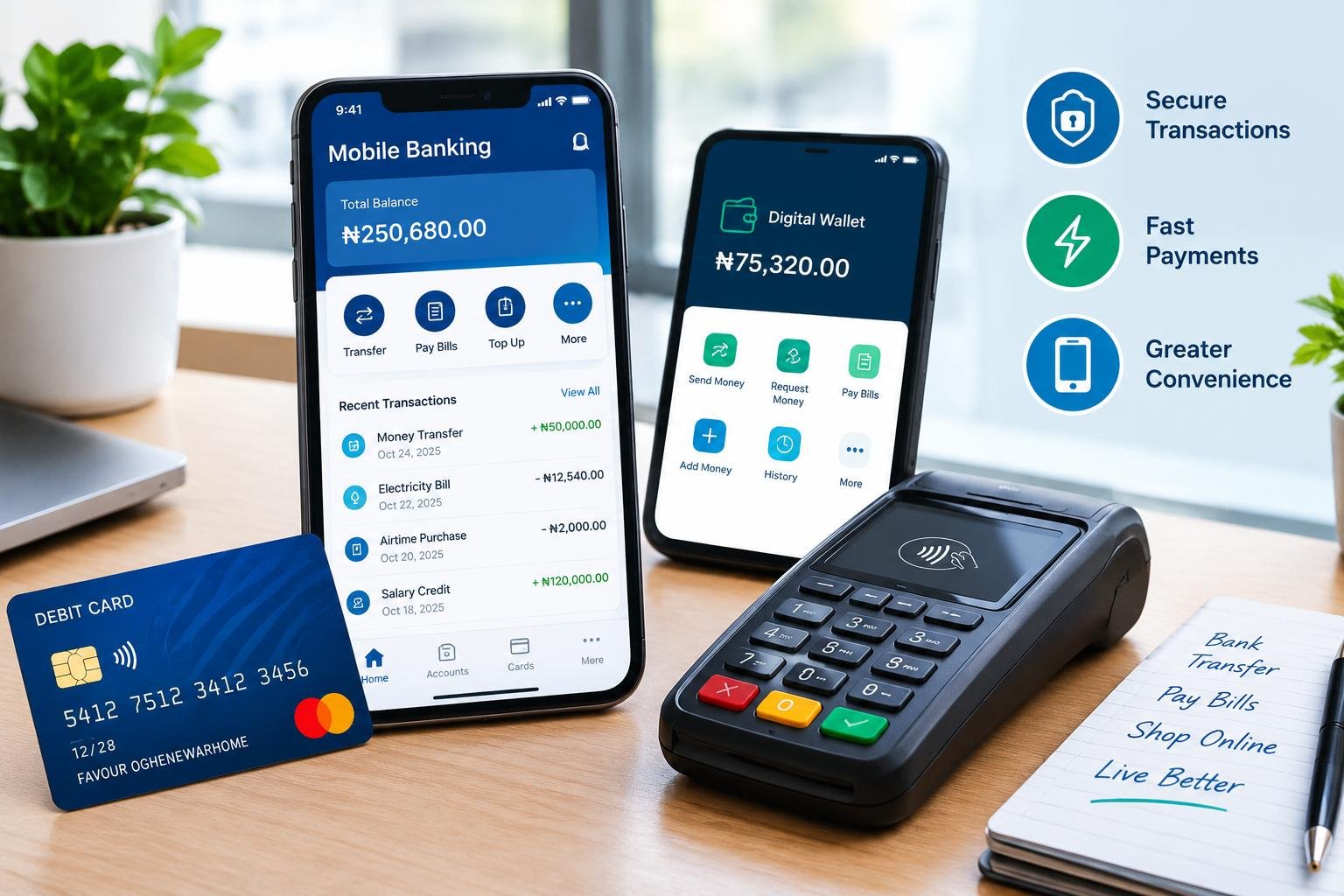
Cashless banking is the use of electronic means of payment instead of using money primarily. It is a means by which the buyer or seller can transfer and receive money, pay a bill, buy a product, and access their account via digital methods. Things like electronic bank transfers, debit cards, digital wallets, QR code payments, contactless payment technologies. Banks, payment service providers and financial technology firms enable these transactions using a network of relationships, where payment orders are checked and accounts are balanced. For cashless banking to be relevant in Nigeria, it is important to look at the salary earners, traders, students and small business owners who have been frequenting the mobile banking application and electronic transfers. While cash is still valuable in certain instances, electronic payment systems can be an alternative to exchanging physical currency. They are effective only if technology is reliable, systems are secure, services are cost effective and devices and financial accounts are available.
Major Digital Payment Technologies
Electronic Bank Transfers
An electronic bank transfer allows customers to transfer money from one bank account to another without physically handing over cash. Depending on services offered, the customer can start a transfer via the mobile application, Internet banking, ATM or banking agents. These transfers are convenient for sending money to suppliers, family members, for school fees payments, and for business payments. In Nigeria, electronic transfers are now an integral part of daily business activities as people and businesses can pay recipients at different locations without having to visit a bank branch. Customer accounts can also be confirmed with receipts and notifications for transactions, and customers can keep a track of their finances. However, there can be issues such as network problems, incorrect account information, technical issues, or temporary service disruptions that can cause transfers to fail. When a payment is unsuccessful, customers should reconfirm the recipient’s details, keep the transactions’ references and check their accounts.
Debit Cards
Debit cards allow paying for purchases with money that is in the bank account of the customer. They can be used at retail outlets that accept them, internet shops and automated teller machines. The payment system verifies the details of the card and the amount of money available before authorizing the purchase. Debit cards are useful for making payments and do not require a person to carry around a lot of cash, and they can be used to pay for all kinds of daily expenses, such as shopping, travel, paying bills, subscriptions and more. They also produce transaction records that assist customers see how they have spent money and recognize strange payments. But, cardholders should take care to safeguard their personal identification numbers, not share one time passwords, and only use trusted payment platforms. Any lost cards need to be blocked as soon as possible via the bank’s approved procedure. Consumers should also keep an eye out for any suspicious transactions, notifying their bank of any unusual activity as soon as possible to minimize possible losses.
Digital Wallets
Digital wallets are electronic applications or services that enable users to store payment information or have a digital balance to make transactions. A wallet can be linked to a bank account, a debit card or a prepaid account, depending on the provider. Digital wallets enable customers to shop, pay bills, send money and make other transactions that are supported via a mobile device. Certain wallets also have features that allow users to share details about their transactions and loyalty programmes, assisting them to keep an eye on their spending. The wallet payment option can be a convenient alternative for your customers’ payment for businesses. Wallet services can, however, impose transaction limits, fees, and/or identity verification. Users are advised to download applications from trusted sources; install security features where available and know the terms of the provider. They should also be aware of whether their wallet balance is backed by a regulated financial institution and what protection is in place in the event of a financial institution’s problems.
QR Code Payments
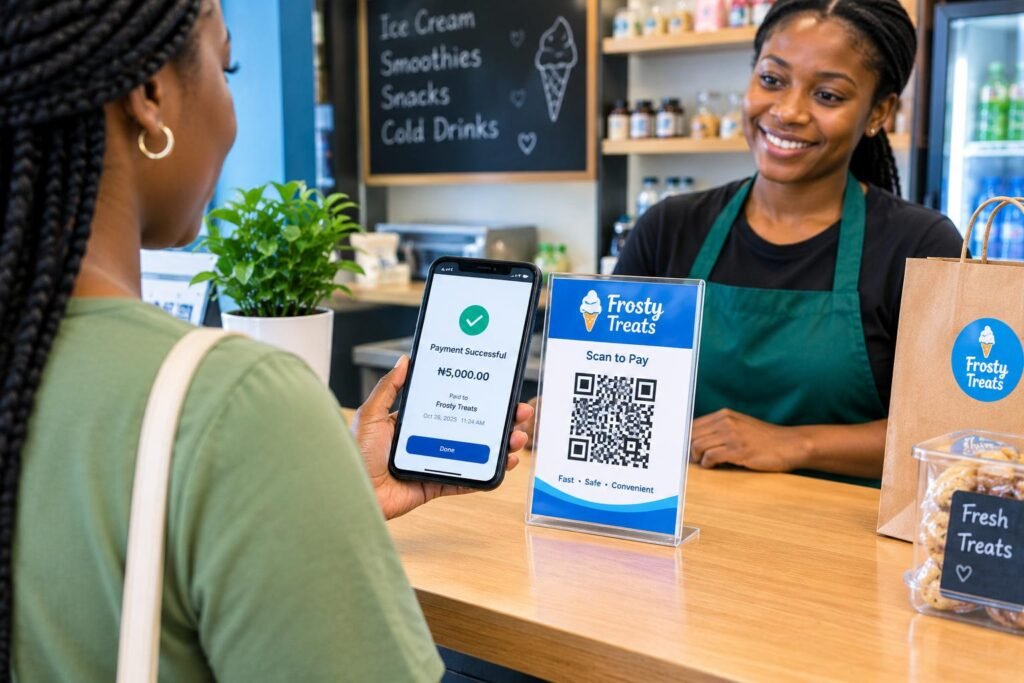
QR code payments are a form of payment that allows customers to pay electronically by scanning a quick response code with their mobile banking or payment app. Payment information, merchant identifier, or information to start a transaction could be included in the code. Customers can scan the code, check the recipient and amount (where applicable) and confirm the payment without having to enter lengthy account details. This is helpful for restaurants, retail stores, market vendors and small businesses who wish to receive digital payments without costly payment terminals. QR codes can also help minimize manual data entry mistakes and streamline checkout processes. Customers have to make sure the recipient they are sending to is legit, however, before they approve the send. Fraudsters can also swap codes for fake ones, and send funds to the incorrect accounts. Merchants are required to show codes that are approved and to ensure that the payment is actually received before delivering goods.
Contactless Payments
Contactless payment involves technologies that enable communication between a compatible payment card, phone or wearer device with a payment terminal over a limited distance. Eligible purchases can be made by simply swiping a payment card or simply using a customer’s cash instead of inserting. It can ease queues and simplify the service in supermarkets, restaurants, transport services and other crowded places. For certain providers and transactions, further verification may be necessary. Contactless payments can also enable digital wallets based on tokenisation, which allow the use of different payment credentials instead of physical card information, increasing security. Customers should still take the following precautions: Ensure they secure their devices and set security locks on them, and check transaction notifications. They will also need to be aware of the spending limits and steps to take if they lose a card or device.
Payment Gateways
Payment gateways are the technologies used to enable online businesses to process and accept electronic payments. Each time a customer buys one of your products using a website or mobile application, the gateway will safely process the payment data with the appropriate processor or financial institution to get the authorization. The outcome of the transaction is then relayed to the merchant and customer. Depending on the provider, the payment gateway can accept payment options like debit cards, digital wallet, bank transfers, and more. They enable businesses to cater to their customers from outside their immediate region and minimize the need for cash, when selling online. But there are charges for merchants such as processing charges and chargeback, fraud attempts and technical integration costs. Choosing a trusted provider, ensuring that websites are connected securely, and implementing proper fraud detection methods are crucial in safeguarding customer data and ensuring payment services are reliable.
Instant Payment Systems
Instant payment systems allow electronic funds to be transferred almost instantaneously, or within seconds, so that the funds are immediately available to the recipient. Some of the older transfers can take a while to get through, whereas these systems can provide services outside of banking hours, such as weekends and public holidays, depending on the service. They come in handy for transfers on short notice; business transactions that must be settled in a short amount of time; salary payments; or retail transactions. In Nigeria, instant electronic transfers enable people and businesses to transfer money without having to go to their bank branches. But not all transactions will be completed immediately, depending on the availability, of course. There are other reasons that could cause payments to be delayed, such as system maintenance, network congestion, fraud controls or issues with their receiving bank. Customers should check on transactions and refrain from transferring funds over multiple times until they have determined what occurred with the first transaction.
Advantages of Cashless Banking System
The convenience of cashless banking is one of the key advantages. They can also make payments, move money between accounts and do shopping without having to physically carry cash to pay or make a trip to the bank. Digital payment options can also streamline the queue time and enable businesses to better serve customers. Another benefit is the ability to track transactions. Electronic receipts, statements and notification of payment give people a record to use to prepare their budgets and look for abnormal activity. These records can be utilized by the businesses to reconcile sales, keep a track of income, and enhance bookkeeping. Faster payments can also benefit the cash flow of merchants by ensuring that they gain access to money in a timely fashion and that customers can pay off a pressing need. Furthermore, digital transactions can help lower some of the expenses incurred with handling cash, its storage, and its transport. By providing the necessary protections and secure systems, cashless banking can enhance financial management and streamline business operations.
The Problems with Cashless Banking
While cashless banking can offer several benefits, the technology also has its drawbacks, and they need to be aware of them. Inability or delay in transferring or receiving can lead to confusion, misorders, and disagreements between the sender and the receiver. Transaction fees can also add up to higher costs for frequent payments, particularly for small enterprises and individuals who are making lots of small value transactions. Fraud is also of concern, such as phishing emails, false payment confirmations, compromised credentials and unauthorized access to accounts. Customers may not be able to transact with the bank for the duration of an outage, a power outage or for the duration of banking system maintenance. Others may not be able to access the Internet, especially if they don’t have a smartphone, access to the Internet, proper identification, or computer skills. Other customers might have limited confidence in banking applications, or have accessibility issues. These issues highlight the importance of robust customer service, clear fees, cost transparency, security education, reliable payment platform, and other payment mechanisms when electronic services are not available in order to support the move towards cashless banking.
Using Digital Payments Safely as an Individual or a Business
The first step to safe digital banking is to check the details of a transaction before approving a payment. Customers should verify payment amounts, amounts to pay, and names of the parties into and out of the account and payees; businesses should have strict protocols to verify incoming transfers prior to releasing goods or services. It’s important for customers to use strong passwords, enable multifactor authentication if it’s offered and never give any personal identification numbers or one time passwords to any caller or message that is claiming to be from the bank. Regular checking of your accounts can help ensure that any suspicious activity is caught early. Companies should choose reliable payment processors, secure customer data and maintain thorough records of transactions for reconciliation and reporting. In case of a failed transfer, customers should keep the references of the transaction and contact their bank by official channels, without repeating the payment. Having a reasonable emergency cash reserve helps if networks go down, or if the electronic payment system is temporarily unavailable.
Conclusion
The cashless banking system is evolving financial transactions by making electronic transfers, debit cards, digital wallets, QR code payments, contactless payments, payment gateways, and instant payment systems more and more available. These technologies provide people and businesses with convenience, quicker payments, and improved transaction history. However, problems with failed transfers, fees charged, fraud, network downtime, and digital disparity are still significant concerns. Secure payment systems, reliable infrastructure, cost-effective payment services and customer education are critical to the future of cashless banking. Digital payments can be used by both consumers and businesses to take advantage of the convenience of transactions without incurring unnecessary risks if they understand how it works and practice proper security measures. Technology is best used to make cash banking even more convenient, without leaving the cash and/or technology behind user groups behind.
Get more well researched information about Cashless Banking here.


