
AI in everyday life has become a present reality, changing how we communicate, shop, work, travel, and get info. What we think of as far-off robots and future technology actually is already at play in the normal tech we use daily, like smartphones, search engines, social media, streaming services, and banking apps.
AI enables digital systems to recognize patterns, understand language, make predictions, and automate tasks. In that which is as far as music recommendations to the detection of unusual bank transactions, AI works behind the scenes, which in turn makes present-day tech more personal, convenient, and efficient.
What Is AI and How Does It Work?
Artificial intelligence is a field in which we see the development of computer systems which, in fact, perform what in the past has only been doable by humanly intelligent actions, such as in the recognition of patterns, understanding of language, and problem-solving. These systems we see take in data and, through the use of algorithms, put out results based on what they have learned.
Machine learning is a key element in the field of AI. It enables systems to identify patterns and do well at prediction instead of exact instructions being given out for each and a lot. Also included is deep learning. By way of artificial neural networks, we see very complex results like speech recognition, image analysis, and also language processing.
AI doesn’t think exactly as we do. Instead, it uses mathematical models and identified patterns to carry out specific tasks.
How AI Is Used in Smartphones and Mobile Apps
Smart in their algorithms and processes, today’s smartphones improve in the fields of photography, security, and communication because of AI. Also, we see that camera apps, which in the past may have just taken a picture, now are able to recognize faces, identify what it is in the frame, and will also adjust lighting, focus, and exposure for you, which in result produces better-quality photos.
AI also has facial recognition, which is used to identify users as they unlock their devices. As for photo apps, they put in order your pictures based on the content; also, we see that which words to use and how to correct spelling is a part of what predictive keyboards do.
These features which present themselves in smartphones do the work of performing tasks that we used to have to do manually.
AI in the Field of Search Engines and Information Discovery
Search engines implement AI to improve query understanding and to put together relevant results. Instead of just looking at keywords, today’s systems look at the context and the relationship between words to bring up the best results.
AI also fuels autocomplete features, spell check, spam identification, and search results. We see that these technologies, which do not exactly replicate a web page’s text at times, still present users with the info they are looking for.
Some search engines also create condensed overviews and conversational-type responses. But, what we see is that what is put out by the machines isn’t always accurate, which is why it’s best to check back with the original sources for primary facts.
AI and Social Media: Personalized Content
Social media sites use AI in the organization of posts, videos, photos, and ads. We see that which content to present is determined by algorithms which pay attention to users’ interactions, interests, and what they tend to view.
For instance, we see which channels you watch very closely and also put forward related content to you. Also, AI is involved in spotting out the spam, identifying off-base profiles, and warning us about at-risk materials.
Although we see that personalization improves the relevance of social media, we also see that which it presents to you is very often the same. By studying how these systems function, users are better able to make informed decisions about what they put out into the online world.
AI in Online Shopping and E-Commerce
Online at these shopping sites, AI is used to put forward product recommendations which are based on what you have looked at in the past, what you bought, and what you as a customer may be interested in. We see this as a service which puts the relevant products right at your front door.
AI is into visual shopping also. We have image recognition which allows systems to analyze uploaded photos and put forward similar products. Also, customers may use images to search for what they are looking for, which is an alternative to the use of written product descriptions.
AI chatbots handle issues related to orders, delivery, and returns. They do provide a quick response, although for complex issues which still go beyond what is basic, human customer service reps are required.
AI in Streaming Services and Entertainment
Streaming services use AI to curate movies, TV shows, music, and podcasts for you. We see that they look at what you have watched in the past, what you listen to, your ratings, and what you like to present you with relevant content.
For instance, in the case of a music application, it will put forward songs similar to what a user has been playing a lot, and in the case of a video platform, it will recommend movies from the genre which the user is used to.
AI also, in the case of streaming services, plays a role in content delivery; we see it in improved video compression, and in prediction of demand. Also, with recommendations which are predictions at that time, may not always be to the user’s current interest.
AI in Navigation Apps and Transportation
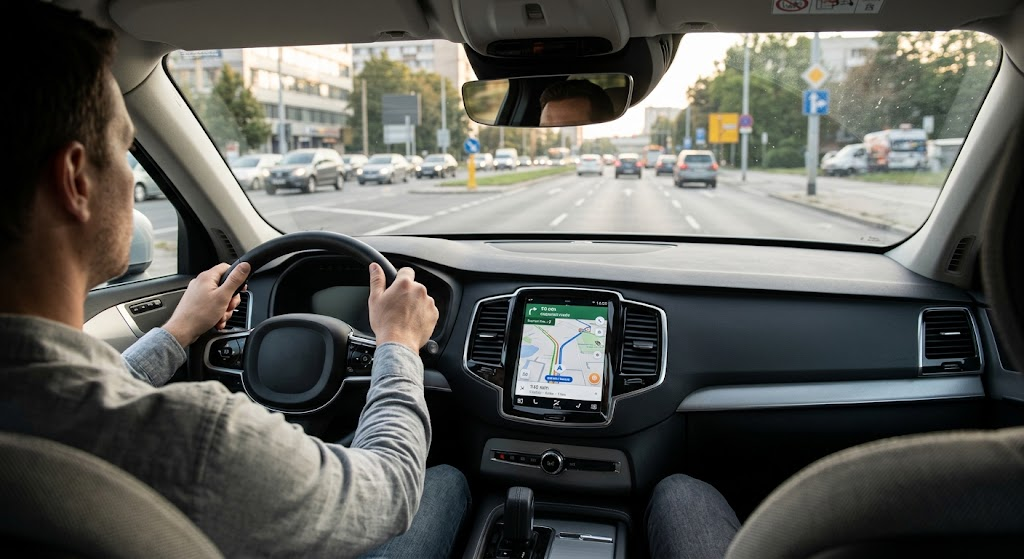
Navigation systems use AI to determine traffic patterns, which in turn they use to report travel times and suggest routes. They analyze GPS data, road networks, traffic reports, and past info to get you to your destination.
Machine learning does which is to predict traffic jams and put forth alternate routes as traffic changes. Also, AI does which is to give voice turn-by-turn directions and to recognize road signs and landmarks.
However, in some cases, navigation systems may fail due to out-of-date maps, poor GPS accuracy, or unforeseen road closures. Also, drivers should adhere to traffic laws and pay attention to what the road signs are telling you.
AI in Virtual Assistants and Speech Recognition
Voice assistants use AI for recognizing spoken commands and responding to what the user asks. Speech recognition turns what is said into text, and natural language processing determines the intent of the user.
These systems also can set alarms, play music, send out messages, and answer questions. Also, in this day and age, assistants do also put forth responsive answers in a conversational manner, and they help users with the performance of everyday tasks.
Also, background noise, foreign accents, and vague instructions which in turn affect accuracy. AI-generated responses also put out errors.
AI for Email Filters and Digital Communication
Emails which are spam or phishing attacks are identified by AI in email services. We see that machine learning systems look at what is said in the email, any suspicious links present, how the sender has behaved in the past, and other indicators which may point to a harmful email.
AI also puts out responses, fixes grammar, sums up conversations, and aids in message draft.
Despite such precautions, some harmful emails may get through. Users should check out suspicious messages and stay away from unknown attachments.
AI for Bank Apps and Financial Security
Banks are using artificial intelligence for transaction monitoring, detection of unusual activities, and also for better digital customer service, helping improve financial security.
Fraud detection systems look at transaction amounts, locations, and account activity, which in turn they use to identify out-of-the-ordinary trends. Upon identification of a suspicious transaction, the bank may ask for more info or put it through for a review.
AI chatbots handle routine banking issues and also help out customers with access to their account info. But we must put in place close watch over auto tech in finance to protect privacy and prevent unfair or improper decisions.
AI for Smart Homes and Connected Devices
Smart home devices which use AI to perform household tasks and set to your personal preferences. Thermostats in these systems will change temperature; also, lights react to timers, motion, or voice.
AI-enabled security cameras that report motion and also tell between certain objects, which in turn reduces false alarms. Also, we have smart speakers which you may use to control connected devices via voice.
Also, we see connected devices which collect private information. Users do well to secure their accounts, check privacy settings, and install updates.
AI in Everyday Life: Benefits and Challenges

AI increases convenience and access while improving efficiency, which we see in the automation of repeatable tasks and the quick processing of info. Also, we see in speech recognition, translation, and image recognition which make tech use better for a diverse set of users.
However, AI presents issues of privacy, misinfo, bias, and poor decision-making. We see misuses of info and delivery of false results when we don’t properly design and manage these systems.
Responsible development of AI, proper privacy protections, and human oversight is key to solving these issues. Also, users should verify important info and know the limits of auto systems.
Conclusion
Artificial intelligence is present in all of today’s technologies. In the field of smartphones, search engines, social media, shopping platforms, navigation apps, and banking, we see the large role AI plays, which is to personalise experience, recognize patterns, and automate routine tasks.
As technology advances in the field of AI, we see it play a larger role in education, transportation, health care, and communication. We see which AI does best and also what it doesn’t do at all, which in turn helps us as we adapt to this tech.
In fact, the essence of AI is that it supports human needs, improves convenience, and works in conjunction with human judgment to make day-to-day life easier.