Introduction
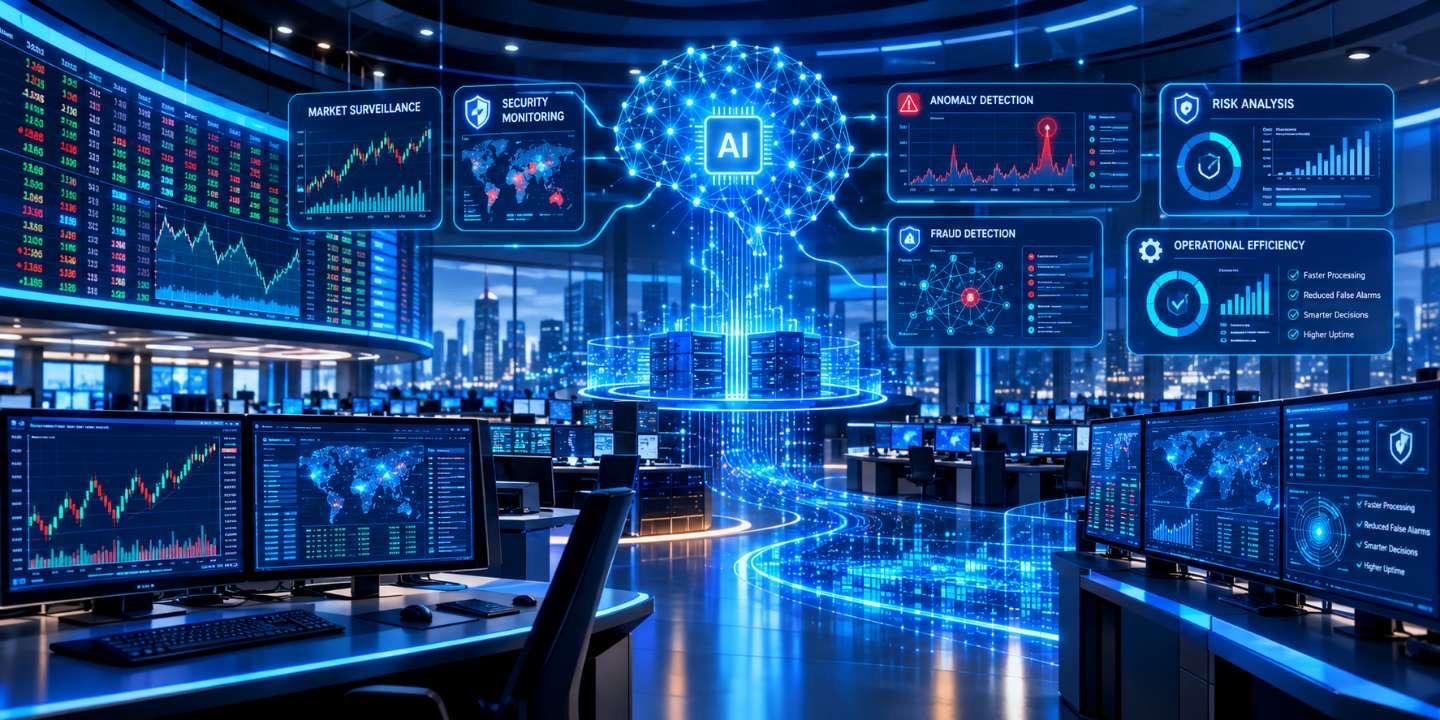
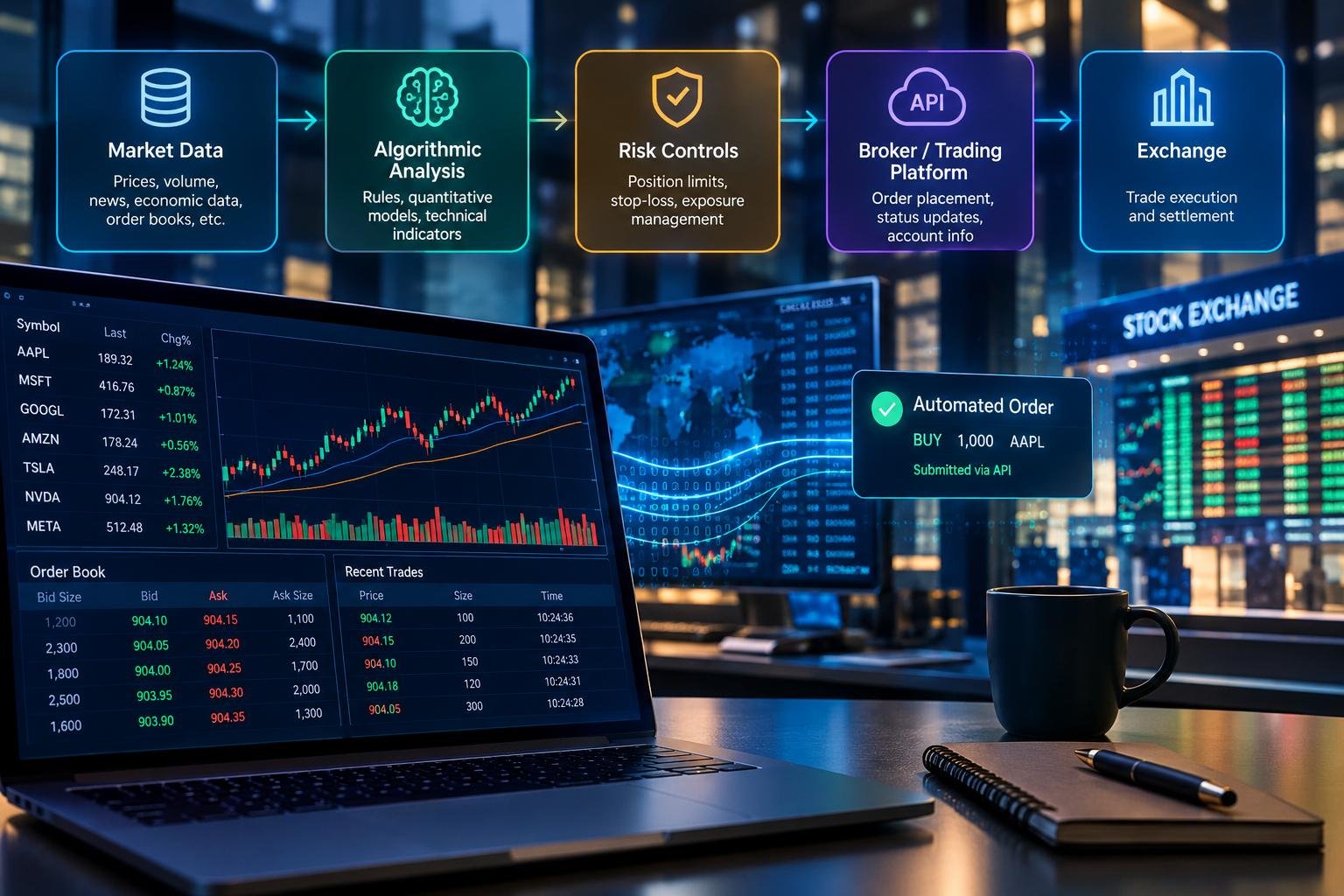
Financial markets are currently in an information world where information can be transmitted, compared and acted upon in mere nanoseconds. Known as high-frequency trading, or HFT, this is a specialized category of electronic trading which relies on superfast computers, complex algorithms and an optimized infrastructure to analyze market data and place orders in the split second. An HFT system can react to the market conditions based on the criteria set by the trader within seconds or minutes, while a human trader might need seconds or minutes to read the chart and make a decision. In general, it is helpful to accept high-frequency trading as a way of trading that is highly technological and has speed, automation, and extensive volume of transactions as key elements. Knowing the systems helps in understanding how the modern exchanges can handle a huge volume of transactions, where traders are trying to spot and capitalize on fleeting market opportunities.
Differences between High-Frequency Trading and Other Forms of Trading
Unlike traditional automatic trading, high-frequency trading involves more than just the speed being a secondary factor; it’s a key component of the plan and setup. Automated trading can be applied to any trading system that adheres to instructions programmed into it, such as a pension fund algorithm that slowly buys shares over the course of several hours or days. On the other hand, HFT systems typically trigger numerous orders or trades within a day’s trading period, and their reaction to market events is generally quite fast, in very short time scales. Not all automated trading strategies are HFT, nor are all HFT strategies based on the same HFT strategy. What really matters is the mix of automation, volume of messages and trades, advanced technology and laser focus on faster latency. This means automated trading is a large and varied concept and HFT is one type of automated trading.
The Technology used in HFT
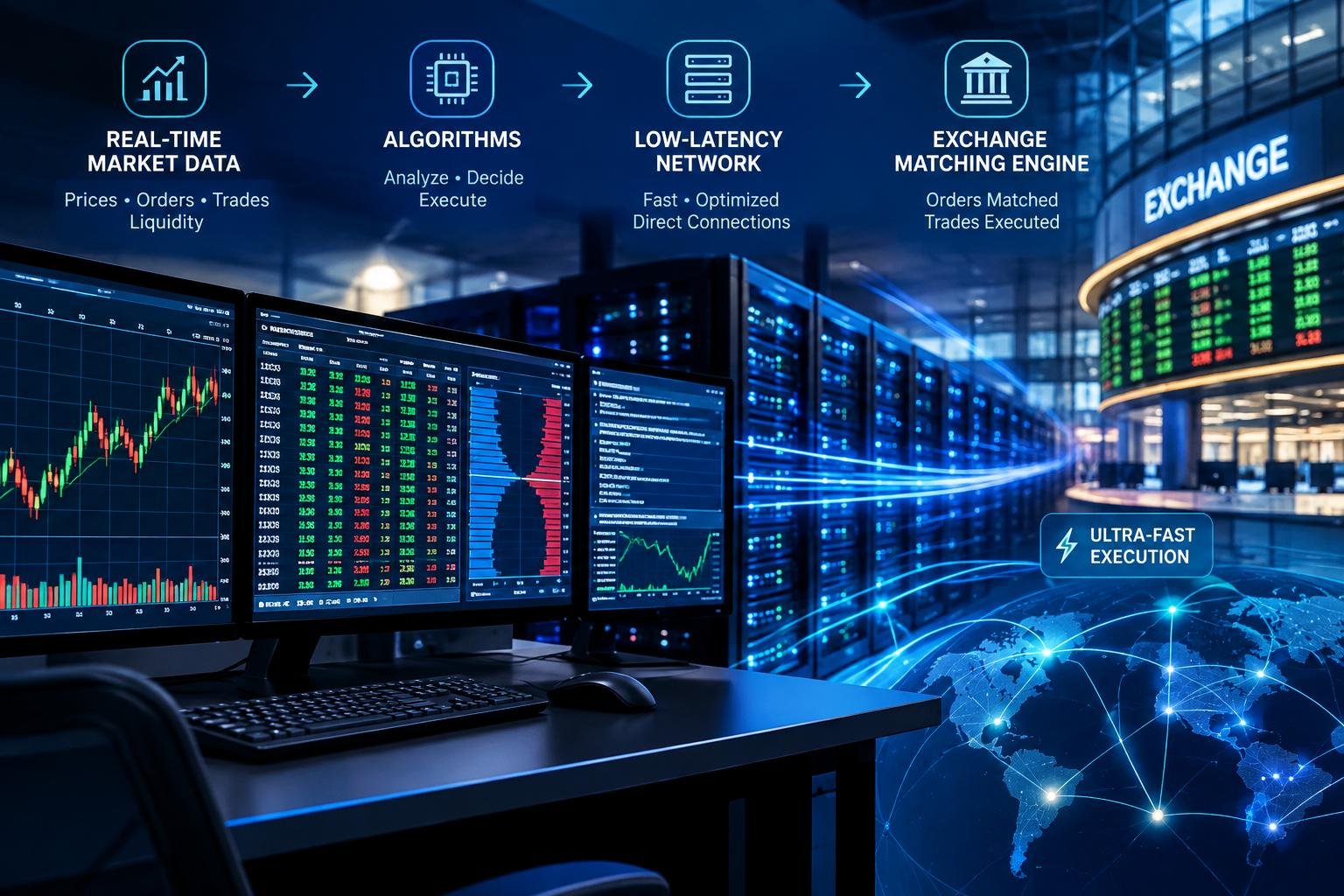
The technology stack that is the foundation of HFT is based on technology that is optimized to be as fast as possible in moving and processing information. An HFT firm can include dedicated computers or systems, high performance processors, fast memory, optimized networking hardware and software designed to minimize unnecessary processing steps. While flexible applications and ease of development are more important in traditional systems, HFT systems might require predictable execution times and extremely efficient read of market data. Other companies employ the technology of so-called field-programmable gate arrays (FPGAs) to handle certain calculations in hardware as opposed to software on a general-purpose processor. The aim is to establish a system that will receive the data, interpret the data, generate a trading decision and send an order with minimum delay and variation as possible. Each element must be able to function effectively with the other elements.
Data Transmission and Low Latency Network
Network performance is another critical part since a trading system can’t respond quickly enough if the market information that it needs to react to takes too long to reach it or an order takes too long to reach the exchange. HFT companies hence look out for latency, which is the time taken for data or instructions to move through the system. They might employ high-speed connections, optimized network paths, specialized network equipment, and direct connections. When there are multiple participants responding to the same information, even minor variations in the time taken for the information to be sent out can be significant. The physical location of a company’s servers from the matching engine of an exchange might also be a factor to consider as electronic signals still take time to travel. HFT infrastructure is based on the principle that performance is dependent on the entire communication path rather than on the processing power of any particular computer. Minimizing delays along that route may thus be a significant technological goal to achieve.
Co-Location and Proximity to Exchanges
This is one of the most obvious examples of how physical infrastructure enhances speed of electronic trading. A trading firm under a “co-location” deal hosts servers inside or close to an exchange or trading venue’s data centre. This helps to minimize the distance between the firm’s equipment and the venue’s systems. It could make a huge difference when two or more automated strategies are trying to respond to the same market event, owing to those differences. But, co-location does not automatically provide a trader with endless access and opportunities for profitable trades. Rather, it can decrease one latency in a bigger technology system. Exchanges typically set guidelines on who can use the infrastructure, and how many and what types of co-location services exist in the market and at particular venues. Co-location then, is thus, more of a component of larger low latency architecture than a trading strategy.
Algorithms and Real-Time Decision Making
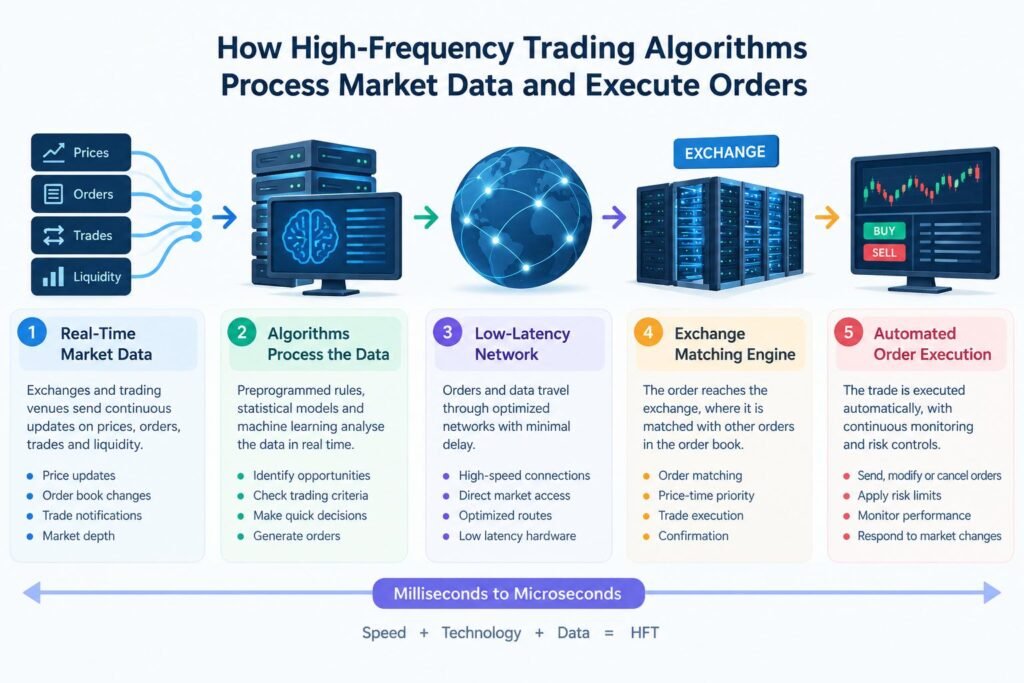
The decision-making engines that transform information flowing in to trading actions are called algorithms. An HFT algorithm can be constantly inspecting the price, liquidity, movement in the order book, trading volume, correlation between correlated asset prices and more. The software automatically applies some preprogrammed rules and statistical models, instead of waiting for a person to examine this information. Another plan will be able to offer buy and sell quotations and alter them based on the market conditions. Markets continually change, making it imperative that the algorithm can make decisions rapidly and process the information at hand without being overwhelmed. This is an ongoing assessment that is the core aspect of HFT. The system needs to verify if the incoming information meets the system’s trading criteria, know what to do about it, and tell somebody quickly.
Real-Time Market-Data Analysis
The raw material that is analyzed by HFT is a market data. Exchanges and other trading venues generate continuous information on prices, trades, orders and changes in liquidity available. These updates can be fed into an HFT system as they come in, instead of collecting the data for later analysis. The system can keep an electronic record of the order book, and can analyze the volume of buying and selling interest as it evolves from one moment to the next. The need to process data in real-time means that the system must be efficient in managing the data; otherwise, it could be processing outdated information to make decisions. That is why HFT firms spend a lot of money on market-data feeds, software architecture, data-processing and monitoring tools that enable them to have accurate and timely views of the market. Automated systems can process vast amounts of information, and react to market fluctuations in a matter of time that would be challenging for a manual trader.
Automated Order Execution
After an algorithm has determined that a trade should be executed, the next step is to actually execute the trade. The HFT environment will allow the system to automatically create and send orders without having to confirm each one. Orders can be modified, cancelled or replaced subject to programmed rules and changing market conditions. With this automation comes a need for tight controls, and the ability to respond quickly and consistently with a strategy. Limits are typically a part of a trading system, and they cover, among other things, order size, position exposure, price, message rate, and more. Pre-trade checks can be used to reduce the risk of orders being sent which are in contravention of defined constraints by an algorithm. Monitoring systems can also detect and activate protective mechanisms in the event of unusual performance. Speed must go hand-in-hand with reliability and risk management as a software error could cascade down an automated system at a much quicker rate than a human operator can respond.
Optimization of Computing Systems and Software
High-quality hardware isn’t enough to make a high-quality HFT. Software engineers need to eliminate unwarranted delays and build systems that are able to handle many events consistently. Optimized code, efficient data structures, memory management, parallel processing, and special hardware acceleration are examples of techniques that may be used. There are some systems that are engineered to reduce the possible variations in the pause between words, because regularity is as important as the average pause. Developers also evaluate performance of apps during various market scenarios such as periods of high trading volumes and data intensity. Optimization of hardware/software interfaces is common for the transfer of information through the system without a lot of overloading. The end result can be vastly different from a standard retail trading application where ease and extent of use and wide functionality could be more important than saving a millisecond off an automated decision. Reliability is also key as a quick system that can be unpredictable can generate substantial operational and financial risks.
Functions of High-Frequency Trading in Modern Markets
Many of the modern electronic markets have come to rely on high-frequency trading. The HFT firms may also act as market makers, offering persistent buy and sell quotations, under certain market conditions leading to available liquidity for HFT firms. Other HFT approaches are based on the hope that there will be temporary pricing discrepancies between related instruments or other trading venues. HFT is part of a larger ecosystem that encompasses exchanges, institutional investors, retail traders, market makers, brokers and other automated traders. Its value lies in the size and velocity of some companies’ engagement with that ecosystem. However, the impact of HFT may differ based on the market structure, strategy, trading environment and protections. Consequently, when considering HFT, debates may focus on liquidity, spreads, volatility, access to the market and technology resilience, but do not necessarily compare all forms of HFT activity.
High-Frequency Trading vs Normal Algorithmic Trading
Algorithmic trading and high-frequency trading are often used interchangeably, but they are different concepts. Algorithmic trading is an umbrella term for trading using computer programs to make trading decisions or orders based on trading algorithms. To minimize the impact of a large order, a large institutional investor may split it into smaller orders spread out over a long time using an algorithm. That is not high-frequency trading – it can be done in an automated way. HFT more specifically is linked to very low latency systems, quick decision cycles, high volumes of orders submitted and cancelled and strategies that look to take advantage of fleeting market conditions. The difference is primarily one of speed, infrastructure, frequency of trading and strategy. A computerized trading system may be algorithmic, but not have the attributes typically associated with HFT.
Benefits and Risks Associated with it.
The technology implemented in the HFT can provide benefits, and also present challenges that are still under scrutiny of regulators and market participants. Not only can the activity of automated market makers provide liquidity, but in certain situations, competition between the electronic participants can help to refine the quoted price. Concurrently, markets can become more complex when there is very quick trading; and the impact of technical failures and poorly-controlled algorithms may be magnified. Many orders can also generate significant data and messaging volume even if many of these orders are cancelled prior to execution. Circuit breakers, risk management, market access and system testing have been part of the debate going on since the events of automated trading. The impact of HFTs is dependent on trading strategy, market structure, technology, protection measures and market circumstances. HFT continues to be the focus of exchanges, regulators, technology experts, institutional investors and others because of these factors.
Conclusion
High frequency trading can be thought of as a fusion of cutting-edge technology, unique algorithms, quick communications, real-time data analysis, and automatic trading. The defining characteristic of it is not just computers, as there are many forms of trading that involve computers. Instead, HFT focuses on minimizing latency and reacting to fast-changing market data on very tight time-frames. Co-location can shorten the path of the physical transmission; optimized networks can speed up the transmission process; powerful computing systems can process the information quickly; algorithm can translate the information into automated trading decisions. These components are integrated and work together as a whole. The understanding of HFT offers valuable insights into the technology that underpins modern price discovery, provision of liquidity and order execution in electronic markets, and with regard to the need for speed to go hand in hand with robust testing, monitoring and risk controls.
Get more well researched information about High-frequency trading here.