Introduction
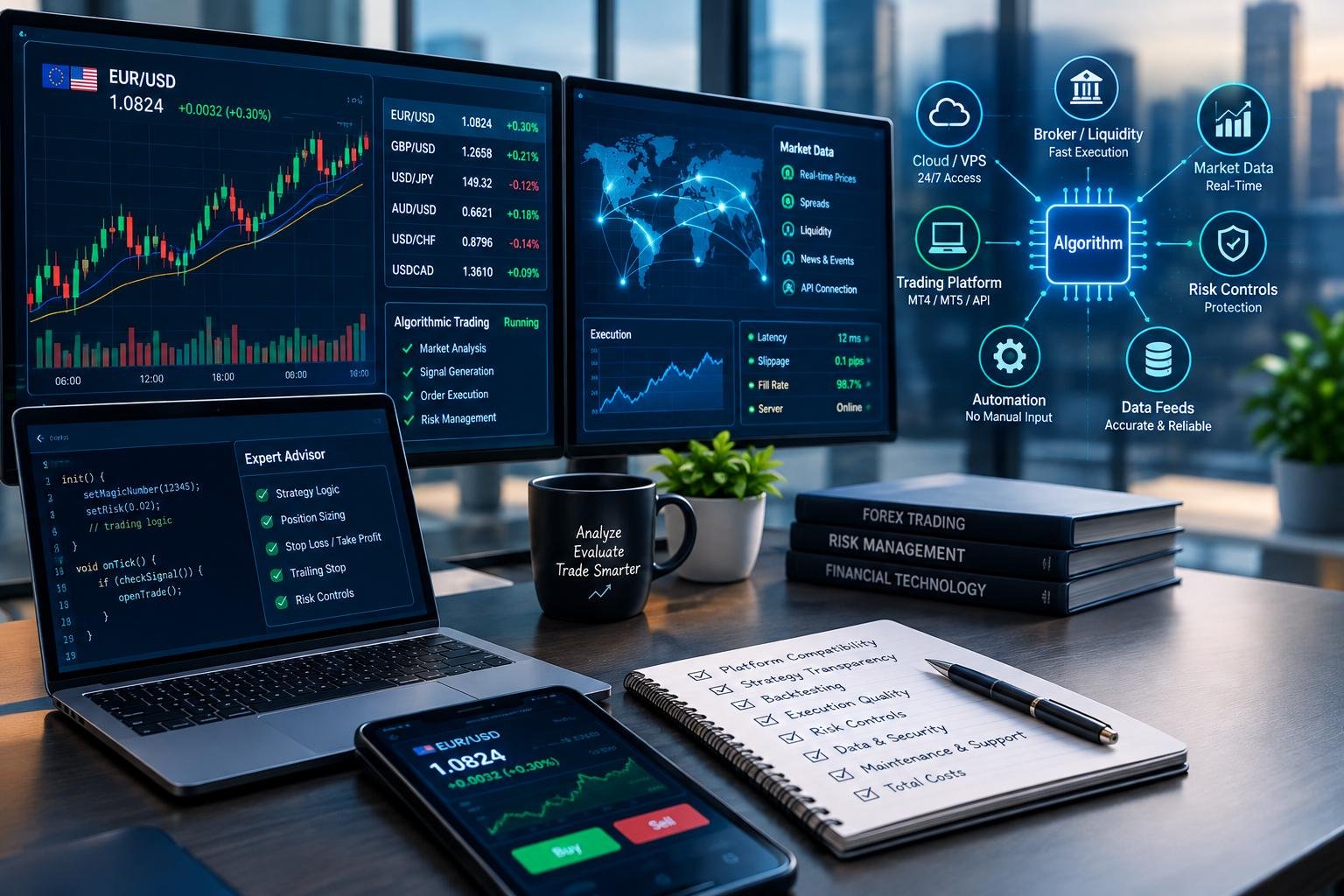
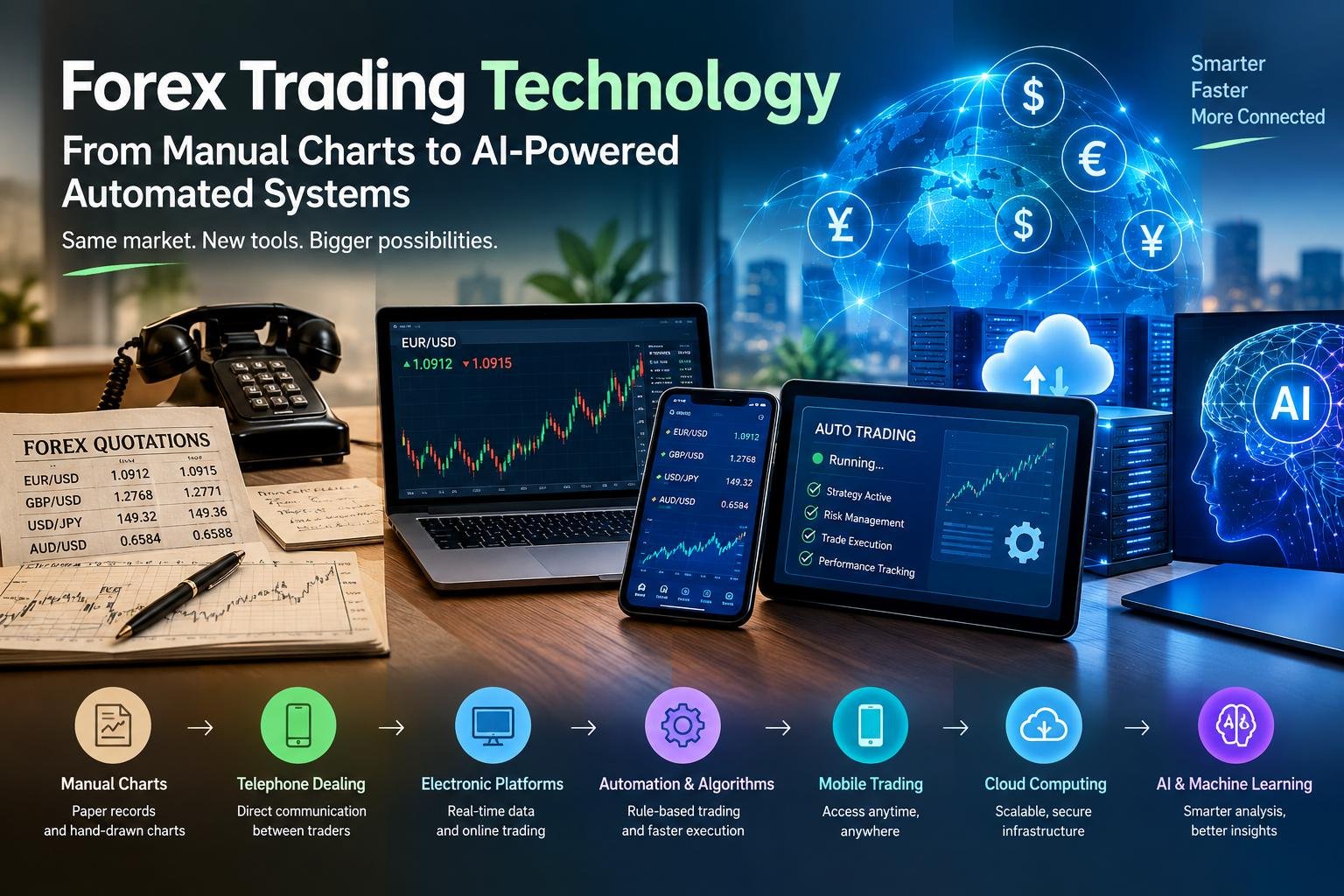
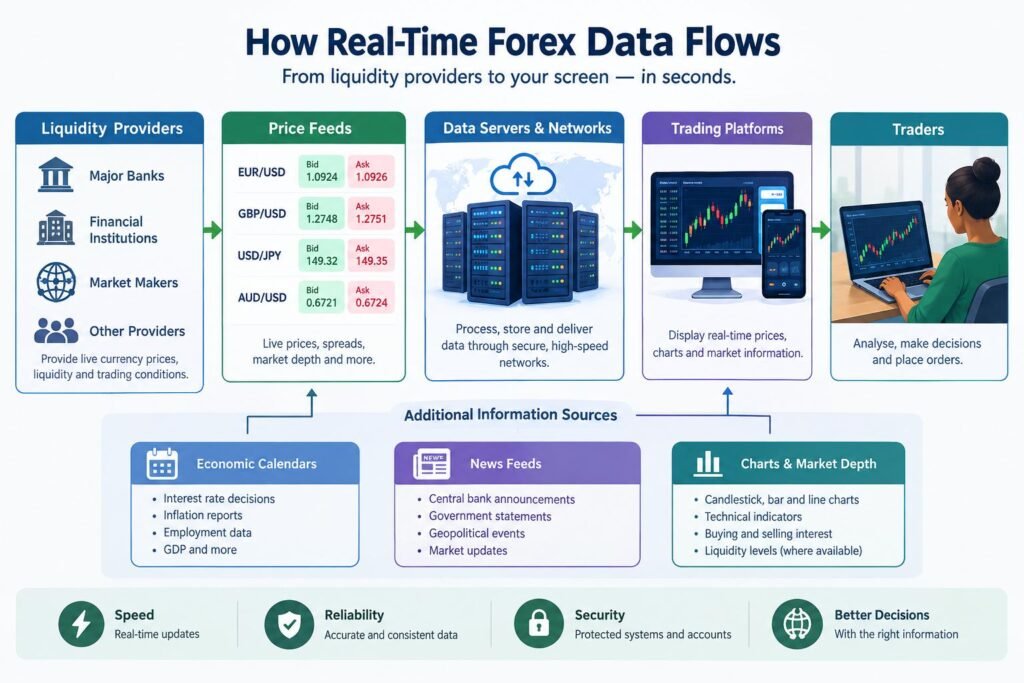
The foreign exchange market is global, continuously open and trades currencies across financial centres around the world. Electronic markets for Forex can experience thousands of price changes as banks, financial institutions, liquidity providers, businesses, and traders react to new information, as opposed to traditional markets with scheduled updates. Real-time foreign exchange information are thus important in the modern currency trading, as well as currency analysis. XE traders use real-time data like live prices, market updates, economic announcements, news, charts and more to make sense of market activity. What lies behind the numbers on a trading screen is a sophisticated technology architecture that includes liquidity providers, feeds, servers, pricing systems, electronic communication networks and more. Having this information pass through the broader forex market to a trader’s screen makes it much easier to appreciate the significance of data quality, speed, and reliability.
How Forex Price Feeds Work
A price feed is a series of data that includes information about the foreign exchange market. Forex price feed: electronic delivery of foreign exchange market information to a trading platform, application, website or other financial system. Typically, the information consists of the current bid and ask price of currency pairs, and, on a higher level, trading conditions, available liquidity, price changes, and other trading data. Bank and institutional liquidity providers create or provide prices, which depend on their own market activity, relationships, risk management systems and market participants. A broker can link to one or more liquidity providers and can merge the prices together into a feed, which a broker can show to its customers. The retail trader is then only seeing the price after several technical operations instead of a single worldwide computer setting a universal price. The foreign exchange market is a decentralized one which can occasionally give different prices to different providers at the same time.
The Function of the Liquidity Providers
Liquidity providers are a key component of the electronic forex infrastructure which enables electronic foreign exchange trading. They may involve the big banks, financial institutions, market makers and others that have the ability to offer currency rates and to settle deals. A liquidity provider is someone who is constantly analyzing the market and can report a currency pair’s prices on which they are ready to trade. Brokers can link to these to get prices that they can execute on their trading systems. Some brokers employ several providers to enable them to compare the available prices and liquidity prior to offering a quote to their clients. This can enhance access to competitive pricing, but the actual experience is reliant upon the broker’s technology, available providers and arrangements, execution providers and risk controls. Under certain market conditions the liquidity may rapidly fluctuate, leading to a widening of spreads or prices fluctuating rapidly as market participants respond to market movements and adjust their risk exposure.
The Bid/Ask Price Explained
The bid and ask prices are two of the most crucial information sent by a forex price feed. The bid is the price at which the market participant is able to sell the base currency of a currency pair, and the ask is the price at which it can buy the base currency. The difference between these two prices is known as the spread. For instance, one platform could list a currency pair’s price at one level for selling and a higher price for purchasing. The figures shown can fluctuate very quickly depending on the liquidity provider’s quotes. Note that spreads are not always fixed; they are influenced by liquidity, market activity, volatility, trading hours and significant economic events. Knowing the difference between bid and ask prices will help a trader determine what is displayed on his or her screen and why orders may be filled at a slightly different price from the one displayed in the quote.
Market Depth and Liquidity Information
Market depth offers a more comprehensive picture of depth of interest in the market at various price levels. A forex quote might not include any depth information, or trading venues and liquidity sources may provide additional levels of liquidity if included. This data can be useful to the user to know if they are at certain price levels, there may be a lot of interest on buying or selling. Forex market depth is not, however, a full breadth of the foreign exchange market as a whole because there is no single central order book for all foreign exchange transactions. A platform can only provide data from its own liquidity, or its own trading. More complex data may be available for institutional trading systems, and a simplified view may be presented for retail systems. Market depth can be beneficial, but only if the type of market depth comes from a trusted source, and the platform is gathering it properly.
Data Servers and Electronic Communication
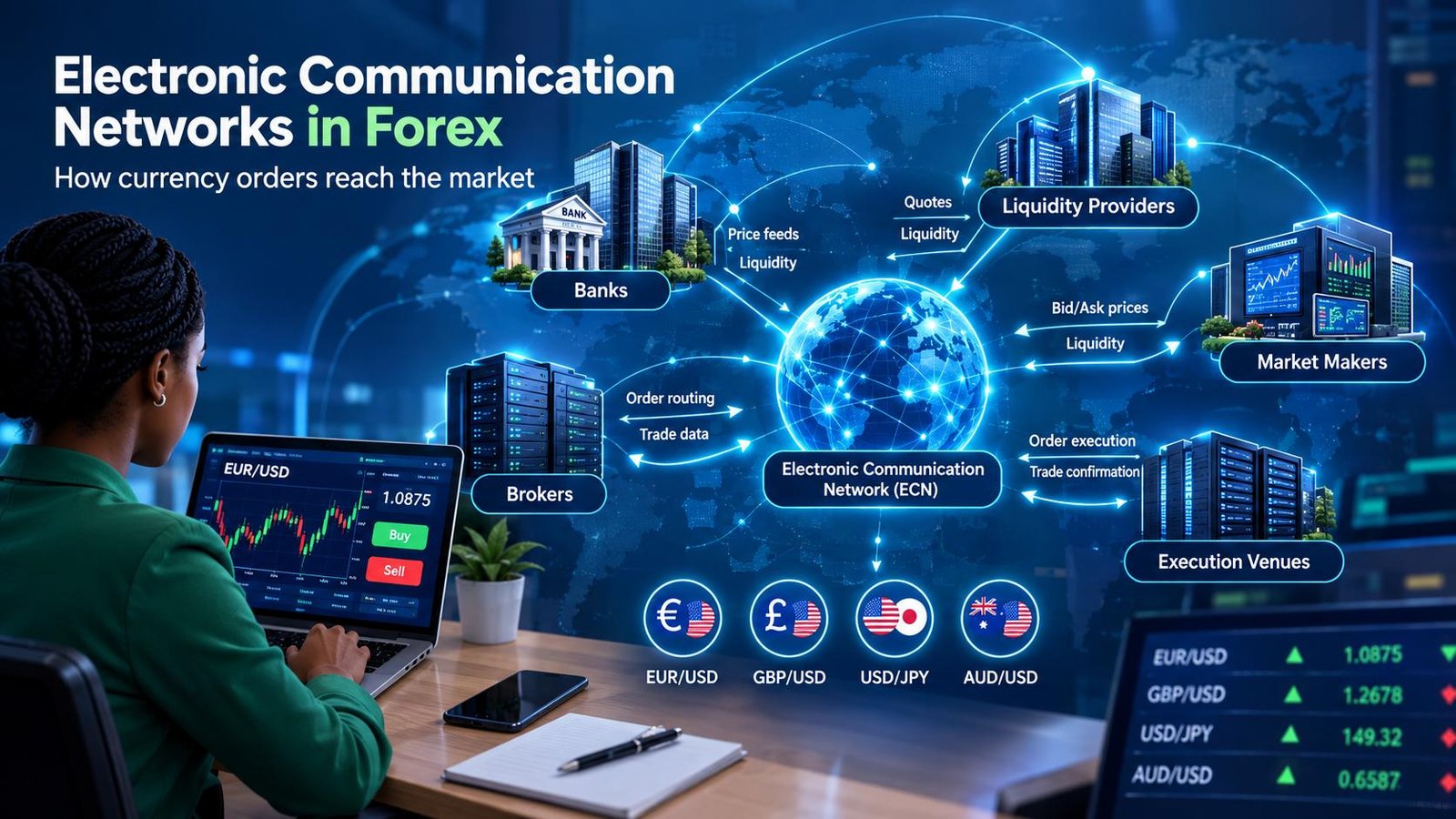
After collecting market information, it must be transmitted over computer networks to a trader’s screen. Brokers and tech firms are connected to data servers, which gather, process, store and deliver information to users and apps. These servers are linked to the trading platforms via internet connection or some other network infrastructure, either from which prices and account information are transmitted or from which they are received. A trader’s device asks for or gets fresh data, and orders are sent back to the trading technology of the broker and then to the relevant trading execution system. The modern infrastructure is intended to accept huge numbers of updates and orders at once, especially during peak hours. The physical distance between servers may also have an impact as this can affect the time it takes to communicate between them and the routing of the network. Professional electronic trading can set servers near the key financial data centers to avoid unnecessary network delay.
Economic Calendars and Scheduled Market Information
Live prices constitute just a part of the information that is used in forex analysis. Economic calendars feature information regarding events that could potentially affect the currency market, such as interest-rate decisions, inflation releases, employment reports, economic growth figures, purchasing managers’ surveys, and central-bank statements. These calendars will usually include the approximate release time, country or region impacted, previous results, and (if available) market sentiment. They’re watched by traders due to the fact that there may be sudden shifts in the price of currencies when there’s a massive difference in the figures revealed on the economy by the government. Economic calendars are based on technology that gathers data from official institutions, the news, financial information providers and other sources before disseminating the information via websites, apps, trading platforms and data services. While an economic calendar won’t tell traders how a currency will perform, it does provide a gauge of the times when market conditions may shift rapidly.
News Feeds and Fundamental Information
There’s another flow of information via news feeds that can get to forex traders in seconds or minutes after an important development. Financial news services track central-bank decisions, government statements, geopolitical activity, economic news, corporate activity and more that can impact currency markets. In professional trading conditions, the news can also be displayed directly on the trading terminal, enabling traders to follow the news in addition to prices and charts. There are also some news systems that categorize and filter news by currency, country, subject, or by the relevance to their own markets. When there is a big announcement that impacts interest rates or the economy, speed may be a key consideration. But the quickness of the news to come does not always imply the completeness and correct interpretation of the news. Even though traders are familiar with the difference between fact and report, they need to be careful about what they read in a ‘breaking’ news headline, and take into account the context of the market in which the news occurs.
Graphical Design and Real-time Visualisation of Data
The charting systems take the raw price data and convert it into visual information that can be easily analyzed by traders. A trading platform might continuously get the price of a currency, and arrange these updates into various periods of time, such as seconds, minutes, hours, days or greater. Charts can be of the line, bar or candlestick type, and technical indicators can analyze past and present information to determine patterns or compute indicators employed in technical analysis. The chart is not the source of the market information, but rather a visual representation, which is generated by software based on information received on the platform. When there are slow, inaccurate or incomplete updates in feeds, or when the connection between the feed and chart fails, the chart can become unreliable. That’s why professional and retail platforms pay a lot of attention to a reliable data connection and systems that can handle multiple price changes.
Why Data Latency Matters
Data latency is the delay between the source of data and when the data is presented or utilized in a system. In fast and volatile market conditions such as the forex market, a time lag can cause the price shown on a chart to differ from what’s actually offered by the liquidity provider. There are multiple steps that could cause an increase in latency such as data generation, data transmission, server processing, broker infrastructure, internet routing, and even the traders own device. A minor delay might not be much of a consequence when it comes to normal market surveillance. But for automated trading systems or strategies that rely on quick price movements, latency can be more important. A trading algorithm can get a price, make a decision and place an order based on changing information that has already modified. This is not to say that data speed ensures successful trades, but it helps to understand why electronic trading systems are keen to monitor communication speed and the performance of the trading infrastructure.
Reliability, Security and Data Quality
While speed is important, so is reliable forex data that is accurate, consistent and secure. A trading system with speedy but inaccurate or incomplete prices can turn out to be as troublesome as a delayed system. Monitors, redundant infrastructure, secure communication, backup servers and other controls are thus used by brokers and financial technology service providers to ensure service availability. Additionally, traders need to know that there are times when the markets are extremely volatile, and technical issues can arise. A platform may be affected by being interrupted by the Internet, overloaded by servers, have some software problems, have price feeds interrupted, or the liquidity may be temporarily unavailable. Security will also be a factor as there will be data to protect and there may be systems that can place orders that are linked to a trading account. Responsible Electronic Trading is important to the use of strong passwords, account protection, software updates, secure networks and reputable service providers.
Conclusion
Real-time Forex data is the lifeline of the e-trade market, bringing traders into the ever-evolving arena of electronic buying and selling. The price feeds are used to provide bidding and asking prices to trading systems, the liquidity providers provide the actual prices that can be executed, the server’s process and provide quotes to the systems and the charting software provides the visual representation of the data. Additional information regarding events that may impact market expectations can be provided in an economic calendar, news feeds, and in market-depth tools where available. All of these systems communicate at different speeds, which is dependent on the latency, the underlying infrastructure, server capacity and the quality of the data source. The key thing to learn for new traders is that the prices shown on a trading screen are a complex process of electronic communication and not one central location. While reliable information is not a guarantee that forex trading will be safe, it is crucial that the information is accurate and real-time to support analysis, electronic order entry and to comprehend the forex market.
Get more well researched information about real-time Forex data here.