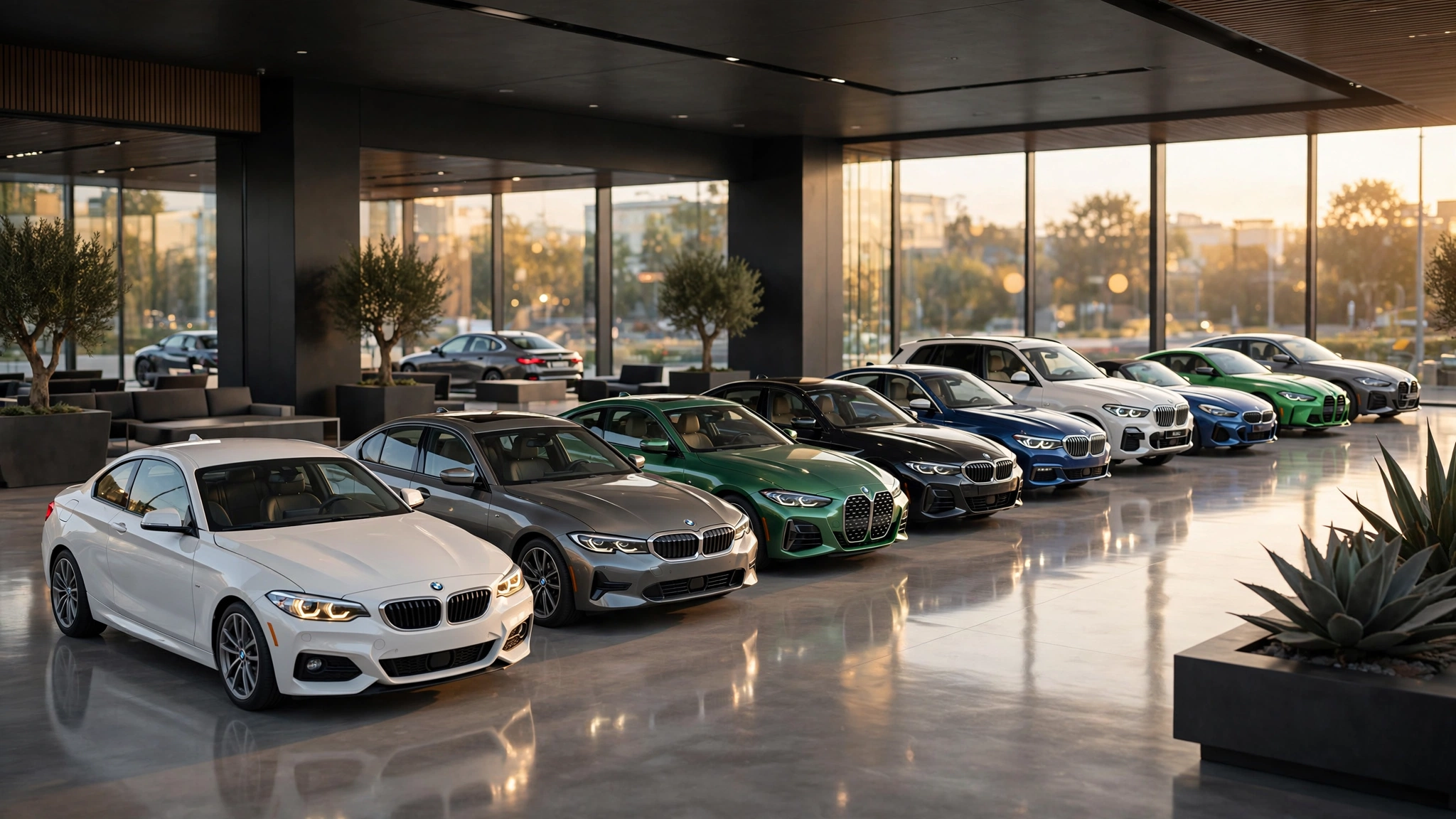
BMW model lineup explained: BMW is one of the most internationally visible luxury car brands in the world, although its naming conventions can be confusing to some car buyers. Some models are designated numerically (e.g., 2, 3, 5, and 7) and others by letters (e.g., X, Z, M, and i). At a glance, these badges can appear haphazard, but they actually offer insight on a car’s size, style, use and performance. Knowing about the layout of the BMW product line can help you find the perfect car for you.
The numbers provide insight into BMW’s numbers, enabling buyers to make informed comparisons. You will know what each of these badges means, so you can easily identify which BMW will suit your lifestyle, driving style and budget without getting too confused with the many models the brand has to offer.
BMW’s Numbering System
BMW’s dealerships, most of the time, will use numbers to identify the position of each vehicle within the company’s vehicle lineup. Lower numbered models will typically be less expensive and will have smaller cabins, whereas higher numbered models will be larger, have more luxury and have more technology. For instance, the 3 Series is a compact luxury sedan, the 5 Series is an executive sedan and the 7 Series is BMW’s top luxury sedan.
The engine size of a BMW is no longer indicated by the badge number, as it is on older models. Some, however, will recognize the model family, with the rest of the numbers and letters signifying trim level or performance variations. This greatly simplifies the naming of gasoline, diesel, hybrid and electric cars.
BMW 2 Series: Compact Luxury and Fun
The BMW 2 Series represents the first step in BMW’s range of luxury cars. It comes in Coupe and Gran Coupe body styles and is equipped with top-notch features, sporty handling ability and is competitively priced with the larger BMWs.
With its relatively small size, the 2 Series packs a big performance and technology punch. Drivers who like to push the limits without compromising on comfort will find an excellent choice in the 2 Series with higher performance models such as the M240i, offering much more power and handling.
BMW 3 Series: BMW’s Most Popular Sedan
The BMW 3 Series has always been known as the BMW’s “Heart and Soul”. It is highly rated for its comfort, technology, practicality and performance, making it a top choice for professionals, families and driving enthusiasts.
The 3 Series comes in a variety of engine choices and also with BMW’s xDrive all-wheel-drive system, making it ideal for a variety of drivers. The M340i is also a noticeably better performer when it comes to acceleration and handling, whereas the 330i puts more emphasis on efficiency and comfort.
BMW 4 Series: Stylish Design
The BMW 4 Series has much of its engineering in common with the BMW 3 Series, but with an emphasis on sporty styling. It comes in a Coupe, Convertible and Gran Coupe, and has a lower roofline and is more aggressive in appearance.
The 4 Series appeals to buyers who value design, and also consider its driving dynamics more engaging. The M440i and the iconic M4 are also available with performance upgrades, better suspension and track-inspired engineering.
The BMW 5 Series is the Executive Luxury car.
The BMW 5 Series is a crossover between sporty sedans and luxury touring cars. It provides a bigger cabin, quality materials, state-of-the-art safety mechanisms, plus ride comfort, best suited for business executives and families.
It features efficient gasoline-powered engines, plug-in hybrid and high performance versions. This flexibility enables consumers to have luxury in their purchase and choose the performance and efficiency that is most appropriate for their needs.
BMW 7 Series: The ultimate expression of luxury.
BMW’s luxury sedan flagship is the 7 Series. It features the brand’s most up-to-date innovations in the fields of technology, comfort and driver assistance, along with an incredibly roomy cabin interior.
The 7 Series is a refined and comfortable car, but also quite capable when it comes to performance. It features high-end interior quality, top-of-the-range infotainment and executive seating, which makes it a favourite among those looking for the highest quality luxury sedan.
BMW X Series: The luxury SUVs.

BMW’s crossovers and SUVs are designated as the X series. They offer higher seating positions, more space for cargo and greater flexibility, as well as BMW’s signature driving dynamics, and are available in various models from the compact X1 to the full size X7.
The models with the X designation approximate one of BMW’s sedan families. The X3 is the same size as the 3 Series, for instance, whereas the X5 will have the same space and luxury as the 5 Series. For those who prioritize family-friendly practicality, the X family is a great choice between utility and luxury.
Popular BMW X Models.
The X1 and X2 are perfect vehicles for urban driving, and the X3 and X5 continue to be among the top-selling SUVs in BMW’s lineup, offering ample space and a harmonious driving experience. The X7 is the top of the line, with 3 rows of seating and luxury features.
BMW also offers several X models in sports-car trim, BMW M Performance and all the way to full M performance, all in a practical SUV body.
BMW Z Series: The Roadster Lineup.
The Z Series is BMW’s sports roadsters and the latest addition is the Z4. Primarily aimed at providing enjoyment, it offers rear-wheel drive, balanced handling and open-top motoring.
The Z4 is not as functional as BMW’s sedans and SUVs, but offers an exhilarating driving experience that would surely be a great weekend sports car for enthusiasts.
BMW M vs. M Sport

There is a misconception that M Sport is the same as M models. In fact, M Sport is primarily an appearance and handling package which features sportier styling, stiffer wheels, better suspension and interior upgrades.
BMW’s high-performance division, the BMW M division, builds full BMW M models. The M2, M3, M4 and M5 are much more powerful engines along with improved brakes, added strength to the chassis and suspension systems for maximum driving excitement.
BMW’s Electric Future: BMW i Series.
The i Series is one of BMW’s new lines of EVs. The i4, i5, i7 and iX models range from zero-emission driving to top-notch interior design, cutting-edge technology and exceptional driving dynamics.
Compared to many gasoline-powered vehicles, electric BMWs provide instantaneous acceleration, silence and reduced maintenance costs. With the growing popularity of electric mobility, the i Series has been one of the brand’s fastest-growing families of models.
Choosing the Right BMW
The best BMW is going to be one which you live, drive and can afford. Many people who want a luxury sedan that is still affordable will opt for the 2 Series or 3 Series, while those who want more comfort and space will go for the 5 Series or 7 Series. The X Series tends to be very functional to a family, while road-going car fans generally gravitate to M models or the Z4 roadster.
Long-term ownership costs also should be taken into account. The higher the performance level and the larger the vehicle, the more expensive it is to maintain and insure, so choose a BMW that will suit your lifestyle and budget for the best ownership experience.
Conclusion
Once you understand what the individual badges represent, BMW’s naming system is much easier to comprehend. The numerical series identify the vehicle’s size and position in the line-up; letters such as X, Z, M, M Sport and i indicate a body style, performance level or powertrain.
Knowing the difference between these BMW models and which one suits your needs, driving style and budget will help you confidently choose the BMW that is right for you – whether you’re in the market for a sporty sedan, practical luxury SUV, high-performance sports car or a fully electric vehicle.