Social media has a hunger that most brands underestimate when they first start building a presence. The platforms that drive the most commercial value for businesses today — Instagram, Pinterest, LinkedIn, X, TikTok — all reward consistent, high-quality visual output. Not one strong image per month. Not a handful of polished posts per quarter. A steady, frequent stream of visuals that maintains visibility in feeds, signals active engagement to platform algorithms, and gives audiences repeated reasons to pay attention.
For brands that take their social media seriously, this demand for visual content is one of the most resource-intensive parts of their marketing operation. A content calendar that calls for daily posting across three platforms, with original visual assets for each post, represents an enormous production load. The brands that manage it well either have dedicated in-house creative teams, agency relationships with high retainer costs, or have found ways to systematize and accelerate their visual production.
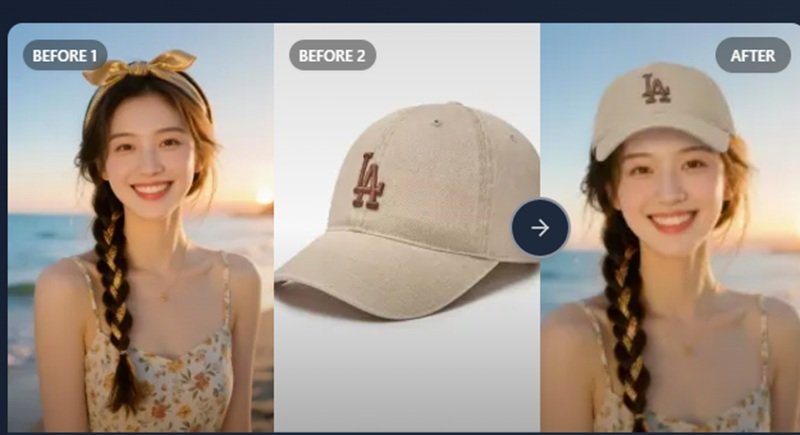
AI image generation has become a central part of how the third group operates. Among the tools they use, Nano Banana has established itself as a reliable engine for producing social media visuals at the volume and quality level that modern content calendars demand.
The Volume Problem in Social Media Content
The mathematics of social media visual content are demanding even for brands with reasonable resources. Consider a brand that posts once per day on Instagram, three times per week on Pinterest, and twice per week on LinkedIn. That is roughly fifty original visual assets per month, before accounting for Stories, Reels thumbnails, paid social creative, or platform-specific format variations of the same content.
If each of those assets requires a unique photograph, the production cost is prohibitive for all but the largest brands. Stock photography offers a way to fill some of the volume, but stock images are inherently generic — they were not created for your brand, they do not reflect your visual identity, and audiences increasingly recognize and mentally discount stock imagery when they encounter it in brand contexts.
The solution that has emerged for brands serious about their social media visual identity is AI generation, used systematically within a defined brand visual framework. The volume problem becomes manageable when generation is fast, the output is consistently on-brand, and the process of producing a new asset does not require scheduling a shoot or waiting on a designer’s availability.
What Makes a Social Media Visual Actually Work
Before thinking about how to produce social media visuals efficiently, it is worth being clear about what makes them effective in the first place. The platforms and the audiences on them have specific visual conventions, and understanding those conventions is prerequisite to producing content that performs.
On Instagram, the dominant factor is stopping power — the ability of an image to interrupt a scrolling thumb and hold attention for long enough that the viewer registers the content and takes some action, whether that is lingering, liking, saving, or clicking through. Stopping power comes from contrast, color, compositional clarity, and a visual hook that is immediately legible at the small size images appear in a feed.
Pinterest operates on a different logic. Images on Pinterest need to perform over a longer time horizon — a well-optimized Pinterest image can drive traffic for months or years after its initial posting. The visual conventions that perform well are vertical format, rich color, and clear subject matter that is immediately identifiable by search. The emotional register tends toward aspiration: lifestyle, transformation, beauty, and possibility perform consistently.
LinkedIn is a professional context, and the visual conventions reflect that. Clean, professional imagery with clear relevance to business topics performs better than the warmer, more casual aesthetics that work on Instagram. Data visualizations, professional environments, and imagery that signals expertise and credibility are the vocabulary of effective LinkedIn visual content.
Understanding these platform-specific conventions is the foundation of effective AI generation for social media. The prompt structure for an Instagram post and a Pinterest pin and a LinkedIn visual should be different, calibrated to the conventions and audience expectations of each platform.
Building a Brand-Consistent Generation System
The risk with AI generation for social media content is the same risk that exists with stock photography: producing assets that are individually competent but collectively incoherent, so that the brand’s visual presence across its platforms reads as random rather than intentional.
Avoiding this requires building a generation system rather than producing individual images in isolation. The system consists of a defined brand visual framework — specific color palette with hex values, lighting style, compositional conventions, level of styling, aesthetic references — encoded into a standard prompt structure that is applied consistently across all generation sessions.
Nano Banana produces results that are stable enough across sessions to make this kind of systematic approach viable. When the same core prompt parameters are applied consistently, the outputs share a visual register that reads as coherent even when the specific subjects vary widely. A brand that has established its visual framework can generate a product highlight image, a lifestyle context image, a seasonal campaign visual, and an educational graphic in the same session and have all four feel like they belong to the same brand.
This is the functional equivalent of what professional brand photography achieves — a consistent visual identity across a large volume of assets — but produced at a fraction of the cost and time.
Content Category Planning
Social media content strategy typically works with several categories of content rather than treating every post as an independent creative problem. Common content categories for product-based brands include product highlights, lifestyle context, behind-the-scenes, educational or informational content, seasonal campaigns, and user-generated content reposts. For service businesses, the categories shift somewhat but the principle is the same.
AI generation maps well onto this category-based approach. Each content category has its own visual conventions — product highlights typically call for clean, well-lit product-forward compositions; lifestyle content needs human context and environmental warmth; educational content benefits from clarity and visual simplicity. Defining a prompt template for each content category, calibrated to both the brand’s visual framework and the category’s visual conventions, turns content production into a structured process rather than a creative problem that has to be solved fresh each time.
A content calendar built around five or six content categories, each with a defined prompt template, means that producing the visual assets for a full month of social media content is a session of systematic generation rather than a series of individual creative briefs. The creative decisions have already been made at the template level; execution is fast.
Platform Format Considerations
One of the underappreciated production demands of social media content is format variation. The same piece of content often needs to exist in multiple formats to be used across all relevant placements: a square version for Instagram feed, a vertical version for Instagram Stories and Reels thumbnails, a horizontal version for X and LinkedIn, a tall vertical version for Pinterest.
Producing all of these from a single photograph requires cropping and compositing work that is time-consuming and often compromises the composition in one or more of the formats. AI generation sidesteps this by allowing each format to be generated natively — the same visual concept, prompted with the appropriate aspect ratio and compositional approach for each platform. The result is visual content that is properly composed for every placement rather than adapted versions of a single original.
Speed and the Content Calendar
The practical benefit of AI generation for social media teams is that it decouples visual content production from the bottlenecks that traditionally constrain it. A social media manager who previously had to plan content weeks in advance to allow time for photography scheduling, shooting, editing, and approval can instead generate assets on a much shorter timeline.
This matters more than it might initially seem. Social media is a real-time medium, and the ability to respond to current moments — trending conversations, unexpected cultural events, seasonal inflection points — is a genuine competitive advantage. A brand whose visual content pipeline requires weeks of lead time cannot participate in cultural moments that develop and peak within days. A brand whose visual production can happen in hours can.
The combination of speed, volume capacity, and brand consistency that AI generation offers is what makes it a structural rather than incidental tool for serious social media operations. It changes the economics of what is possible for brand visual content in a way that affects both the quality and the strategic flexibility of the brand’s social media presence.
Maintaining Creative Quality at Scale
One legitimate concern about using AI generation at scale for social media content is that the efficiency gains come at the cost of creative quality — that systematized generation produces competent but uninspired content that lacks the spark of genuinely good creative work.
This concern has merit when AI generation is used passively, without strong creative direction. When the prompt templates are vague, when the brand visual framework has not been clearly defined, when no one is evaluating output with a critical creative eye before it goes to the content calendar, the results will be generic.
When AI generation is used with strong creative direction — specific, well-developed prompt structures, a clearly defined brand visual language, and human review that selects the best output and rejects what does not meet the standard — the quality of the output reflects the quality of the direction. The tool produces options; creative judgment determines which ones are worth publishing.
The brands doing this well treat AI generation as a production tool that operates within a creative framework, not as a replacement for creative thinking. That distinction is what separates a social media visual presence that uses AI generation effectively from one that simply looks like it was made by an algorithm.