
Human-Computer Interaction (HCI), in the fast changing technology world, is paramount towards defining the experience of the users and overall customer satisfaction. With more and more business being conducted via digital interfaces as a means of interaction with customers, it is important to learn the principles of HCI in order to create user-friendly systems that will stimulate retention, engagement and satisfaction. In this article, the connection between the principles of HCI with the greater context of User Experience (UX), the impact of interface design on the major metrics of user satisfaction, retention, and engagement, will be explored.
Knowledge of Human-Computer Interaction (HCI)
Human-Computer Interaction (HCI) is the design and study of human-computer interaction systems. It concerns the maximization of the interface between the system and the user to make it intuitive, efficient and responsive to user needs. HCI aims at not only making technology easier to use but also to improve the overall user experience, thus increasing customer satisfaction.
Key HCI Principles
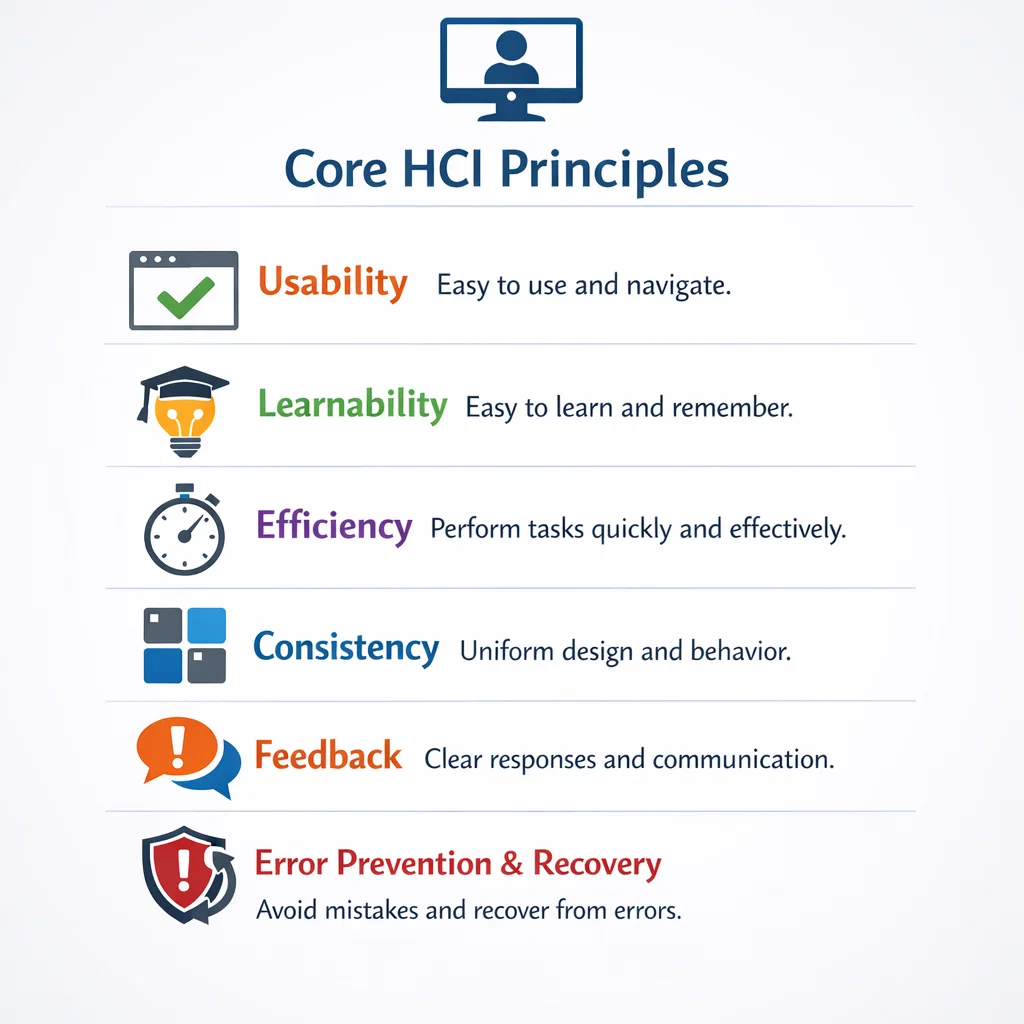
The HCI principles lead the design of interfaces that focus on usability and human-centered design. These principles include:
- Usability: It involves making the system user-friendly and accessible by users of different levels of skills.
- Learnability: Interfaces that are easy to learn and navigate should be designed.
- Efficiency: This is the ability to work efficiently and fast with little effort.
- Consistency: This is ensuring that there is consistency in the interface design in order to make the user predict how the system will act.
- Feedback: Ease of access and presentation of feedback to users regarding their actions.
- Error Prevention and Recovery: creating systems that reduce the number of errors and assist users to overcome errors effectively.
To learn more about HCI principles, visit this page.
HCI, User Experience (UX): A Symbiotic Relationship
User Experience (UX) means the perception of a user in relation to using a product or service, including the full scope of interplay, i.e. design, functionality as well as usability. The correlation between HCI principles and UX is deep. HCI design has a direct impact on the quality of the user experience, which affects satisfaction, engagement, and retention.
The impact of HCI Principles on UX
HCI principles can be used to improve UX in a number of ways when used properly:
- Lean Interactions: Interfaces that are designed based on HCI principles generate fast and understandable interactions and lessen cognitive load and frustration. This results in a pleasant experience and increased satisfaction.
- Consistency Across Platforms: Unified design elements across different devices and platforms make sure that the users can easily switch between them, which adds to the unified and rewarding UX.
- Personalization: With the use of HCI principles, developers can develop systems that are responsive to preferences of users, enhancing the experience by customizing interactions to individual needs.
- Error Handling: The HCI concepts of error prevention and recovery are important in ensuring that the user is not frustrated. The system that is effective and fast in resolving errors can be of great help in increasing the satisfaction of the users.
The Interface Design in Customer Satisfaction
The interface design is a direct result of HCI principles, and it is a critical factor in determining customer satisfaction. The wrong interface may turn off users who may end up being frustrated and losing business. Conversely, an interface that is based on HCI principles creates good experiences that motivate the user to visit the product again to further interact with it.
The Major Measures of Customer Satisfaction in UX
In order to measure the effect of HCI on user satisfaction, it is possible to utilize the following metrics:
- Net Promoter Score (NPS): NPS is a customer satisfaction tool that requires users to respond based on how probable they are to recommend the product to others. Good UX and practices of effective HCI are often associated with a high NPS.
- Customer Satisfaction Score (CSAT): CSAT surveys may be applied to identify the general satisfaction of users with a product after they interact with it. The metric is useful in learning short-term responses to interface design.
- Task Success Rate: This is used to show the ability of users to accomplish tasks in the system. A successful rate is usually a sign of a friendly interface, which has a direct impact on user satisfaction.
- Time to Complete a Task: The effectiveness of an interface can be evaluated based on how long users can take to complete certain tasks. A shorter time to finish a task is often an indication that the system follows the major HCI concepts such as usability and efficiency.
- Retention Rate: Customer retention is a direct measure of customer satisfaction. When there is a positive user experience because of a good HCI design, retention rates are increased as the user would be willing to revisit the system when they have found it easy and enjoyable to use.
Case Studies: Practical use of HCI Principles in UX
Case Study 1: iPhone Interface of Apple

The iPhone by Apple is a good example of how HCI principles can be used to develop a smooth UX. It has a clean, simple, and consistent interface that enables users to use and navigate the device. The sensitivity of touch gestures and the intuitive design and frequent feedback (vibrations or visual cues) makes the device user-friendly. The frequent updates and upgrades by the company as a result of user feedback also show that the company has been keen to ensure that it sustains an optimum user experience.
Case Study 2: E-commerce Platform at Amazon

The interface design of Amazon can be discussed as an example of how HCI principles may contribute to the increase of user satisfaction and business success. The site is made user-friendly and the information hierarchy is clear, as well as there is a search option that enables users to locate products within a short time. Engagement and retention of customers through personalized recommendations by Amazon, which are based on user behavior, demonstrate how HCI principles can be aligned with business objectives.
Case Study 3: Google Search
The search interface of Google is an excellent example of the successful HCI design that is based on usability and efficiency. Google has low distractions, quick load times and constant feedback, and because of this, they can easily get the information they seek. This has seen Google being one of the most used platforms and this is how the principles of HCI can result in an aesthetically pleasing user experience.
HCI Practices and Business and User Goals
To ensure success in businesses, it is important to align HCI practices to the goals of the users and the goals of the business. This can be done by the following ways:
- Know User Requirements: User research and usability testing are necessary to make sure that the interface design is user-oriented and meets the user needs and expectations. This may assist businesses to produce products that satisfy the demands of the users and deliver fulfilling experiences.
- Iterate Due to Feedback: It can be important to have the businesses to continuously collect user feedback and utilize it to improve the interface to create a superior product that allows the businesses to achieve their business goals and objectives as well as the user expectations.
- Pay attention to the Accessibility: Making interfaces to be available to as many as possible users, including those with disabilities, expands the user base, and promotes inclusivity, which can result in increased customer satisfaction.
- Measure Important UX KPIs: The periodic measurement of key UX KPIs like task success rate, retention, and NPS enables companies to understand the extent to which their HCI practices are meeting both user and business objectives.
Conclusion
The Human-Computer Interaction (HCI) principles play an essential role in the creation of user experience (UX) and customer satisfaction. The focus on usability, learnability, and efficiency will enable businesses to develop interfaces that do not only satisfy user expectations but also encourage engagement and retention. The examples of such companies as Apple, Amazon, and Google provide insights into the depth of the effects that properly implemented HCI principles can produce on the user experience and the overall success of the business. With a business that wishes to prosper in the modern digital world, it is necessary to align the HCI practices with both user and business objectives.
The knowledge of these principles and its application helps companies to produce products and services that make a significant impact on users and lead to long-term success and loyalty of the company among its customers.