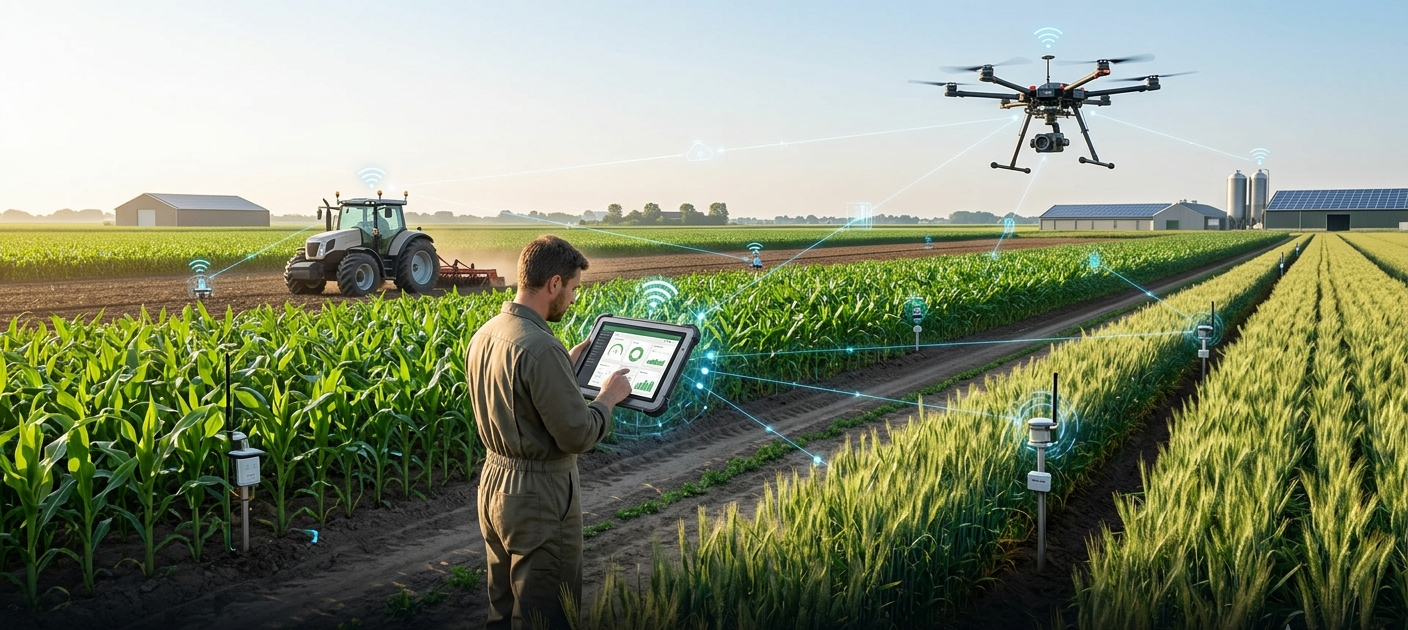
Reliable access to water is one the greatest challenges for smallholder farmers particularly in areas where rainfall is becoming more unpredictable and dry seasons increasingly intense. If irrigation is not provided, stress crops reduce yield substantially and farmers are dependent on a single harvest during the rainy season. There are, however, pump-free and cost-effective irrigation technologies available to allow irrigation for farmers without the high expense of pumps and continue production throughout the year. The systems are made as functional as possible, with the use of locally available materials, minimum energy or electric power requirements and minimum requirement for technical skills. They can, if properly implemented, enable double cropping, food production resilience and better income security even in the face of challenging climate conditions. These systems are crucial to understand for any farmer looking to minimize reliance on rain, and enhance their overall farming practices to become a more resilient producer.
1. Treadle Pumps for Manual Water Lifting (MWL)
With shallow wells, access to rivers or irrigation canals and without the need for fuel or electricity, treadle pumps are one of the most promising technologies for smallholder farmers to provide irrigation water. This is done by a pedal powered system allowing the farmer to alternate stepping on pedals creating a suction force to draw water up into the system; which is then discharged by a pipe. The simple mechanical design enables a continuous water flow at relatively low physical strain, once the user gets used to the rhythm. During the dry season, vegetable growers producing marketable produce like tomatoes, peppers, and leafy greens particularly benefit from the use of treadle pumps, which require regular pumping for quality crop production. These are also inexpensive with a low maintenance requirement and are suitable for rural communities that might not have access to repair services. They are generally recommended only for shallow ground water sources and may not work for deep ground water sources, therefore extensive site testing needs to be done prior to adoption.
2. Manual Water Lifting – Treadle Pumps
Treadle pumps are among the highest effective low cost irrigation options available to smallholder farmers with shallow wells, river or irrigation canal water sources who do not use fuel or electricity. It works by having feet pedaled to generate the suction which forces the water up and out through a discharge pipe. This is a very simple mechanical arrangement such that water is continuously pumped with relatively small physical effort for the user after getting used to the rhythm. Treadle pumps are particularly helpful to vegetable producers in periods of little rain for cultivating crops like tomatoes, peppers and leafy vegetables, which require regular watering for good markets. Additionally, they can be run at a cost that is lower than a motorized pump, and the amount of maintenance required is easy to achieve in rural areas that may not have repair services. They work best in shallow water sources and availability may be limited depending on the depth of groundwater in the site, however, so an adequate assessment of the site should be conducted before their adoption.
3. Consider wicking beds for efficient soil moisture control
Watering divide or wicking beds are a self-watering system where crops are allowed to take up water from the water chamber located below the ground. This is accomplished by capillary action that draws water up through the wicking material they use to get in the root zone of the plants, whether it be sand, gravel, or fabric. This creates a highly efficient irrigation system which results in consistent soil moisture and reduced evaporation of water. The most significant benefit of wicking beds in water-scarce lands is that they allow farmers with no daily irrigation access to grow at least some of their crops. They are usually made from raised beds that are lined with plastic, cement or similar impervious material and contain a layer of reservoir at the base. Playful once installed, they allow a development of low maintenance plants such as lettuce, spinach, carrots and herbs. The system also minimizes nutrient leaching, thus enhancing fertilizer use efficiency and plant growth. It may take time to set up, but benefits can be long-term such as being more efficient with labor, reducing water usage, and controlling or stabilizing crop growth during droughts.
4. Gravity-Fed Drip Irrigation Kits
Gravity fed drip irrigation systems are an extremely efficient system for the water and labor-challenged smallholder farmer who wishes to irrigate crops without pumps. This system uses gravity to create water pressure using elevated water storage tanks, like drums or small reservoirs. Water is forced out of the tank and drips slowly onto the roots of each plant by means of emitters or drip lines. The controlled delivery system will more effectively use water, preventing wastage and increasing crop yield. It works really well for crops grown in rows, like row crops and vegetable gardens where the water needs to be applied in a consistent amount across the row. Constructed from low cost, plastic drums, PVC pipes and local fittings it is well suited to low income farmers. Periodic cleaning of the filters and checking drip lines for blockages are all that is required for its maintenance, making it relatively simple. This is one of the main benefits, as it can run on power-free (fuel or electricity) without the need of extra external connections. Gravity fed drip systems can be used to obtain an improved water productivity and achieve several cropping cycles when well designed.
5. Simple Sprinkler Systems that require raised heads.
Another lower cost irrigation option for smallholder farmers who want to irrigate larger areas in a short period of time is the simple sprinkler irrigation system that is operated with an elevated drum. With this system, a drum or tank is installed on a platform above ground to provide the pressure required for water to flow through the pipes to the sprinkler heads. The system used these sprinklers to water in a pattern similar to rainfall and in larger areas are suitable for crops that require uniform moisture across the surface. This will be useful for seedbeds, pasture grasses and vegetable fields where uniform watering is essential. The farmer can build it using recycled materials such as drums, metal support stands and affordable PVC pipes, not only reducing costs but also ensuring comprehensive irrigation coverage. However, the water supplies are only possible as per the elevation of the tank and only suitable on small size to medium size of plots on relatively flat land. Also distribution efficiency can be influenced by wind, and hence irrigation timing must be considered. Even with these drawbacks, drum sprinkler irrigation is still a viable alternative for achieving additional irrigation expansion on small farms that have limited resources.
Conclusion
The choice of irrigation systems depends on a number of factors such as farm size, availability of water, crop type, and financial resources. The designs of the systems mentioned – treadle pumps, clay pot irrigation, wicking beds, gravity-fed drip kits and drum sprinkler systems have their own sets of advantages that could aid farmers in dealing with unpredictable rainfall. None of these techniques is 100% portable, but more than one can be more so in some situations. Use of treadle pumps in water-lifting, drip irrigation for vegetables and clay pots for fruit trees, for instance, could be used to achieve efficient operation in various locations on the farm. The real challenge is to pay attention to water conservation, lower energy expenses, and maintain uniform crop hydration during the entire growing season. The increased access to these irrigation alternatives with no need for costly pumps mean that smallholder farmers can advance towards more stable production systems, boost yields, and boost income opportunities even amidst climate uncertainty.