One of the major challenges for farmers at each growing season is weeds. They compete with the crops for food, light, water and space and can result in yield loss and poorer quality of the crop being taken. Chemical control is readily used, but weed issues can become herbicide resistant and inflicting in the environment with at least some effect on beneficial organisms can occur. This has encouraged increased uptake among farmers of natural methods of weed control to enhance crop health in a way that is not harmful to the environment.
Natural weed control is terminal rather than just nipping weeds in the bud or after they have emerged. With careful planning and implementation of soil management, crop diversity, and ecologic farming methods, however, growers can strongly curb weed pressure without synthetic herbicides. These sustainable practices will not only enhance soil fertility but also promote sustainable ecosystems that have more capacity for providing soil support over future generations.
Farmers can use beneficial organisms, along with cultural and mechanical practices, to keep their fields healthy naturally, among the most effective biological control methods. If these methods are part of a holistic weed management program, they will not only save labor, but will also decrease environmental risk and encourage the success of sustainable agriculture systems that can be productive and healthy from year to year.
Benefits of natural weed control.
Natural weed management provides more than weed control benefits. As healthy soils grow with lots of organic matter, they make stronger crops, which grow more competitively with the weeds they are fighting off. Sustainable weed control also maintains beneficial insects, earthworms, pollinators and soil microorganisms that help soil nutrient cycling and soil structure. Additionally, a decrease in the reliance on herbicides results in a reduction in production costs over time, which also facilitates farmers’ efforts to respond to growing consumer demand for food produced in an environmentally friendly way.
Multiple complementary practices provide an integrated weed management system, with no single practice being entirely effective in eradicating the weed, but all working together are highly effective in consistently reducing weed populations resulting in profitable crops.
1. Mulching in the organic way to suppress weed growth.
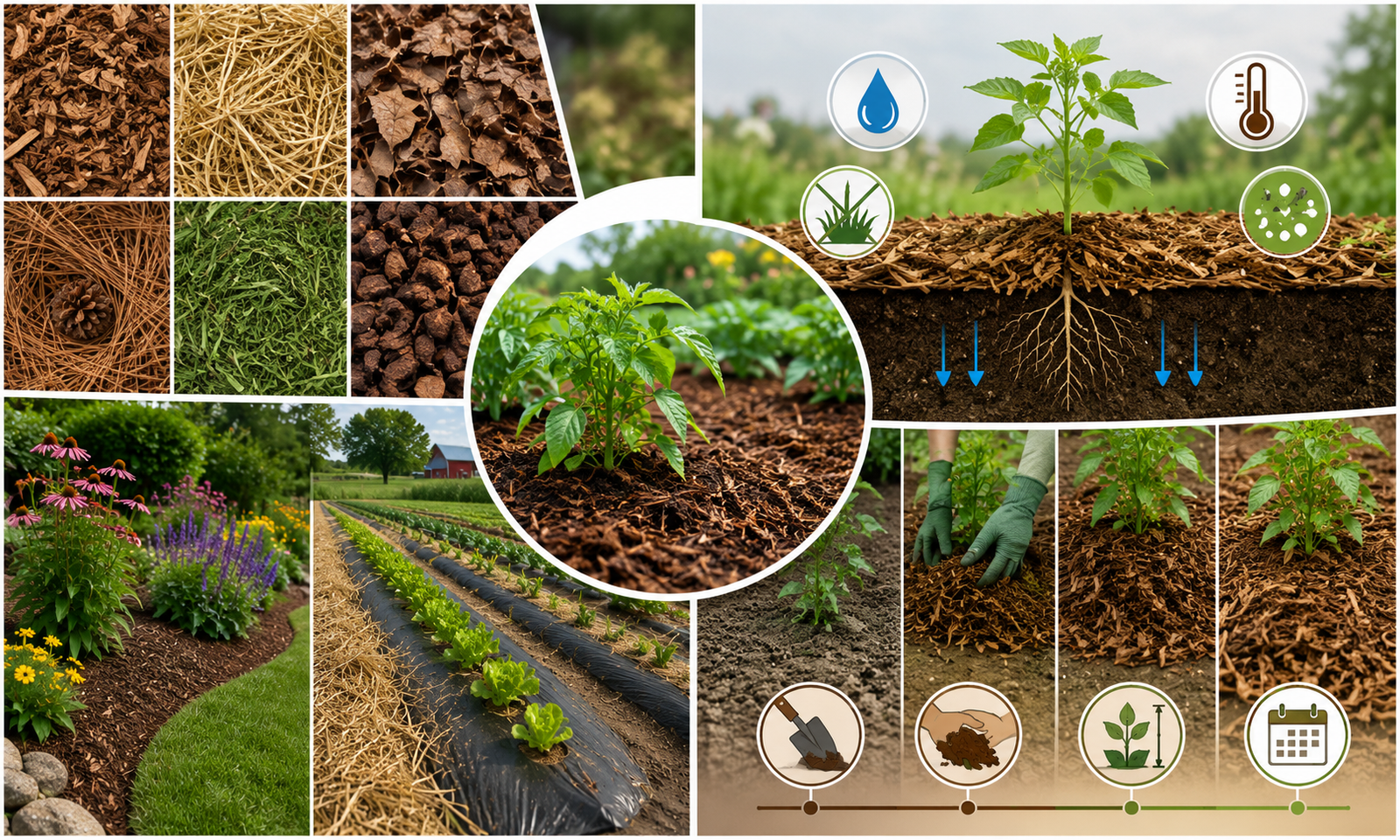
Mulching is still one of the easiest and most effective weed control solutions using a natural approach. Organic materials like straw, wood chips, dried leaves, grass clippings, compost or shredded bark form a protective cover on the soil surface. The barrier helps minimize germination and establishment of weed seeds by blocking access to sunlight. Meanwhile, mulch keeps soil moist, decreases erosion, acts as a moderator of soil temperatures, and slowly breaks down to enhance soil fertility. When used in combination, these can optimize crop growth conditions and help to inhibit unwanted plants.
Mulching is effective if applied correctly! Farmers should mulch nearly 2–4 in. away from the crop stem at an even thickness so as not to collect too much water in the mulch and create disease issues. Covers can be topped with more mulch material as the organic material is decomposed naturally over the course of the growing season. In the long-term, frequent mulching will include providing better soil structure, increasing microbial activity and will be one of the most cost effective methods of long-term weed control workable for all types of farms regardless of their size.
2. Carefully control Mechanical Cultivation.
For centuries farmers have used mechanical cultivation as an effective means of weed control when chemical control methods are not available. Young weeds are physically removed by equipment like hoes, wheel hoes, tine weeders, rotary cultivators and inter-row cultivators before they are aggressive and competitive. Timing is important as weeds can be best controlled shortly after sowing, before they get well established and their roots are deep. Weeds are not allowed to set seed and thus boost infestation levels in the future by using regular cultivation during the early growth phase.
But it is important to operate carefully, as excessive soil disturbance or crop root damage can be avoided. Over digging will allow dormant weed seed to emerge and will provide ample space so the seeds can germinate and grow. Careful management of weeds, only for shallow tilling when needed, is recommended. Mulching or growing a cover crop may be the most effective practices to control weeds, and the combination of mechanical cultivation with mulching or cover crops may be even better, while usually reducing labor needs during the growing season.
3. Grow cover crops as gaps in the crops.
One of the most natural methods of weed control is to cover with a crop that will help to suppress weed populations. The dense vegetation that creates a canopy from species like clover, rye, oats, buckwheat, hairy vetch, and sorghum helps to suppress weeds that emerge in the early spring. They have deep root systems which also serve to structure the soil, decrease erosion, add organic matter, and increase water infiltration. Some of the cover crops even produce natural chemicals which aid in suppressing weed seed germination, thus achieving weed control without using synthetic chemicals.
Choices of cover crops will depend on locally available climate and crop rotation information and production objectives. Cover crops are growing following some cash crop, and then cut down before the next crop is sown. Leaving the rest of the plant material acts as a natural mulch to further inhibit weeds and help to add soil organic matter. Cover cropping is good for soil health, beneficial microorganisms, and long-term weed control, and is worth investing in for sustainable farming systems.
4. Maximize the use of weeds to reduce weed competition
Weeds will be kept in check naturally if a good crop canopies occur when competing for space. Good crop spacing results in both proper sun utilization by cultivated crops and decreased amount of light for weed germination. Dense plantings, which are well planned, helps the crops cover ground faster and weed space is reduced on which weeds grow. It is a natural competition rival that can help control weeds with no additional input or labor.
Space is required to complement good air movement, disease control and weed management and different crops have different preferred spacing. Planting should be done according to recommended planting guidelines, then taking into account local growing conditions and soil fertility. Pure stands ensure good growth and better root structure that is able to take advantage of available plant nutrients. Optimized crop spacing signatures a good outcome in the management of the crop, particularly in reducing the chance of weeds establishing as well as having good crop performance.
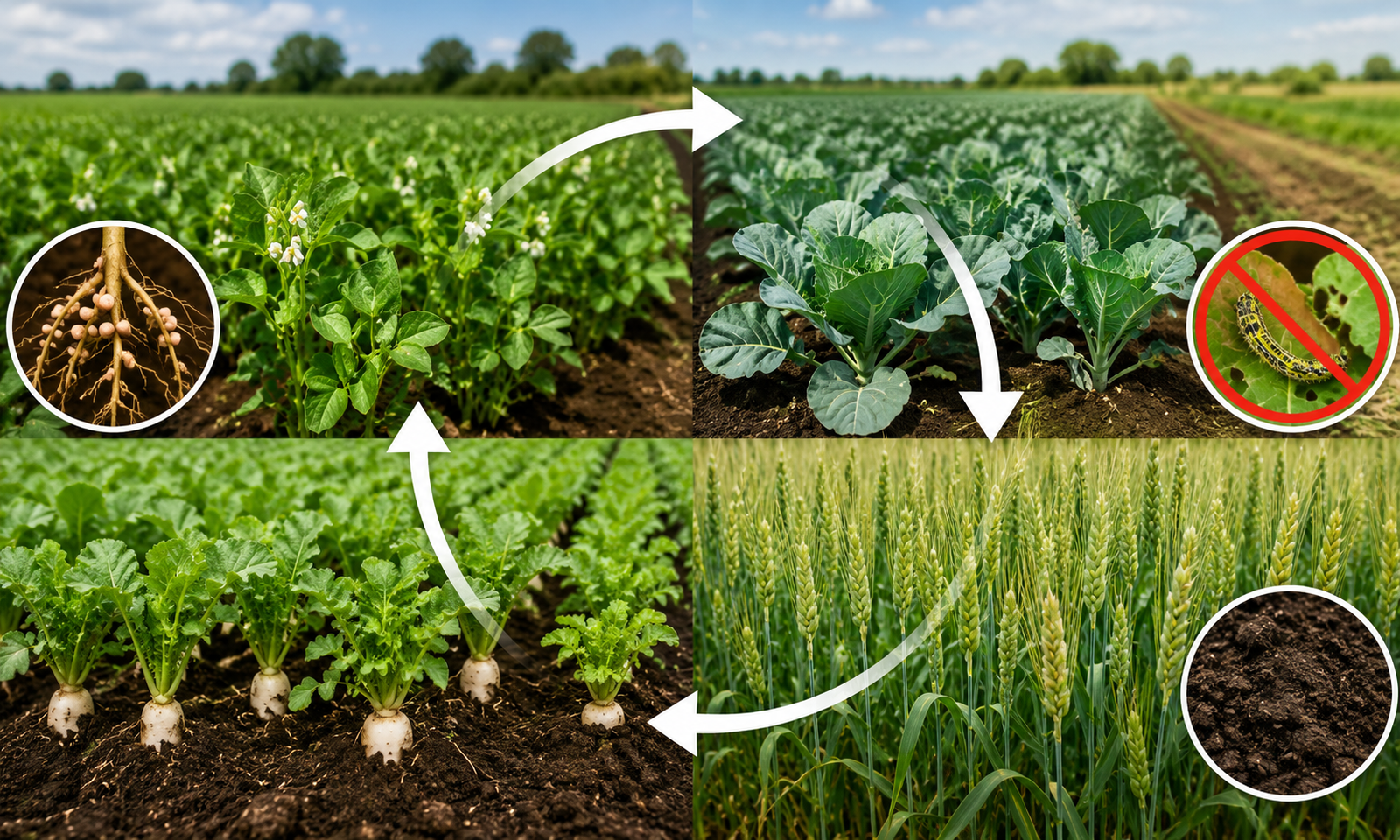
5. Rotate Crops Regularly
Crop rotation will break weed cycles as growing conditions vary from one season to another. Many weeds are specific to crops, dates and practices of cultivation. Areas that have the same crop grown again and again become ideal breeding ground for these weeds to flourish and leave behind a lot of seed in the soil. Variety rotation delays the growing season, their canopy structure and root system differs, and their nutrient requirements vary. This makes it more difficult to establish weed dominance.
Crop rotation may involve the cyclic rotation of cereals/legumes/root crops/leafy vegetables over several seasons, depending on the various objectives. Such changing conditions also break pest and disease cycles and enhance soil health, nutrients and availability. Leguminous crops, for instance, provide nitrogenous resources to the soil which avoids use of extra fertilizers with the next crop. Crop rotation practices help to balance the ecology of the field and help to suppress weeds naturally in a consistent manner that enables use of the land productively.
6. Promote Biological Weed Control
Among many other organisms that inhibit unwanted plants while protecting valuable crops are those found in nature. There are different types of biological controls including use of insects, grazing animals, microbials or natural plant interactions to lower weed numbers. Some insects specialize in eating invasive weed species, and physically controlled grazing systems like sheep and goats can graze weeds in orchards, vineyards, and some field crops without harming the existing crop. Such relationships help manage weeds and decrease chemical inputs.
In order to manage the biological control successfully, it is important to know local ecosystems and to choose a biological control agent that does not pose any hazard to specific weeds. There is a strong need to monitor biological control programs closely to maintain environmental balance for beneficial organisms and to prevent negative effects. Biological weed suppression can be used as part of a broader suite of measures such as crop rotation, mulching, mechanical cultivation, and cover cropping—all of which help to cultivate healthy farms for the long term.
7. Irrigate strategically to favor crops
The management of water plays a vital role in weed growth. Weeds may be as well-served by the broadcasting of irrigation water onto the entire field and impaired by inter-row irrigation, as may cultivated plants. Drip irrigation, among other more highly specific irrigation technologies, provide water directly to growing root area, reducing moisture for surrounding weeds. Space-to-soil irrigation reduces weed seed germination between rows whilst stretching precious water resources.
Using irrigation schedules that will match crop and water demand also contributes to creating a balanced moisture regime. Over-irrigation may result in weed development, while efficient irrigation promotes good crop growth that suppresses weed growth. A combination of drip irrigation and mulching will enhance weed control by reducing soil moisture under mulch and keeping soil surface relatively dry.
8. Remove weeds before they produce seeds.
Prevention of seed production is one of the most effective long term weed management methods. One plant can make thousands of seeds that can stay dormant in the soil for several years. Weed control prior to flowering significantly does the most to minimize future weed problems by preventing weed soil seed bank build up. With consistent field scouting, farmers can quickly discover weed-related concerns when they are just starting to develop so that they can more easily correct them.
Hand removal is a viable method of control within small infestations, especially when mechanical tillage might cause damage in sensitive crops. If weed control is to be effective within the host crop, removal by mowing, cultivation and selective removal may be feasible on larger sized farms to keep weeds from maturing. This technique does need to be undertaken regularly over the growing season but over time significantly reduces weed populations and subsequently labour needs in subsequent seasons.
9. Enhance the health and carbon quality of soils through compost and organic matter.
Healthy soils support vigorous crop growth, which will out-compete weeds more effectively. Compost, well-decomposed manure and other organic amendments also put more structure into soil, enrich the microbial diversity, increase moisture holding capacity and provide adequate balanced nutrients needed for crops to grow. Good crops can outgrow weeds in less time and provide more shade for weeds during the growing season.
Soil organic matter buildup also enhances nutrient cycling, lessening the stress placed on plants by poor fertility and/or inadequate soil moisture. Healthy soils leading to robust root structure that is able to utilize the moisture and nutrients opportunities, regardless of difficult weather. Increases in soil quality over the years boosts the resilience and adaptability of crops, and slowly reduces weed pressure, all for a more sustainable crop production without depending on external inputs.
10. Take care of your fields regularly and take early action.
The key to successful natural weed control is regular field monitoring. Dedicating more time to the IRM can mean that trouble spots before big weeds become common can be found and dealt with before heavy populations grow. If there is early detection of small problems, they can be dealt with by non-destructive interventions like hand pulling, shallow cultivation or localized mulching, as opposed to later and more intensive interventions. Monitoring also eases weed identification, allowing farmers to make selections for changes in crop rotations, planting dates, or management strategies for similar weeds.
Detailed field notes are another and valuable way to consider and help decision making because they record the location of the weeds, the seasonal changes, the weather, and the effectiveness of weed management. These observations over multiple growing seasons can assist farmers with further optimizing their integrated weed management strategies for their respective farming operations. Regular monitoring and incorporating preventive cultural practices through a consistent approach helps to reduce weed competition in a proactive system that contributes to healthy crop production and longer-term environmental sustainability.
Multiple strategies make for greater effectiveness.
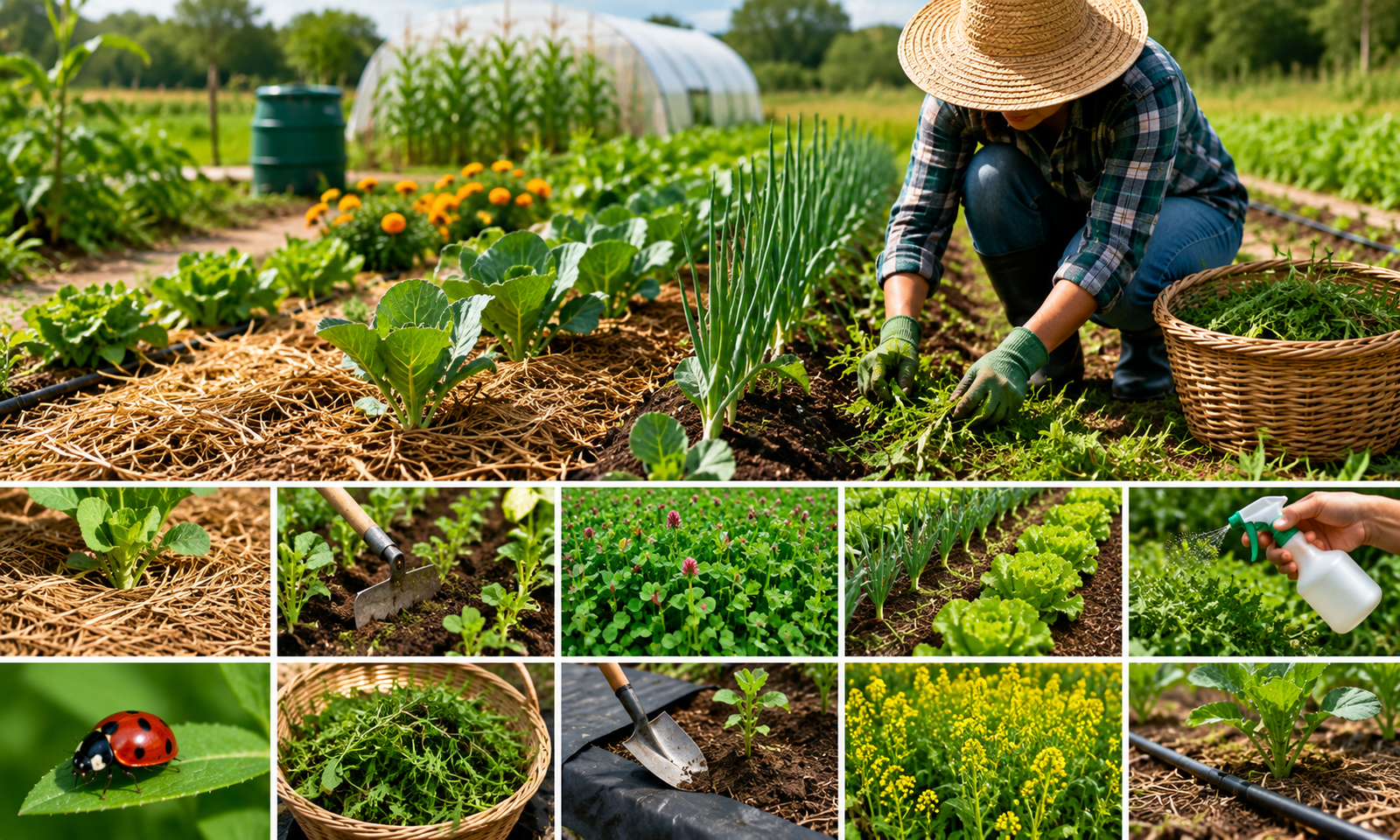
A combination of several practices are likely to be more effective methods of natural weed control than any single approach. Mulching can be used in conjunction with cover cropping, to keep the ground covered after cover crops have been terminated. Mechanical cultivation eliminates early weed growth before mulch and/or crop cover cover them completely. The stronger the crop competition, the more it resists the establishment of weeds and the more fertile the soil, the more vigorous the plant growth and weed control is implied. By targeting water where it is most needed, strategic irrigation will also prevent weed germination, which is a further benefit.
Products that employ integrated management systems cannot rely as heavily on herbicides and in turn, improve agricultural eco-systems. Agriculturalists can reduce weed pressure, improve soil quality, promote biodiversity and as a consequence, have more sustainable crop yields in the long-term if they regularly utilize multiple natural methods. The approaches involve planning and observation, but also offer long-term solutions that are beneficial for the farm economy and the environment.
Conclusion
Natural weed control can provide farmers with viable and environmentally friendly options to reduce reliance on heavy herbicide application while ensuring profitable crop production. Mulching, mechanical cultivation, cover cropping, crop rotation, optimized spacing, enhanced soil health, targeted irrigation to avert nutrient pollution, early weed control, field monitoring, and biological weed control systems work together to limit the proliferation of weeds that do not compete with valuable crops. These strategies are not just about eradicating weeds, but also about cultivating the competitiveness of crops and the health of agricultural ecosystems in general.
Integrated weed management not only increases the quality of soils but also reduces input expenses, enhances biodiversity, and improves the sustainability of agricultural enterprises, which results in a long-term benefit for more producers. Through investing in prevention and using a combination of multiple natural solutions, farmers can fight weed competition, safeguard crop yields, and create sustainable agricultural systems that can produce a productive harvest and perpetuate it through generations.