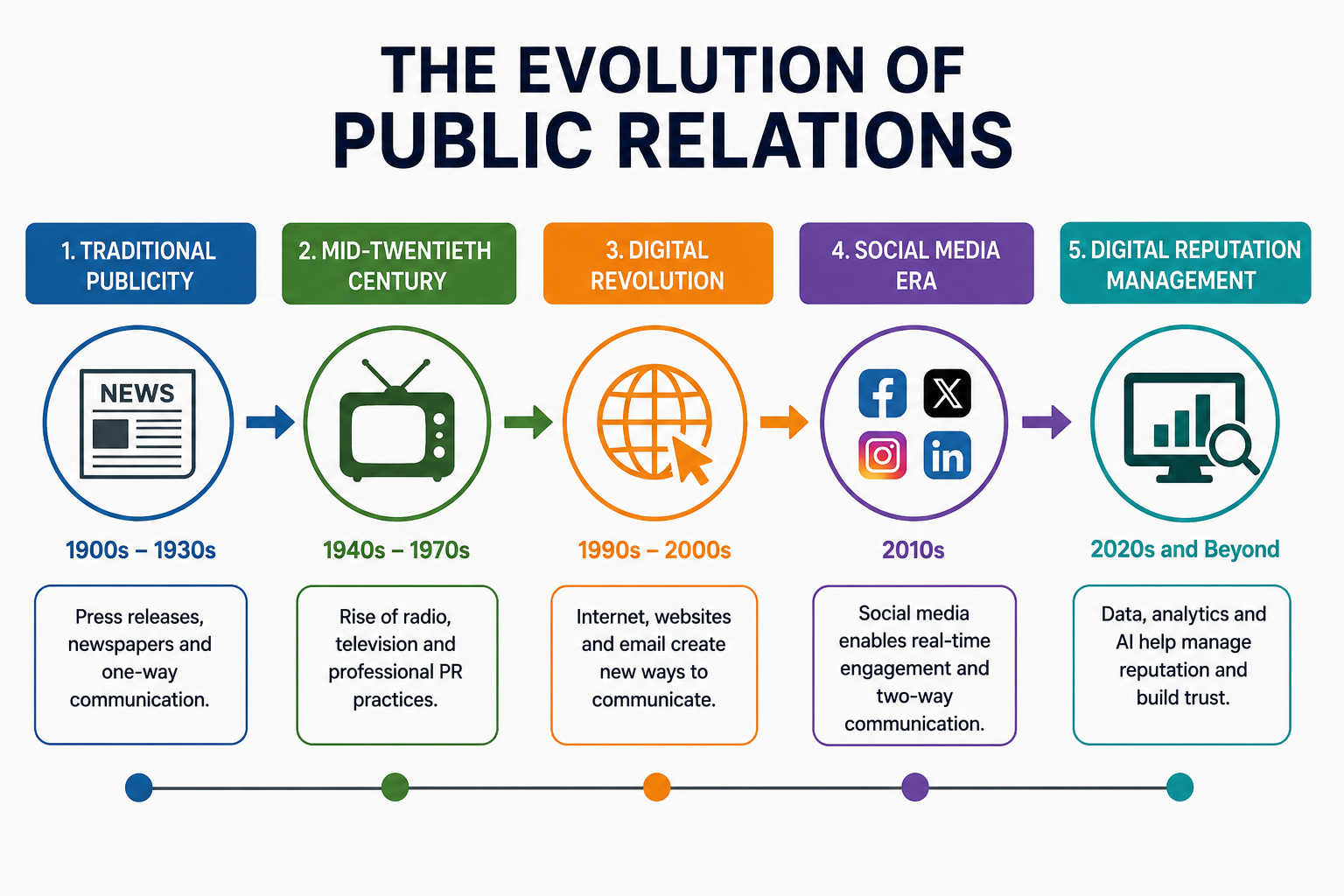
From making announcements to the media to the days of sophisticated strategic communication, reputation management, and public engagement, public relations (PR) has come a long way in the last century. In the past, public relations was all about sending out press releases and handling journalist relations, but today it involves a large array of digital tools and platforms that enable organizations to communicate directly with the public in real time. This change has transformed the way businesses, governments, and consumers establish trust, handle crises, and shape public opinion in the interconnected world we live in.
With the evolution of communication technology in this modern world, it is important to understand the history of public relations and how organizations adapt to changing public expectations. Public relations is no longer just a press office, it now ranges from the early days of print media to today’s social media analytics and AI-powered engagement.
This article discusses the evolution of public relations in the world and Nigeria as well as the impact of technology, the evolution of media and the use of modern digital communication strategies that have transformed the profession and made it a key tool in building organization’s credibility and communicating a story to the public.
The Beginnings of Public Relations: Press Agentry and Early Publicity
The beginnings of public relations started with strategic publicity aimed at influencing public opinion and drawing attention. Public relations had a negative reputation in the late nineteenth and early twentieth centuries because the focus was mainly on gaining news coverage rather than transparency and accuracy. Public officials, companies, and individuals used press agents to develop stories, sell products, and secure favorable press coverage.
Communication during this period was mostly one-way communication, where organizations delivered messages while the public had little opportunity for feedback or engagement.
Main Attributes of Early Public Relations (PR)
The initial models of public relations had several characteristics:
- Dependence on newspapers and printed announcements
- One-way flow of information from organizations to the public
- Little concern for factual openness
- Focus on attracting attention instead of building trust
- Heavy dependence on the media to spread messages
One of the pioneers of modern public relations was Ivy Lee, often referred to as the father of public relations. Lee introduced ethics into communication and emphasized the importance of honesty and information sharing between organizations and the public. His work helped shift public relations away from manipulation toward transparency and credibility.
Edward Bernays also studied psychology and persuasion in relation to public relations. He demonstrated how carefully crafted messages could influence public opinion. These early developments helped establish public relations as a professional discipline focused on relationship-building and public trust rather than mere publicity.
The Emergence of Public Relations in the Mid-Twentieth Century
The rise of mass media platforms such as radio and television made public relations a more complex profession. Organizations recognized the need for systematic communication strategies and audience understanding in order to build positive reputations rather than simply advertise.
During this period, PR professionals became important advisors to corporate, government, and non-profit institutions, helping leaders communicate effectively during both opportunities and crises. Reputation management was no longer only about attracting immediate attention but also about building a long-term reputation.
Major Developments during This Period
Several developments contributed to public relations becoming a recognized profession:
- Development of corporate communication departments
- Establishment of professional PR associations
- Incorporation of ethics and communication standards
- Growth of PR education programs in universities
- Increased focus on crisis communication planning
Public relations became a legitimate profession because of the establishment of professional associations and academic programs. Codes of conduct, strategic planning, and professional standards became central to practice. Organizations also invested more heavily in media relations and crisis management teams.
There was also growing public expectation that organizations should be accountable, honest, and responsive to public needs. During this period, PR became firmly established as a bridge between institutions and the communities they served.
The Transformation of Public Relations and the Digital Revolution
The internet revolutionized the public relations industry. Websites, email newsletters, and online news platforms gave organizations new ways to communicate directly with stakeholders without relying solely on traditional media gatekeepers.
Information became faster, easier to access, and more interactive. Audiences could instantly respond to corporate announcements, creating a two-way communication environment that required greater transparency and responsiveness from PR professionals.
How Digital Tools Have Changed PR
The digital age introduced several transformative opportunities:
- Instant global communication
- Direct interaction through social media
- Real-time audience feedback and sentiment tracking
- Data-driven campaign measurement
- Personalized messaging for target audiences
Social media platforms such as Facebook, X, Instagram, and LinkedIn enabled organizations to communicate with audiences in real time, personalize interactions, and monitor public sentiment.
A viral post or online controversy can now affect a company’s reputation within hours, making reputation management more challenging. As a result, PR professionals increasingly rely on data analytics, social listening, and digital communication strategies to monitor trends, manage risks, and tailor messages to audiences.
In today’s digital environment, success in PR depends not only on using digital tools, but on using them effectively to build credibility in a connected world.
Key Elements of Modern Digital Reputation Management
Digital reputation management is now a major aspect of modern PR. Unlike traditional publicity, which mainly focused on attracting positive media attention, digital reputation management involves continuous monitoring and strategic responses across multiple online platforms.
Organizations must monitor reviews, social media discussions, search engine results, and public comments to understand stakeholder perceptions. A proactive strategy allows PR teams to address misinformation, respond to criticism, and strengthen trust before problems escalate.
Essential Components of Reputation Management
Modern PR professionals rely on several important practices.
1. Social Media Monitoring
By tracking online conversations, PR professionals can identify trends, customer concerns, and potential crisis situations early. Monitoring audience feedback helps organizations adapt communication strategies and meet audience expectations.
2. Crisis Communication Planning
Reputation crises now spread rapidly on digital platforms. Organizations should establish crisis communication plans that include:
- Rapid response procedures
- Designated spokesperson training
- Clear approval processes
- Transparent public messaging
- Post-crisis evaluation strategies
3. Content Strategy and Storytelling
Strategic storytelling has become increasingly important in modern PR.
Effective content formats include:
- Blog articles
- Videos and webinars
- Podcasts
- Interactive social media posts
- Brand case studies
These communication tools help organizations express values, build emotional connections, and influence public narratives.
4. Data Analytics and Audience Insights
Analytics tools provide valuable information about:
- Audience engagement levels
- Website traffic and user behavior
- Social media reach
- Campaign conversion rates
- Public sentiment trends
PR professionals use these insights to improve campaigns, measure effectiveness, and refine future communication strategies.
The Evolution of Public Relations in Nigeria
The history of public relations in Nigeria has been shaped by colonial history, political changes, and rapid technological advancement. During the colonial era, communication was largely government-centered and focused more on informing the public than encouraging engagement.
After independence, Nigerian institutions began to recognize the importance of strategic communication in improving public image and building trust. Public relations departments gradually emerged within government agencies, multinational companies, and educational institutions.
Milestones in Nigerian Public Relations
Important developments include:
- Formation of the Nigerian Institute of Public Relations
- Expansion of PR roles in corporate organizations
- Growth of PR education and certification programs
- Increased use of digital media platforms
- Rising influence of influencer marketing and social media campaigns
In recent years, Nigeria has experienced rapid digital transformation, increasing the importance of innovative PR practices. With millions of social media users and widespread mobile internet access, digital engagement has become essential for organizations seeking to connect with audiences.
Professionals in Nigeria are combining international PR best practices with local cultural understanding to communicate effectively in a rapidly changing environment.
How Technology and Public Expectations Have Redefined Public Relations
Technology has empowered audiences to demand greater transparency and accountability from organizations. Consumers are no longer passive recipients of information; they actively question, evaluate, and comment on organizational actions.
This shift has transformed PR from simply distributing messages to actively managing relationships through listening, engagement, and meaningful interaction with stakeholders.
Emerging Trends Shaping the Future
Several trends are shaping the future of public relations:
- Artificial intelligence and automation
- Predictive reputation monitoring
- Personalized digital engagement
- Ethical communication standards
- Increased demand for authenticity and social responsibility
Artificial intelligence, automation, and predictive analytics are redefining the profession. PR teams now use AI tools to analyze public sentiment, automate responses, identify media opportunities, and predict reputational risks.
At the same time, concerns about misinformation, privacy, and digital manipulation have increased calls for responsible communication practices. In a world where trust can be lost quickly and rebuilt slowly, PR professionals must balance innovation with professional ethics.
Conclusion
Public relations has evolved from traditional publicity into modern digital reputation management, reflecting changes in technology, society, and public expectations. What began as a profession focused mainly on media attention has become a strategic discipline dedicated to building trust, shaping public perception, and encouraging meaningful engagement between organizations and their audiences.
From global pioneers to Nigeria’s rapidly developing PR industry, the profession continues to adapt to new challenges and opportunities.
In today’s digital world, where information is constantly created and shared, PR professionals must remain innovative while still upholding the core principles of ethical communication. Understanding the evolution of public relations helps readers appreciate the importance of public relations in building reputation, strengthening credibility, and shaping public conversations in a connected world.
Frequently Asked Questions (FAQs)
What is the main difference between traditional public relations and digital public relations?
Traditional public relations focused mainly on gaining media attention through newspapers, radio, and television, while digital public relations focuses more on online engagement, social media communication, and digital reputation management across multiple platforms.
Why is reputation management a crucial aspect of modern public relations?
Reputation management helps organizations monitor public opinion, manage criticism, respond to negative feedback, and build trust through transparent communication in a fast-changing digital environment.
What impact does social media have on public relations?
Social media has created direct communication channels between organizations and audiences, enabling faster interaction, instant feedback, and more personalized relationships.
What skills are essential for future PR practitioners?
Important skills for future PR professionals include:
- Strategic writing
- Crisis communication
- Ethical decision-making
- Data analysis
- Social media management
- Adaptability to new communication technologies