Your basement may be out of sight during most of the day, but it plays a major role in supporting your entire home. The walls and foundation beneath the house carry heavy structural loads while facing constant pressure from soil, groundwater, and changing weather conditions. When trouble begins below ground level, the earliest clues may appear as small cracks, damp spots, or doors that suddenly become harder to close.
Homeowners should take these changes seriously, even when they seem minor at first. Basement foundation repair may become necessary when visible damage, structural movement, or water entry points indicate a deeper problem. Resources such as foundationrepairmassillon.com provide helpful information about common warning signs, inspection services, and repair options for local homeowners. Learning how to recognize these warning signs gives you a better chance to address the cause before the damage spreads to other areas of the house.
Foundation problems do not correct themselves. Cracks may widen, walls may continue moving, and water may keep entering until the source receives professional attention. Staying aware of changes in your basement is one of the simplest ways to protect your home and avoid larger repair needs later.
Why Basement Foundation Problems Develop
Basement walls sit below ground, where they remain in direct contact with the surrounding soil. The soil changes throughout the year. It absorbs water during rainy periods, dries out during hot weather, and freezes in colder months. Each change affects the amount of pressure placed against the foundation.
Water is one of the biggest contributors to basement trouble. When rainwater collects near the home, the soil becomes heavier and pushes against the walls. This pressure is often called hydrostatic pressure. Over time, it may contribute to cracks, leaks, bowing walls, or movement within the structure.
Poor drainage may also direct water toward the foundation. Clogged gutters, short downspouts, and land that slopes toward the house allow moisture to collect where it causes the most trouble. Plumbing leaks and damaged exterior drainage systems may add to the problem.
Some foundations also experience settlement. Settlement occurs when the soil beneath part of the home compresses or shifts. When one area moves more than another, cracks and uneven surfaces may begin to appear.
Cracks That Deserve Attention
Not every small crack signals a serious structural problem, but the direction, width, and location of a crack provide useful clues.
Thin vertical cracks sometimes develop as concrete cures or as a home experiences minor settlement. Even so, they should be monitored for changes. Marking the end of a crack with a pencil and adding the date helps you see whether it continues growing.
Horizontal cracks require more urgent attention. They often form when outside soil pressure pushes inward against a basement wall. A long horizontal crack may be accompanied by bulging, leaning, or separation between rows of concrete blocks.
Stair-step cracks travel along the mortar joints of block walls in a step-shaped pattern. They may point to uneven settlement beneath one section of the home. Diagonal cracks near windows and corners may also indicate movement.
A professional evaluation is important when cracks widen, appear suddenly, allow water to enter, or develop alongside other structural changes.
Bowing or Leaning Basement Walls
A basement wall should remain straight and upright. When part of the wall curves inward, leans, or develops a noticeable bulge, pressure from the surrounding soil may be forcing it out of position.
Bowing often begins slowly. You may first notice a horizontal crack running across the middle of the wall. Over time, the wall may move farther inward. Shelving, pipes, or framing attached to the wall may also appear misaligned.
A leaning wall should not be treated as a cosmetic issue. Continued movement may weaken the wall and place stress on other parts of the structure. Basement foundation repair methods, such as wall anchors, steel braces, or carbon fiber reinforcement, may be recommended depending on the extent of movement and the wall material.
The correct method should be based on a detailed inspection rather than appearance alone.
Water Entering the Basement
Water stains, damp patches, puddles, or mineral deposits often reveal moisture entry. White or chalky material on concrete walls is known as efflorescence. It appears when water passes through masonry and leaves minerals behind as it evaporates.
Moisture may enter through wall cracks, floor cracks, foundation joints, windows, or gaps around utility lines. Water may also rise beneath the floor when groundwater levels increase.
The U.S. Environmental Protection Agency explains that basement water may be related to missing gutters, poor grading, leaks, or water flowing toward the house. The homeowner guidance recommends correcting leaks and seepage while directing groundwater away from the foundation. More information is available through the EPA’s moisture control guidance.
Moisture should be addressed at its source. Painting over stains or applying a surface coating may hide the evidence without stopping the water.
Changes on the Main Floors
Foundation movement does not always stay in the basement. Changes may eventually appear throughout the home.
Watch for doors that rub against their frames, windows that become difficult to open, and gaps forming around trim. Floors may begin to slope, dip, or feel uneven beneath your feet. Cracks may appear above doorways, near windows, or along the seams where walls meet ceilings.
One isolated symptom may result from ordinary wear, humidity, or aging materials. Several symptoms appearing together deserve closer attention. They may indicate that part of the structure is shifting.
A foundation professional can compare these interior changes with conditions in the basement and around the home’s exterior.
Gaps and Separation Around the Structure
Movement may create spaces where building materials once met tightly. You might notice gaps between basement walls and floors, separation around support posts, or openings where exterior walls meet porches and steps.
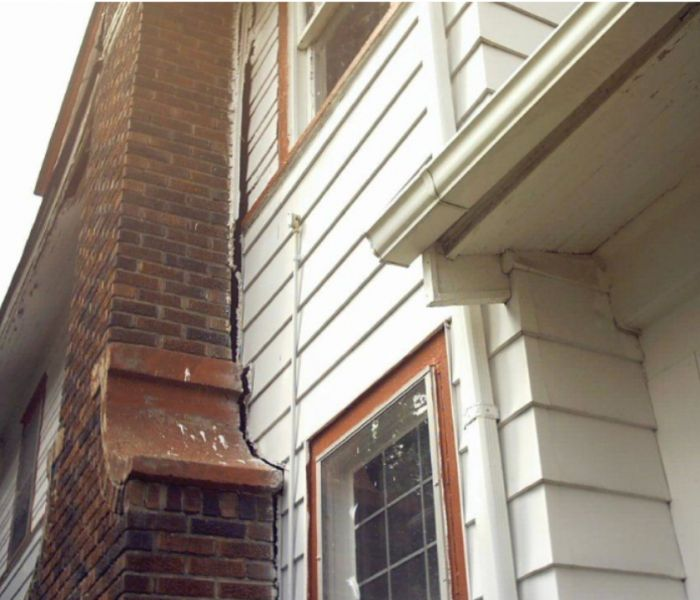
Outside, brickwork may pull apart near windows or corners. Chimneys may lean away from the house. Siding may appear warped or uneven where the wall beneath it has moved.
These changes provide valuable evidence during an inspection. Take photos when you first notice them and record whether they grow over time. Clear records help a contractor understand how quickly the condition is developing.
When to Schedule a Professional Inspection
You should consider an inspection when you notice widening cracks, bowing walls, repeated water entry, uneven floors, or several sticking doors and windows. A sudden change deserves attention, especially after heavy rain, flooding, drought, or nearby construction.
During an inspection, a contractor may examine the basement walls, floor, support beams, drainage, exterior grading, and visible cracks. Measurements may be taken to identify wall movement or uneven settlement.
The goal is to determine what is happening, why it is happening, and which repair method fits the condition. A proper inspection should provide clear findings rather than vague warnings.
Early evaluation may also give you more repair choices. Waiting until a wall has moved farther or a crack has grown wider may require a more involved project.
Common Basement Foundation Repair Methods
The recommended repair depends on the type and cause of the damage.
Wall anchors may be installed to stabilize a bowing wall by connecting it to firm soil outside the home. Steel braces may support walls from inside the basement. Carbon fiber straps may be used for certain cracks and limited inward movement.
Foundation piers may be recommended when settlement has caused part of the structure to sink. These systems transfer the home’s weight to stronger soil or stable material deeper beneath the surface.
Cracks may be sealed or injected with specialized materials, but crack repair alone may not be enough if movement is still occurring. Drainage improvements, sump pump systems, exterior waterproofing, and grading changes may also be included when water contributes to the damage.
Effective basement foundation repair addresses both the cause and the visible symptoms.
Steps Homeowners Should Take
Begin by inspecting your basement every few months and after major storms. Look closely at walls, floors, windows, support posts, and areas around pipes. Check for new cracks, dampness, stains, unusual smells, or changes in wall alignment.
Keep gutters clear and extend downspouts several feet away from the home. Soil near the foundation should slope away from the structure so rainwater moves in the opposite direction. Avoid allowing sprinklers to spray directly against basement walls.
Do not ignore a condition because it seems small. Foundation damage tends to progress when soil pressure, settlement, or water remains active. A professional assessment gives you facts and a path forward.
Final Thoughts
Your basement often provides the first visible warning that the foundation is under stress. Cracks, bowing walls, water entry, uneven floors, and gaps around the structure should be treated as clues rather than harmless quirks.
Regular observation and timely inspections help homeowners respond before damage becomes more extensive. When signs point toward basement foundation repair, professional evaluation is the right next step. Understanding the cause allows you to choose a repair plan that supports your structure and protects your property’s value.
Concerned about cracks, moisture, or movement beneath your home? Contact Top Foundation Repair Massillon to schedule a detailed foundation inspection. Our team will examine the warning signs, explain what they mean, and recommend the appropriate repair for your property.